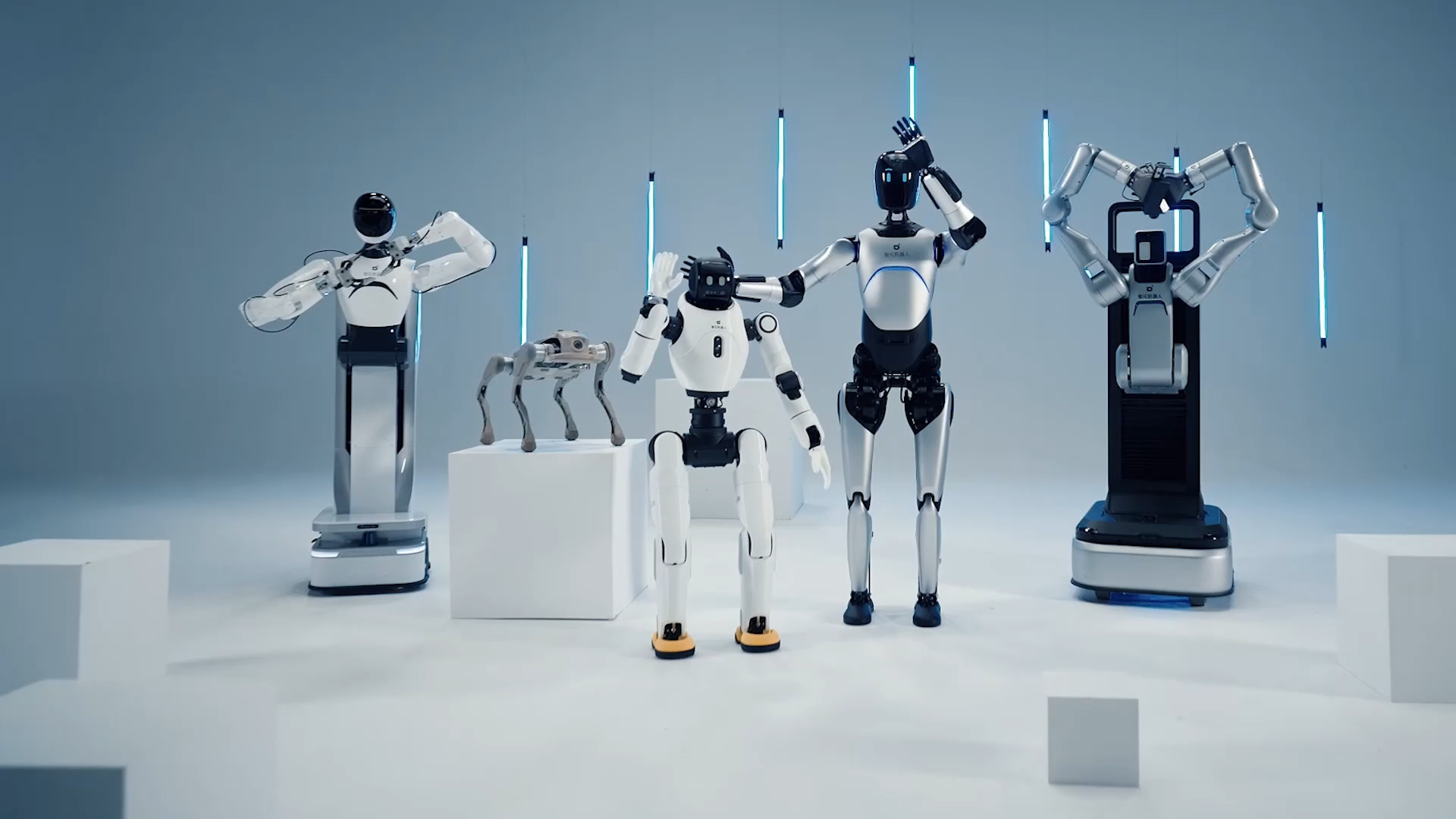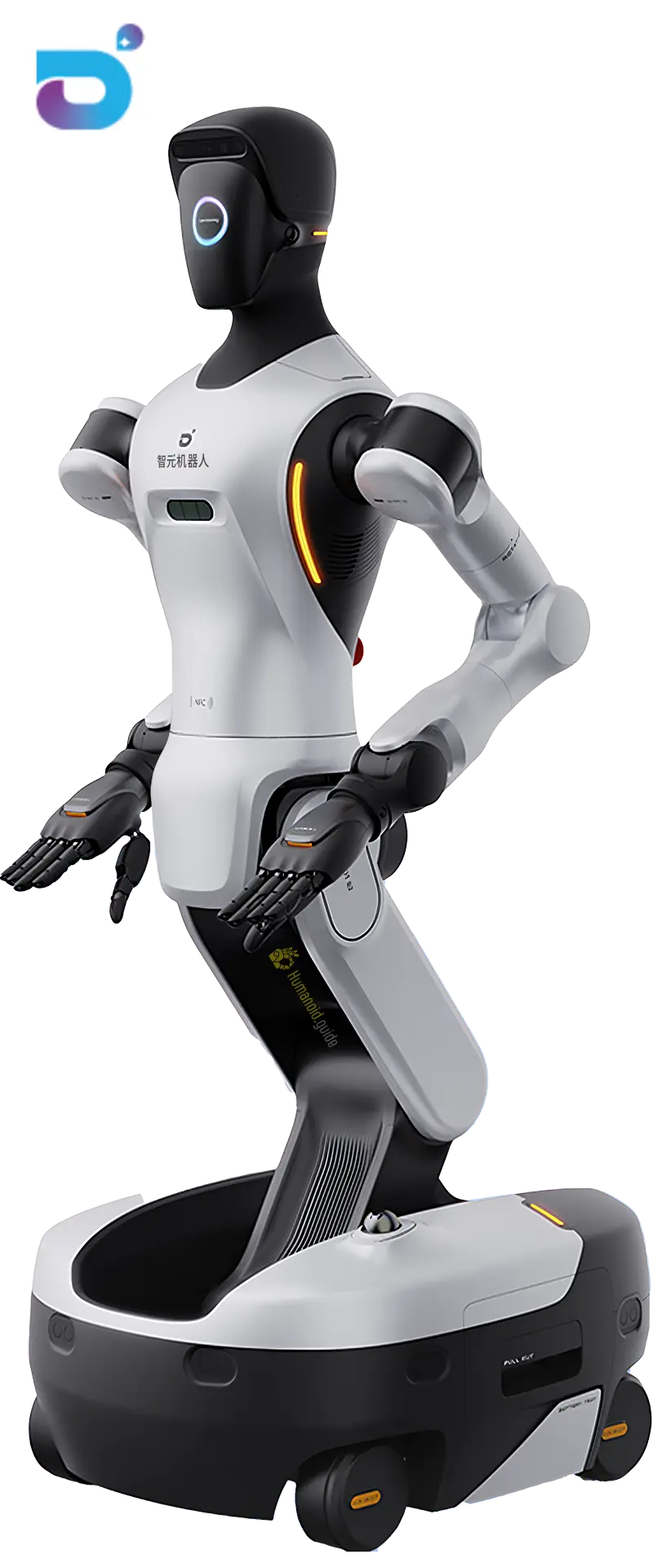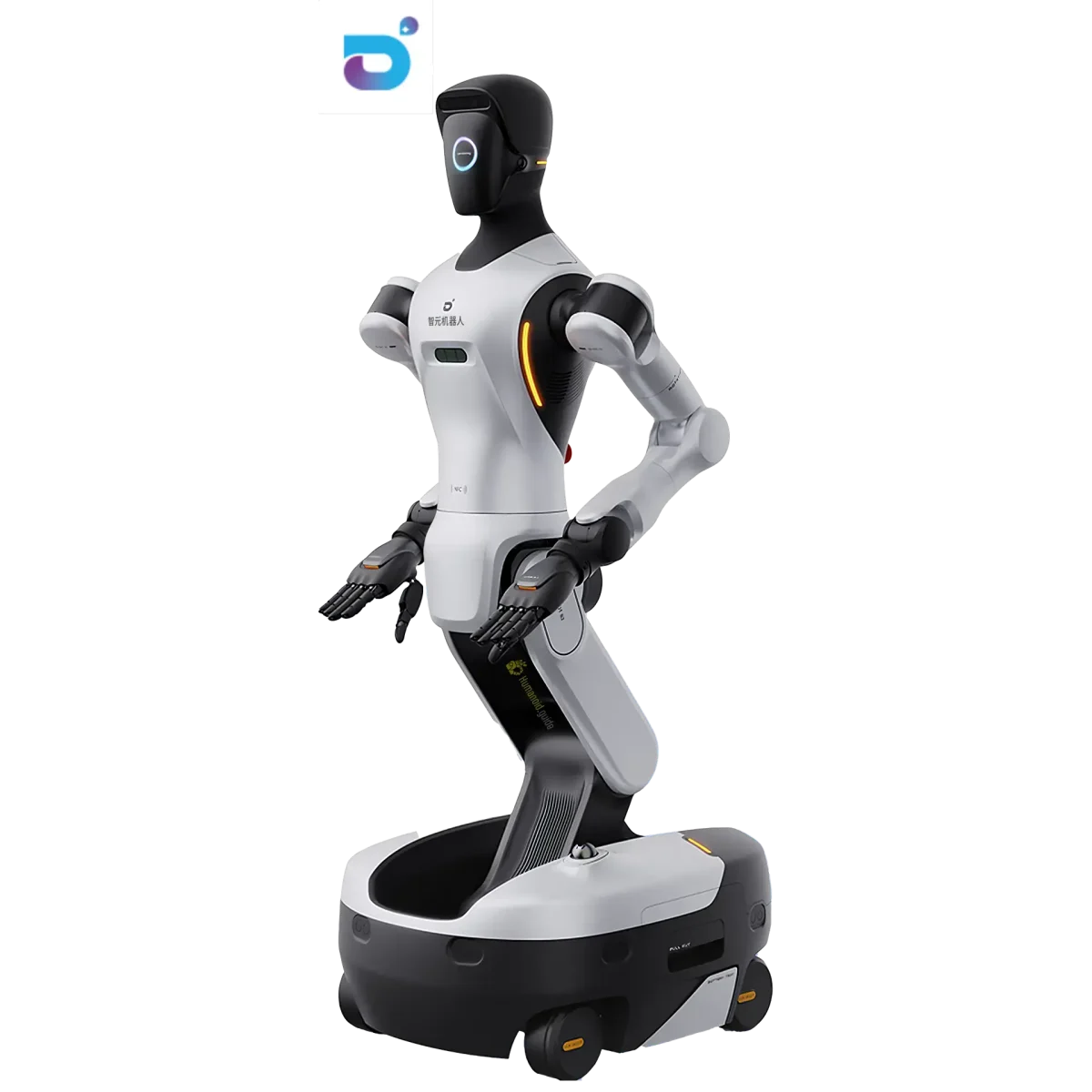
What is the Agibot G2 Genie?
The AgiBot G2 Genie is a second-generation bipedal humanoid robot from Shanghai-based AgiBot, designed for research, industrial, and service applications. It features 32 degrees of freedom, bimanual manipulation with 12-DOF hands, and an upgraded vision-language model (WorkGPT/Genie) for contextual interaction. Weighing 55 kg and standing 175 cm tall, the G2 Genie can walk at up to 7 km/h and runs on dual hot-swappable battery packs providing approximately 4 hours each, enabling near-continuous 24/7 operation. Its computing is built on an NVIDIA Jetson Orin with ROS 2, and it carries a suite of sensors including RGB-D cameras, joint torque sensors, and force/torque wrists. Primarily a research platform in early access, it competes with other next-generation humanoids like the Unitree G1 and Fourier GR-2.
Specifications
Here are the full technical specifications.
| Spec | Value |
|---|---|
| Height | 175 cm |
| Weight | 55 kg |
| Degrees of freedom | 32 |
| Battery life | 4 hours |
| Max speed | 7 km/h |
| Payload | Not specified (standing: 5 kg) |
| Price (new) | Undisclosed |
| Price (used range) | N/A |
Price & Value
New MSRP: Undisclosed
Used range: N/A
AgiBot has not released commercial pricing for the G2 Genie; it is currently available only through enterprise quotes for early‑access partners. Unofficial estimates place the cost around $200,000, but this is unconfirmed and subject to change upon full commercial launch. While this positions the G2 in a high‑end research bracket comparable to early humanoid platforms from Boston Dynamics or Tesla, the dual hot‑swappable battery system and open ROS 2 architecture add significant operational value. Without official pricing or a secondary market, assessing depreciation or total cost of ownership is speculative. Organizations should budget for integration, training, and potentially costly service contracts given AgiBot’s limited global support infrastructure.
Who Is It For?
Best for: - University and corporate robotics labs – the 32 DOF and VLM enable advanced research in bipedal locomotion, dexterous manipulation, and human‑robot interaction. - Industrial R&D teams evaluating humanoid automation – the hot‑swappable batteries and ROS 2 ecosystem support long‑duration pilots in logistics or light assembly tasks. - Educational institutions wanting a cutting‑edge hands‑on platform for AI, control, and mechatronics education.
Not for: - Production environments requiring defined payload ratings – no arm payload specification is published, limiting confidence for heavy lifting. - Budget‑conscious buyers – with unofficial estimates around $200,000, it is far more expensive than compact humanoids like the Unitree G1 ($16,000). - Out‑of‑the‑box deployment – as a pre‑commercial platform, it requires significant integration effort and lacks mainstream support channels.
Alternatives & Comparison
The AgiBot G2 Genie enters a competitive field of next‑generation bipedal humanoids, ranging from compact research bots to enterprise‑grade platforms.
| Model | Price | Available | Key Difference |
|---|---|---|---|
| Unitree G1 | $16,000 | yes | Affordable compact humanoid with 23–43 configurable DOF; less than one tenth the estimated price of the G2. |
| Fourier GR-2 | Undisclosed | preorder | Industrial‑grade humanoid with high arm payload and full‑body torque control, more targeted at heavy logistics than research. |
| Tesla Optimus | Undisclosed | no | High‑profile general‑purpose humanoid still in closed testing; not yet commercially available. |
Verdict: For well‑funded research labs that need a large, high‑DOF humanoid with hot‑swappable batteries and an open software stack, the G2 Genie is a compelling but unproven choice. Budget‑conscious teams should opt for the Unitree G1, which offers a comparable DOF count at a fraction of the cost. Industrial users who prioritize payload will find the Fourier GR‑2 more immediately capable. As of 2026, the G2’s lack of public pricing and limited field reports make it a speculative investment compared to more mature, transparent competitors.
Use Cases & Capabilities
Bipedal Locomotion Research
The G2 Genie’s 32 degrees of freedom and 7 km/h maximum walking speed provide a rich testbed for developing dynamic gait algorithms, whole‑body control, and fall recovery strategies. Its onboard NVIDIA Jetson Orin and ROS 2 environment allow seamless integration of custom controllers, while the inertial measurement unit and joint torque sensors supply high‑fidelity feedback. Researchers can experiment with terrain adaptation, stair climbing, and push recovery. The dual hot‑swappable battery system is particularly valuable for prolonged experiment sessions, eliminating lengthy recharge downtime. Because no arm payload is specified, locomotion studies are the platform’s most mature application.
Human‑Robot Interaction Studies
With its vision‑language model (WorkGPT/Genie), the G2 can parse natural language commands, understand contextual tasks, and generate appropriate motor actions. This makes it suitable for investigating multimodal human‑robot interaction, service robotics dialogue, and collaborative task planning. The bimanual 12‑DOF hands and force/torque wrist sensors allow safe, responsive physical interaction with humans. Coupled with RGB‑D cameras and the mobile bipedal base, researchers can study how a humanoid can assist in domestic or laboratory settings. However, true deployment‑readiness will depend on the VLM’s reliability and the robustness of the underlying object manipulation skills.
Industrial Automation Pilots
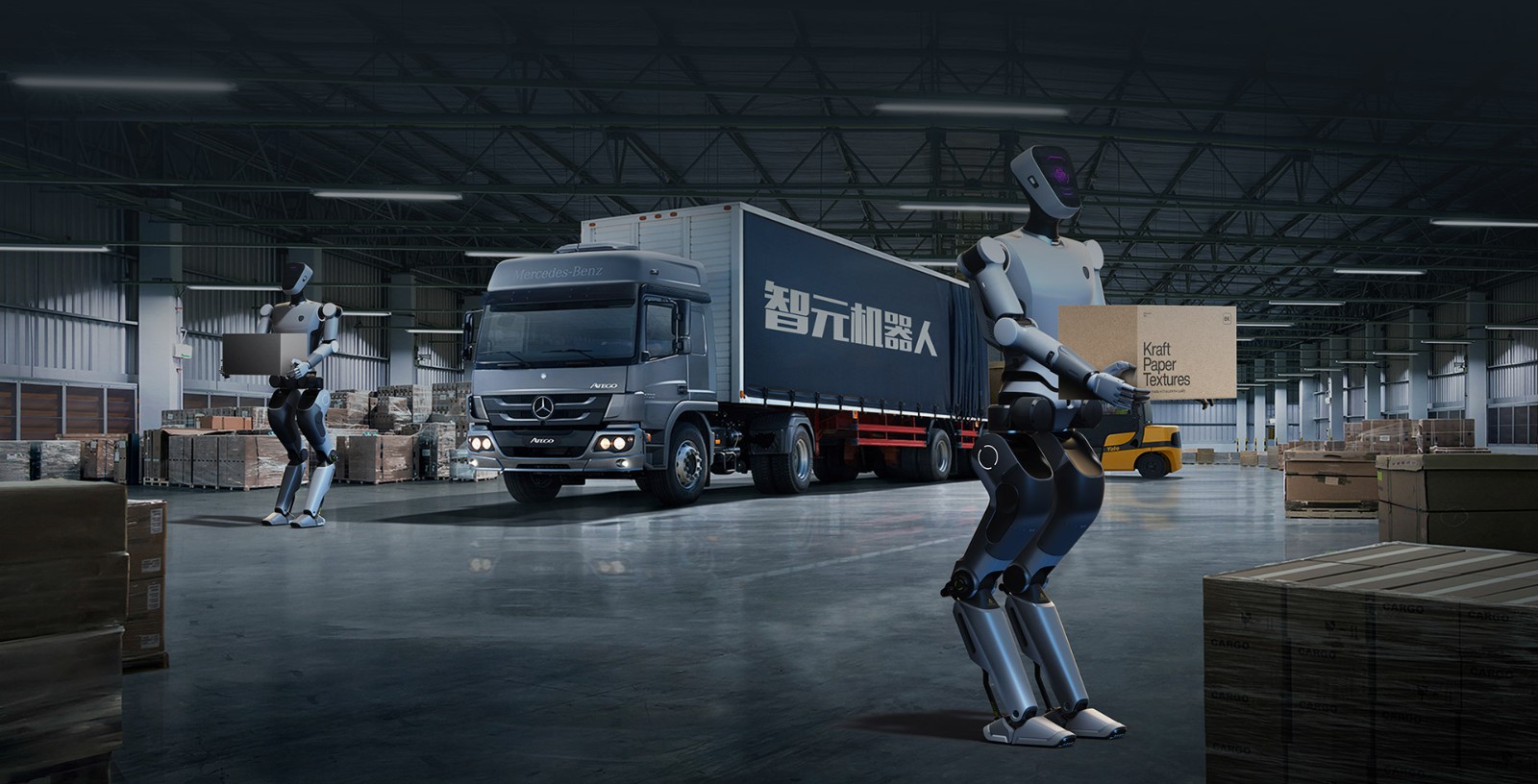
The G2’s ability to operate continuously—thanks to dual 4‑hour batteries that can be hot‑swapped in under three minutes—positions it for 24/7 use in factory floors, warehouses, or logistics hubs. Its bimanual design could handle light assembly, kitting, or machine tending tasks that require dexterity and mobility. The ROS 2 framework and standard connectivity (Wi‑Fi 6, Ethernet, USB‑C) facilitate integration with existing industrial systems. However, without published arm payload data, its role remains limited to low‑load applications, and the lack of IP rating may restrict deployment in dusty or wet environments. Enterprises should view the G2 as a forward‑looking pilot platform rather than a production‑ready worker.
Education and Academic Training
For universities and technical institutes, the G2 Genie offers a multidisciplinary teaching tool spanning robotics, computer vision, natural language processing, and control theory. Students can program the robot in Python via ROS 2, run gait simulations, and experiment with AI‑driven task planning. The dual‑battery system ensures the robot can run throughout a full day of lab sessions without recharging. Its resemblance to future service humanoids also sparks interest in societal and ethical discussions. The primary barrier is cost; until public pricing emerges, only well‑funded educational consortia or research‑focused programs are likely to adopt the G2.
History & Background
AgiBot (AGIBOT Innovation Technology Co., Ltd.) was founded in 2023 in Shanghai, China, with a mission to develop advanced humanoid and mobile manipulation robots. The company rapidly expanded its product line, introducing the A2 series of dual‑arm wheeled robots, the X1 humanoid, and the D1 educational platform. The G2 Genie was officially unveiled in December 2024 as AgiBot’s second‑generation bipedal humanoid, following an earlier G1 that remained mostly under wraps. The G2 incorporated key upgrades: a new vision‑language model (WorkGPT/Genie), 32 degrees of freedom, and a dual hot‑swappable battery system designed for near‑continuous operation. In 2025, the robot entered early access for select research and industrial partners; as of 2026, it has not yet transitioned to mass production or public sales, and all pricing remains via enterprise quotation.
Buying Used — What to Check
Verify official release status The G2 was never sold publicly; any second‑hand listing may be a pre‑production unit or prototype not intended for resale.
Confirm arm payload rating Payload specifications are missing from official materials; knowing the true lift capacity is essential before deploying in any material‑handling scenario.
Battery pack condition and hot‑swap functionality The dual battery system is a key differentiator; aged or non‑functional packs would negate the continuous operation advantage.