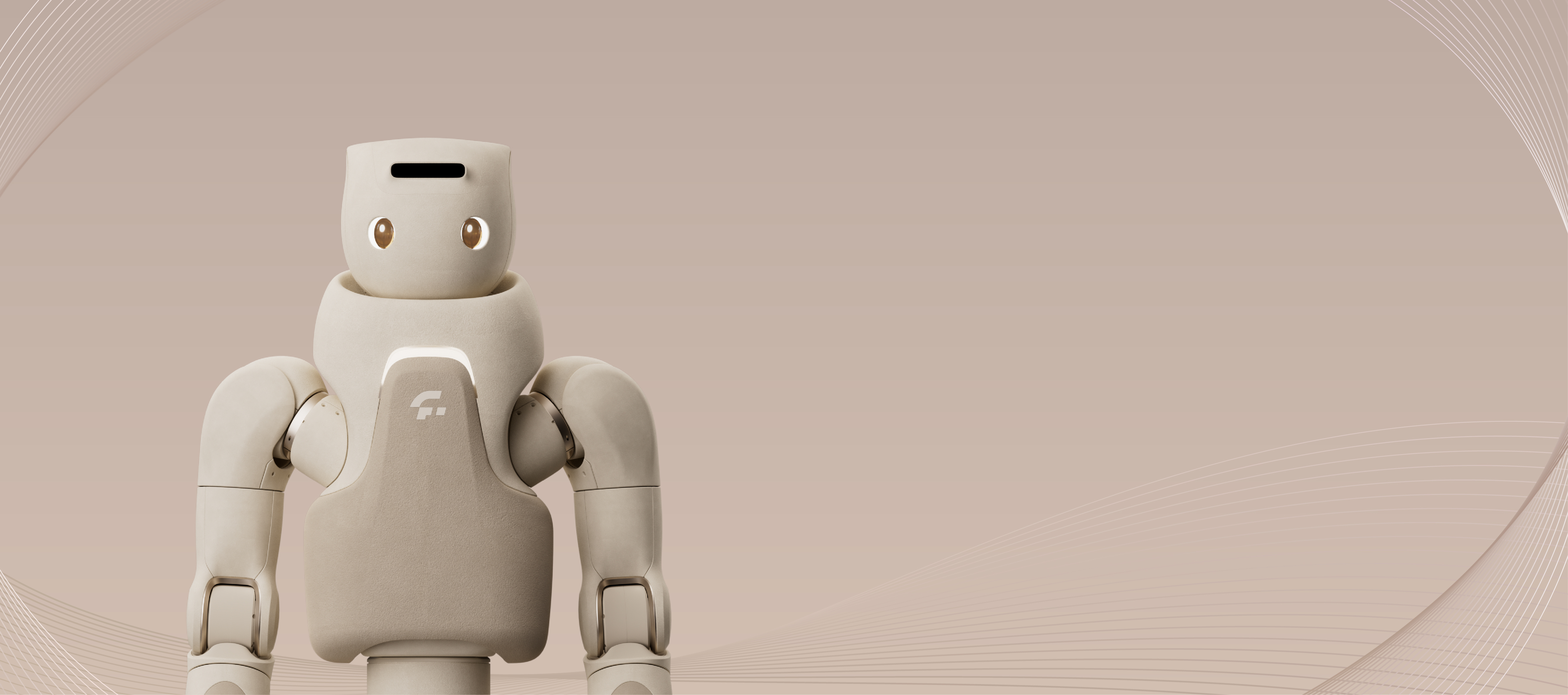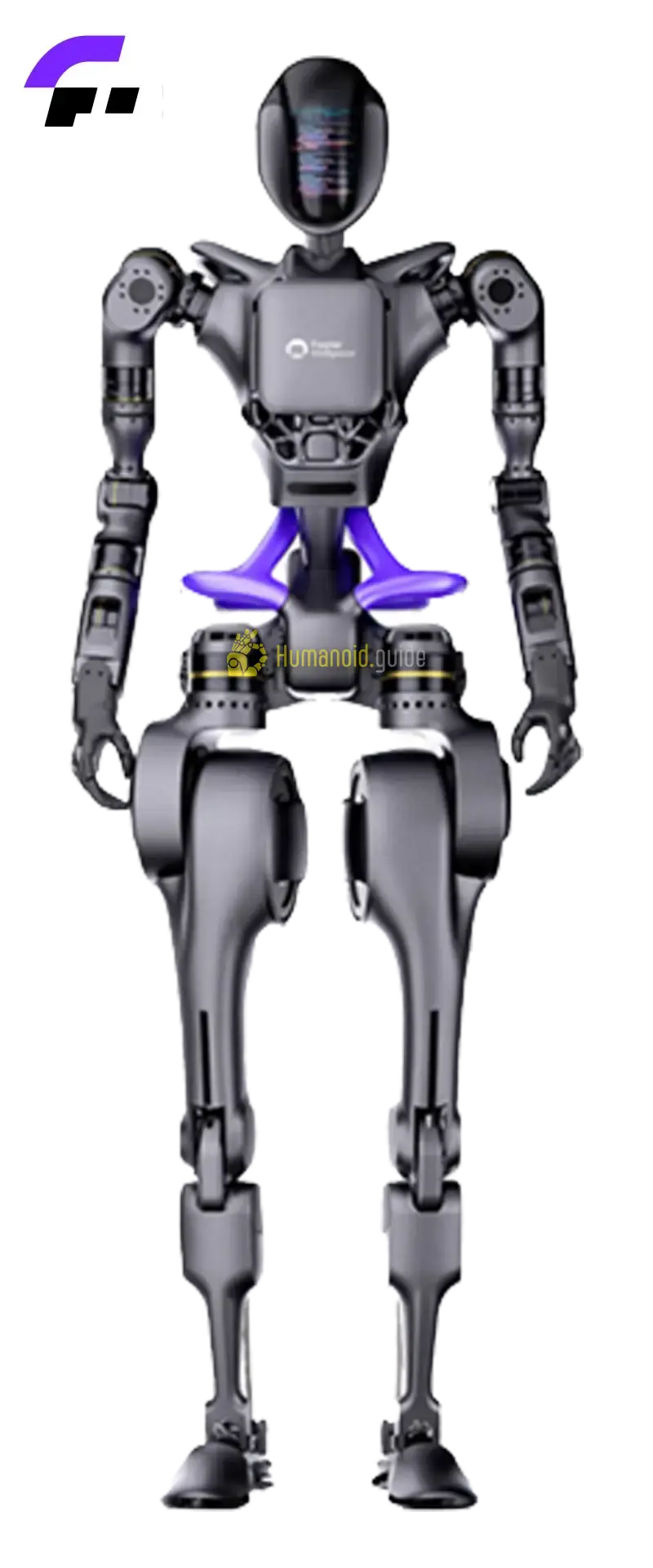
What is the Fourier Gr1?
The Fourier GR-1 is a bipedal humanoid robot developed by Fourier Intelligence, a Shanghai‑based company with over 7 years of clinical rehabilitation robotics experience. Designed for humanoid robotics research and caregiving assistance, it stands out with a class‑leading 50 kg payload capacity and 40 degrees of freedom across its body. Its lightweight 55 kg frame uses aluminum alloy and carbon fiber. Under the hood, it runs on an NVIDIA Jetson Orin compute module and uses Fourier’s proprietary Smart Actuators. The GR‑1 targets healthcare, elderly care, service, and research environments, combining high‑performance actuation with a 2‑hour battery for sustained operation.
Specifications
Here are the full technical specifications.
| Spec | Value |
|---|---|
| Height | 165 cm |
| Weight | 55 kg |
| Degrees of freedom | 40 |
| Battery life | 2 hours |
| Max speed | 5 km/h |
| Payload | 50 kg |
| Price (new) | ~$125,000–$170,000 |
| Price (used range) | N/A (pre-order) |
Price & Value
New MSRP: Approx. $125,000–$170,000 (direct inquiry)
Used range: No established used market yet
Pricing for the GR‑1 is not publicly listed; Fourier quotes approximately $125,000 to $170,000 depending on configuration and volume, with direct sales through the manufacturer. This positions it above the Unitree H1 ($90,000) but below some premium research humanoids, reflecting its high payload and full‑body DOF. The proprietary actuators and NVIDIA compute add to hardware cost, but Fourier’s healthcare robotics pedigree may justify the premium for labs and care facilities needing reliability. Depreciation is uncertain given early commercial stage, but the GR‑1’s strong spec sheet could sustain value if it meets reliability expectations. Total cost of ownership will include integration, training, and potential software updates; buyers should budget for service contracts. Used units are extremely rare, with no active secondary market as of 2026.
Who Is It For?
Best for: - University robotics labs researching whole‑body manipulation and human‑robot interaction (40 DOF, 50 kg payload) - Healthcare facilities exploring assistive robotics for elderly care and rehabilitation exercises - Industrial R&D teams needing a bipedal platform with high payload for service‑robot prototyping
Not for: - High‑speed industrial logistics (max 5 km/h, no gripper specification) - Home use by individuals (price and enterprise‑sales model make it impractical) - Applications requiring outdoor all‑weather operation (no IP rating disclosed)
Alternatives & Comparison
The GR‑1 competes in the emerging bipedal humanoid space, where most platforms remain in development or limited pilot phases. Key rivals include Tesla Optimus, Unitree H1, Figure 01, 1X NEO, and Agility Digit.
| Model | Price | Available | Key Difference |
|---|---|---|---|
| Tesla Optimus | Undisclosed | no | Vision‑only AI; target mass‑market low cost, but still in R&D |
| Unitree H1 | ~$90,000 | yes | Lower price, 3.3 m/s top speed, proven quadruped maker |
| Figure 01 | Undisclosed | preorder | OpenAI‑backed, general‑purpose labor focus, early stage |
| 1X NEO | Undisclosed | preorder | Lightweight design for home use, but limited payload |
| Agility Digit | Undisclosed | pilot | Logistics‑optimized, not a full humanoid form factor |
Verdict: For labs and care providers that prioritize payload and dexterity, the GR‑1’s 50 kg load and 40 DOF make it a standout, despite a higher price than the Unitree H1. Buyers wanting a ready‑to‑ship, well‑supported humanoid with strong actuation pedigree will find the GR‑1 compelling. If speed or low cost are critical, the Unitree H1 at $90k and 3.3 m/s is a better fit.
Use Cases & Capabilities
Rehabilitation and elderly care assistance
The GR‑1’s 50 kg payload allows it to safely lift and support a person, making it suitable for physical therapy exercises or patient transfers in clinical settings. Its gentle, humanoid appearance can reduce patient anxiety compared to industrial robots, fostering acceptance in care homes. Fourier’s rehabilitation pedigree means the robot can execute repeatable, precise motions calibrated for mobility training, while force‑torque sensors enable safe human‑robot contact. However, certification for direct patient handling is not yet achieved, so initial deployments will likely be supervised pilots in research hospitals. The 2‑hour battery restricts continuous caregiver duties, but the robot could be used for intermittent therapy sessions or material delivery within care facilities.
Humanoid robotics research
With 40 degrees of freedom and a bipedal walking architecture, the GR‑1 provides an extensive testbed for whole‑body control, locomotion learning, and manipulation research. The on‑board NVIDIA Jetson Orin supports real‑time AI inference, and the Linux‑based OS allows labs to deploy custom controllers via ROS or other frameworks. Its high payload capacity leaves headroom for mounting additional sensors—like LIDAR or specialized cameras—without compromising balance. Researchers studying human‑robot interaction will appreciate the human‑like motion envelope, but they should note that the robot’s current software stack is early‑stage, requiring significant integration effort. Early academic partners will likely shape the availability of open‑source models and documentation.
Service robot prototyping
For retail, hospitality, or receptionist roles, the GR‑1’s humanoid form and expressive 40 DOF enable natural gesturing and object handover (pending gripper details). Its 5 km/h walking speed is adequate for indoor service tasks such as guiding guests or carrying items on a tray. The quiet operation and biomimetic design can create a friendly presence that engages customers without being intimidating. A 2‑hour runtime is sufficient for demo shifts or scheduled interactions, and machines can be swapped during charging breaks. However, the lack of a certified gripper means developers may need to integrate custom end‑effectors, and the robot’s price point limits its use to high‑value service settings where ROI can be demonstrated.
Industrial material handling
In warehouses or manufacturing cells, the GR‑1 could perform tasks like moving loaded carts, delivering parts to assembly stations, or restocking shelves using its 50 kg payload. The bipedal design allows it to navigate human‑scale aisles and even stairs, offering flexibility that wheeled platforms lack. Force‑torque sensors and stereo vision support safe operation around workers, though speed is limited to 5 km/h and battery life requires frequent recharging. Without a certified gripper, the robot would need a custom hook or tray system, but its load capacity is sufficient for many light industrial applications. Early adopters in logistics may pilot the GR‑1 for repetitive in‑house transport before full commercial rollout.
History & Background
Fourier Intelligence was founded in 2015 in Shanghai, China, and quickly established a reputation in medical rehabilitation robotics, with products like the Exoflex exoskeleton. After 7 years of clinical deployment, the company unveiled its first full‑body humanoid, the GR‑1, on July 6, 2023. The GR‑1 leverages the actuator technology developed for rehab devices, repurposing it for a bipedal platform. A single generation has been produced, with no subsequent revisions announced. As of 2026, the robot remains in pre‑order status, targeting early adopters in research and healthcare prior to broader commercialization.
Buying Used — What to Check
Verify actuator warranty status Early units may have limited service history; proprietary actuators could be costly to repair out of warranty.
Inspect battery cycle count The battery is consumable and expensive; confirming remaining capacity ensures runtime expectations are met.
Check carbon fiber shell integrity Cracks or impact damage in the lightweight shell could compromise structural safety and indicate mishandling.