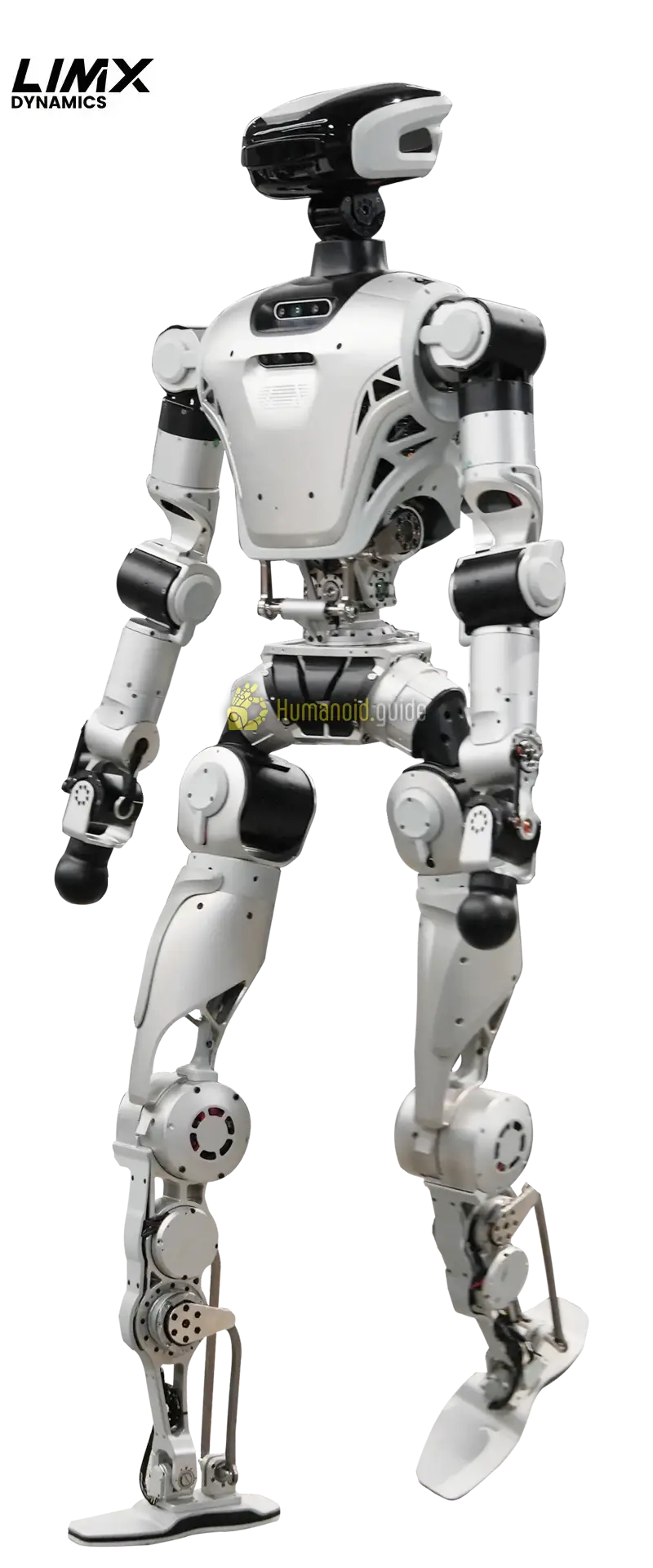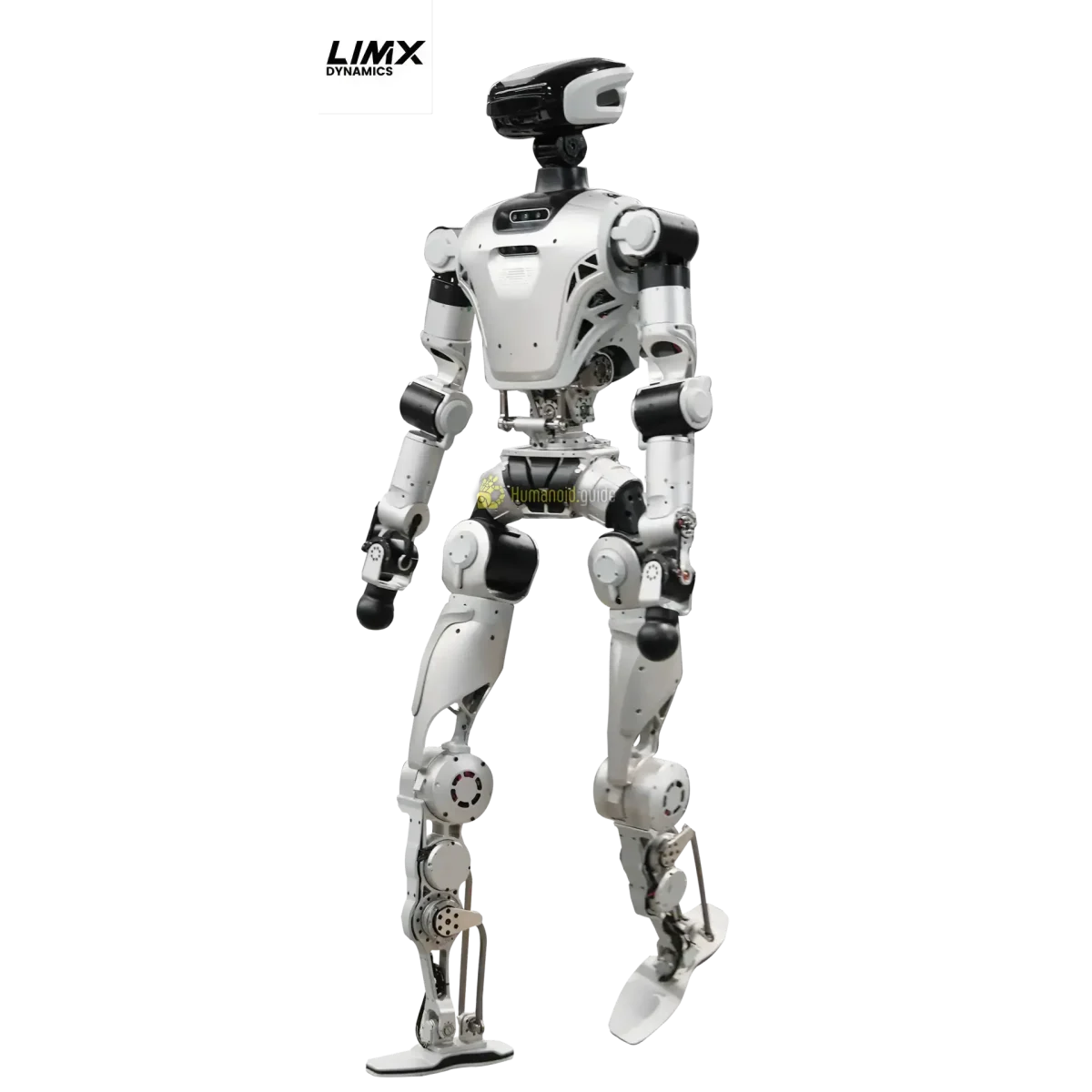
What is the Limx Cl Series?
The LimX CL Series is a line of compact, agile humanoid robots developed by LimX Dynamics in Shenzhen, China. Starting with the CL-1, a stair-climbing bipedal platform unveiled in 2023, the series aims to produce versatile machines for industrial and logistics tasks. The robot integrates real-time AI perception via an integrated vision-LiDAR system and a proprietary motion generation framework (VideoGenMotion) that learns movements from video. With 52 degrees of freedom (including 6-DoF hands), a 25 kg payload capacity, and a 2-hour battery, the CL Series stands 164 cm tall and weighs 45 kg, making it a lightweight entrant in the humanoid robotics race. It is targeted at R&D, manufacturing, and service applications, though full commercial availability is not yet established.
Specifications
Here are the full technical specifications.
| Spec | Value |
|---|---|
| Height | 164 cm |
| Weight | 45 kg |
| Degrees of freedom | 52 |
| Battery life | 2 hours |
| Max speed | 4 km/h |
| Payload | 25 kg |
| Price (new) | $40,000 |
| Price (used range) | N/A (pre-commercial) |
Price & Value
New MSRP: $40,000
Used range: N/A
LimX has not publicly disclosed an official MSRP for the CL Series, but reports indicate a $40,000 price point for research-pilot units. At this price, it undercuts the $90,000 Unitree H1 and offers comparable or superior dexterity (52 DOF). Buyers should consider that ongoing development may lead to rapid depreciation once commercial models emerge, though early access could accelerate R&D. Total cost of ownership includes integration with an open SDK ecosystem, potentially lowering software investment. For labs on a budget, the $40k prototype provides a robust bipedal platform, but limited availability and data sheets make purchase a calculated risk. Leasing or rental programs are not known to be available.
Who Is It For?
Best for: - Bipedal locomotion and manipulation research labs needing a high-DOF platform (52 DOF, 25 kg payload) - Logistics firms exploring stair-climbing humanoid robots for material handling - Academic groups prototyping AI-driven perception and reinforcement learning on humanoid hardware
Not for: - Production-line manufacturing requiring certified safety (no formal safety rating) - Heavy payload industrial tasks (25 kg may be limiting compared to industrial cobots like the FANUC CRX-25iA) - Buyers seeking immediate commercial deployment and after-sales support
Alternatives & Comparison
The LimX CL Series competes in the emerging sub-$100k humanoid segment, with rivals offering different trade-offs in payload, ecosystem, and commercial maturity.
| Model | Price | Available | Key Difference |
|---|---|---|---|
| Unitree H1 | $90,000 | yes | Higher payload (est. 30 kg) and established ecosystem, but heavier and less dexterous (19 DoF vs 52) |
| Fourier GR-1 | Undisclosed | preorder | Focus on whole-body control and high-DOF hands, comparable payload; no public price yet |
| Tesla Optimus | Undisclosed | preorder | General-purpose with advanced AI vision; large-scale manufacturing ambition, not available yet |
| Agibot A1 | Undisclosed | preorder | Designed for service and light industrial tasks, likely similar payload and cost profile |
Verdict: For research teams prioritizing dexterity and stair-climbing agility at the lowest price, the LimX CL Series is the standout. Its 52 DOF and lightweight frame give it an edge in manipulation-intensive experiments. However, if you need a more mature supply chain with reliable support, the Unitree H1, despite higher cost and lower DOF, may be the safer bet. The Tesla and Fourier options remain too speculative for immediate practical deployment in 2026.
Use Cases & Capabilities
Bipedal Locomotion Research
The CL-1’s stair-climbing prowess, driven by real-time terrain perception and reinforcement learning, makes it an ideal testbed for gait algorithms. Researchers can exploit the open SDK and integrated vision-LiDAR stack to develop adaptive walking on uneven surfaces. With a 4 km/h walking speed and 2-hour battery, outdoor and multi-terrain data collection sessions are feasible. The lightweight frame simplifies transportation and setup in lab environments. Limitations include the lack of published stability margins and wet-condition IP rating, confining tests to controlled indoor or dry outdoor settings.
Industrial Material Handling
Targeting logistics and light manufacturing, the CL Series can carry up to 25 kg, enabling part delivery, bin picking, and assembly assistance. The 6-DoF hands, combined with AI-based motion imitation, allow for manipulation of a variety of objects without hard-coded trajectories. Its 164 cm height suits human-scale workstations. Battery endurance supports a full shift of intermittent tasks. However, the absence of formal safety certifications means it must operate in collaborative mode behind sensors or in segregated pilot areas, not yet ready for ISO 10218-2 compliant cells.
Service and Logistics Pilots
LimX envisions the CL Series eventually working in hospitality, retail, or warehouse roles. The robot’s humanoid form and integrated voice/gesture capabilities (via AI) could enable customer guidance or last-meter delivery. Pilot programs in China have tested stair climbing for multi-story logistics. Real-world deployments remain limited to research partners; scalability depends on hardening the platform against dust, spills, and everyday bumps. Until an IP rating is published, non-lab service is strictly prototypical.
History & Background
LimX Dynamics was founded in 2022 in Shenzhen, China, by robotics engineers with expertise in legged mobility. The company debuted its first humanoid, the CL-1, in 2023, showcasing advanced stair-climbing capability using real-time perception and reinforcement learning. CL-1 served as a bipedal research platform, featuring a lightweight frame and integrated LiDAR-vision system. Subsequent iterations, such as the CL-3 (announced 2025), added greater flexibility and manipulation skills. As of 2026, the CL Series remains in research pilot phase, with units supplied to select academic and industrial partners. LimX also offers quadruped robots and other legged platforms, but the humanoid line is central to its long-term goal of general-purpose embodied AI.
Buying Used — What to Check
Verify actual payload and battery specs Official documentation is sparse; confirm that the unit meets the claimed 25 kg payload and 2-hour endurance.
Inspect actuator condition Proprietary high-torque motors may have limited runtime history — request maintenance logs.
Confirm software license status The open SDK may require keys or subscriptions; ensure all development tools are transferable.