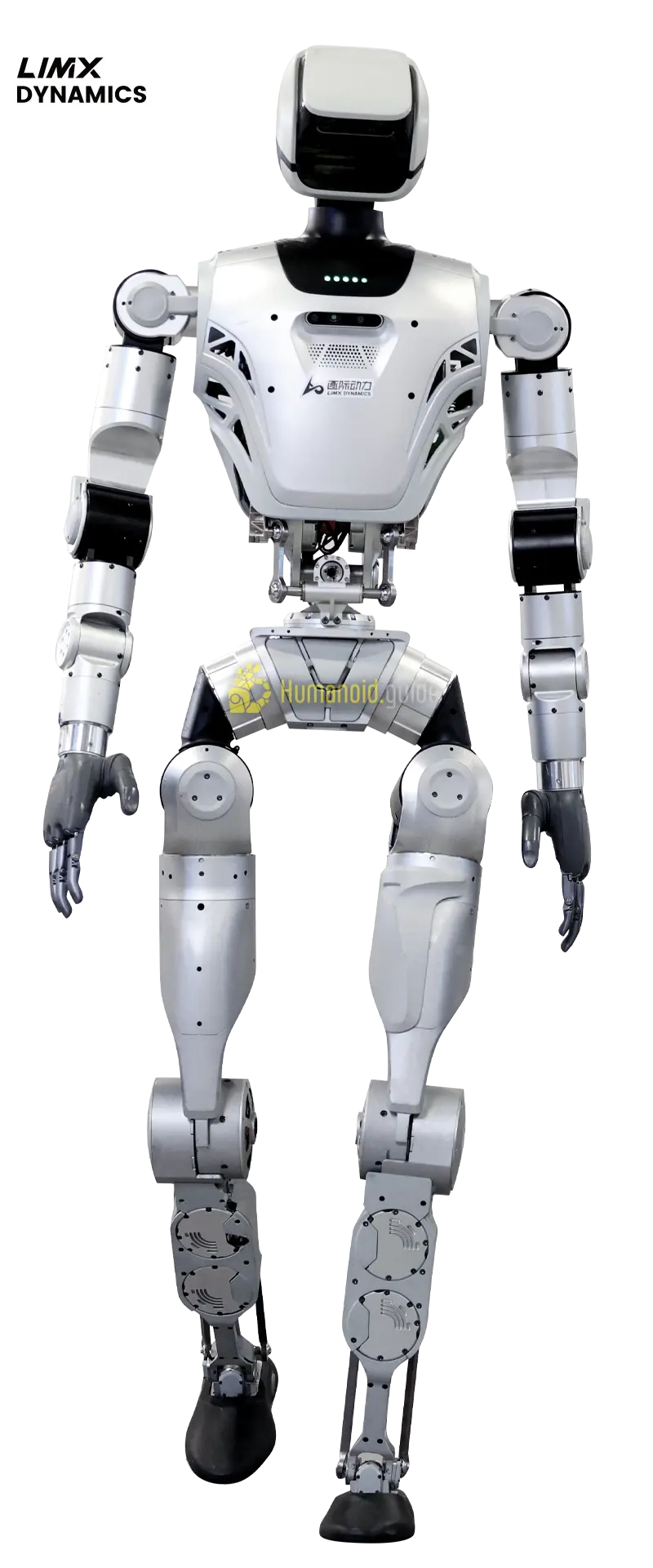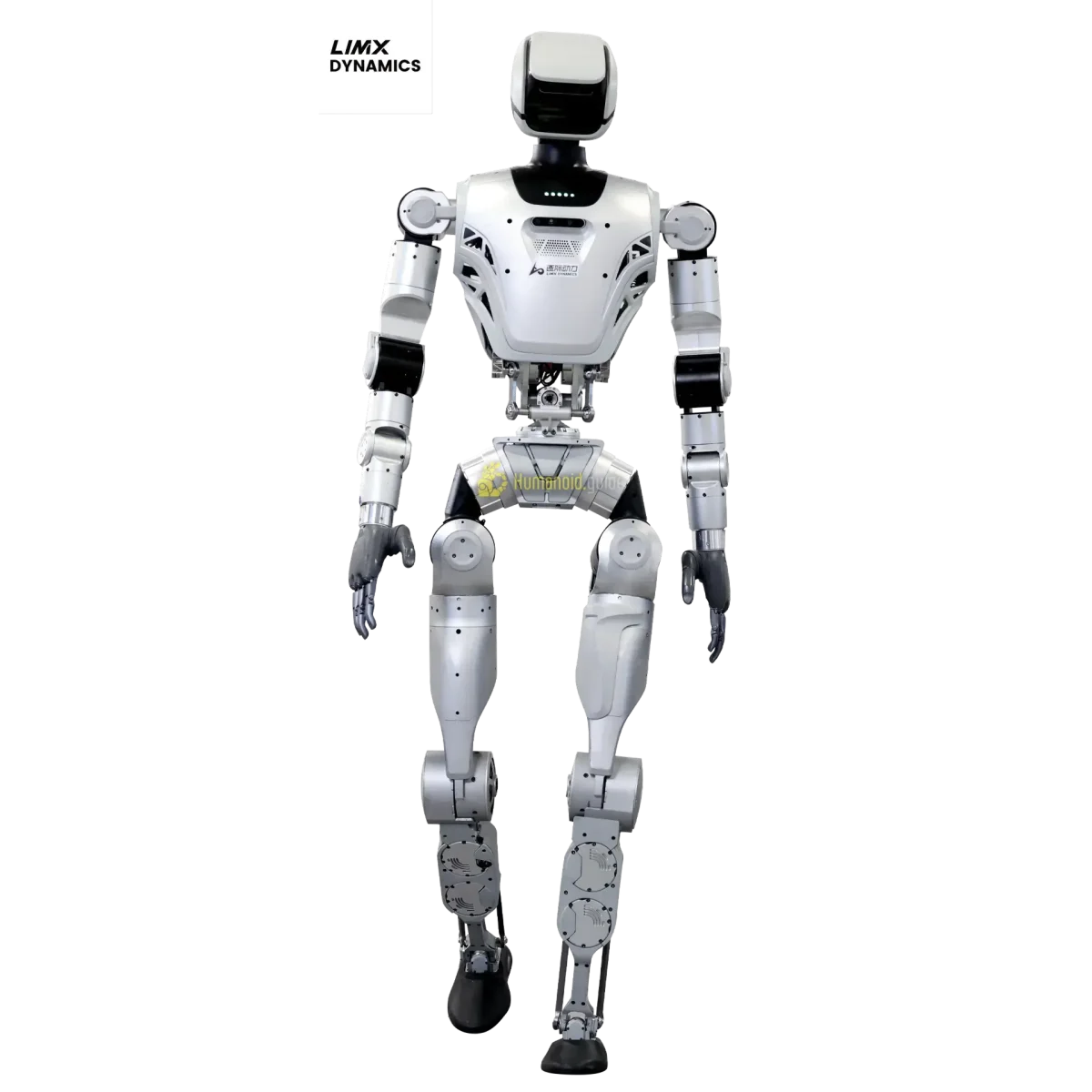
What is the Limx Oli?
The LimX Oli is a full-size humanoid robot from LimX Dynamics, a Shenzhen-based robotics company founded in 2022. Designed as an embodied-AI R&D platform, it stands 165 cm tall and offers 43 degrees of freedom (10 in the hands). The robot features dual depth cameras (Intel RealSense D435i), an RK3588 compute module, and runs Linux with WiFi 6 and Gigabit Ethernet connectivity. Its open Python SDK and simulator compatibility make it scalable to higher-DOF, dexterous configurations. Oli is positioned alongside LimX's Luna humanoid and TRON biped series, targeting university labs and corporate AI teams exploring real-world locomotion and manipulation. While still in development, it represents a new entrant in the competitive Chinese humanoid market.
Specifications
Here are the full technical specifications.
| Spec | Value |
|---|---|
| Height | 165 cm |
| Weight | 55 kg |
| Degrees of freedom | 43 |
| Battery life | 1.5 hours |
| Max speed | 5 km/h |
| Payload | 3 kg |
| Price (new) | Undisclosed |
| Price (used range) | N/A |
Price & Value
New MSRP: Undisclosed (rumored ~$60,000)
Used range: N/A
No official price has been published for the LimX Oli. Unverified sources mention a $60,000 target, but this should be treated as speculative. In the humanoid research market, comparable platforms like Unitree H1 and Fourier GR-1 also lack clear pricing, making direct value comparisons difficult. Given its early-stage development, any discussion of depreciation or total cost of ownership is premature. Prospective buyers should contact LimX Dynamics directly for quotes, knowing that early adopter pricing and support packages may be negotiable. For research labs, the Oli's open ecosystem may justify a mid-range price if it reaches production, but until a firm MSRP is set, the value proposition remains hypothetical.
Who Is It For?
Best for: - University and corporate AI research labs (43 DOF and Python SDK enable embodied AI development)
Not for: - Field deployment in heavy industry (low 3 kg payload rating limits real-world material handling)
Alternatives & Comparison
The LimX Oli enters a growing field of full-size humanoid research platforms. Below we compare it to other humanoids targeting similar applications.
| Model | Price | Available | Key Difference |
|---|---|---|---|
| Unitree H1 | Undisclosed | preorder | Proven dynamic locomotion with no hands included |
| Fourier GR-1 | Undisclosed | preorder | Heavier payload (unknown) but slower speed |
| Tesla Optimus | Undisclosed | no | Backed by Tesla’s AI ecosystem but much longer timeline to availability |
Verdict: For research groups wanting a 2025-era unit with immediate SDK access, the LimX Oli (once available) could be the most open and hacker-friendly. Unitree H1 is a better choice if dynamic walking/obstacle avoidance is the priority. Fourier GR-1 may suit those needing higher manipulation payload. Tesla Optimus remains a long-term bet with an uncertain release date, so it’s not a practical alternative today.
Use Cases & Capabilities
Embodied AI Research
The Oli is purpose-built for embodied AI development. Its 43 degrees of freedom and dual RealSense cameras provide rich sensory feedback for training reinforcement learning agents in simulation and transferring policies to real hardware. The Python SDK lowers the barrier for algorithm prototyping, while the RK3588 board offers enough onboard compute for edge inference. Researchers can tackle whole-body control, dexterous manipulation with 10 degrees of freedom in the hands, and navigation in indoor environments. The 5 km/h top speed is adequate for lab tests but insufficient for outdoor delivery scenarios. Battery life of 1.5 hours per charge will require frequent swaps during long experiments, and the 3 kg payload means the robot is limited to light objects like tools or sensors, not heavy packages.
History & Background
LimX Dynamics was founded in 2022 by Pan Jia, a former key figure at UBTech and other robotics startups. The company quickly gained attention with its TRON 1 bipedal robot, designed as a reinforcement learning teaching tool, followed by the more advanced TRON 2 wheeled humanoid. In early 2025, LimX announced two full-size humanoids: Luna and Oli. While Luna was showcased as the premium model with advanced manipulation, Oli was positioned as a lower-cost, research-oriented variant sharing the same 165 cm stature and core control architecture. Both robots were demonstrated with the company’s in-house VGM (Versatile Grasp Model) and COSA (Cognitive Operating System Architecture) algorithms, highlighting a strong emphasis on embodied AI. As of 2026, Oli remains in the development and testing phase, with no confirmed release date.
Buying Used — What to Check
Verify payload rating Early reviews may reveal the actual safe payload versus specsheet values; critical if you plan any manipulation tasks.
Check battery condition 1.5-hour runtime implies frequent cycling; used batteries may degrade faster, so ask for cycle count before purchase.
Confirm software maturity Pre-production units may run immature software stacks; ensure the SDK and documentation match your research needs.