What is the Agibot G1?
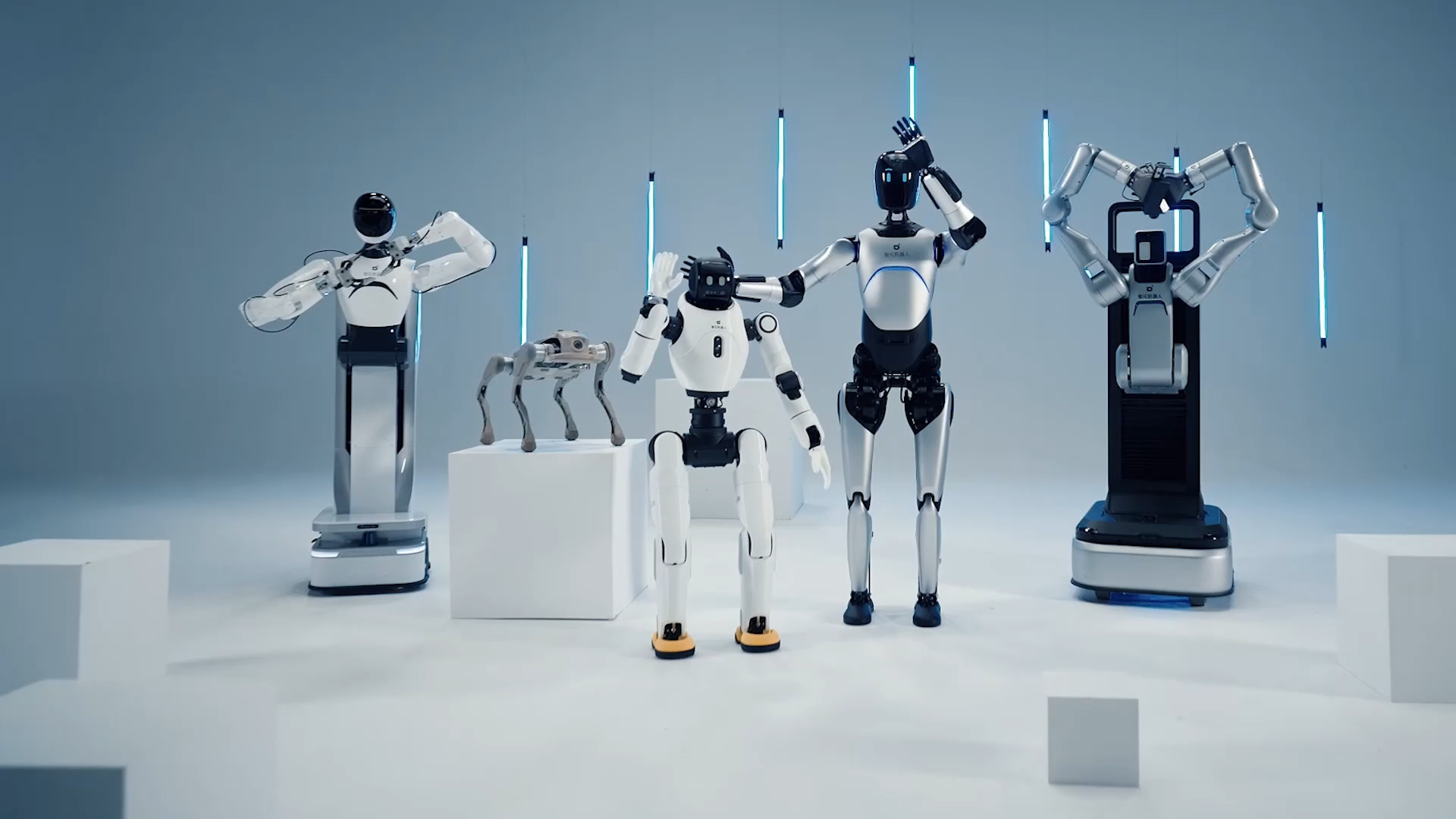
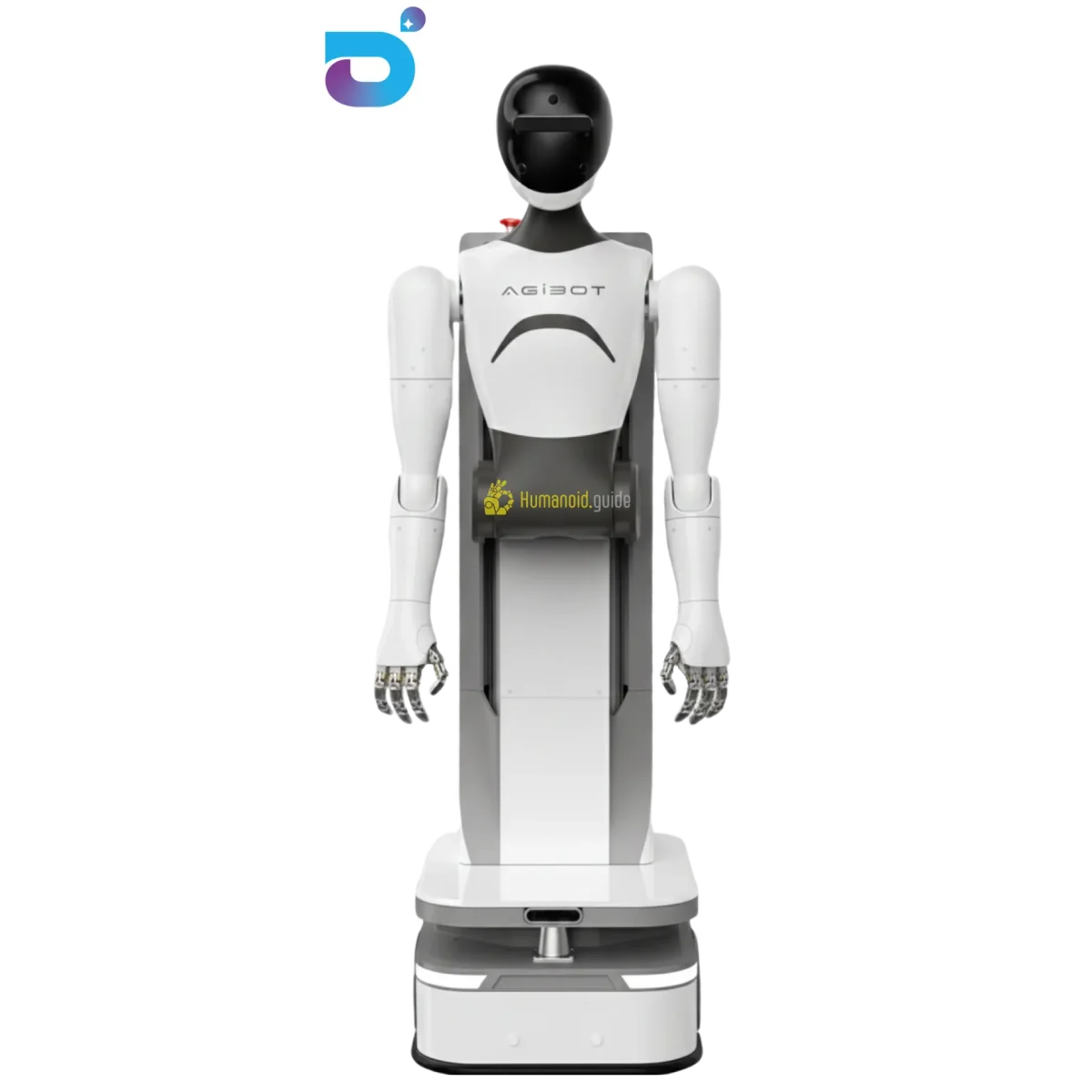
The AgiBot G1 is the first humanoid robot from Shanghai-based AgiBot, a startup founded in 2023. Unveiled in August 2024, this full-size platform stands 175 cm tall and weighs 55 kg. It boasts 53 degrees of freedom (14 per arm, 24 across both hands), enabling fine manipulation. Equipped with RGB-D cameras, a microphone array, and an NVIDIA Jetson AGX Orin, it supports embodied AI research and industrial service tasks. Its lightweight build and 5 kg payload capacity target versatile applications from research to service. AgiBot offers the G1 at an introductory price of $28,000 for the first 200 units, making it one of the most affordable full-size humanoids.
Specifications
Here are the full technical specifications.
| Spec | Value |
|---|---|
| Height | 1750 mm |
| Weight | 55 kg |
| Degrees of freedom | 53 |
| Battery life | 2 hours |
| Max speed | 4 km/h |
| Payload | 5 kg |
| Price (new) | $28,000 (introductory, first 200 units) |
| Price (used range) | N/A (pre-order, no used market yet) |
Price & Value
New MSRP: $28,000 (introductory)
Used range: N/A
The G1's introductory price of $28,000 undercuts most full-size humanoids, which typically start above $90,000. This aggressive pricing is limited to the first 200 units, likely intended to accelerate adoption in research and pilot deployments. After the initial batch, the standard price is expected to be higher, though no official figure has been announced. For early buyers, this represents a compelling value, but the lack of a secondary market means resale value is unproven. Comparing to the Unitree G1 at $16,000, the AgiBot G1 offers nearly double the DOF (53 vs 23-43) and a more robust compute platform, justifying its premium. However, AgiBot is a newer company with less operational history, which may affect service and support. Total cost of ownership includes potential software licensing and maintenance costs yet to be detailed.
Who Is It For?
Best for: - University robotics research labs requiring high-dexterity manipulation (53 DOF) for embodied AI experiments - Manufacturing pilot lines testing humanoid automation at a moderate payload (up to 5 kg per arm) - Early adopter developers building service robot applications with voice interaction capabilities (microphone array)
Not for: - Heavy industrial lifting (arm payload limited to 5 kg) - Long-duration tasks (2-hour battery, non-swappable status unclear)
Alternatives & Comparison
The AgiBot G1 competes in the emerging market of affordable full-size humanoids, alongside models like the Unitree G1 and the still-prerelease Fourier GR-2.
| Model | Price | Available | Key Difference |
|---|---|---|---|
| Unitree G1 | $16,000 | yes | Lower price but fewer DOF (23-43) and simpler hands |
| Fourier GR-2 | Undisclosed ($150,000–200,000 estimated) | preorder | Higher payload (40 kg) and industrial focus, but significantly more expensive |
| Tesla Optimus | Undisclosed (not selling) | no | Tesla’s brand and AI ecosystem, but not available for purchase |
Verdict: For researchers needing maximum dexterity at minimal cost, the AgiBot G1’s 53 DOF and $28k introductory price are unbeatable—provided you can secure one of the early units. The Unitree G1 remains the better choice for labs with tighter budgets or those prioritizing mobility over manipulation. If your application demands industrial-strength payloads (30+ kg), wait for the Fourier GR-2’s full release, though expect to pay significantly more.
Use Cases & Capabilities
Research & AI Development
The G1’s 53 degrees of freedom, 24-DOF hands, and NVIDIA Jetson Orin compute make it an ideal platform for dexterous manipulation research. Researchers can implement reinforcement learning, imitation learning, and vision-language models. Its open ROS-based software stack allows customization, and the microphone array enables voice-interaction studies. The limited payload (5 kg) is sufficient for lab tasks like pick-and-place of small objects.
Light Manufacturing & Logistics
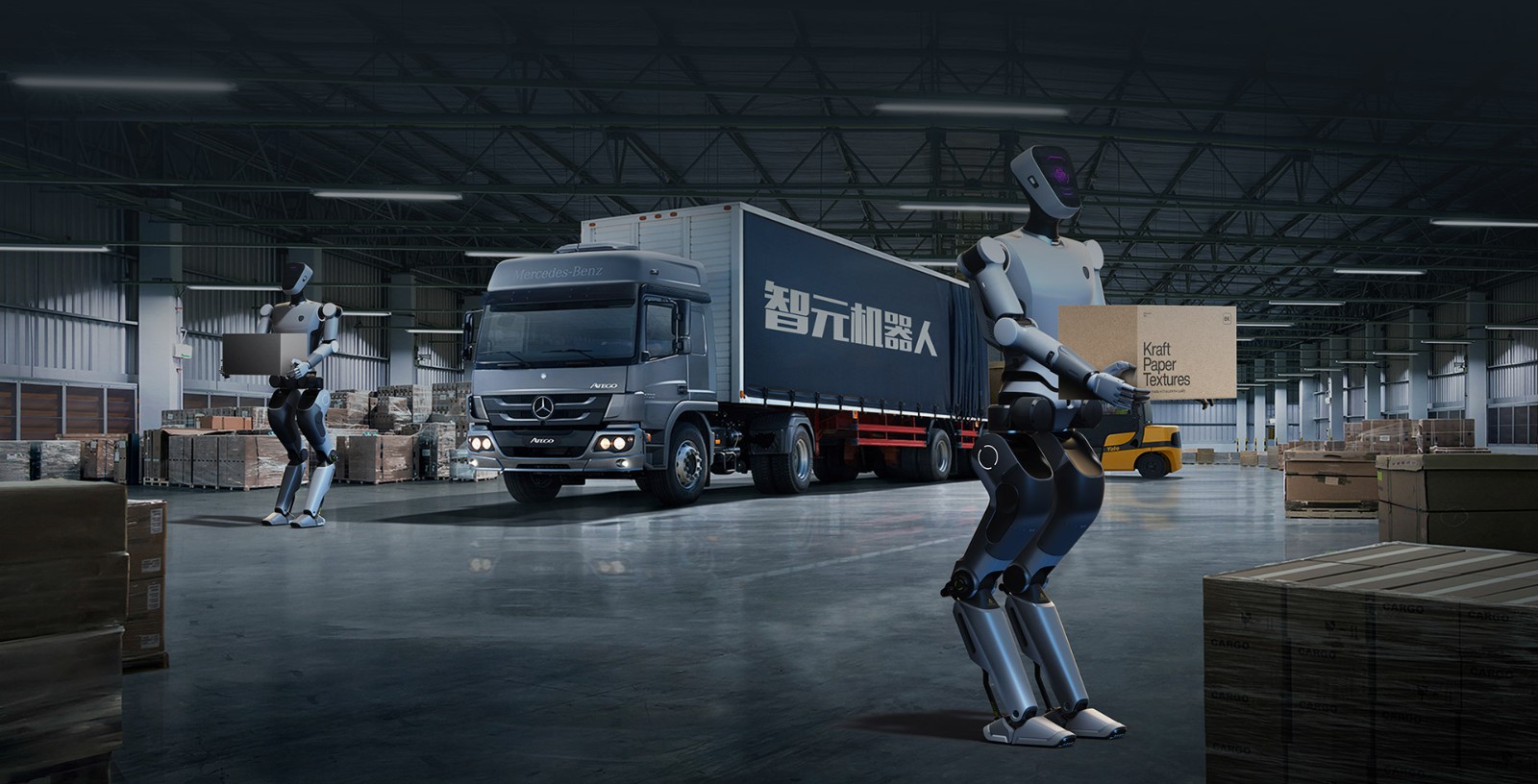
In pilot production lines, the G1 can handle light assembly, inspection, and parts sorting tasks. Its 4 km/h walking speed and 175 cm height let it navigate human workspaces, while the RGB-D cameras provide 3D perception for quality checks. However, the 2-hour runtime means it needs frequent recharges or hot-swappable batteries (not yet confirmed) for continuous operation. The arm payload of 5 kg limits it to small components.
Service & Domestic Assistance
With a human-like form factor and microphone array for voice commands, the G1 is being evaluated for customer service, retail assistance, and home help scenarios. It can carry small items, open doors with its dexterous hands, and interact safely at human height. But its current prototype stage and low battery life restrict always-on availability. Future versions might improve endurance for full-day service shifts.
History & Background
AgiBot Innovation (Shanghai) Technology Co., Ltd. was founded in 2023, backed by significant Chinese tech investment. The company’s first humanoid, the G1, was officially revealed on August 18, 2024, at a launch event showcasing its capabilities in dexterous manipulation and mobility. AgiBot announced an introductory price of 199,000 yuan (~$28,000 USD) for the first 200 units, targeting research institutions and early industrial adopters. Since then, limited pilot deployments have taken place, with the company indicating a broader commercial release once production scales. The G1 is AgiBot’s initial platform; the company has also teased more advanced models like the A2 and X1 series, but the G1 remains the primary entry-level offering as of 2026.
Buying Used — What to Check
Verify actual DOF and payload Early production units may have revised specs or manufacturing tolerances.
Check battery condition and cycle count Battery life is only 2 hours; used units may have degraded packs.
Confirm software stack version and support AgiBot is a new company; software updates and documentation may be sparse.