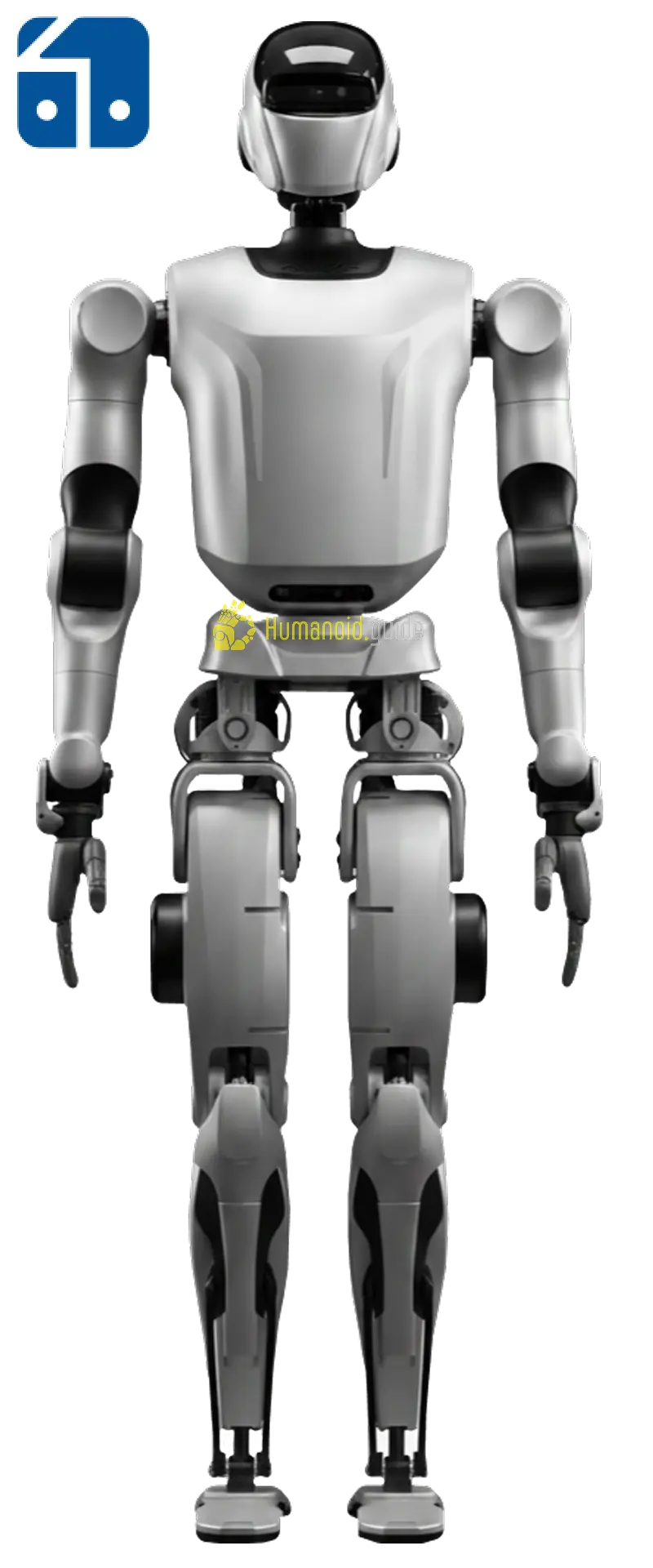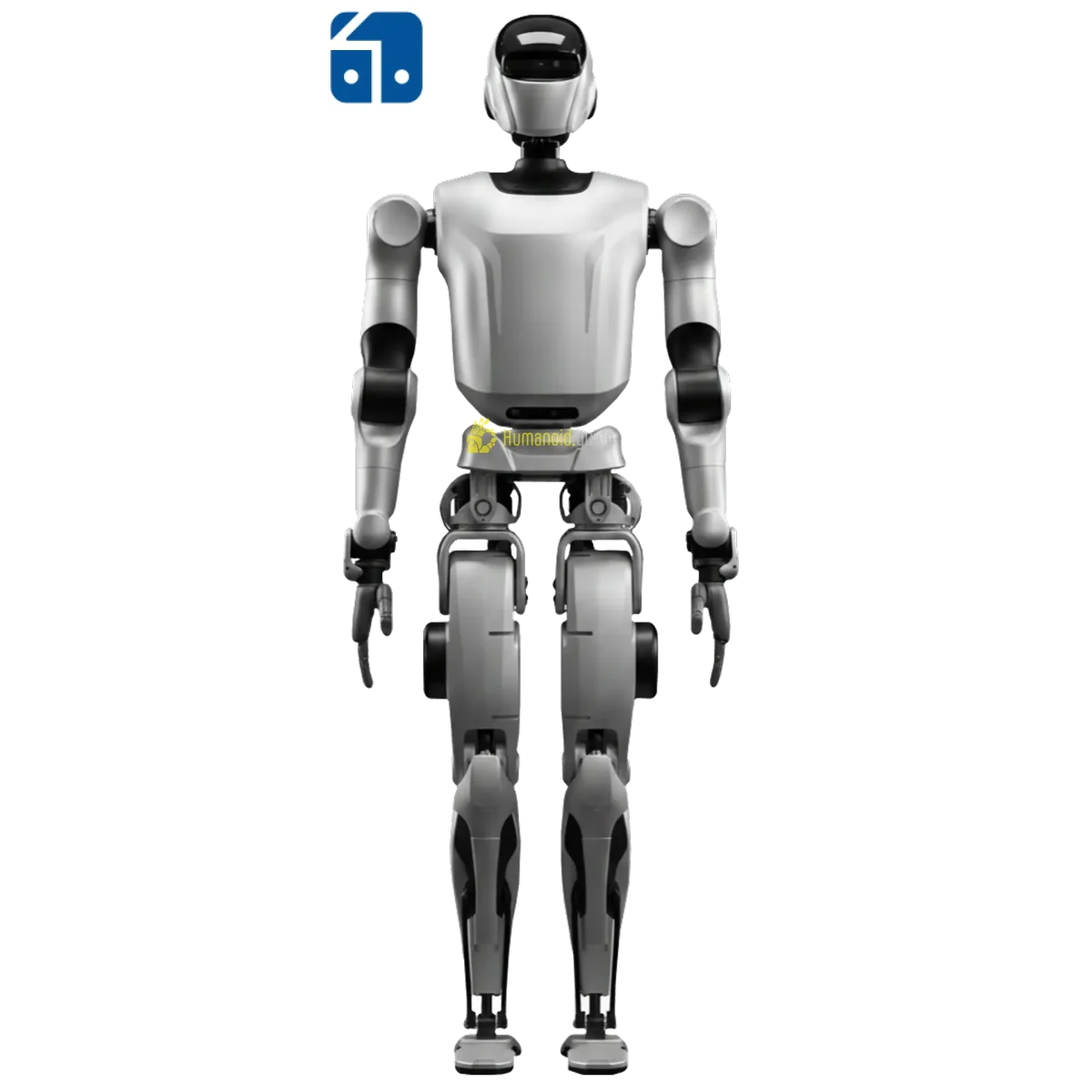
What is the Leju Kuavo 5?
The Leju Kuavo-5 is a fifth-generation bipedal humanoid robot developed by Suzhou Leju Robotics Co., Ltd., based in Shenzhen, China. Designed as an open platform for humanoid robotics research, it features 40 degrees of freedom (26 in the body, 14 in the hands) with dexterous 5-finger hands. Locomotion is governed by a reinforcement-learning controller, enabling walking, stair climbing, and gentle slopes. The robot is equipped with Intel RealSense cameras, wrist-mounted cameras, and optional LiDAR, running on Ubuntu 22.04 with ROS 2 Humble. It competes in the mid-size humanoid space against models like Unitree H1 and Fourier GR-2, positioning itself as a cost‑conscious platform for academic labs, corporate R&D teams, and service-robot developers.
Specifications
Here are the full technical specifications.
| Spec | Value |
|---|---|
| Height | 168 cm |
| Weight | 55 kg |
| Degrees of freedom | 40 |
| Battery life | 7 hours |
| Max speed | 5 km/h |
| Payload | 5 kg (per hand) |
| Price (new) | Undisclosed (contact manufacturer) |
| Price (used range) | N/A |
Price & Value
New MSRP: Undisclosed (contact manufacturer)
Used range: N/A
Leju has not published a fixed retail price for the Kuavo-5; interested buyers must contact the manufacturer directly, though early Chinese market indicators suggest educational/institutional pricing arrangements. Compared to the Unitree H1 at approximately $90,000, the Kuavo-5 may undercut or match that figure thanks to China's supply chain advantages. Because the robot is a pre-order research platform, there is no used market and no depreciation history. As with all pre‑commercial humanoids, total cost of ownership must account for software licensing, ongoing maintenance, and potential add‑on sensors like LiDAR. For budget‑conscious labs, the Kuavo-5 represents an attractive proposition if the final price lands below the H1, but buyers should request a formal quotation including support packages before budgeting.
Who Is It For?
Best for: - University robotics labs (40 DOF enables dexterous manipulation research with 5-finger hands) - Corporate R&D teams exploring humanoid teleoperation and RL locomotion (ROS 2 + NVIDIA Jetson Orin NX) - Service-robot developers needing a mobile, dual-arm platform for reception, guided tours, and light logistics
Not for: - Heavy industrial lifting or palletizing (arm payload limited to 5 kg per hand) - Outdoor all‑terrain deployment (no published IP rating, max slope ~10°) - Production floor use requiring real‑time safety certification (no known ISO 10218 or collaborative‑safety rating)
Alternatives & Comparison
The Kuavo-5 sits in the rapidly expanding mid‑tier humanoid market, competing directly with the Unitree H1, Fourier GR-2, and anticipated Tesla Optimus. Each robot offers trade‑offs in dexterity, speed, payload, and software maturity.
| Model | Price | Available | Key Difference |
|---|---|---|---|
| Unitree H1 | ~$90,000 | yes | H1 is faster and more acrobatic but uses basic 3‑finger hands; Kuavo‑5 has 5‑finger dexterous hands for fine manipulation. |
| Fourier GR-2 | ~$400,000 | preorder | GR‑2 has higher payload (50 kg) and advanced perception, but is heavier and costs several times more. |
| Tesla Optimus Gen 2 | Undisclosed | no | Expected to be lower cost and full‑body dexterous, but not yet commercially available; Kuavo‑5 is buyable now (pre‑order). |
Verdict: For labs that value dexterous hands and an open‑source software stack at a (likely) reasonable price, the Kuavo‑5 is the smartest bet. The Unitree H1 wins if acrobatic locomotion is the priority, while the Fourier GR-2 suits high‑payload industrial tasks. Tesla Optimus remains an unproven future competitor. As of 2026, the Kuavo‑5 offers the best balance of hand dexterity and accessible pricing in the pre‑order market.
Use Cases & Capabilities
Humanoid robotics research
With 40 DOF – including 14 in the hands – the Kuavo‑5 provides a physically capable platform for studying full‑body control, reinforcement‑learning locomotion, and dexterous manipulation. Its ROS 2 Humble ecosystem and Jetson Orin NX compute enable rapid algorithm deployment, while the optional LiDAR and force‑torque sensors permit sensor‑fusion experiments. Researchers can test state‑of‑the‑art learning‑based controllers directly on hardware, moving beyond simulation.
Education platform
Universities and technical institutes can use the Kuavo‑5 as a classroom tool for humanoid robotics, mechatronics, and AI courses. Students gain hands‑on experience with bipedal walking, object grasping, and teleoperation via a modern robot that mirrors industrial humanoid designs. The dual‑boot Ubuntu environment and open API lower the barriers for undergraduate and graduate projects, though the pre‑order lead time requires planning around academic calendars.
Service and hospitality
The Kuavo‑5 can be deployed for reception, guided tours, and light logistics in corporate lobbies, museums, or trade shows. Its 5‑fingered hands allow natural hand gestures and simple object hand‑offs, while a walking speed of up to 5 km/h matches indoor guide speeds. Teleoperation features enable remote monitoring and human‑in‑the‑loop assistance for complex interactions, though limited payload means it cannot carry heavy giveaways or equipment.
History & Background
Leju Robotics (Suzhou Leju Robotics Co., Ltd.) was founded in 2016 in Shenzhen, China, and quickly established itself as a humanoid robot specialist. The company introduced its first Kuavo model in 2023 as a research platform. It was followed in 2024 by the Kuavo‑3 and Kuavo‑3C, which refined the hardware and introduced more advanced joint modules. In August 2024, Leju unveiled the fifth‑generation Kuavo‑5 at major tech events, claiming 40 degrees of freedom and a reinforcement‑learning locomotion controller. The robot was positioned as a pre‑order product for universities, research institutes, and service‑robot companies. As of 2026, Kuavo‑5 remains in limited pre‑order status, with early units reportedly delivered to academic partners in China. Leju continues to iterate while building an ecosystem around the open‑source ROS 2 platform.
Buying Used — What to Check
Verify software licenses and ROS 2 support As a pre‑order platform, used units may have incomplete or outdated ROS packages; confirm the ROS 2 Humble image and any custom drivers are included.
Inspect hands and joint play The dexterous 5‑finger hands are the main differentiator; excessive backlash or missing finger segments can severely limit research utility.
Request battery cycle count With a claimed 7‑hour runtime, an aged battery may degrade fast; a factory‑swappable design helps, but battery packs for used units may be hard to source.