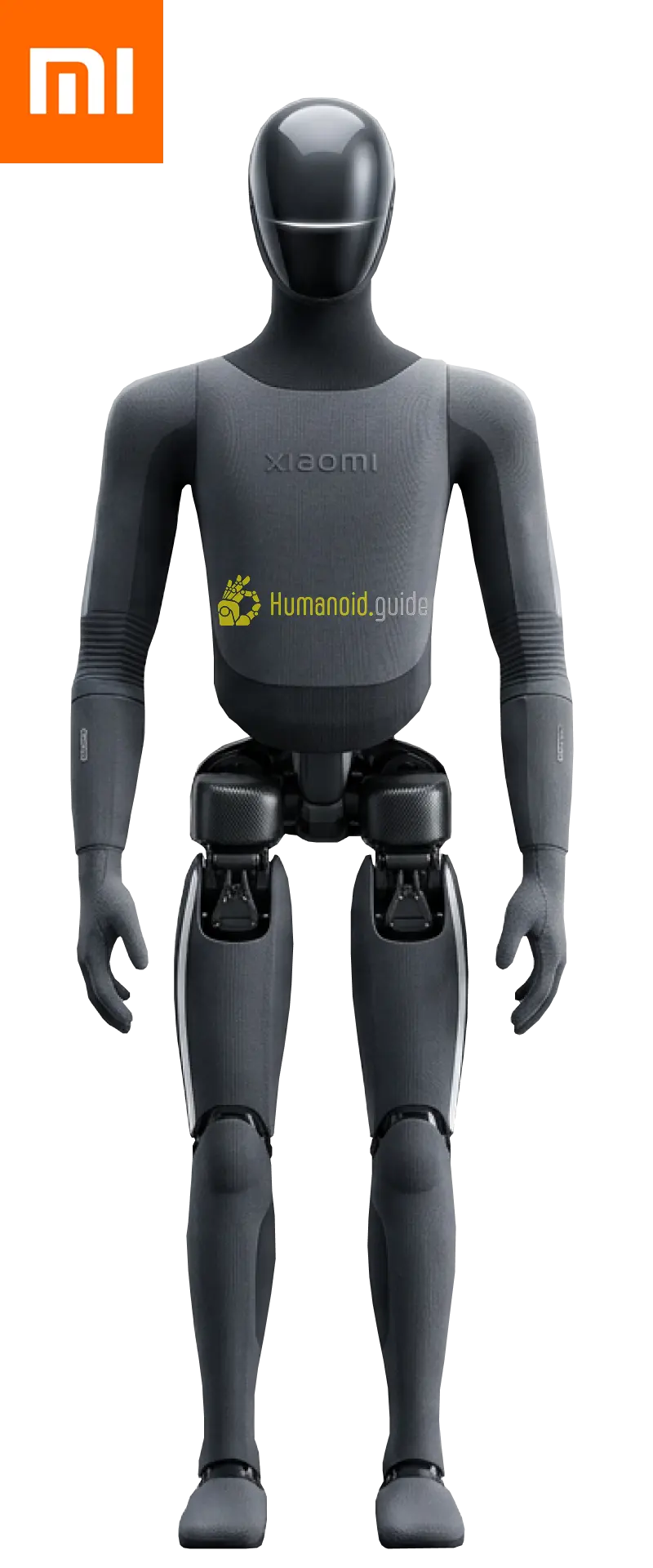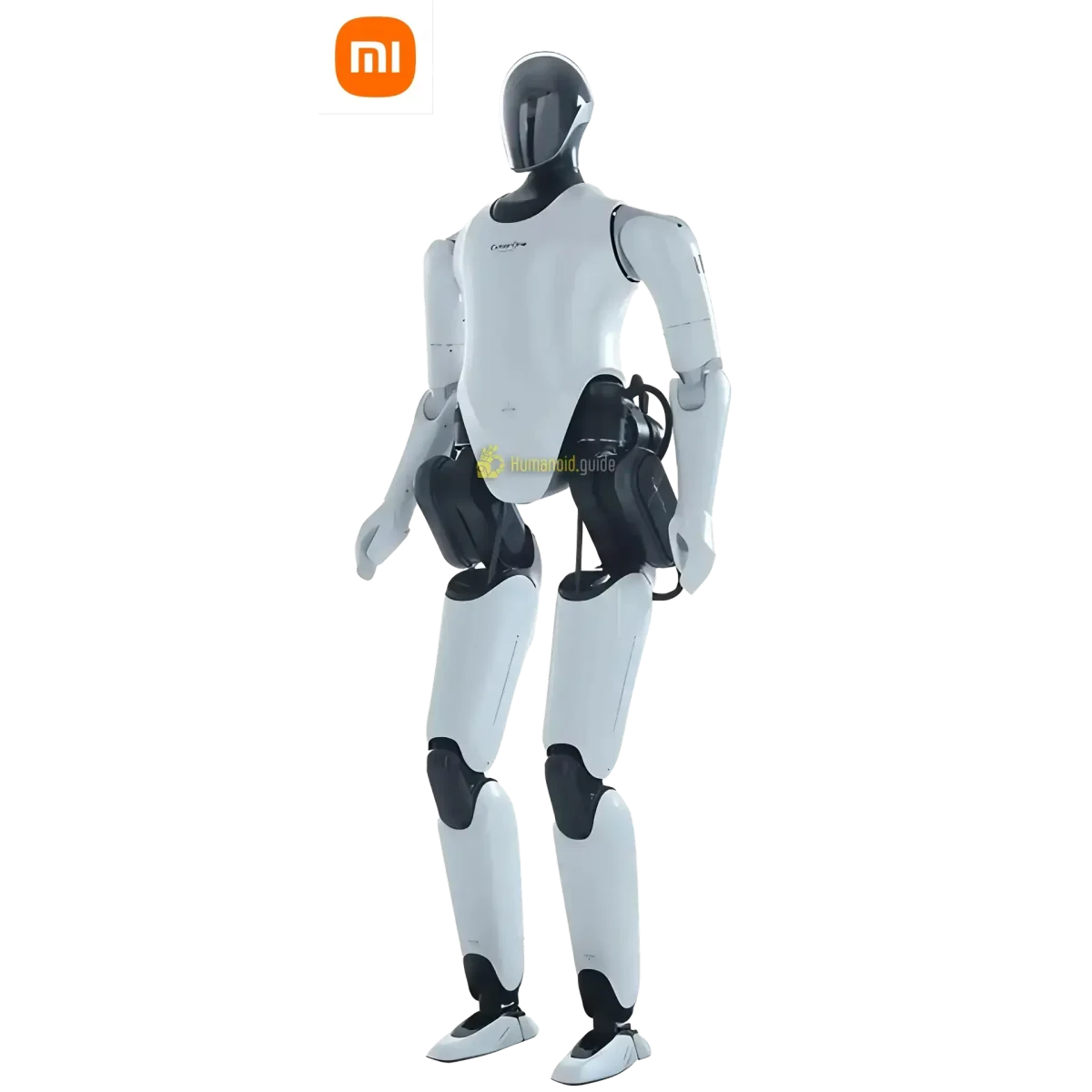
What is the Xiaomi Cyberone V2?
The Xiaomi CyberOne V2 is an advanced humanoid robot developed by Xiaomi’s Robotics Lab in Beijing, China. Unveiled as an evolution of the original CyberOne (2022), this prototype focuses on improved autonomy and manipulation. The bipedal platform stands 177 cm tall and weighs 52 kg, housing 21 degrees of freedom with 8 in each hand. A curved OLED face display enables emotional expression, complemented by Mi-Sense depth cameras, microphones, and ultrasonic sensors for spatial awareness. Powered by Xiaomi’s self-developed AI interaction algorithms, the robot is aimed at research, companionship, and human-robot interaction exploration. As of 2026, it remains in development with no commercial release date.
Specifications
Here are the full technical specifications.
| Spec | Value |
|---|---|
| Height | 177 cm |
| Weight | 52 kg |
| Degrees of freedom | 21 |
| Battery life | 3 hours |
| Max speed | 5 km/h |
| Payload | 1.5 kg |
| Price (new) | Undisclosed |
| Price (used range) | N/A |
Price & Value
New MSRP: Undisclosed
Used range: N/A
Xiaomi has not disclosed pricing for the CyberOne V2 as it is a pre-commercial prototype. Early third-party listings occasionally quote $99,000, but this is unconfirmed and likely placeholder. Given its research status, a future price might align with similar developmental humanoids in the $60,000–$100,000 range. Compared to the Unitree H1 at $90,000 (available) or the custom-engineered Boston Dynamics Atlas, the CyberOne V2 would need to offer compelling AI and emotional interaction capabilities to justify a premium. As a prototype, there is no depreciation or used market, but once commercialized, expect typical 20–30% first-year depreciation. Buyers should contact Xiaomi directly for partnership or pilot program inquiries.
Who Is It For?
Best for: - University robotics labs exploring emotional human-robot interaction (OLED face and AI algorithms) - AI companies prototyping conversational and gesture-based assistants - Consumer electronics R&D teams studying future home robotics
Not for: - Manufacturers needing heavy payloads (arm payload only 1.5 kg) - Outdoor dynamic mobility research (max speed 5 km/h, untested outdoor terrain) - Production-ready service deployments (no commercial availability or certifications)
Alternatives & Comparison
The CyberOne V2 occupies a niche among research humanoids focused on emotional interaction and AI integration. Competitors range from industrial-oriented prototypes to commercially available platforms.
| Model | Price | Available | Key Difference |
|---|---|---|---|
| Tesla Optimus | Undisclosed | no | Stronger industrial AI focus, but less emphasis on emotional display |
| Boston Dynamics Atlas | Undisclosed (not commercial) | no | Superior dynamic mobility and hydraulic actuation, no interactive face |
| Unitree H1 | $90,000 | yes | Commercially available now, faster walking speed, but lacks emotional expression |
Verdict: For labs prioritizing emotional AI and sleek design, the CyberOne V2 is a compelling prototype, but if you need immediate availability for locomotion research, the Unitree H1 is the only buyable option. Boston Dynamics Atlas remains superior for dynamic mobility, while Tesla Optimus promises strong AI but lacks a public human-robot interaction focus.
Use Cases & Capabilities
Human-Robot Interaction Research
The CyberOne V2’s OLED face and body language capabilities make it a testbed for studying non-verbal communication. Its Mi-Sense vision and microphones allow speech and gesture recognition experiments. Researchers can program emotional responses through Xiaomi’s AI stack to gauge user trust and comfort. Limited battery (3 hours) confines sessions to lab environments, but the platform realistically simulates a sociable assistant.
AI-Driven Companion Development
Startups can use the robot to prototype long-term companion agents for elderly or disabled users. The curved display and anthropomorphic form help convey empathy, while the arm payload (1.5 kg) enables fetching light objects. Wireless connectivity supports cloud AI for natural language processing. The lack of commercial release restricts deployment, but the open research design invites algorithmic innovation.
Service Robotics R&D
As a humanoid, CyberOne V2 offers a preview of how service robots could guide customers or assist in hotels. The ultrasonic sensors and depth cameras enable basic obstacle avoidance and mapping. Developers can test object manipulation scenarios with the dexterous hands. Although it cannot yet operate autonomously for extended periods, it serves as a conceptual platform for designing service interaction protocols.
History & Background
Xiaomi, founded in 2010 in Beijing, China, is best known for consumer electronics but expanded into robotics with its Robotics Lab. The company introduced its first humanoid, CyberOne, on August 11, 2022, at a media event alongside the CyberDog quadruped. Standing 177 cm tall and weighing 52 kg, CyberOne featured 21 degrees of freedom, an OLED face, and Xiaomi’s in-house AI stack. It demonstrated human-like emotional expression and basic mobility. The CyberOne V2, an improved version highlighted in subsequent R&D showcases, emerged around 2024–2025 with upgraded autonomy, manipulation dexterity, and sensors, though Xiaomi has not publicly detailed full specifications. As of 2026, the V2 remains a testbed for AI-driven human-robot interaction research, not yet a commercial product. Xiaomi continues to iterate the platform, leveraging its vast consumer ecosystem.
Buying Used — What to Check
Verify software maturity As a prototype, AI integration and autonomy features may be incomplete or experimental versions.
Confirm battery condition Battery degradation data is absent; a 3-hour runtime may drop significantly if the unit has been heavily tested.
Check structural integrity Joints and actuators may have undocumented wear from R&D use, especially in the hands and legs.