

Google DeepMind is quietly assembling the most ambitious robotics software stack in the industry — and Agile Robots is its latest hardware partner. The Munich-based humanoid maker will integrate DeepMind's robotics foundation models into its platforms while feeding operational data back to the lab, extending a pattern of strategic hardware alliances that is rapidly reshaping who controls the intelligence layer of physical automation.
What is the Agile Robots and Google DeepMind Partnership?
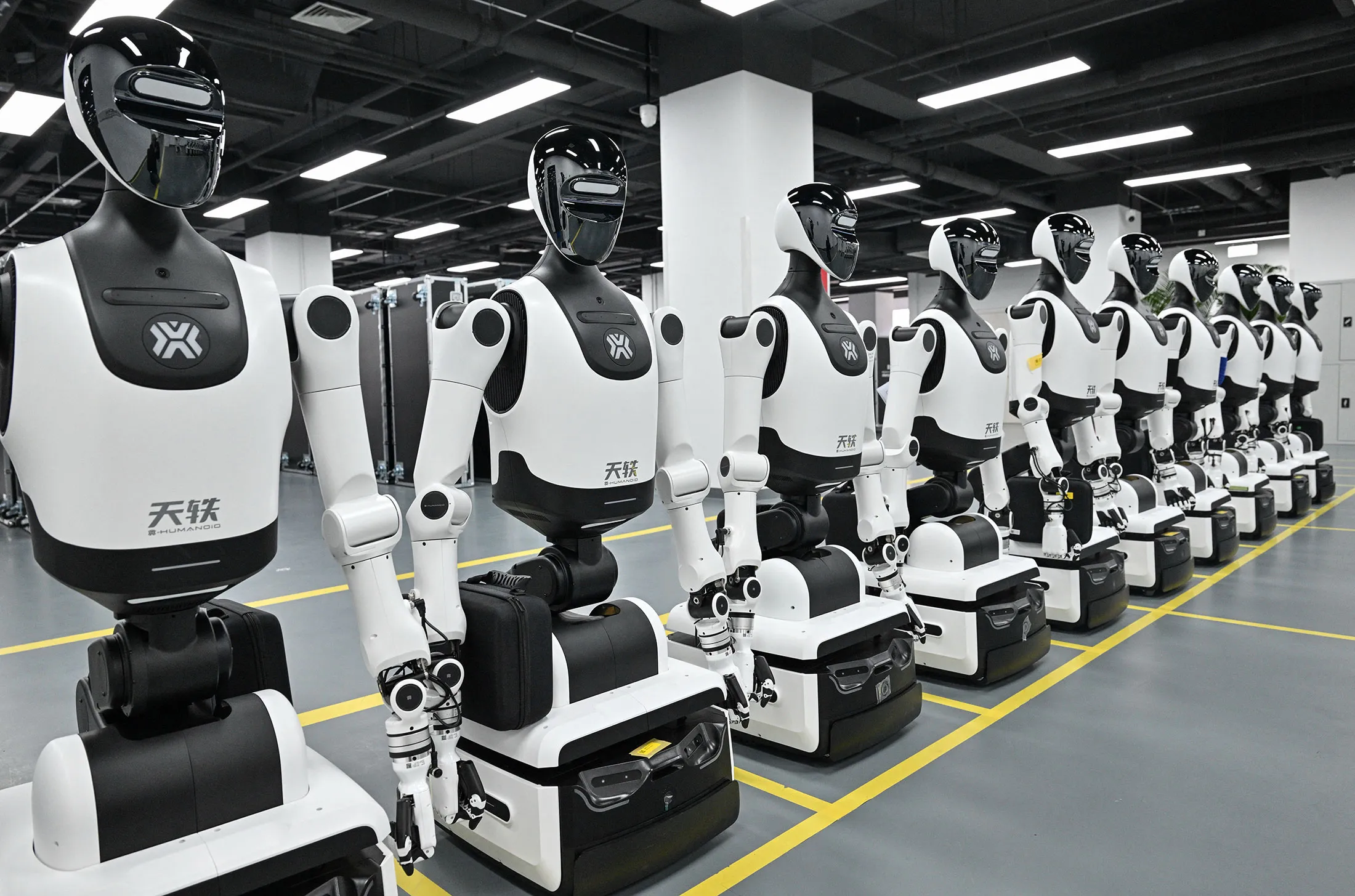
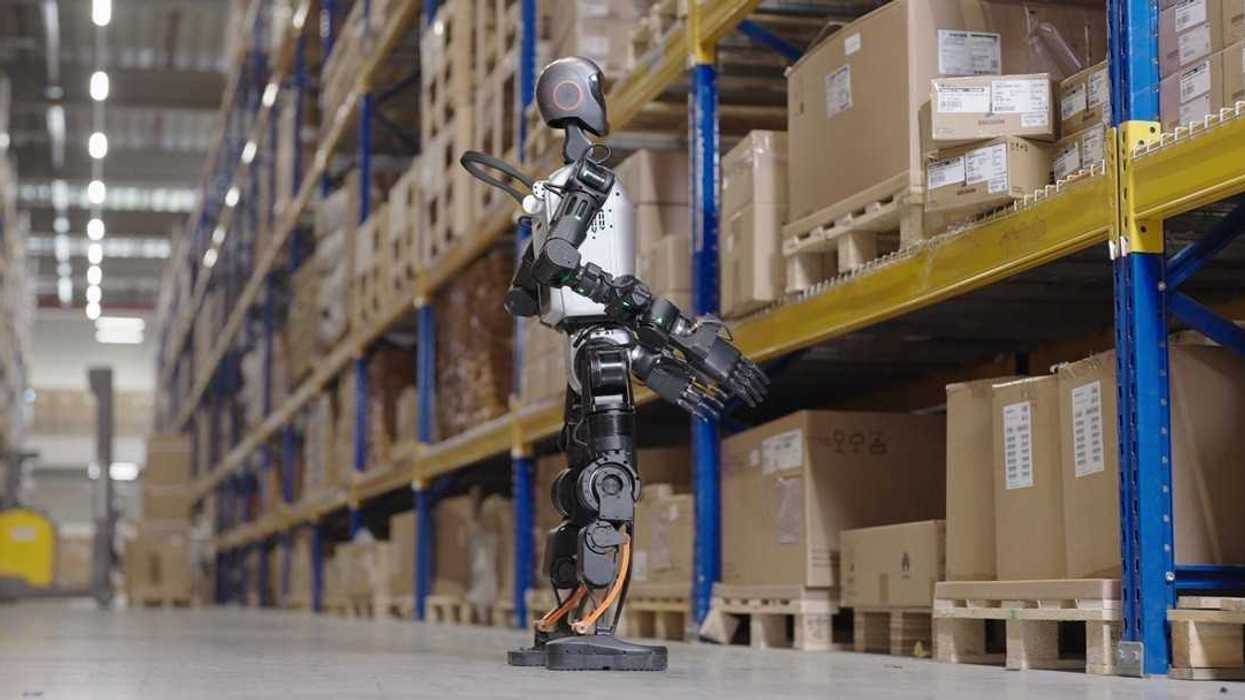
Agile Robots will embed Google DeepMind's robotics foundation models directly into its humanoid and bipedal platforms, while simultaneously collecting real-world manipulation and locomotion data that feeds back into DeepMind's research pipeline. It is a bidirectional exchange: Agile gets state-of-the-art AI capabilities without building the models in-house; DeepMind gets scarce embodied data from a commercially deployed hardware fleet.
According to TechCrunch, the deal follows a structure DeepMind has now used across multiple robotics partners — suggesting this is less a one-off collaboration and more a deliberate platform strategy.
Agile Robots, founded in 2017 as a spin-out from the Technical University of Munich, produces the LARA series of collaborative arms and the Agility-class bipedal systems. The company bridges European precision engineering with Chinese manufacturing scale, giving DeepMind access to deployment environments that neither US-centric nor purely Asian hardware partners can replicate.
Which Robotics Companies Has DeepMind Partnered With?
DeepMind's hardware alliance network now spans multiple robot categories, creating a cross-platform data flywheel that no single company could build alone. The partnerships confirmed or reported to date reveal a deliberate strategy to cover every major robot form factor.
| Partner | Robot Type | Primary Use Case | Data Contributed |
|---|---|---|---|
| Agile Robots | Humanoid / bipedal | Manufacturing, logistics | Manipulation, locomotion |
| Apptronik | Humanoid | Industrial, AMR | Whole-body control |
| Enchanted Tools | Social / service robots | Hospitality, healthcare | Human-robot interaction |
| Kepler | Humanoid | Factory automation | Dexterous manipulation |
| Neura Robotics | Cognitive humanoid | Industrial, service | Multimodal sensing |
The pattern is clear: DeepMind is not betting on a single hardware winner. It is becoming the AI substrate across the entire humanoid category, plus adjacent cobot and service robot segments. Every partner contributes proprietary real-world data; DeepMind's foundation models improve; improved models make each partner's hardware more capable. The flywheel compounds with each new node added to the network.
Why Is DeepMind Building a Hardware Alliance Network?
The core problem in robotics AI is data scarcity. Simulation environments have improved dramatically, but the gap between synthetic and real-world performance — sometimes called the sim-to-real gap — remains a critical bottleneck for training general-purpose manipulation policies. DeepMind's partnership model is, at its core, a data acquisition strategy that sidesteps the cost and complexity of operating a proprietary robot fleet.
Training a competitive robotics foundation model requires millions of hours of diverse, embodied interaction data. Collecting that data with owned hardware would require DeepMind to become a robot manufacturer and operator simultaneously — a distraction from its core research mission. Partnerships solve this elegantly: hardware companies bear the capital and operational cost of deployment; DeepMind captures the data exhaust.
This mirrors strategies used in other AI domains. Google's approach to training large language models benefited enormously from the data flywheel of Search and Gmail. The robotics partnership network is structurally analogous — distributed data collection feeding a centralised model that improves all nodes. Where the analogy breaks down is in the physical stakes: a poorly trained language model produces bad text; a poorly trained robot policy can cause real-world harm, making data quality and safety annotation far more critical than in the software-only domain.
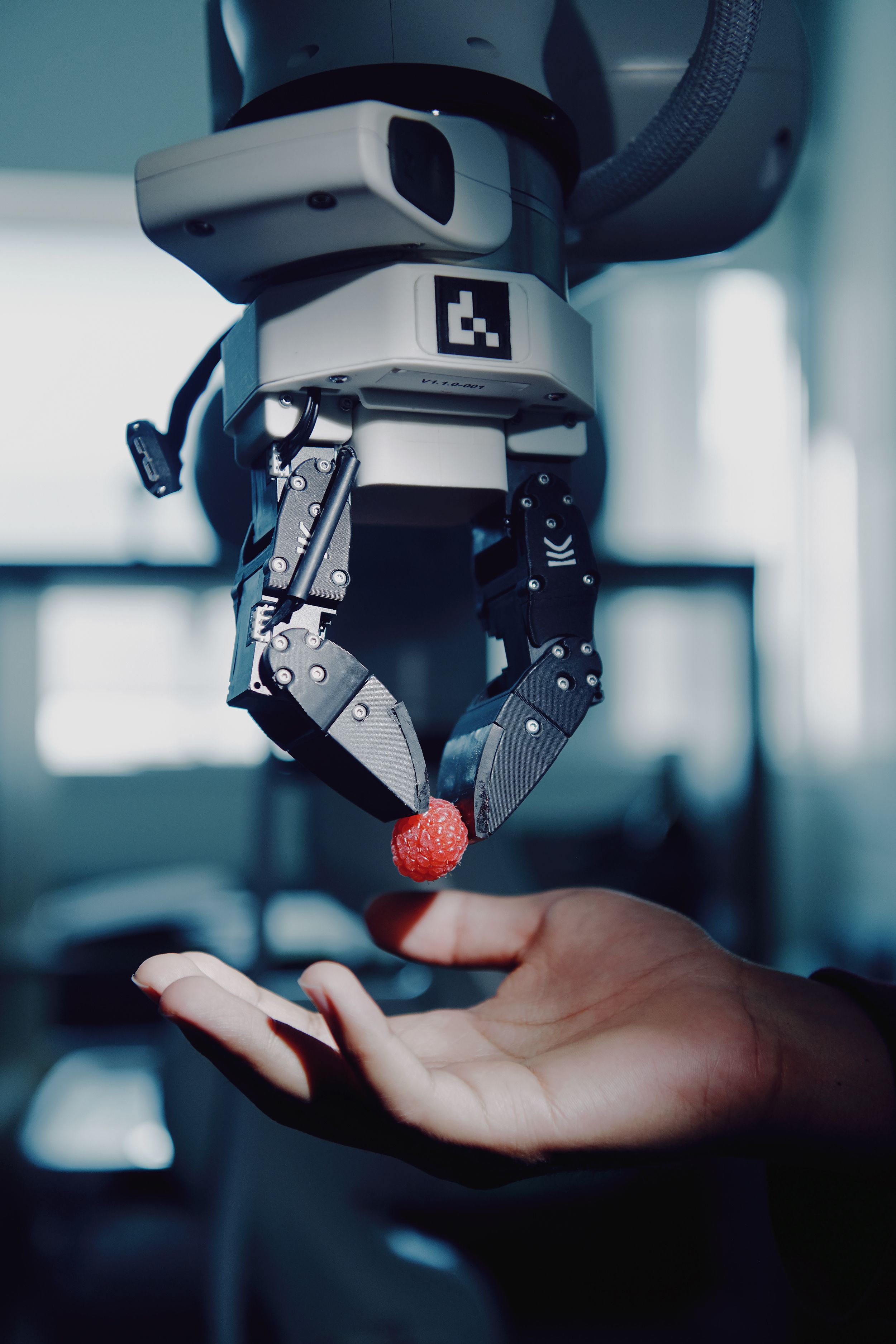
DeepMind's Gemini Robotics model family, announced earlier this year, represents the current state of this foundation model effort. It targets dexterous manipulation tasks — folding, assembly, object handoff — that have historically been the hardest capabilities to generalise across robot platforms.
What Does This Mean for the Robotics Foundation Model Race?
DeepMind's alliance network puts direct pressure on every other organisation attempting to build a general robotics AI stack. The competitive landscape is shifting fast.
Physical Intelligence (Pi) has taken the opposite approach: building its own data collection infrastructure and keeping its π0 foundation model proprietary, licensing only to select partners. Figure AI is developing its AI stack in close collaboration with OpenAI, though that relationship has shown signs of friction. 1X Technologies trains almost exclusively on its own fleet data. Nvidia is pursuing a platform play through Isaac and the GR00T foundation model, targeting the simulation-to-deployment pipeline rather than the model layer itself.
DeepMind's multi-partner strategy creates a structural advantage that is difficult to replicate quickly: diversity of embodiments, environments, and tasks in the training data. A model trained on data from Agile's European factory deployments, Apptronik's US industrial sites, and Enchanted Tools' hospitality environments will encounter a far wider distribution of real-world conditions than any single-platform model. In machine learning terms, this translates to better generalisation — the ability to handle novel situations not seen during training.
The risk for hardware partners is dependency. Companies integrating DeepMind's foundation models as a core capability layer are building their competitive differentiation partly on technology they do not control. If DeepMind changes licensing terms, pivots its research priorities, or — given it operates under Alphabet — becomes subject to regulatory constraints, partners face significant strategic exposure. This is the standard platform risk that has played out repeatedly in the software industry, now arriving in physical automation.
What This Means for Robotics Buyers
For organisations evaluating humanoid or advanced cobot deployments in the near term, the DeepMind alliance network has concrete procurement implications.
Hardware platforms integrated into a major foundation model ecosystem will receive faster capability updates than standalone alternatives. Agile Robots systems, for example, should gain improved manipulation performance as Gemini Robotics models are refined with data from the broader partner fleet — without buyers needing to manage AI development themselves. This is a meaningful operational advantage in dynamic environments like logistics and light manufacturing.
The data-sharing element of these partnerships also raises legitimate questions for enterprise buyers. Understanding what operational data leaves your facility, how it is anonymised, and what contractual protections exist is now a standard due diligence requirement when evaluating any AI-enabled robot platform.
Buyers in the humanoid category should watch this alliance network closely when building vendor shortlists. Platforms outside major AI partnerships will need to demonstrate a credible alternative path to comparable model quality — either through their own foundation model development or through alternative partnerships with players like Nvidia, Microsoft, or emerging specialist labs.
You can browse humanoid robots currently available on Botmarket to compare platforms across the alliance landscape, or explore used industrial robots for near-term automation requirements where the foundation model question is less central to purchasing decisions.
Frequently Asked Questions
What is Google DeepMind's robotics foundation model? DeepMind's robotics AI effort centres on the Gemini Robotics model family, designed to enable generalised dexterous manipulation across diverse robot hardware. Unlike task-specific models, foundation models are trained on broad datasets and fine-tuned for specific applications, reducing the per-task engineering cost for hardware partners and end users.
What does Agile Robots make? Agile Robots is a Munich-based company producing the LARA series of collaborative robot arms and bipedal humanoid platforms. Founded as a spin-out from the Technical University of Munich, the company operates across European and Asian markets, with manufacturing scaled through partnerships in China.
Why do robotics companies share data with AI labs? Access to state-of-the-art foundation models that would cost hundreds of millions of dollars to develop independently is the primary incentive. For most hardware companies, training competitive general-purpose AI is not their core competency; integrating best-in-class models from specialist labs allows them to compete on hardware design, manufacturing quality, and application-layer software instead.
Does joining the DeepMind network mean Agile Robots' data is shared with competitors? The specific data governance terms of each partnership are not public. Standard practice in such arrangements is for raw operational data to be used only for model training, with the trained model weights — not the underlying data — being what is shared across the network. However, buyers should verify data handling terms contractually before deployment.
How does DeepMind's approach compare to Nvidia's GR00T? DeepMind's strategy centres on a data flywheel built through hardware partnerships feeding a proprietary foundation model. Nvidia's GR00T focuses on the simulation-to-real pipeline, providing a training and deployment platform rather than a trained model. They are complementary rather than directly competing layers — though over time, both are competing for the role of essential infrastructure in commercial robotics.
DeepMind's robotics alliance network is becoming one of the most consequential structural developments in the physical automation industry — not because of any single partnership announcement, but because of the compounding logic of the flywheel it is building.

Beteilige dich an der Diskussion
Which platform in DeepMind's robot network becomes the dominant Physical AI deployment layer?