What is the Honda P1?
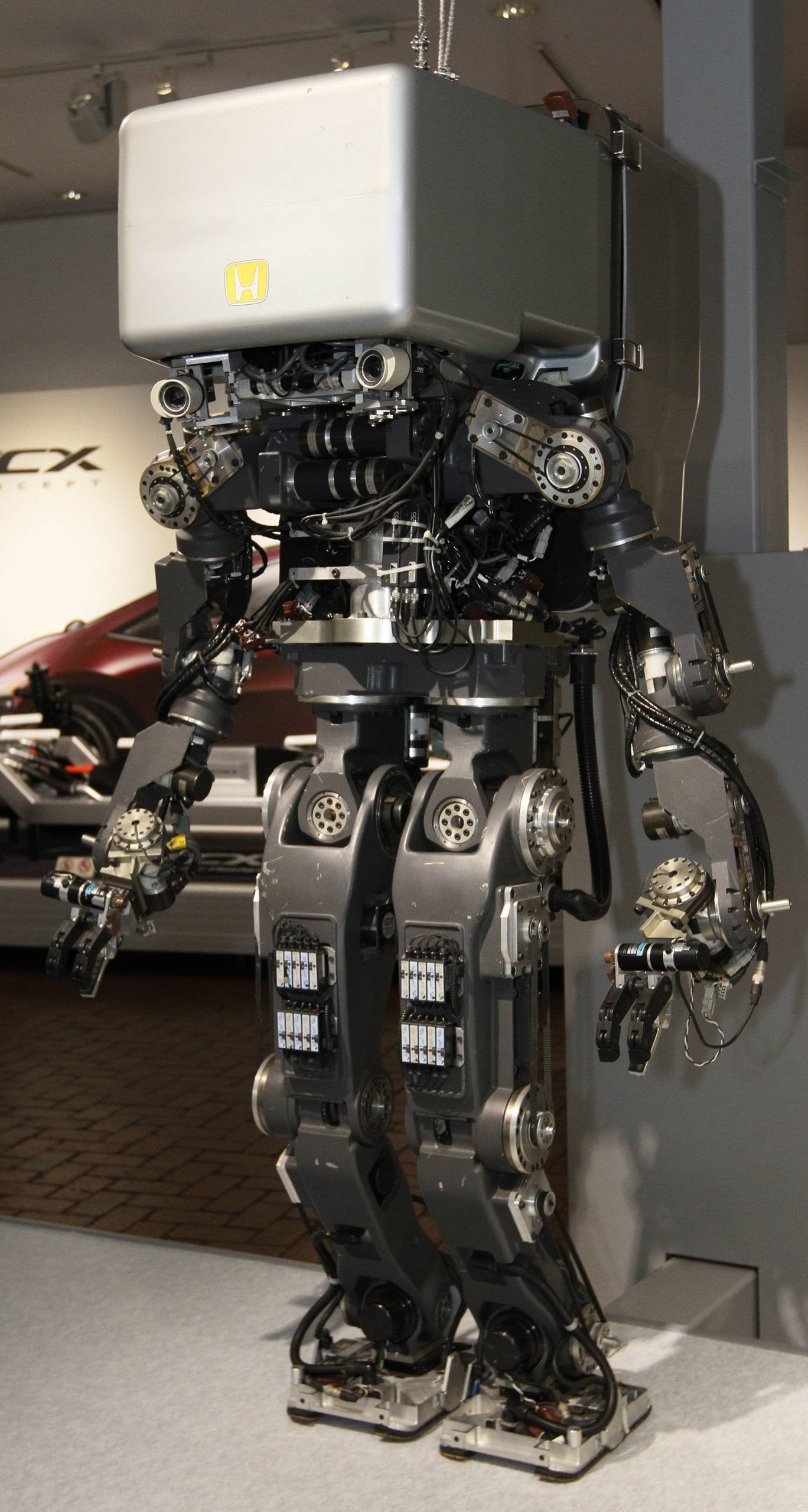
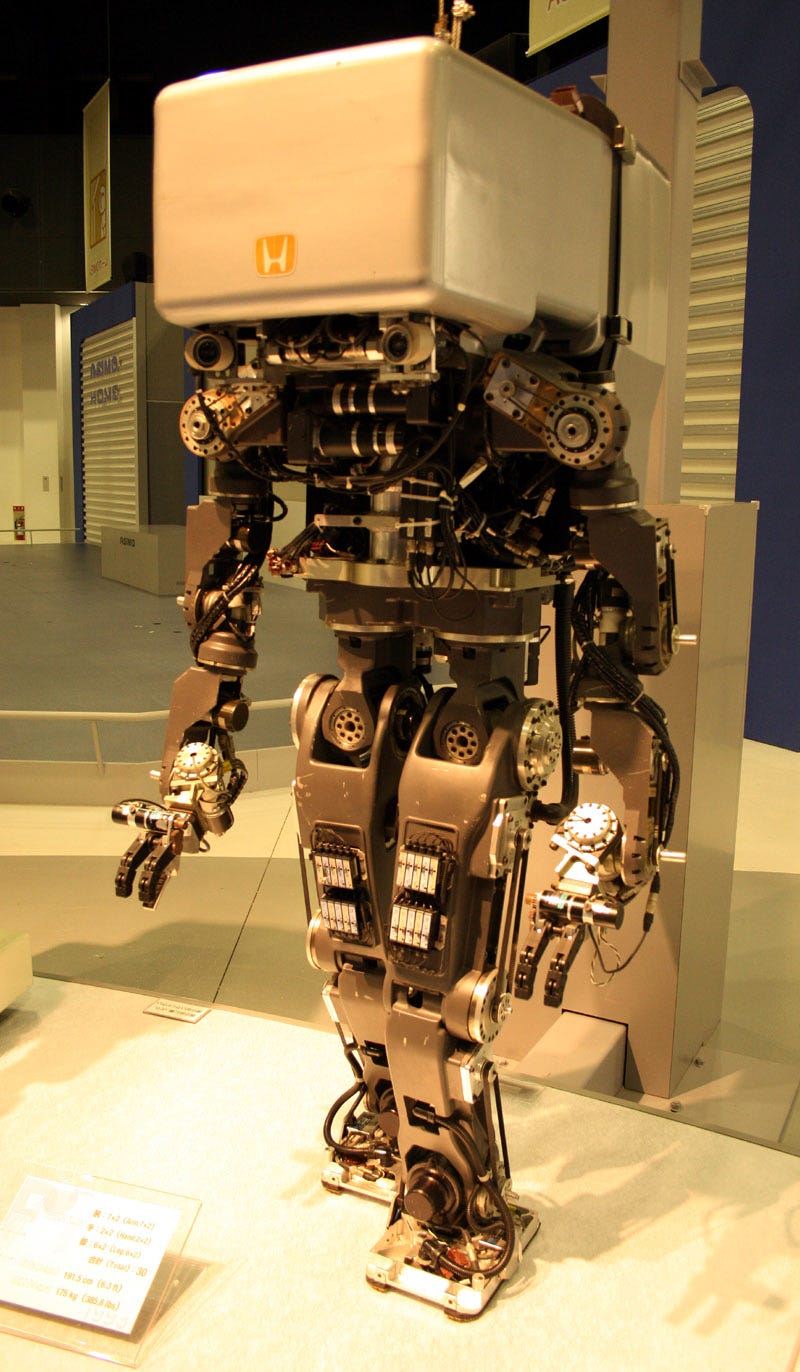
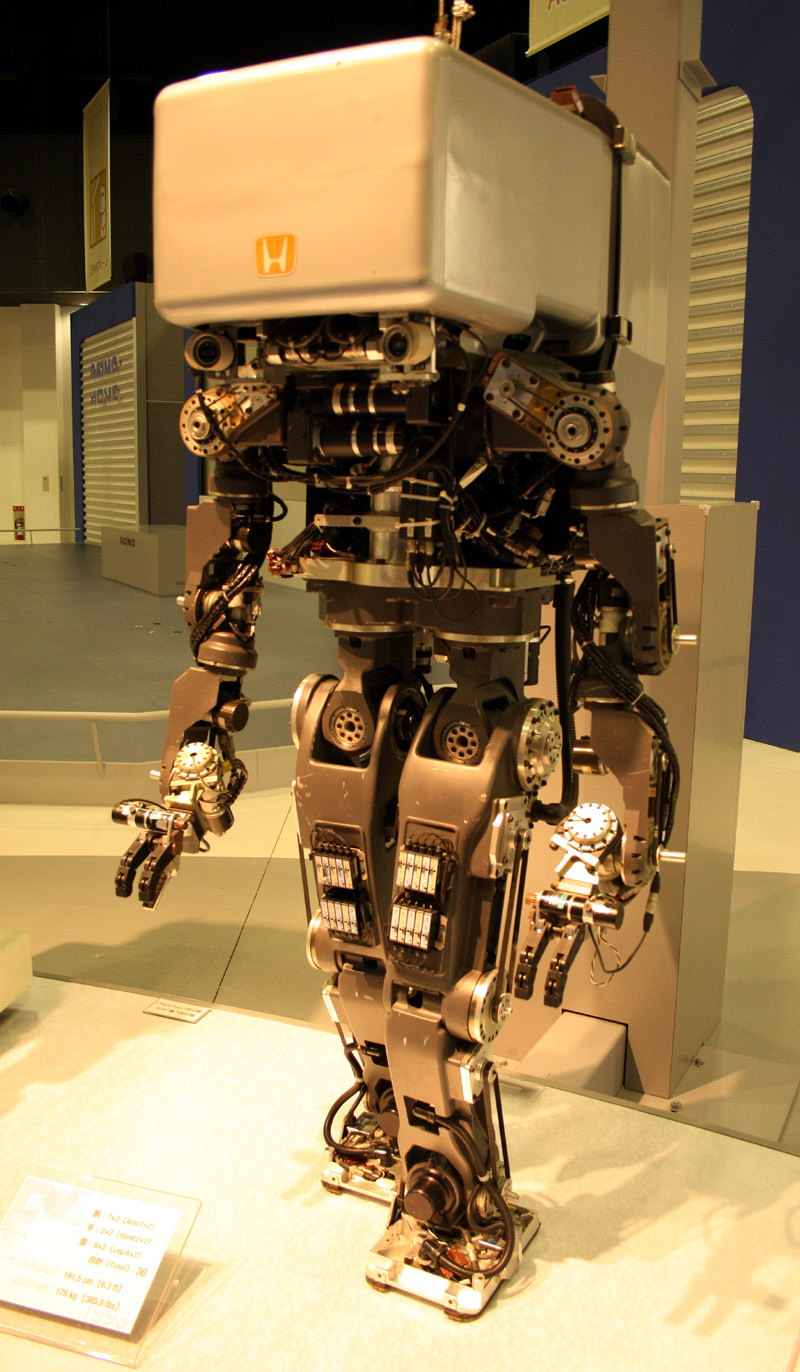
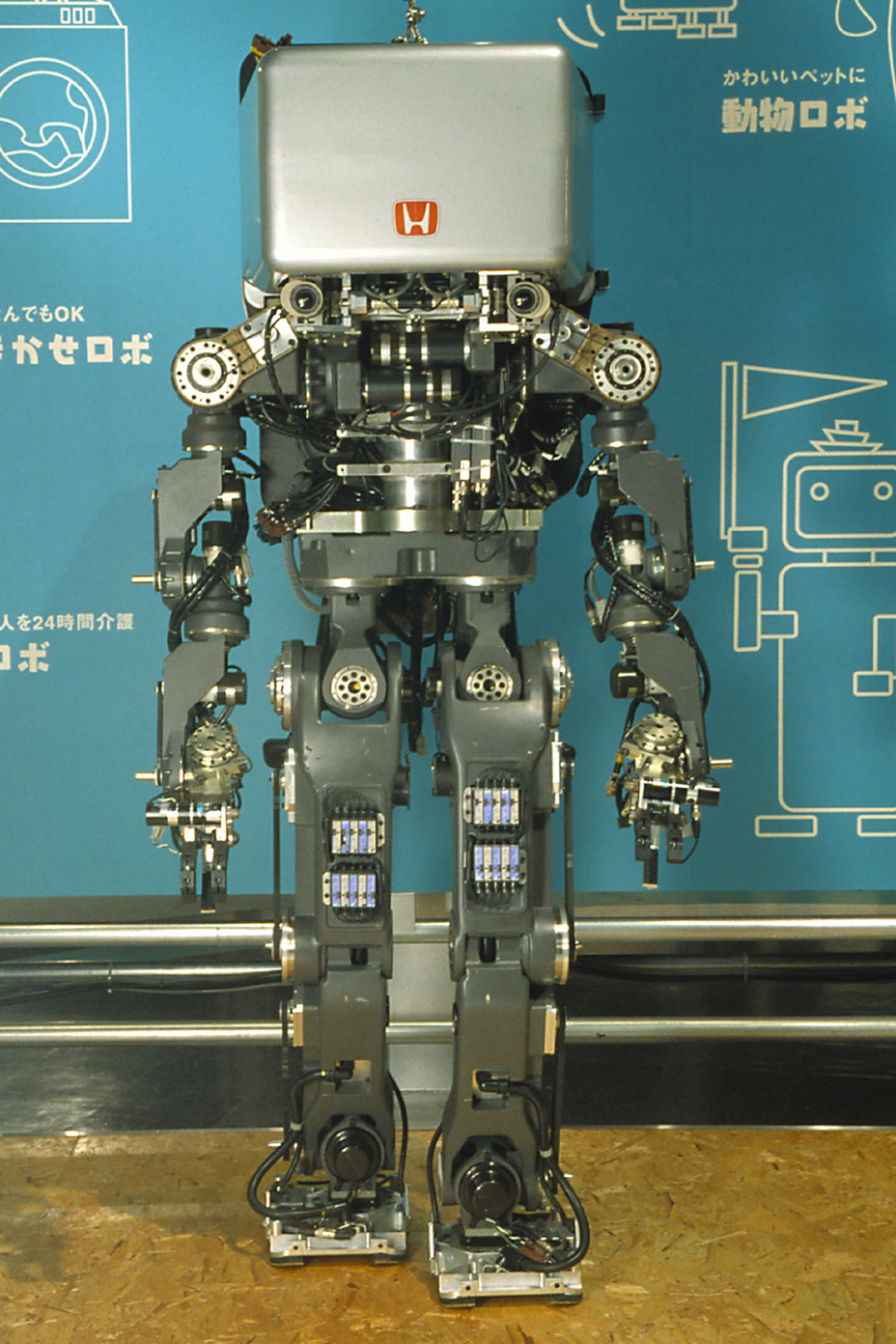
The Honda P1 is the first humanoid robot developed by Honda Motor Co., built secretly in 1993 at its Wako Research Center in Japan. It was a full-scale bipedal prototype designed to validate dynamic walking algorithms. Standing at 1.92 m tall and weighing 175 kg, the P1 used DC servo motors with harmonic drives for actuation, achieving 30 degrees of freedom. Unlike later models, it relied on an external power source and tethered computer system. The P1 demonstrated stable walking, stair climbing, and basic manipulation like turning switches and grasping doorknobs. It directly paved the way for the P2 (1996) and the iconic ASIMO (2000). Today, the P1 remains a milestone in humanoid robotics research and is preserved in Honda’s collection.
Specifications
Here are the full technical specifications.
| Spec | Value |
|---|---|
| Height | 1.92 m |
| Weight | 175 kg |
| Degrees of freedom | 30 |
| Battery life | N/A (external power only) |
| Max speed | Not published |
| Payload | Not formally rated |
| Price (new) | Never sold (research prototype) |
| Price (used range) | N/A (no secondary market) |
Price & Value
New MSRP: Never sold
Used range: N/A
The Honda P1 was a classified internal research project with no commercial pricing. There is no used market; the few existing prototypes are kept by Honda for historical display. Its value lies in its status as a foundational stepping stone that established Honda’s humanoid robotics expertise, which later materialized in ASIMO. No direct monetization or ROI can be assessed for this platform.
Who Is It For?
Best for: - Robotics researchers studying the history of bipedal locomotion (precursor to ASIMO) - Museums or academic collections documenting humanoid robotics evolution
Not for: - Commercial deployment or load-bearing tasks (no payload rating and tethered design) - Any production use case — the P1 requires an external power and computer, making it unsuitable for real-world autonomy
Alternatives & Comparison
While no direct contemporary competitor to the P1 existed in 1993, it can be compared with other early full-scale humanoid prototypes that advanced bipedal walking research.
| Model | Price | Available | Key Difference |
|---|---|---|---|
| Honda P2 | Never sold | no | First untethered model with onboard battery and computers |
| Waseda WABOT-1 | Never sold | no | Earlier anthropomorphic robot (1973) with vision and basic speech, but slower and less stable walk |
Verdict: For those studying the history of Honda’s humanoid program, the P1 is the origin point, but the P2 represents the first practical untethered design. WABOT-1 predates both and focused on verbal interaction. Choose P1 for historical completeness, P2 for technical evolution, and WABOT-1 for pioneering AI integration.
Use Cases & Capabilities
Bipedal Locomotion Research
The P1 was built solely to prove that a bipedal humanoid could dynamically walk, climb stairs, and maintain balance. Its 30 DOF enabled complex leg and arm coordination using zero-moment-point (ZMP) control. Researchers used the tethered setup to rapidly iterate algorithms without onboard power or compute constraints. The knowledge gained directly informed the P2’s untethered design and Honda’s later stabilization techniques.
Historical Robotics Education
The P1 serves as a key teaching tool in robotics history courses, illustrating the transition from static walkers to dynamic humanoids. Its design choices—tethered power, heavy frame, and modular actuator arrangement—demonstrate the engineering compromises of early 1990s technology. Universities and museums reference it as a tangible step from academic prototypes to the commercially viable ASIMO.
History & Background
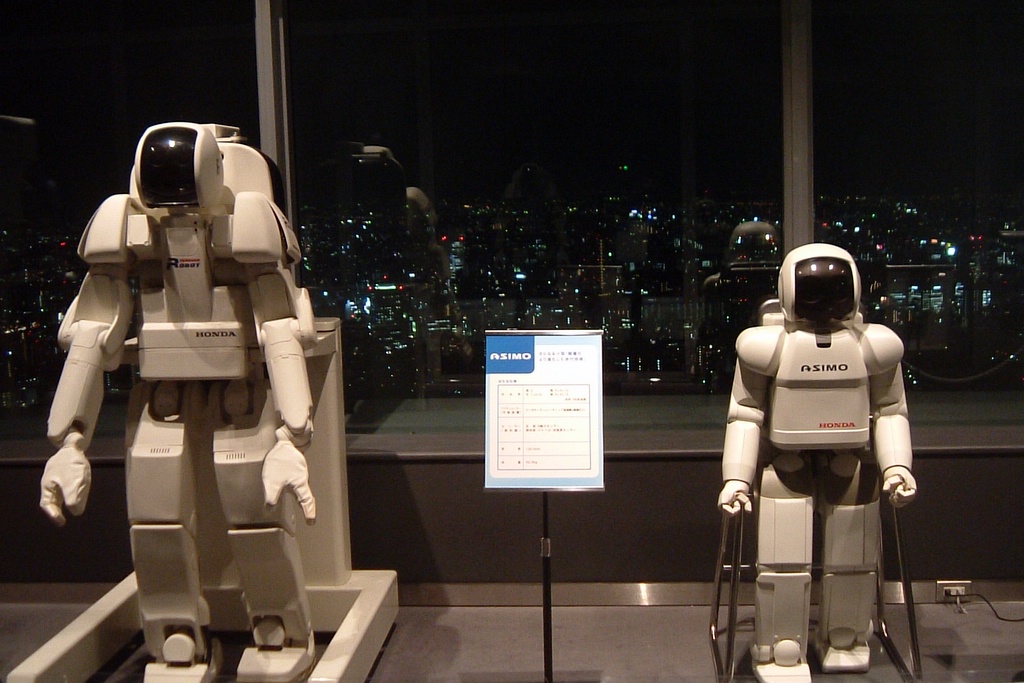
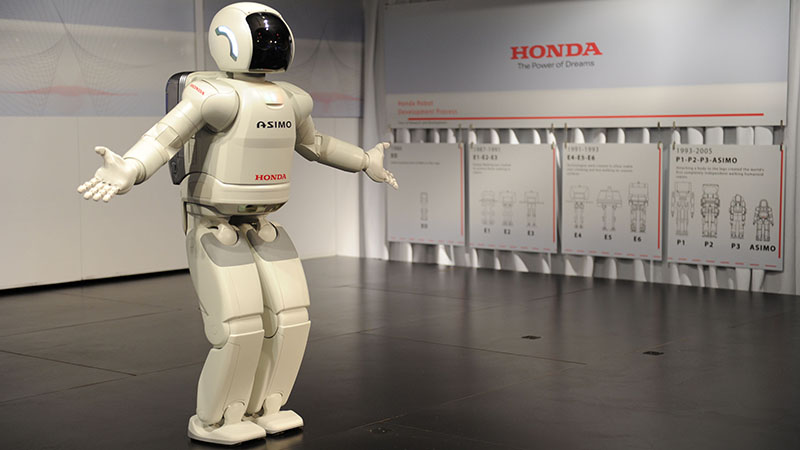
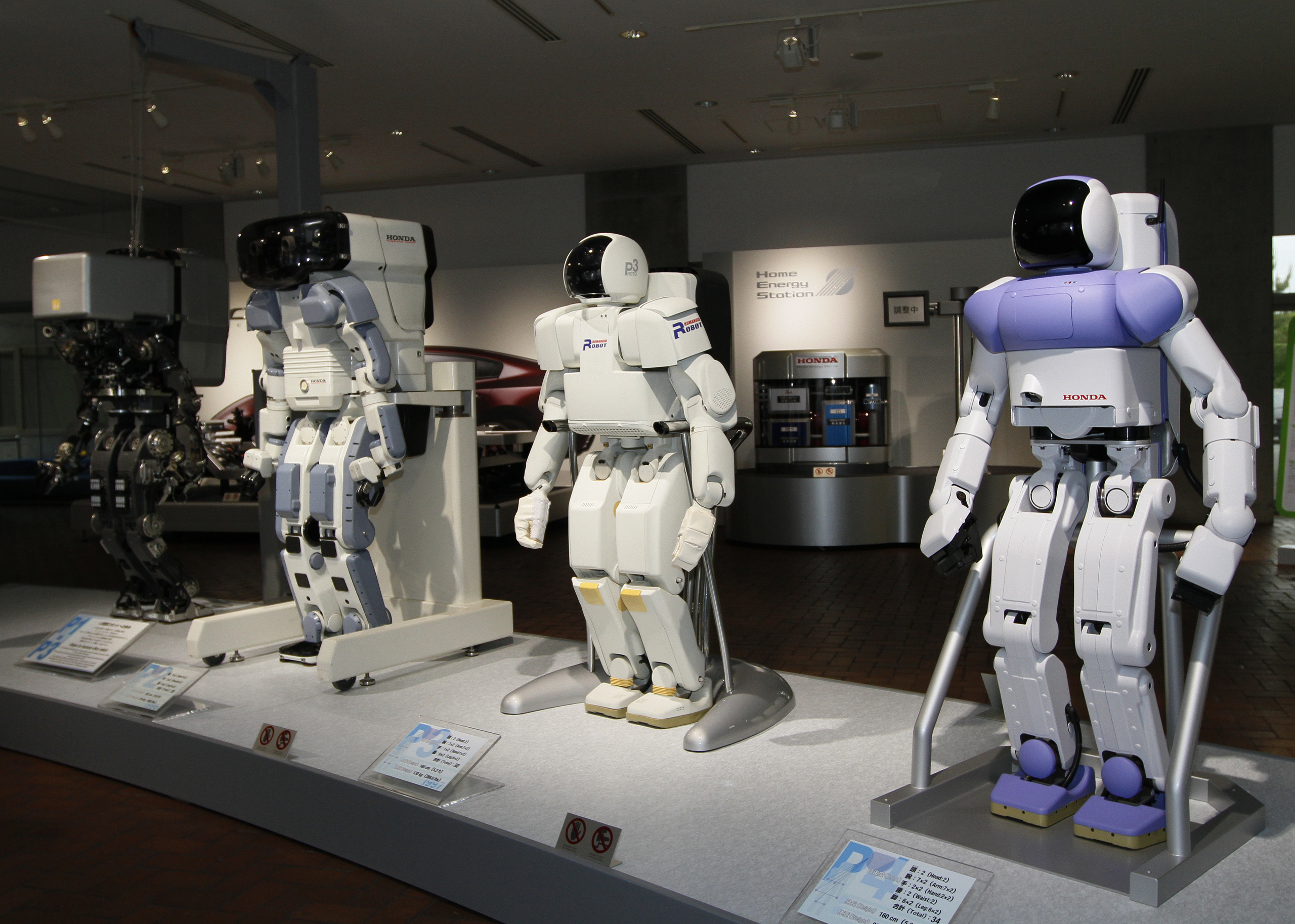
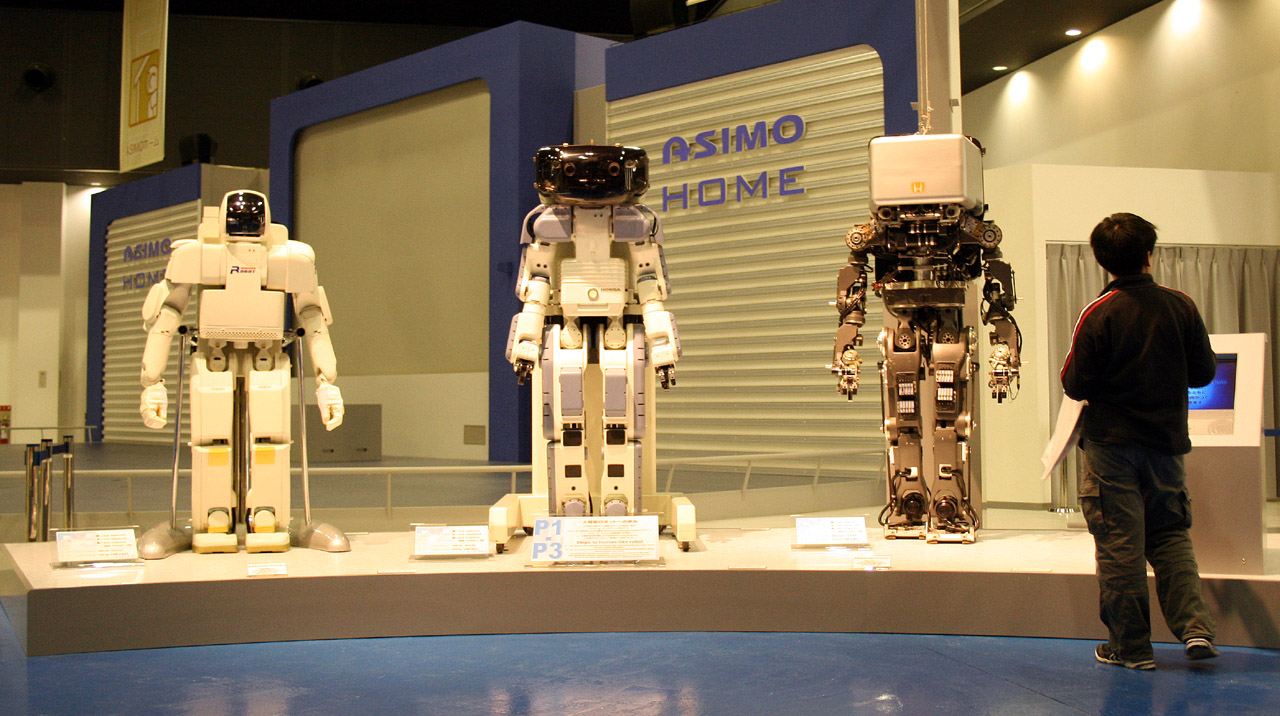
Honda began secret humanoid robotics research in 1986, producing the E-series bipedal leg models. The P1, completed in 1993, was the first full-body humanoid prototype. It featured arms and hands, standing 1.92 m tall with 30 DOF. The P1 was tethered to external power and computing. Its successful walking trials led to the untethered P2 in 1996 and the compact P3 in 1997. The research culminated in ASIMO, unveiled in 2000. The P1 is now a museum piece, displayed at Honda’s collection hall in Motegi, Japan.
Buying Used — What to Check
Verify authenticity Only a handful of P1 units were built; any offered for sale must be authenticated against Honda’s internal records.
Confirm original hardware The P1 used custom 1993 electronics and harmonic drives; modifications or missing parts would severely impact historical value.
Assess tethered infrastructure Full operation requires the original external power supply and real-time computer system, which are rarely preserved.