
Autonomous cargo ships have been tested for years, but operated in a legal grey area with no international safety standards. That changed this month when the International Maritime Organization (IMO) adopted the first global safety code for crewless vessels, setting design, cybersecurity, and human oversight requirements that clear the way for commercial deployment.
- What Does the MASS Code Actually Require?
- How Will This Change Autonomous Shipping?
- What About Cybersecurity and Human Oversight?
- What This Means for the Maritime Robotics Industry
- Frequently Asked Questions
What Does the MASS Code Actually Require?
The new International Code of Safety for Maritime Autonomous Surface Ships (MASS Code) is a legally binding framework that covers every phase of a crewless ship's lifecycle — from design approval to daily operation and emergency response. A ship is considered autonomous under the code if its onboard technology is designed and verified to control actions without human intervention, whether fully automated or remotely operated.
The code demands that autonomous ships meet the same level of safety, security, and environmental protection expected of a conventional vessel. That means compliance with the International Convention for the Safety of Life at Sea (SOLAS) and other mandatory IMO instruments. Key areas include navigation, connectivity, remote operations, fire safety, and search and rescue.
| Requirement Area | What the MASS Code Mandates |
|---|---|
| Design & Construction | Risk-based approval, redundancy for critical systems |
| Navigation | Autonomous collision avoidance, sensor fusion, fail-safe modes |
| Connectivity | Reliable satellite/5G links, data logging, latency management |
| Remote Operations | Dedicated Remote Operations Centres (ROCs) with trained staff |
| Fire Safety | Automated detection and suppression systems adapted for no-crew zones |
| Search & Rescue | Remote-capable lifeboats, automatic distress signaling |
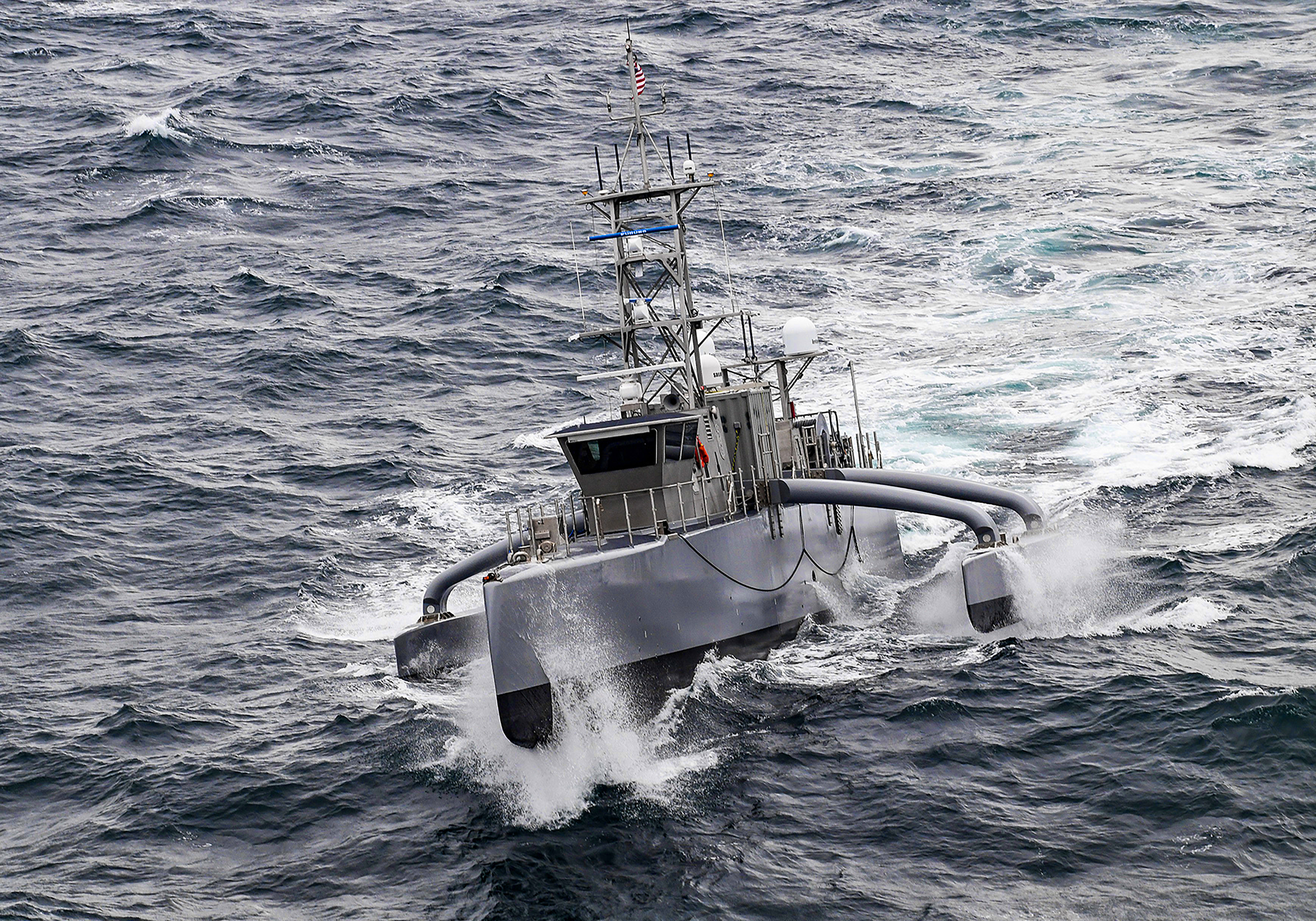
The code places strong emphasis on risk assessment — shipbuilders must demonstrate through analysis and testing that every autonomous function is at least as safe as the equivalent human-controlled operation. This shifts the burden of proof onto manufacturers and operators, forcing them to proactively identify failure modes rather than relying on a crew to react.
How Will This Change Autonomous Shipping?
The MASS Code removes the regulatory uncertainty that has held back investment in autonomous maritime technology. Previously, a shipowner wanting to deploy a partially or fully crewless vessel had to seek individual waivers from flag states, port authorities, and insurers — a slow, case-by-case process that discouraged commercial scaling.
Now, any vessel that meets the code's design and operational standards can operate internationally under a clear, pre-approved framework. This is expected to accelerate the transition from small-scale trials (dozens of ships) to fleet-level adoption (hundreds) over the next five to ten years.
The IMO's press briefing notes that while the number of fully crewless ships remains limited today, a growing number of successful trials worldwide — from Norway's Yara Birkeland to Japan's autonomous container ships — have demonstrated technical feasibility. The MASS Code provides the regulatory backbone to turn those demonstrations into commercial services.
What About Cybersecurity and Human Oversight?
Two aspects of the MASS Code stand out as particularly consequential: cybersecurity and retained human responsibility.
Cybersecurity is baked into the code as a core design requirement, not an afterthought. Autonomous ships rely on continuous satellite and radio links to Remote Operations Centres (ROCs), making them vulnerable to jamming, spoofing, and ransomware attacks. The code mandates encrypted communications, intrusion detection systems, and secure boot processes for all navigation and control electronics. Operators must also submit periodic cybersecurity audits as part of vessel certification.
On human oversight, the code explicitly states that the master retains overall responsibility for the ship at all times — even if not on board. This creates a new role: the remote master, stationed in a ROC, who monitors multiple vessels or oversees a single ship from shore. The ROC itself must meet design standards for ergonomics, redundancy, and latency — effectively becoming a "bridge on land" with comparable equipment and failover capabilities.
This dual emphasis — cybersecurity hardening plus retained human accountability — addresses the two biggest concerns insurers and port authorities have raised about crewless ships. Without clear liability chains and robust digital defenses, the industry could not have scaled.
What This Means for the Maritime Robotics Industry
For companies building the hardware and software that enable autonomous shipping — sensor arrays, AI navigation stacks, remote control systems, and cybersecurity tools — the MASS Code represents a market-shaping event. It creates a clear compliance target that every autonomous ship system must now meet.
- AI and autonomy providers must now design systems that pass IMO-style risk assessments, including formal safety cases and failure mode analysis.
- Sensor and communication hardware makers benefit from mandates for redundant, high-bandwidth connectivity and secure data links.
- Remote operations centers become a required piece of infrastructure, opening a new market for shore-based control facilities and workforce training.
Shipping companies evaluating autonomous technology now have a concrete checklist rather than vague aspirations. This makes it easier to compare vendors and calculate total cost of ownership — similar to how safety ratings drove adoption of advanced driver assistance systems in trucks and passenger vehicles.
For a broader view of how automation is reshaping physical industries, browse our used industrial robots and autonomous mobile robot categories — the same trends in sensing and autonomy are reaching the warehouse floor.
Frequently Asked Questions
What makes a ship "autonomous" under the MASS Code? A ship is autonomous if its onboard technology is designed and verified to control actions without human intervention. This includes both fully unmanned vessels and remotely operated ships where a human can intervene from a shore station.
Does the code apply to all autonomous ships immediately? The MASS Code was adopted in 2025 and is expected to enter into force after ratification by a sufficient number of IMO member states. Existing autonomous ships will have a transition period to comply, but new builds must meet the standards from the effective date.
How does the code handle cybersecurity for crewless ships? It mandates encrypted communications, intrusion detection, secure boot for all navigation electronics, and periodic cybersecurity audits as part of vessel certification. Operators must also demonstrate resilience against jamming, spoofing, and ransomware attacks.
What is a Remote Operations Centre (ROC)? A ROC is a shore-based facility with trained operators who remotely monitor and control autonomous ships. The code requires ROCs to meet design standards for ergonomics, connectivity redundancy, and failover capability — essentially a bridge on land.
Who is responsible if an autonomous ship causes an accident? The master retains overall responsibility at all times, even if not on board. For fully autonomous ships without a remote master, the company operating the ship is held liable. The code ensures clear chains of accountability.
Conclusion
The IMO's MASS Code turns autonomous shipping from a niche experiment into a regulated industry. By setting clear safety, cybersecurity, and human oversight standards, it gives shipowners, insurers, and port authorities the confidence to invest in crewless vessels at scale. For robotics and AI companies serving maritime applications, the code defines a market that now has a compliance roadmap — and that means the race to build the first fully certified autonomous cargo fleet is officially on.








Kommentaarid