

Japan's acute labor shortage — projected to reach 11 million unfilled positions by 2040 — is forcing a deployment timeline that Western markets are still debating in boardrooms. While Europe and North America argue about automation displacing workers, Japanese manufacturers and elder care facilities are simply trying to fill roles that no human applicant wants. The result is a real-world stress test of physical AI at a scale no controlled pilot could replicate.
- Why Japan Is Different: Labor Shortage as a Forcing Function
- Where Physical AI Is Actually Deployed in Japan Right Now
- The Models Seeing Increased Demand: Specs and Sector Fit
- Why Western "Displacement" Narratives Miss the Point
- What This Means for Robotics Buyers and Automation Teams
- Frequently Asked Questions
Why Japan Is Different: Labor Shortage as a Forcing Function
Japan's demographic pressure isn't a future projection — it's an operational reality distorting hiring markets today. With a population that is over 29% aged 65 or older, the country faces simultaneous shortfalls in elder care, logistics, and light manufacturing. No amount of immigration policy adjustment closes that gap fast enough.
This creates a procurement dynamic that fundamentally differs from Western contexts. In the US or Germany, automation adoption typically follows a cost-reduction logic: robots replace workers to lower unit costs. In Japan, the logic is substitution for absence — robots are filling roles where the alternative isn't a human worker, it's an unfilled vacancy. That distinction matters enormously for how quickly organisations accept deployment risk.
When the counterfactual is "position stays empty," tolerance for imperfect robot performance rises sharply. A care facility robot that handles 70% of routine mobility assistance tasks independently — while human staff handles the remaining 30% — isn't a partial failure. It's a net positive over zero coverage.
This is why Japan has become, almost by accident, the world's highest-fidelity test environment for physical AI in unstructured real-world conditions.
Where Physical AI Is Actually Deployed in Japan Right Now
Japan's deployment landscape spans three sectors with meaningfully different requirements, and physical AI is gaining traction in all three simultaneously.
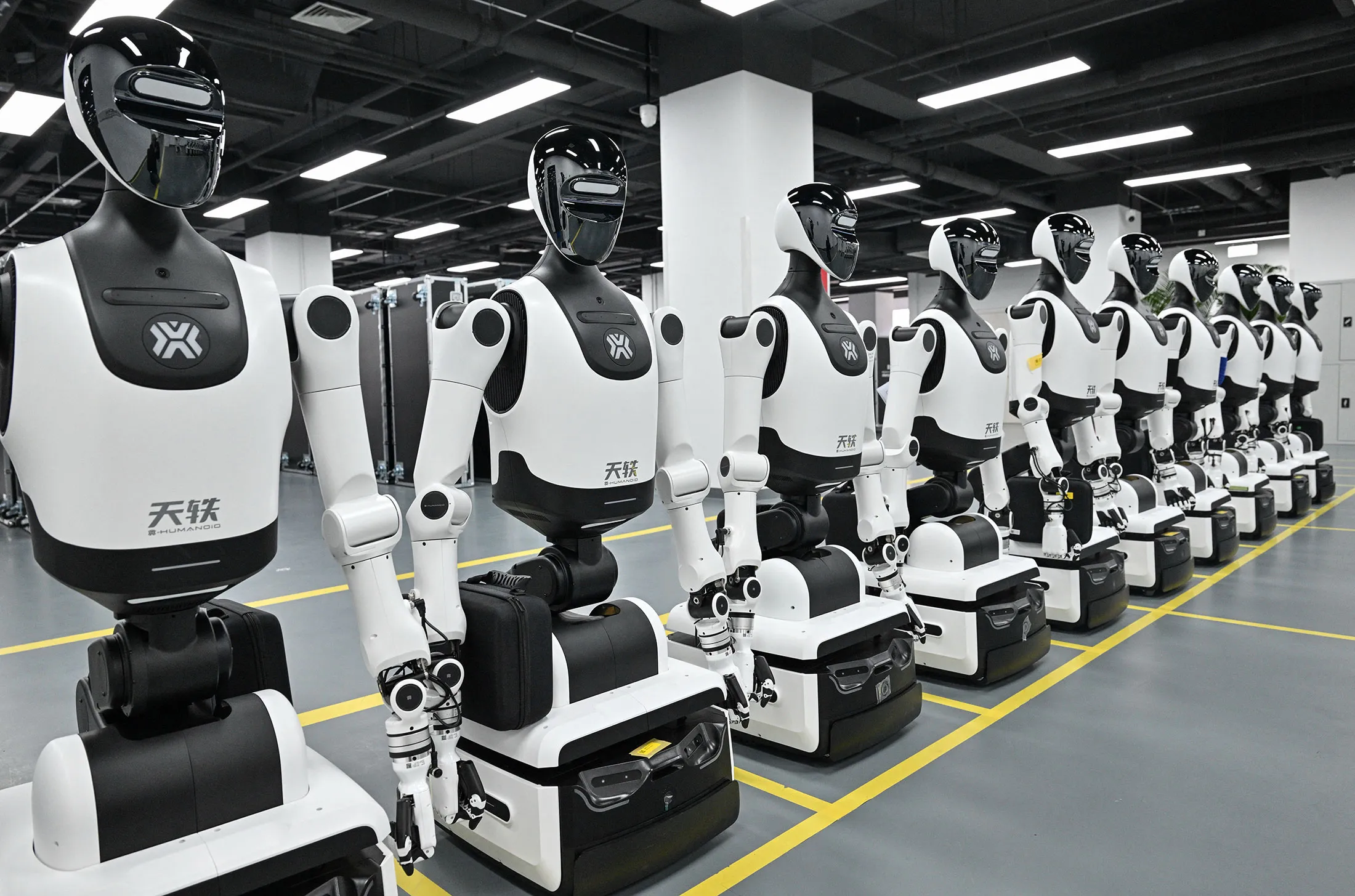
Elder care is the most publicly visible front. Robotic lift-assist systems and mobility companions are operating in facilities across Osaka, Tokyo, and rural prefectures where care worker shortages are most acute. The RIKEN-developed ROBEAR prototype demonstrated the concept years ago; what's changed is that systems from companies including CYBERDYNE (HAL exoskeleton), Panasonic, and Toyota's Care Robot division have moved from facility trials to multi-site deployments.
Manufacturing and logistics represent the highest volume of units. Japanese automotive supply chains — still among the most robotically dense in the world at roughly 399 robots per 10,000 workers — are integrating collaborative robot arms and mobile manipulation platforms into mixed human-robot workflows. The shift is from fixed-task industrial robots toward adaptive cobots capable of handling product variability without reprogramming.
Food service and retail rounds out the picture. Restaurant chains including Skylark Group have deployed serving robots across hundreds of locations, less as a novelty and more as a structural response to front-of-house hiring failures in regional Japan.
| Sector | Primary Robot Type | Deployment Driver | Maturity Level |
|---|---|---|---|
| Elder Care | Lift-assist, exoskeletons, companion robots | Staff shortages, aging population | Mid-stage, scaling |
| Manufacturing | Cobots, mobile manipulators | Precision + labor gaps | Advanced, high volume |
| Logistics | AMRs, sorting robots | E-commerce demand, warehouse labor | Advanced, scaling |
| Food Service | Serving robots, kitchen assist | Front-of-house hiring failures | Early-to-mid stage |
The Models Seeing Increased Demand: Specs and Sector Fit
Botmarket marketplace data and sector procurement signals point to several robot categories experiencing accelerated demand driven by Japanese deployment success and its global demonstration effect.
Collaborative robot arms (cobots) in the 6-20 kg payload range are the highest-velocity category. Universal Robots' UR10e and UR20, Fanuc's CRX series, and OMRON's TM series are all seeing elevated inquiry volumes for light assembly and packaging applications — tasks directly comparable to those being scaled in Japanese factories. These systems typically operate at $35,000–$85,000 per unit before integration costs, with payback periods of 18–36 months in high-labor-cost environments.
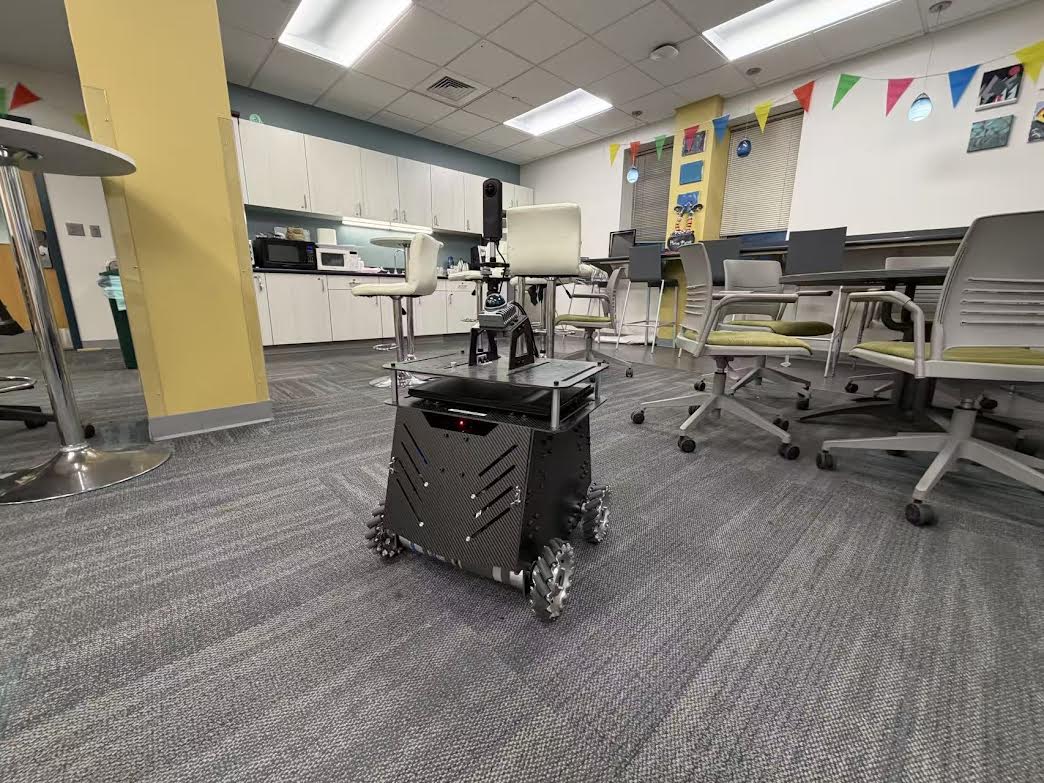
Autonomous Mobile Robots (AMRs) designed for mixed human-robot environments are the second high-demand category. Unlike traditional AGVs (Automated Guided Vehicles) that follow fixed paths, AMRs use SLAM (Simultaneous Localisation and Mapping) navigation to move dynamically through changing environments — a critical capability for elder care facilities and food-service environments with unpredictable human traffic. MiR, Locus Robotics, and Omron's LD series are the reference platforms.
Exoskeletons and lift-assist devices remain niche globally but are showing the strongest growth rate percentage-wise, driven almost entirely by care sector interest following Japanese deployment data.
For buyers evaluating used cobots for sale in manufacturing contexts, the Japanese deployment evidence is directly applicable: the task profiles — bin picking, light assembly, quality inspection — are functionally identical to Western factory needs.
Why Western "Displacement" Narratives Miss the Point
The dominant Western framing around automation — that robots are coming for jobs — is empirically backwards in the sectors Japan is automating first.
In Japanese elder care, there is no job being displaced. There is a vacancy that has gone unfilled for years. The robot isn't replacing a care worker; it's doing the lifting work that made care work physically unsustainable and drove workers out of the profession in the first place. Robotic lift-assist systems that handle patient transfers reduce musculoskeletal injury rates for remaining human staff — they make the human jobs more sustainable, not redundant.
In manufacturing, the pattern is subtler but structurally similar. Japan's robot-dense factories haven't seen mass unemployment — they've maintained manufacturing output as their working-age population contracted. Automation absorbed the demographic gap.
This isn't an argument that displacement never occurs. In economies with robust labor supply, automation economics work differently. But the Japan evidence is a clear proof point that physical AI adoption dynamics are context-dependent — and the Western debate frequently assumes a labor market context that doesn't exist everywhere.
For robotics buyers and automation strategists, the practical implication is this: the question isn't "will this robot take a job?" It's "is there a job to take, or a gap to fill?" That reframe changes the ROI calculation, the stakeholder conversation, and the deployment timeline substantially.
What This Means for Robotics Buyers and Automation Teams
Japan's deployment acceleration is a leading indicator, not an isolated phenomenon. Here's the direct read-through for buyers evaluating automation investments:
For elder care and healthcare facilities: The Japanese evidence de-risks the ROI conversation. Lift-assist and mobility robots are no longer experimental — they have multi-year deployment records in high-stakes environments. The integration challenge has shifted from "does this work?" to "how do we train staff to work alongside it?"
For manufacturers and logistics operators: The cobot and AMR categories have crossed the reliability threshold. Japanese supply chains are not running pilot projects — they're running production. Buyers who have delayed on the grounds of technology maturity can update that assumption.
For automation strategists building the business case: The displacement narrative is a stakeholder management problem as much as a factual one. Japan's labor-shortage-driven model offers a reframing: automation as workforce stabilisation, not workforce reduction.
Buyers actively evaluating platforms should browse used industrial robots with an eye toward models with proven track records in mixed human-robot environments — the operational complexity that Japan has been navigating at scale.
Key procurement benchmarks based on current market data:
| Robot Category | Entry Price (Used) | New Unit Range | Typical ROI Period |
|---|---|---|---|
| Cobot arm (6-10kg payload) | $15,000–$30,000 | $35,000–$55,000 | 18–30 months |
| AMR (standard warehouse) | $20,000–$45,000 | $50,000–$90,000 | 24–36 months |
| Lift-assist / exoskeleton | $25,000–$60,000 | $60,000–$150,000 | Varies by care context |
| Mobile manipulator | $45,000–$90,000 | $100,000–$200,000+ | 30–48 months |
Frequently Asked Questions
What is physical AI and how is it different from software AI?
Physical AI refers to AI systems that perceive and act in the physical world — robots, autonomous vehicles, and embodied systems — rather than processing data in purely digital environments. The distinction matters because physical AI must handle real-world unpredictability: variable lighting, unexpected objects, and human proximity. Japan's deployments are significant because they validate physical AI performance outside of controlled lab or pilot conditions, in live elder care and manufacturing environments.
Why is Japan deploying robots faster than Western countries?
Japan's deployment rate is driven by demographic necessity, not technology enthusiasm. With a projected 11 million unfilled positions by 2040 and over 29% of the population already aged 65 or older, Japanese organisations face vacancies with no human candidate pipeline. When the alternative to a robot is an empty role, risk tolerance for imperfect performance rises sharply, accelerating real-world deployment timelines that Western markets — with different labor supply dynamics — are still debating.
Which robot types are seeing the most demand increase due to Japan's deployment success?
Collaborative robot arms in the 6–20 kg payload class, AMRs with SLAM-based navigation, and lift-assist systems for care environments are the three categories showing the strongest demand growth. Cobot arms from Universal Robots, Fanuc's CRX series, and OMRON's TM series are the most commonly cited reference platforms in manufacturing procurement discussions. AMRs from MiR and Locus Robotics are leading in logistics and care contexts.
Is there evidence that robots are displacing workers in Japan's automated sectors?
The Japanese case does not support a simple displacement narrative. Robot-dense Japanese manufacturing has maintained output as the working-age population contracted — robots absorbed the demographic gap rather than replacing existing workers. In elder care, robots are filling roles that went unfilled due to physical demands driving workers out of the profession, not replacing human staff. This doesn't mean displacement never occurs, but Japan's specific labor context produces a structurally different outcome than labor-abundant economies.
What should buyers look for when evaluating cobots or AMRs for mixed human-robot environments?
Prioritise platforms with proven safety certification (ISO/TS 15066 for cobots, ISO 3691-4 for AMRs), SLAM-based navigation over fixed-path guidance, and deployment references in environments comparable to yours — not just controlled pilots. Japanese supply chain deployments now provide some of the richest real-world performance data available. For elder care applications, look specifically for systems with documented musculoskeletal injury reduction data from care facility deployments.
Is your facility facing a labor gap that robots could fill — and is the Japan evidence changing your timeline?
Japan's labor crisis has done something no tech demo could: it ran physical AI through years of unscripted, high-stakes, real-world operation and returned a verdict. The technology works well enough to deploy — not perfectly, but better than vacancy. For buyers and automation teams in any sector facing similar workforce pressure, the question is no longer whether physical AI is ready. It's whether your procurement process is.

Osallistu keskusteluun
Is a labor gap — not cost savings — the business case that finally accelerates your automation investment?