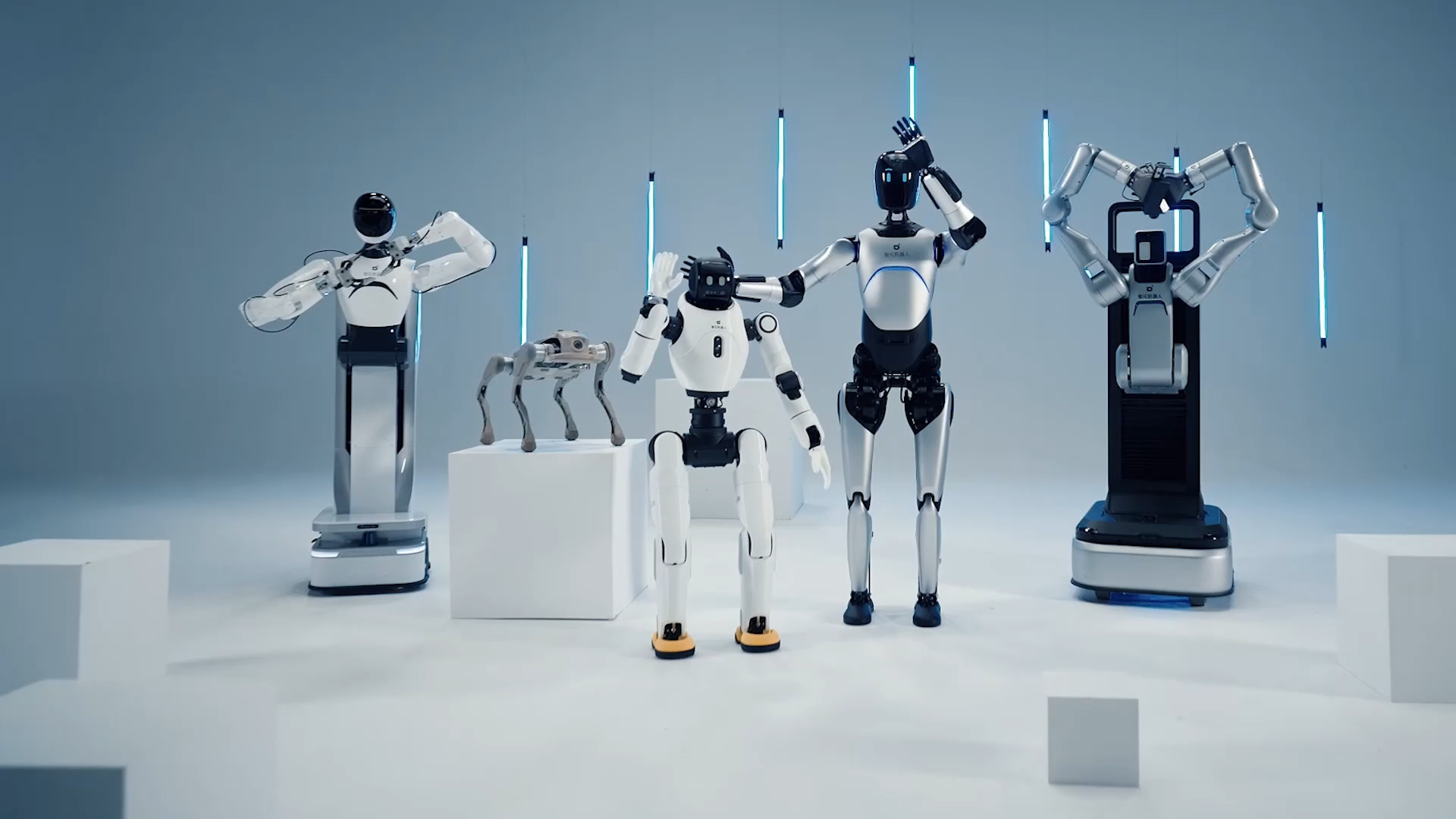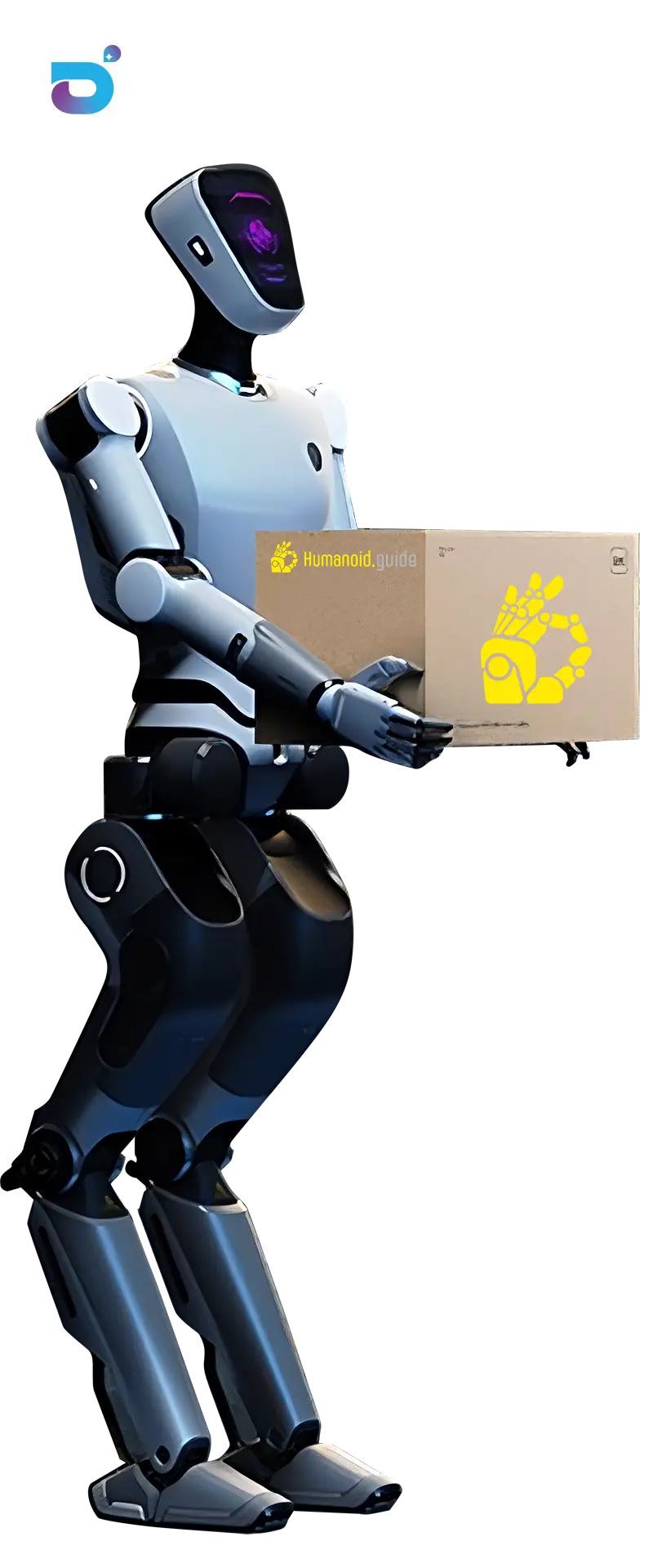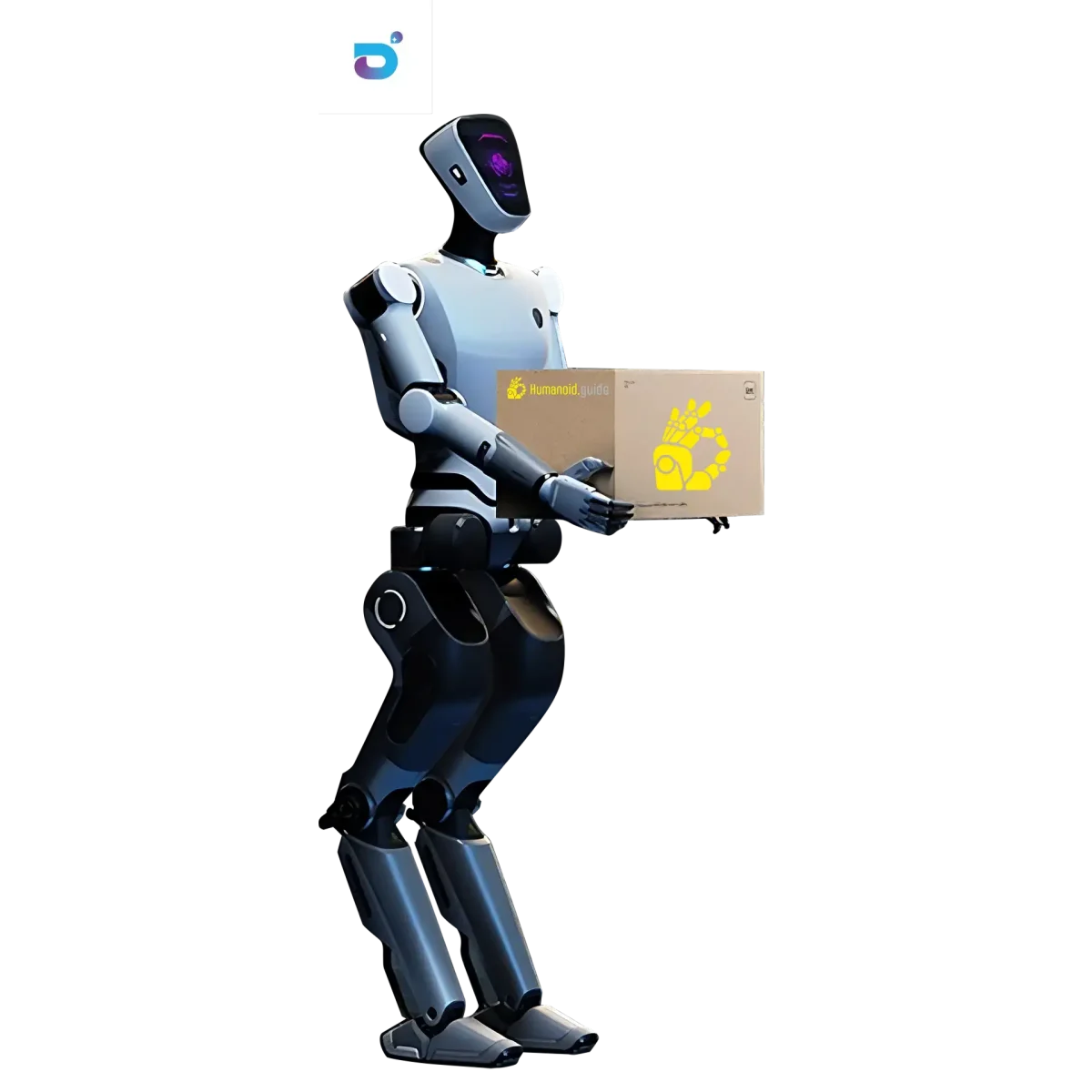
What is the Agibot Raise A1?
The AgiBot Raise A1 is a full-size humanoid research platform developed by AgiBot Innovation Technology Co., Ltd., based in Shanghai, China. Unveiled in August 2023, it is designed as an advanced platform for AI training and whole-body control research, featuring 49 degrees of freedom — 12 in its dexterous five-fingered hands. The robot stands 175 cm tall and weighs 53 kg, powered by AgiBot’s custom PowerFlow quasi-direct-drive rotary joints with liquid cooling. Its bipedal locomotion reaches 7 km/h, and it carries a standing payload of 5 kg. The Raise A1 integrates depth cameras, IMU, and a microphone array for perception, and supports AgiBot’s WorkGPT for task planning. The platform remains a prototype, with no official pricing or commercial availability.
Specifications
Here are the full technical specifications.
| Spec | Value |
|---|---|
| Height | 175 cm |
| Weight | 53 kg |
| Degrees of freedom | 49 (12 in hands) |
| Battery life | 2 hours |
| Max speed | 7 km/h |
| Payload | 5 kg (standing, arm payload unspecified) |
| Price (new) | Undisclosed |
| Price (used range) | N/A |
Price & Value
New MSRP: Undisclosed (expected ~$30,000)
Used range: N/A
AgiBot has not announced an official price for the Raise A1, but early reports suggested it could be priced under ¥200,000 (roughly $28,000–$30,000). At that price point, it would compete with research-oriented humanoids like the Unitree H1 ($90,000) and the expected cost of Tesla Optimus. However, since the robot is still in prototype stage, buyers should anticipate that commercial pricing and availability may be far off. If the Raise A1 reaches market at a sub-$30,000 price, it could offer exceptional value for agility and dexterity research, but the lack of payload data and no track record of reliability are significant unknowns. Furthermore, as a pre-commercial system, there is no used market, and depreciation cannot be estimated. The total cost of ownership will depend heavily on eventual software support, spare parts, and whether the robot’s advanced actuators require specialized maintenance. Overall, the Raise A1 is a potentially disruptive platform if it can deliver on its spec sheet at a fraction of the price of existing humanoid systems.
Who Is It For?
Best for: - University robotics labs researching whole-body control and dexterous manipulation (49 DOF, 12-DOF hands) - AI/embodied intelligence teams needing a platform for sim-to-real transfer and LLM-based task planning (WorkGPT support) - Industrial R&D departments exploring bipedal locomotion in logistics and inspection - Educational institutions teaching advanced humanoid robotics and mechatronics (though not yet commercially available)
Not for: - Heavy payload operations (no arm payload rating, 5 kg standing limit) - Conservative commercial deployments (prototype, no safety certifications, uncertain support) - Budget-constrained projects that require a ready-to-use robot (no firm pricing or delivery timeline)
Alternatives & Comparison
The AgiBot Raise A1 enters a slowly growing field of mid-size humanoid research platforms. While several competitors are now commercially available or in pilot programs, the Raise A1’s standout feature is its industry-leading 49 degrees of freedom paired with an expected budget-friendly price.
| Model | Price | Available | Key Difference |
|---|---|---|---|
| Unitree H1 | $90,000 | yes | 27 DOF, faster 18 km/h top speed, heavier ~47 kg (with battery), proven commercial availability |
| Fourier GR-1 | Undisclosed | preorder | 40 DOF, developed for rehabilitation and walking assistance, similar 175 cm height, no public pricing |
| Tesla Optimus | Undisclosed (~<$20,000 est.) | no | 40 DOF, heavier ~73 kg, targeted at factory logistics, Elon Musk’s bold price target may undercut the Raise A1 if met |
| Figure 01 | Undisclosed | no | 42 DOF, specifically designed for warehouse box-moving, currently in pilot tests with BMW, fast walking 4.3 km/h but focused on manipulation |
Verdict: For researchers who value maximum kinematic dexterity at a potentially low price, the Raise A1 is the most compelling spec sheet. However, the Unitree H1 is a safer bet for those who need a robot they can order today, while the Tesla Optimus looms as a massive wildcard if its promised sub-$20,000 price materializes. For now, the Raise A1 remains a prototype to watch rather than buy.
Use Cases & Capabilities
Humanoid Locomotion Research
The Raise A1’s 49 DOF and whole-body control algorithms make it a powerful testbed for bipedal walking, running, and dynamic balance studies. Researchers can push the limits of terrain adaptation, speed control, and fall recovery thanks to the robot’s 7 km/h top speed and custom rotary actuators. The high DOF count allows for advanced gait optimization and energy efficiency analysis. However, without published payload or endurance data, long-term locomotion experiments remain speculative. It is best suited for simulation-to-real transfer and control theory validation rather than continuous heavy-duty operation.
Dexterous Manipulation and AI Training
With 12 DOF in each hand and five-fingered dexterity, the Raise A1 is a promising platform for grasping, tool use, and fine manipulation tasks driven by AI. Its integration with WorkGPT enables natural language task commands and complex sequential manipulation learning. Labs can use the robot for sim-to-real research, reinforcement learning, and bimanual coordination. The lack of arm payload specifications means it is not designed for heavy lifting, but its dexterity may advance robotic surgery or delicate assembly research once the hardware matures.
Industrial Inspection and Logistics R&D
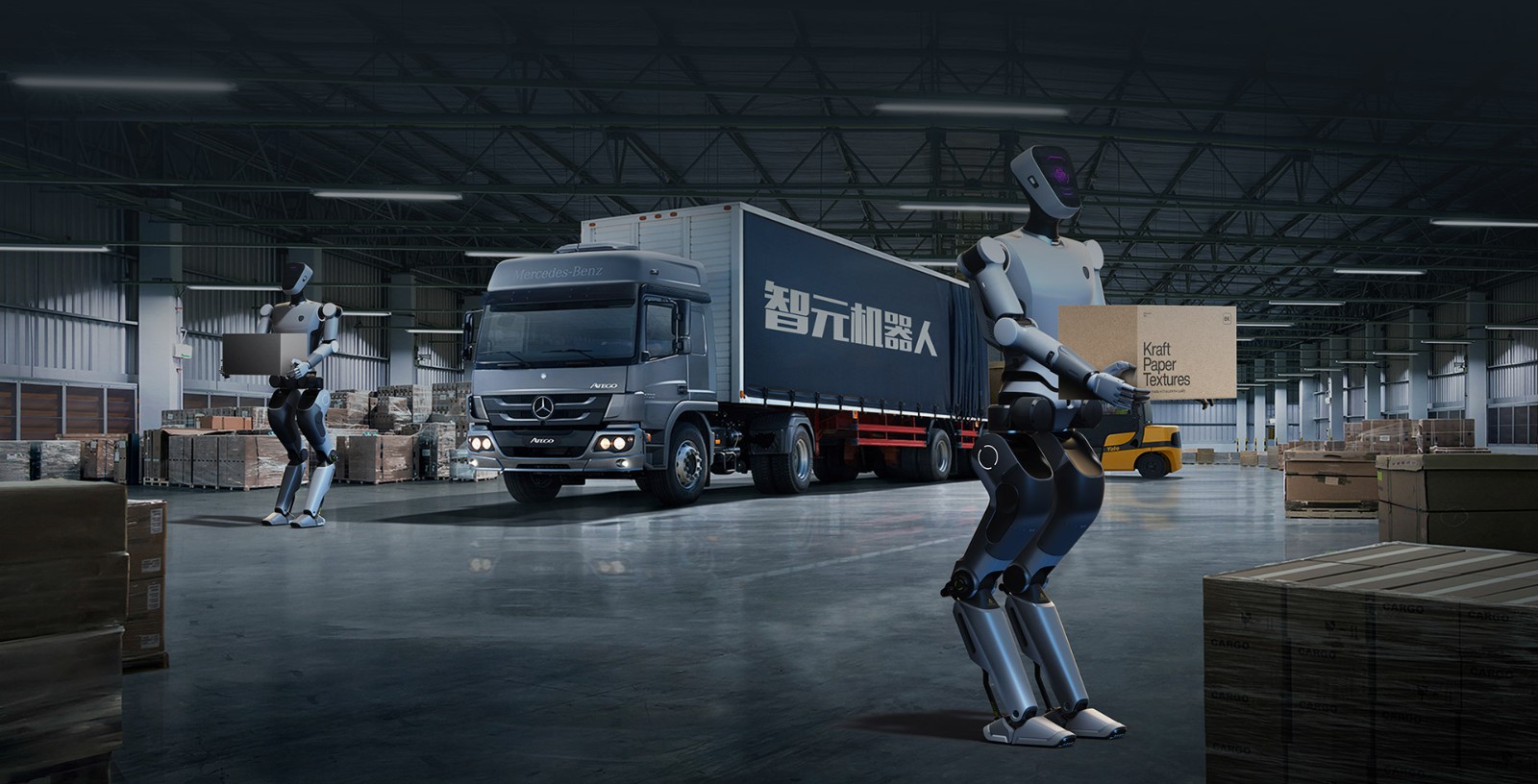
AgiBot targets the Raise A1 at logistics, manufacturing, and service sectors, envisioning autonomous inspection and light material handling. The robot’s bipedal mobility and sensor suite (depth cameras, IMU, microphones) allow it to navigate factory floors and warehouses, performing tasks like inventory scanning or equipment monitoring. Its standing payload of 5 kg limits it to small tools or sensors, but the platform’s potential for custom software and low expected cost could attract industrial R&D labs. Real-world deployment awaits safety certifications and reliability data.
Educational Platform for Advanced Robotics
Designed as a research platform, the Raise A1 can serve as a high-end educational tool for graduate programs in robotics, mechatronics, and AI. Students gain hands-on experience with a full-scale humanoid, learning about whole-body control, sensor fusion, and human-robot interaction. The open SDK (yet to be fully detailed) and anticipated competitive pricing could make it accessible to well-funded university labs. However, its prototype status means that curriculum integration will likely require close collaboration with AgiBot for early-access units and technical support.
History & Background
AgiBot Innovation Technology Co., Ltd. was founded in early 2023 in Shanghai, China, as a pure-play humanoid robotics company. The company made a splash on August 18, 2023, when it unveiled the Raise A1 alongside the smaller Sub-T model during a launch event. The Raise A1 was positioned as the company’s most capable research platform, boasting 49 degrees of freedom and custom PowerFlow actuators. Since then, AgiBot has released only limited demo footage and technical previews, and as of 2026 the robot has not entered mass production or commercial delivery. AgiBot continues to refine the Raise A1’s whole-body control algorithms, and details on its next-generation models remain scarce.
Buying Used — What to Check
Verify payload rating Payload and runtime are critical — the published 5 kg is standing only, arm payload is unknown.
Check actuator lifespan Custom PowerFlow joints have no public durability data; early units may wear quickly with heavy use.
Confirm software and API availability As a prototype, the SDK and WorkGPT integration may be incomplete or unstable, limiting research utility.