

Sam Altman is building a second front for OpenAI in Washington, courting lawmakers and regulators ahead of the company's next major product: a platform that lets AI agents divide complex tasks among themselves. The engagement strategy reflects what OpenAI sees as the product's biggest risk — not technical, but political — as the company asks the government to let it define the rules for an economy-level shift.
Table of Contents
- Altman's Washington Pivot
- What the New Agent Platform Does
- The Economy Is the Sticking Point
- Competitive Context: A Crowded Agent Race
- What This Means for the Industry
- Frequently Asked Questions
- Conclusion
Altman's Washington Pivot
Sam Altman's calendar has shifted. The OpenAI chief executive is spending as much time in Washington these days as in Silicon Valley, meeting with lawmakers, agency heads and administration officials to make the case for the company's next act: a product built around AI agents that can take on tasks and complete them with limited human supervision.
According to the Washington Post, Altman described the upcoming product in conversations with policymakers, framing its ability to let multiple agents divide work among themselves as a potential economic turning point. The pitch is both a product demonstration and a policy preview. OpenAI wants Washington to understand what is coming before the product ships, rather than after regulators read about it in the news.
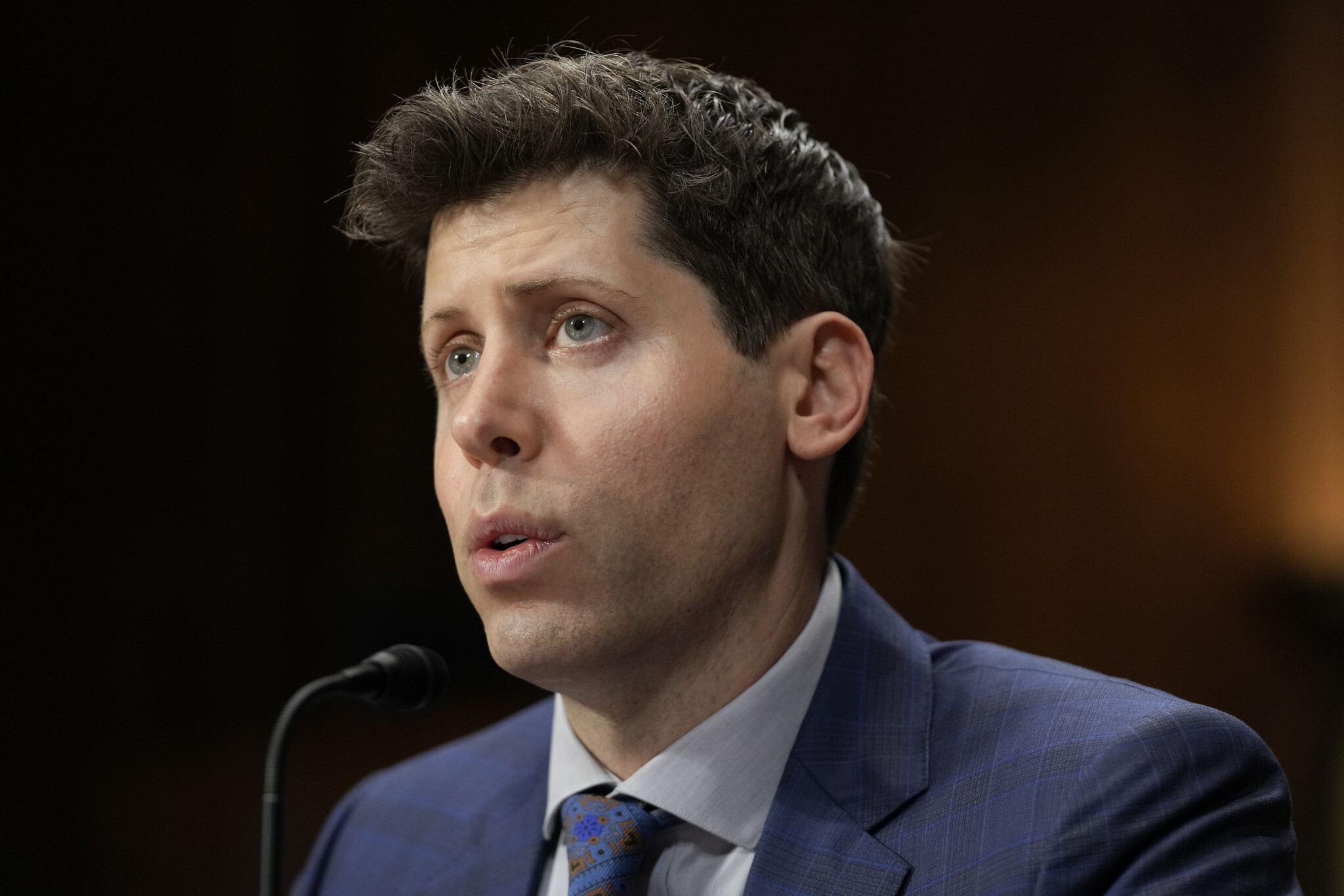
It is a notable reversal of posture. Altman has appeared before the Senate to ask for regulation, proposing licensing requirements for the most capable systems. The tone now is different. The message has shifted from "please regulate us" to "here is how you should regulate the category we are about to define."
OpenAI has built the infrastructure to match the ambition. The company has expanded its policy team, hired former government officials and deepened its presence in the capital. The investment reflects a simple calculation: the biggest obstacle to the agent product is no longer model capability — it is permission.
What the New Agent Platform Does
The product Altman is describing goes beyond the assistant-style chatbots that made ChatGPT a household name. Instead of a single model answering questions, the platform is designed around AI agents — software that can plan, use tools, access data and complete multi-step tasks with limited human supervision.
The word getting the most attention in Washington is "divide." Altman's description centers on a system in which a large, complex assignment is broken into subtasks and distributed across multiple agents working in parallel. Each agent handles a piece; a coordinating layer keeps the pieces aligned; a human sits in a supervisory role, stepping in only for judgment calls.
That architectural shift matters far beyond the technical details. A single agent is a tool. A system of coordinated agents is closer to a workforce.
For enterprises, that distinction is the difference between buying software and reconsidering how work is organized. Early deployments are likely to target back-office functions — operations that involve large volumes of structured tasks — where the economics of delegating work to software are most obvious. OpenAI's commercial model already leans heavily on enterprise contracts, and the agent platform is expected to follow the same path.
The Economy Is the Sticking Point
Altman's own framing is the most aggressive part of the rollout. He has told policymakers the product could "transform the American economy" — language that is deliberately ambitious and deliberately unsettling. The question hanging over his Washington meetings is what that transformation actually looks like.
Lawmakers have split into predictable camps. Some want assurances that agents will be subject to clear liability rules before deployment at scale. Others are focused on the labor question: if agents can divide and complete tasks that once required teams of people, what happens to those teams? Still others are asking about security — the prospect of agent systems operating with access to sensitive corporate data.
Altman's argument is that these concerns are best addressed by rules written with the technology in mind, not in reaction to it. He is effectively asking Washington to pre-approve a framework — defining responsibility, transparency and safety requirements — before the product reaches the market. That is a much easier sell in theory than in practice, and the coming months will test whether OpenAI's courting converts interest into policy.
Competitive Context: A Crowded Agent Race
OpenAI is not alone in betting on agents. Anthropic and Google have both shipped agent-oriented products, and Microsoft has woven agent functionality across its enterprise stack. What separates OpenAI's pitch is scale: the company's models power the largest consumer AI audience in the West, and its enterprise business is growing quickly, reported to have crossed $10 billion in annualized revenue before accelerating past $13 billion in the latest reported period.
That scale gives OpenAI something rivals must match: distribution. The agent platform plugs into an ecosystem that already has hundreds of millions of weekly users and thousands of corporate customers. The strategy is to make the agent product the default way existing customers encounter AI, rather than a standalone experiment.
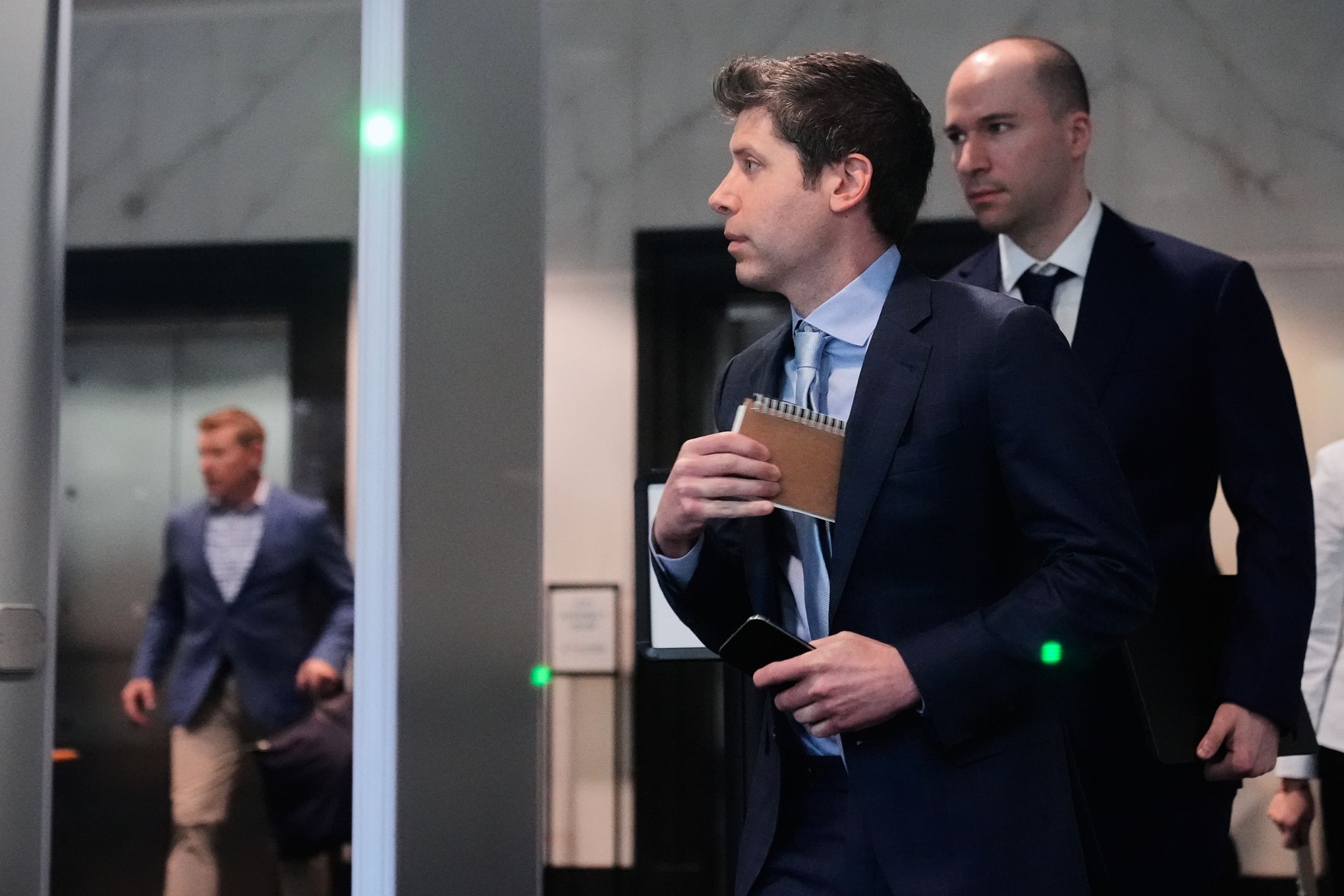
OpenAI's Washington push is also running parallel to a series of legal and regulatory battles, including a long-running dispute with Elon Musk over the company's founding mission and its for-profit conversion. The courtship of policymakers is, in part, an effort to control the narrative around those fights — to ensure that when Washington thinks of OpenAI, it thinks of jobs and growth rather than courtroom drama.
What This Means for the Industry
For investors, the agent platform represents OpenAI's most direct attempt yet to convert AI capability into durable revenue. Agent-based pricing, tied to tasks completed rather than seats licensed, could push revenue growth to a new level, justifying — or at least testing — the roughly $300 billion valuation the company commanded in its latest funding round.
For competitors, the stakes are equally high. If OpenAI defines the default architecture for multi-agent systems, rivals will be forced to match on capability, price and trust. The enterprise market is large enough to support several winners, but the first mover in agents gets to set the terms — and OpenAI is aiming squarely at that position.
For the broader tech industry, the significance is structural. Agent platforms shift the value in software from interfaces to orchestration. The companies that own the layer that plans, delegates and verifies the work of AI agents will capture a disproportionate share of the economic value the technology creates. That is why Altman is in Washington: the architectural decisions are being made now, and so are the rules that will govern them.
Conclusion
Altman's Washington tour is part product launch, part preemptive policy campaign. OpenAI is betting that the agent platform's economic potential is so large that the government will choose to shape it rather than slow it down. The outcome of that bet will be decided not in a lab, but in committee rooms and federal agencies — and it will determine how quickly the agent economy arrives.