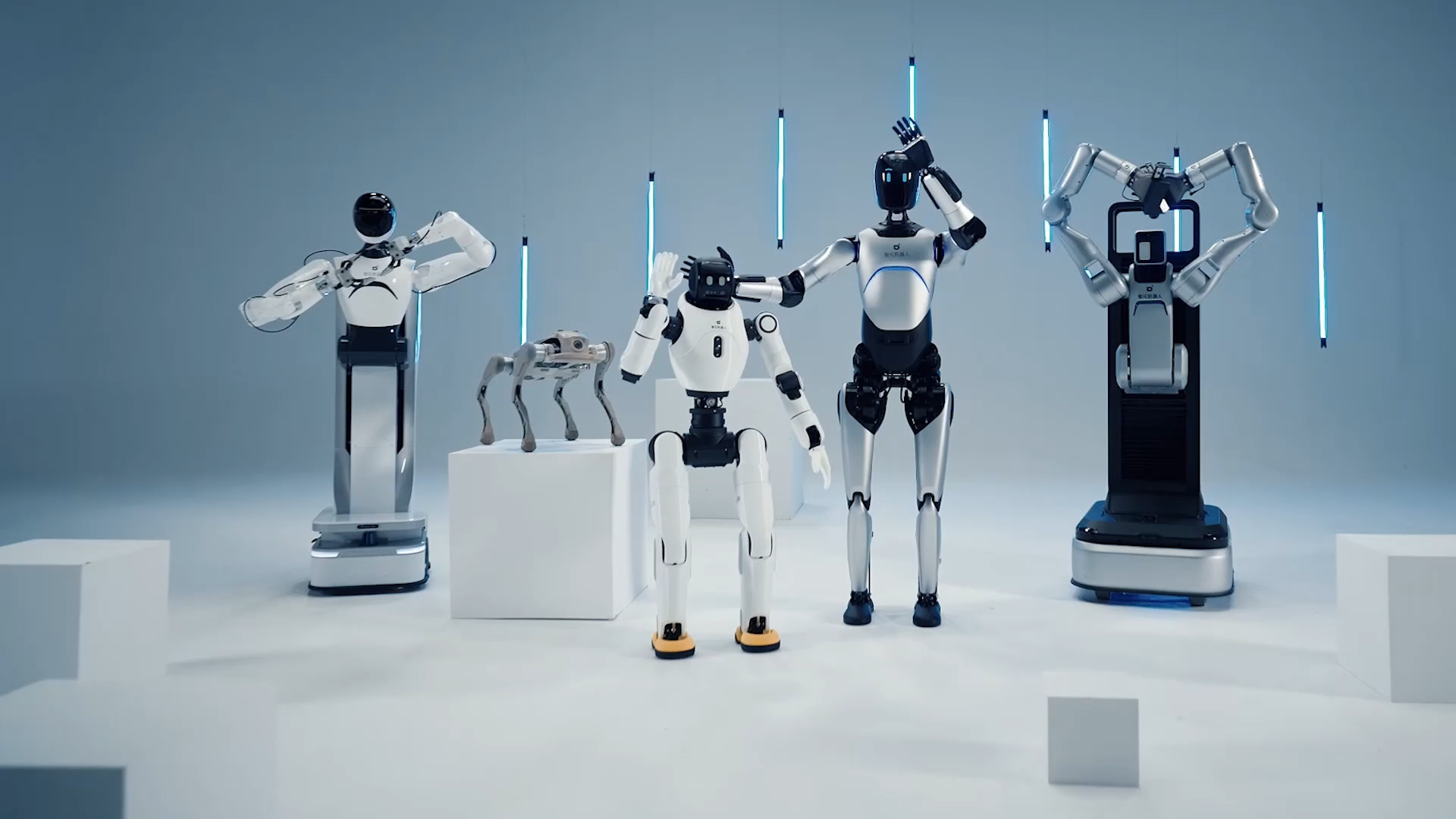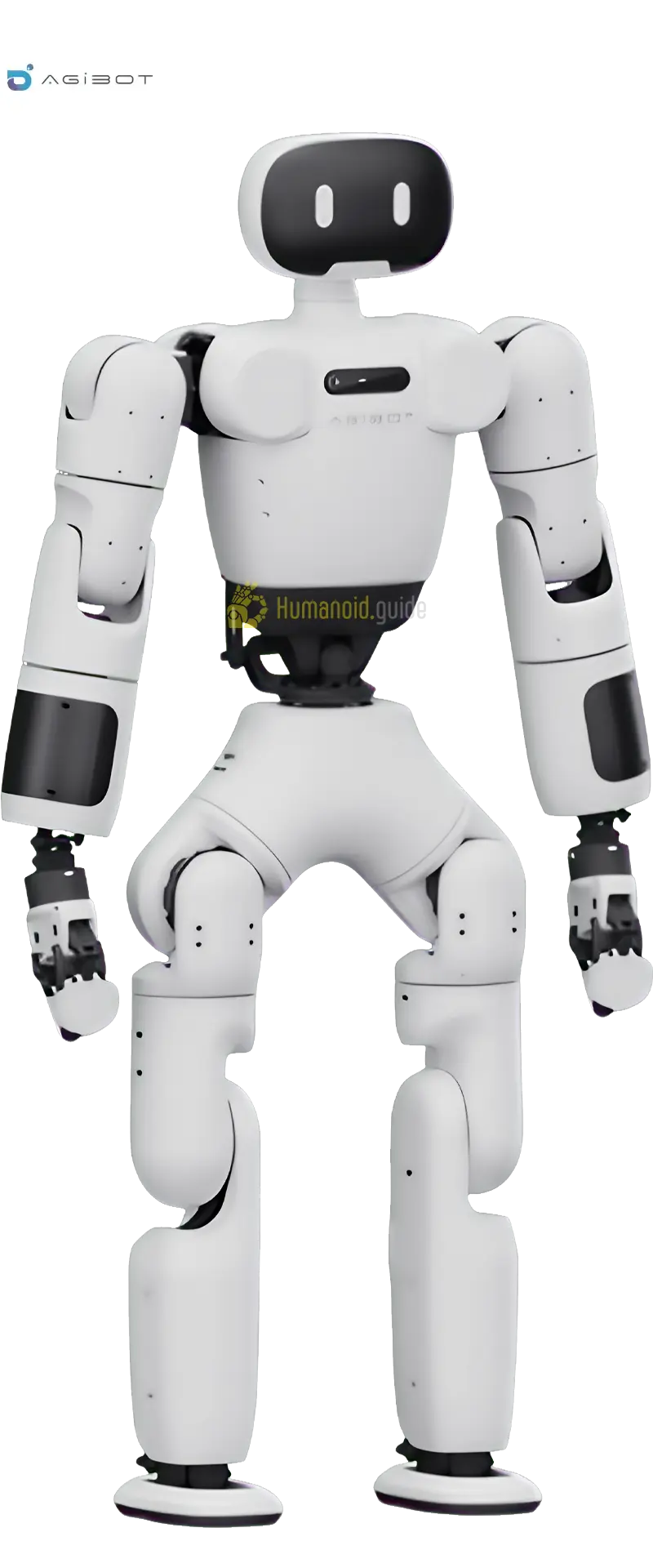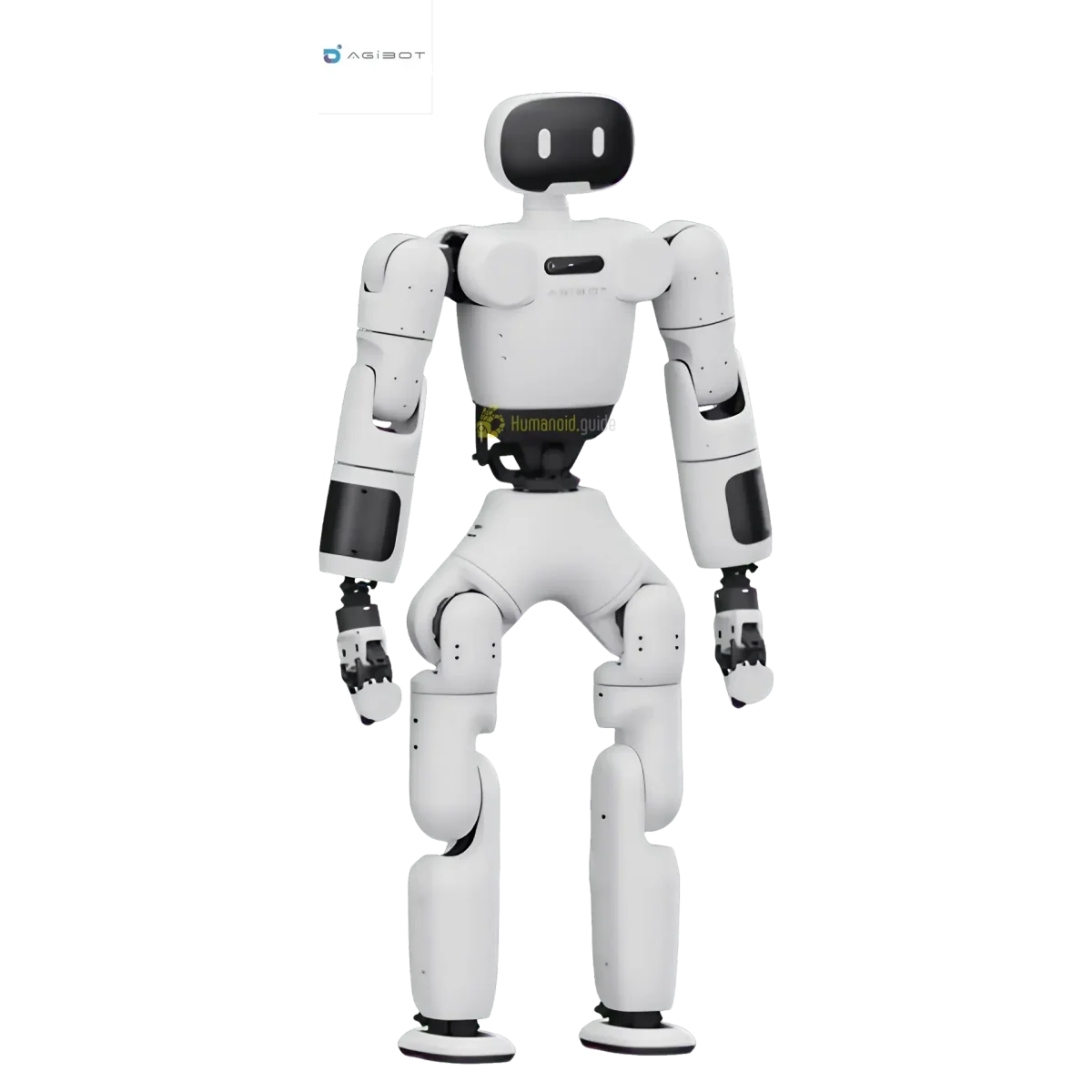
What is the Agibot X1?
The AgiBot X1 is a production humanoid robot developed by AgiBot Innovation (Shanghai) Technology Co., Ltd., founded in 2023 and based in Shanghai, China. It targets industrial automation with 44 degrees of freedom across its full body, enabling human-like dexterity for tasks like pick-and-place, machine tending, and inspection. A cloud-connected learning pipeline allows fleet-level skill improvement. The robot stands 175 cm tall, weighs 55 kg, and offers 2 hours of battery life with a top speed of 3.6 km/h. As a 2nd-generation humanoid, it is positioned for manufacturing, logistics, and service sectors, competing with other Chinese and US humanoids.
Specifications
Here are the full technical specifications.
| Spec | Value |
|---|---|
| Height | 175 cm |
| Weight | 55 kg |
| Degrees of freedom | 44 |
| Battery life | 2 hours |
| Max speed | 3.6 km/h |
| Payload | Not specified |
| Price (new) | Undisclosed |
| Price (used range) | N/A |
Price & Value
New MSRP: Undisclosed
Used range: N/A
The AgiBot X1 has no confirmed public price. Some listings showed a placeholder figure of $35, likely a scraping artifact or 'contact for quote' indicator. As a pre-order industrial humanoid still in early availability, pricing is expected to be undisclosed enterprise-level. Buyers should request a quote from AgiBot or authorized distributors like MERA Robotics. Without established used units, there is no secondary market yet, but depreciation will depend on final MSRP and production scale. Compared to the Unitree G1 at $16,000, the X1 is likely positioned at a significantly higher price point given its larger size, higher DOF, and industrial focus.
Who Is It For?
Best for: - Industrial automation teams deploying humanoid workers for pick-and-place and machine tending in manufacturing environments (44 DOF full-body dexterity and cloud learning enable adaptive tasks). - Logistics companies exploring humanoid integration for autonomous material handling and inspection. - Research institutions needing a full-scale humanoid platform with open architecture for AI/LLM integration (DIY ROS2/AimRT hooks).
Not for: - Tight-budget labs or makers — no confirmed pricing, and expected cost is high compared to education-oriented robots. - Heavy payload applications — official arm payload is unconfirmed; some sources suggest only 0.5 kg, making it unsuitable for load-bearing tasks without official clarification.
Alternatives & Comparison
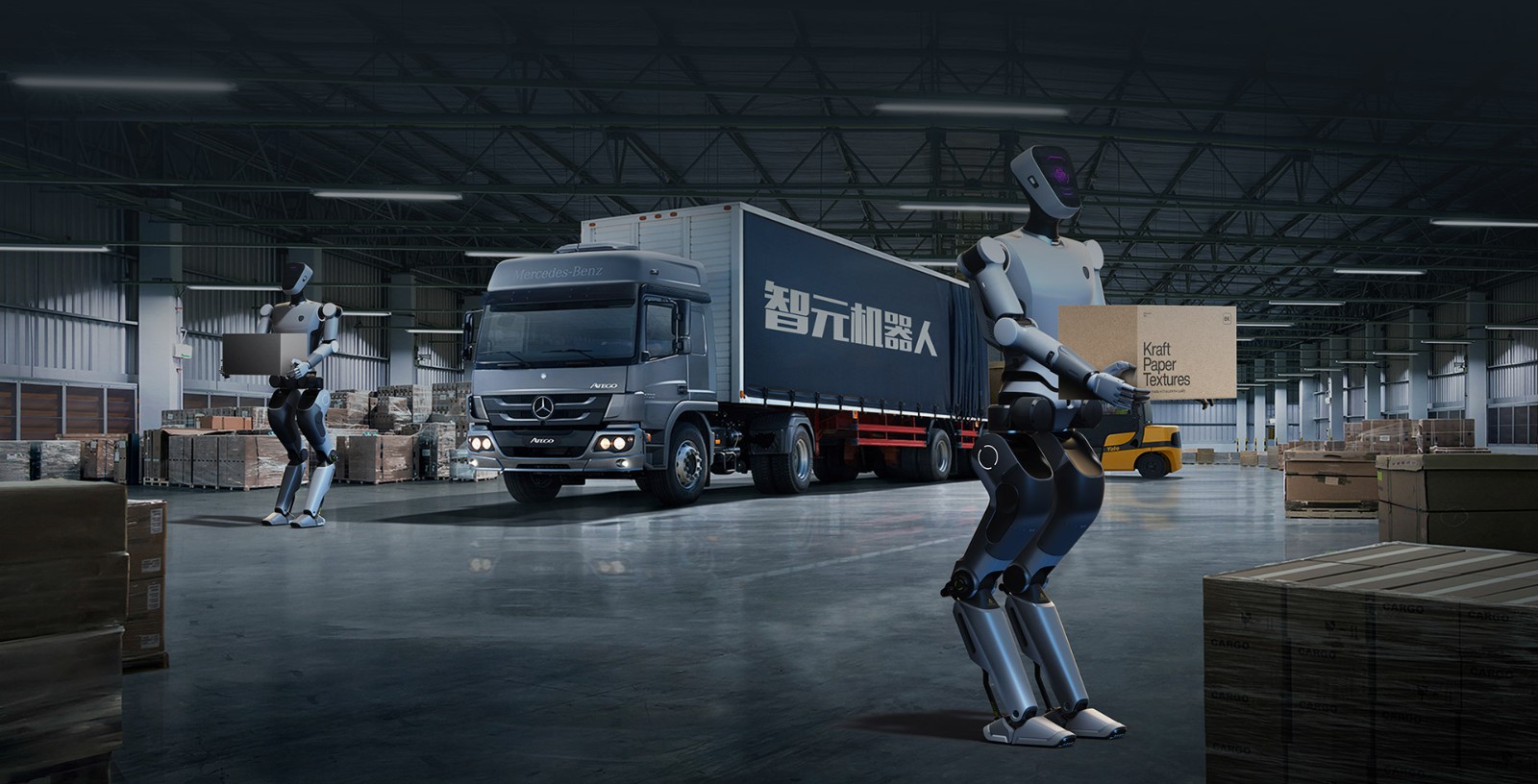
The AgiBot X1 competes with other Chinese and US humanoid platforms targeting industrial use. While full specs remain fuzzy, its 44 DOF and cloud-learning approach position it in the mid-to-high-end segment.
| Model | Price | Available | Key Difference |
|---|---|---|---|
| Unitree G1 | $16,000 | yes | More affordable but less dexterous and smaller form factor |
| Fourier GR-2 | Undisclosed | preorder | Higher arm payload capacity (reportedly up to 15 kg) but lower DOF |
| Tesla Optimus | Undisclosed | preorder | General-purpose with Tesla ecosystem and potential for massive scale |
Verdict: For buyers seeking immediate affordability, the Unitree G1 at $16,000 is the only purchasable option today. If payload is critical, the Fourier GR-2 promises higher arm strength. The AgiBot X1’s 44-DOF dexterity and cloud learning make it the most manipulation-capable candidate if final specs hold, but until real prices and payload figures are released, it remains a speculative choice for industrial deployment.
Use Cases & Capabilities
Pick and Place
The 44-DOF upper body and fine hands (likely) enable the X1 to grasp and place diverse objects in warehouse or assembly line settings. Its cloud-connected learning pipeline allows continuous improvement of grasping strategies across a fleet. With a top speed of 3.6 km/h, it can navigate between stations but is not optimized for rapid transport. Until official payload limits are disclosed, it's best suited for light to medium-weight items.
Machine Tending
In CNC or injection molding environments, the X1 can load/unload parts, press buttons, and monitor machine status. Its human form factor fits into existing workspaces designed for human operators. The 2-hour battery life suggests shift-based deployment with charging breaks. Cloud diagnostics could enable predictive maintenance and remote oversight.
Inspection
Equipped with optional RGB-D cameras and open ROS2 architecture, the X1 can perform autonomous visual and thermal inspections in factories or warehouses. It can record anomalies and upload data to the cloud for analysis. Mobility at 3.6 km/h is adequate for periodic rounds. Limited battery life may require charging docks along patrol routes.
Research
The X1 offers an open platform with user-supplied host PC/Jetson and LLM integration hooks via ROS2/AimRT, making it attractive for university and corporate R&D. Researchers can experiment with whole-body control, grasping, and human-robot interaction. The full-body 44 DOF provides a high-dimensional testbed. However, lack of public pricing may limit academic adoption until costs are clarified.
History & Background
AgiBot Innovation (Shanghai) Technology Co., Ltd. was founded in 2023 by a team of robotics engineers in Shanghai, China. The company unveiled its product line—including A2, X, Genie, and D1 series—in 2024, with the X1 positioned as a production-grade humanoid. The X1 represents a 2nd-generation design, moving from research prototypes toward industrial readiness. In 2025, it appeared at trade events and was listed for pre-order through distributors like MERA Robotics. As of early 2026, AgiBot continues to refine the X1 with cloud-connected learning features, though detailed technical specifications remain scarce publicly. The company competes directly with other Chinese humanoid makers such as Unitree and Fourier.
Buying Used — What to Check
Verify payload rating Conflicting reports range from 0.5 kg to 80 kg; ask manufacturer for official arm/manipulation payload before purchase.
Check battery runtime Rated at 2 hours, but actual endurance under continuous motion may differ; ensure it meets your shift requirements.
Confirm software maturity The cloud-learning pipeline may require subscriptions or still be under development; verify OS updates and integration capabilities.