Tesla is reportedly weighing a sale of its China business as it prepares for a merger with SpaceX. Sources say the company had already prepped for that contingency in the event that Beijing invades Taiwan, a scenario that would make continued operations in the country effectively impossible. A China exit would redraw Tesla's global footprint and hand its domestic rivals even more of the world's largest EV market.
- What the Reports Say
- Why Exiting China Is Complicated
- The Taiwan Contingency, Explained
- What a SpaceX Merger Changes
- What This Means for the Industry
- Frequently Asked Questions
- Conclusion
What the Reports Say
According to TechCrunch, Tesla has reportedly explored the sale of its China business and had already prepped for that possibility in the event that Beijing invades Taiwan. The reporting is preliminary: no buyer has been identified, no valuation has been floated, and it is unclear whether any Chinese automaker, consortium, or state-linked entity has been approached.
What makes the story significant is not a signed deal — nothing suggests one exists — but the strategic signal. A sale of Tesla's China operations would rank among the largest exits of a Western automaker from the world's biggest EV market. The Shanghai Gigafactory is Tesla's highest-volume plant and the primary export hub for vehicles shipped to Europe and the Asia-Pacific region. Walking away would mean handing that scale to local competitors.
The report also frames the exploration as preparation for a Tesla–SpaceX merger. Combined with the Taiwan contingency, the picture is of a company stress-testing its own future: what happens to Tesla's China exposure if Washington and Beijing are forced into a far deeper confrontation, or if the company's center of gravity shifts from consumer cars to space and defense?
Why Exiting China Is Complicated
Tesla's China operations are not merely a sales channel; they are the backbone of its global delivery volume. Shanghai produces more vehicles than any of Tesla's other plants, and China has been Tesla's second-largest market after the United States, absorbing roughly a third of global deliveries in recent years.

Exiting China means unwinding an entire ecosystem: the factory itself, battery supply relationships with domestic partners, the charging network, and the dealer and service footprint. It also means giving up a manufacturing base that has insulated Tesla from import tariffs while serving as a low-cost platform for exports across Europe and Asia.
There are regulatory knots on both sides. Beijing has required foreign companies to localize data storage, and Tesla's handling of driving data in China has been a recurring point of scrutiny. Any sale would face review over intellectual property, EV technology transfers, and access to autonomous-driving datasets — assets that would almost certainly be required to stay in the country. A buyer would acquire the plant and the market, but a foreign seller would not simply be able to pack up the technology and leave.
The Taiwan Contingency, Explained
The reported planning is explicitly tied to a geopolitical tail risk: a Beijing invasion of Taiwan. Taiwan is the production base for much of the world's most advanced semiconductors, and a conflict would trigger far-reaching sanctions, disrupt global shipping lanes, and almost certainly sever normal commercial operations on the mainland.
For Tesla, the exposure is twofold. Its Shanghai complex sits directly inside the jurisdiction of a government that would be at war with the geopolitical bloc Tesla's home market belongs to; in a sanctions scenario, assets could be frozen or seized. At the same time, US authorities would pressure American firms to sever ties with mainland operations overnight. The report describes the sale exploration as a pre-positioned hedge — a plan built to be executed if the world changes suddenly, not a prediction that it will.

The more immediate question is what a sale would mean for Tesla's data footprint. Chinese regulations have forced Tesla to store data collected by its vehicles inside China. A conflict would make that arrangement untenable for both governments — Beijing would not want sensitive data flowing out, and Washington would not want sensitive data stranded in adversary hands. Selling the China business, with its data operations attached, would be the cleanest way to sever that link.
What a SpaceX Merger Changes
The SpaceX context adds a strategic layer. A merger would combine Tesla's EV manufacturing and revenue engine with SpaceX's launch business, Starlink satellite broadband, and deep roster of government and defense contracts. SpaceX has been valued at roughly $350 billion in recent funding rounds, making the scale of any combined entity enormous — and its national-security profile much higher.
That is where the China business becomes a liability. Defense and space contracts bring intense federal scrutiny, and a US-headquartered company with a large mainland presence, Beijing-approved data flows, and a politically sensitive market position is harder to clear through security reviews. Selling the China arm would remove a geopolitical complication ahead of what would be one of the most scrutinized mergers in recent corporate history.
The merger itself is far from certain. It would require shareholder approval, a resolution of valuation questions between a public company and a privately held one, and regulatory sign-off in multiple jurisdictions. But the reporting suggests the deal, or at least the preparation for it, is shaping decisions in China today. Musk has long argued that Tesla and SpaceX share deep engineering and manufacturing DNA; a combined company would be a bet on the next phase of that relationship, and a China exit would help fund and de-risk it.
What This Means for the Industry
For investors: A China exit would remove a persistent geopolitical discount from Tesla's stock, but it would also remove a growth engine and a cost-efficient manufacturing base. The trade-off is margin stability in exchange for scale — and the market's verdict will depend on whether investors believe Tesla can defend volume elsewhere.
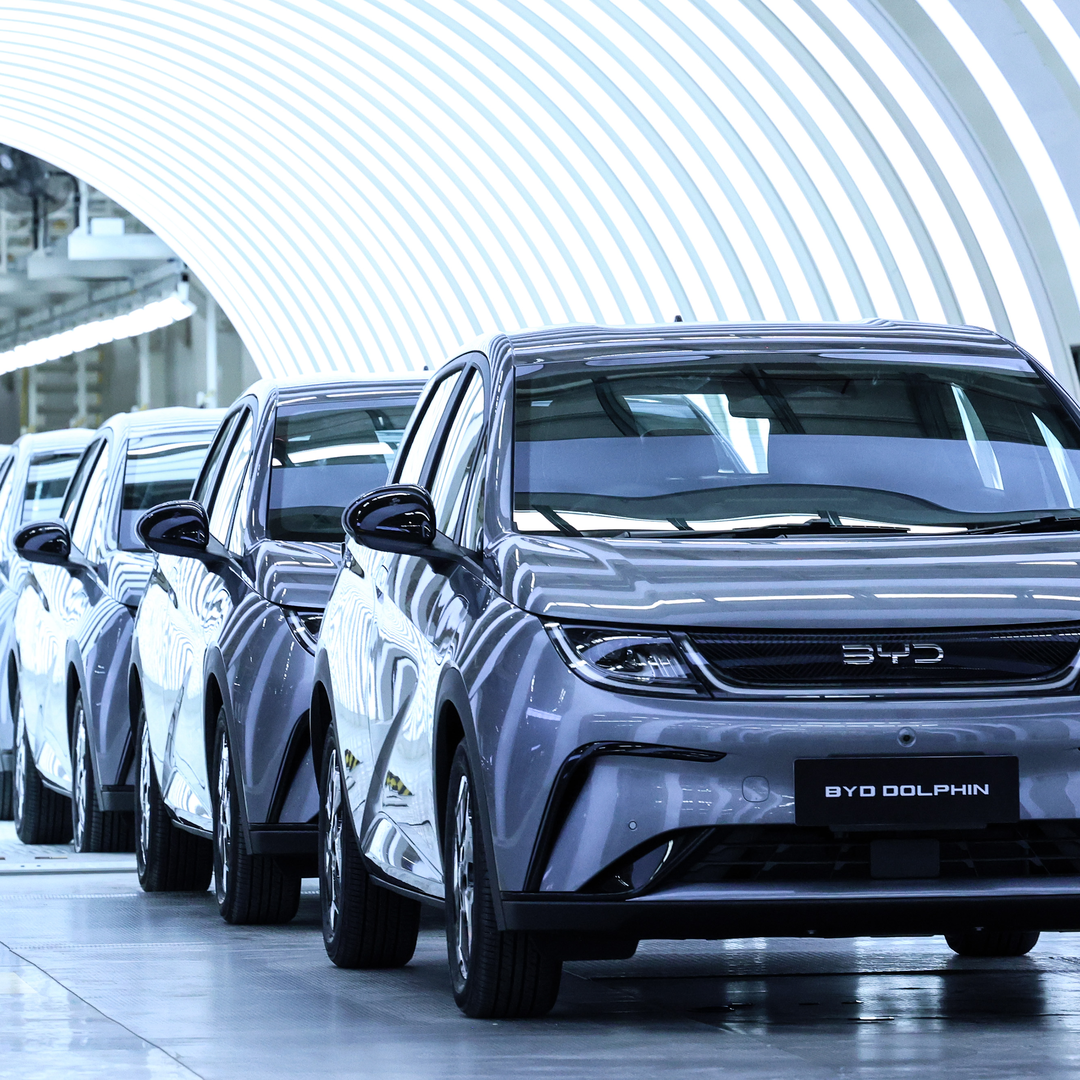
For competitors: Chinese EV makers, led by BYD, would be the immediate beneficiaries. BYD has repeatedly traded the global EV crown with Tesla, and absorbing Tesla's residual market share in China would consolidate its dominance. The Shanghai plant's export role would also be up for grabs, potentially reshaping EV supply chains across Europe and Asia-Pacific.
For the broader tech industry: The reporting is another data point on the hardening US–China decoupling. Every major technology company with mainland operations — from chip designers to cloud providers — is now asking the same question Tesla reportedly prepared for: what happens if the Taiwan scenario forces an overnight separation? Data localization requirements, technology-transfer restrictions, and export controls have already made China a jurisdiction that is planned around rather than relied upon.
For policymakers: A Tesla exit would be a landmark case study in how geopolitical risk gets priced into corporate structure. It would also hand Beijing a difficult choice — approve a sale and lose a flagship foreign investment, or block it and accelerate capital flight.
Conclusion
Tesla's reported exploration of a China sale is a hedge against the worst-case geopolitical scenario and a preparation for a very different corporate future centered on SpaceX. Nothing is decided, and the financial and regulatory hurdles are enormous. But the fact that the contingency exists at all says a great deal about how the world's most valuable EV maker views its options in China.