

In 2024, collaborative robot shipments grew 31% year-over-year, yet traditional industrial robots still outnumber cobots 5-to-1 on factory floors. This guide cuts through the hype to help you decide which automation type delivers the best ROI for your specific production needs.
- What Is the Real Difference Between a Cobot and an Industrial Robot?
- How Do Payload, Reach, and Speed Compare?
- Which Is Safer — and Do You Need a Safety Cage?
- How Does Total Cost of Ownership Differ?
- Which Is Easier to Program and Integrate?
- Which Applications Fit Which Robot Type?
- How to Choose: A Decision Framework for Your Factory
- Cobot vs Industrial Robot: At-a-Glance Comparison Table
- Frequently Asked Questions
- Conclusion
What Is the Real Difference Between a Cobot and an Industrial Robot?
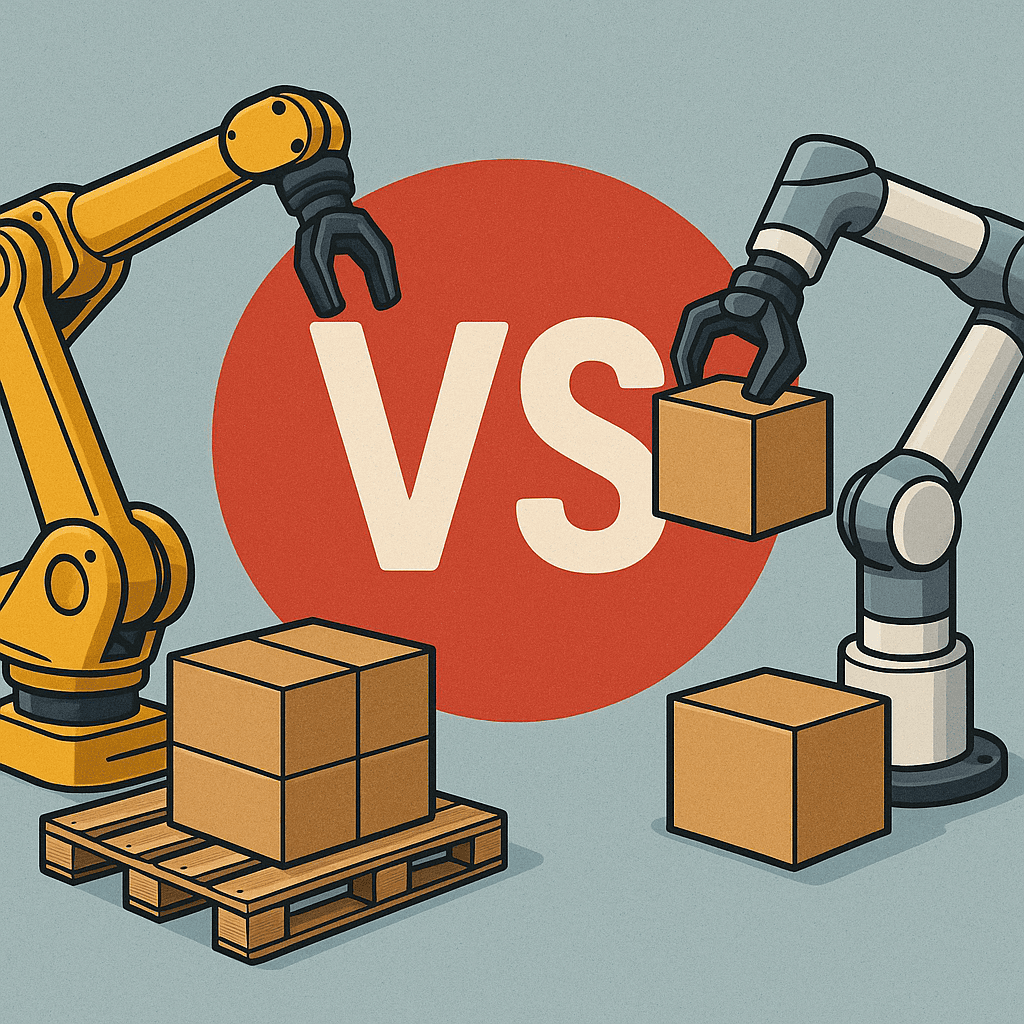
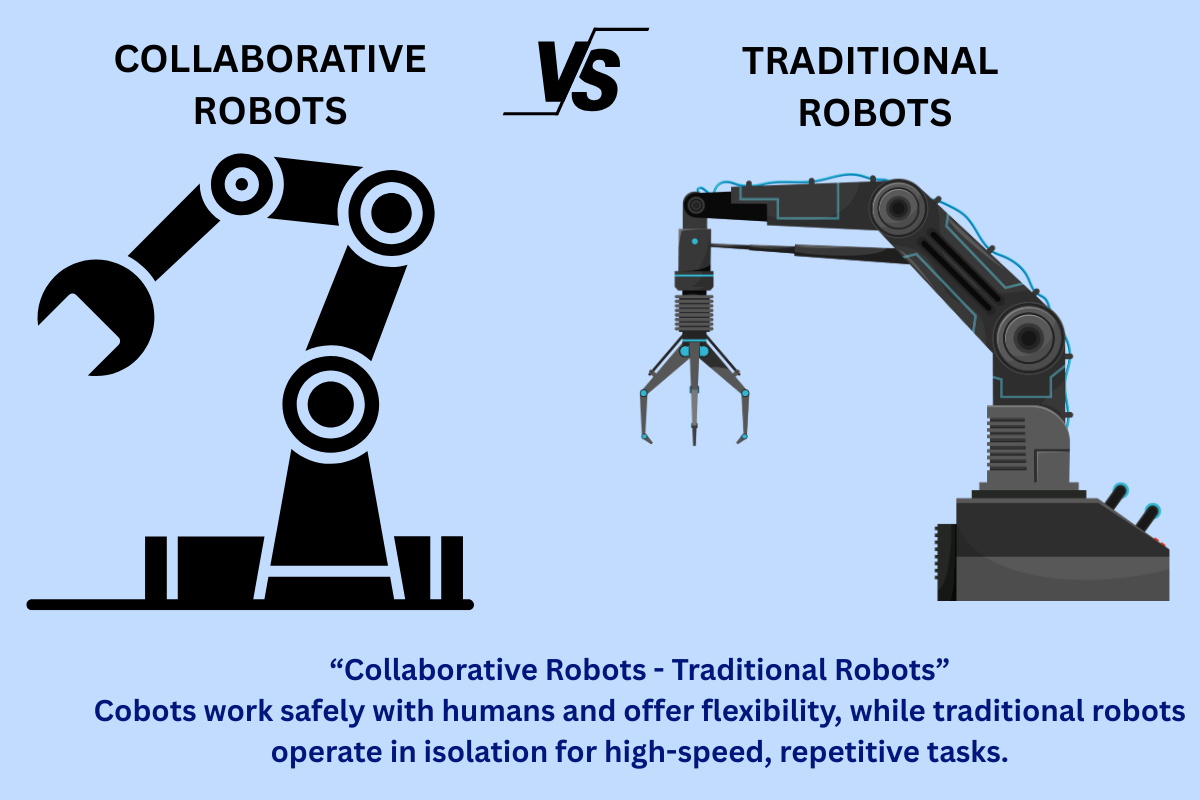
A cobot (collaborative robot) is designed to work safely alongside humans without safety cages, using force-limiting sensors and rounded designs. An industrial robot is a high-speed, high-payload machine built for speed and precision, typically requiring physical guarding. The fundamental difference lies in intended interaction: cobots prioritize human safety at lower speeds, while industrial robots prioritize throughput, often operating at speeds exceeding 2 m/s. This distinction drives every other decision, from installation cost to application suitability.
How Do Payload, Reach, and Speed Compare?
Cobots typically carry payloads from 3 kg to 25 kg, with reach up to 1.8 m, and operate at speeds around 1–2 m/s. Industrial robots can handle payloads exceeding 1000 kg, reach up to 4 m or more, and run at speeds over 10 m/s. For heavy lifting or long-reach applications, industrial robots remain the only option. However, for pick-and-place, assembly, or machine tending tasks within a 1.5 m radius, modern cobots like used cobots for sale can match cycle times within 80% of their industrial counterparts while using far less floor space.
Which Is Safer — and Do You Need a Safety Cage?
Cobots are inherently safe due to integrated torque sensors, force monitoring, and compliant motion technologies that stop upon collision. They comply with ISO 10218 and ISO/TS 15066 for collaborative operation. This eliminates the need for hard guarding, reducing installation costs by up to 40%. Industrial robots, by contrast, require fences, light curtains, or laser scanners to meet safety standards. If your application allows a robot to operate without human presence, an industrial robot can run at full speed. If workers must step into the workspace during changeovers, a cobot's safety features save both floor space and capital.
How Does Total Cost of Ownership Differ?
The initial purchase price of a cobot (US$15,000–$60,000) is lower than an industrial robot ($50,000–$200,000+), but total cost of ownership (TCO) includes programming, integration, safety infrastructure, and maintenance. Cobots offer lower installation costs due to plug-and-play deployment and no cage. Industrial robots demand higher upfront engineering but achieve longer service life (7–10 years vs 3–5 years for cobots) and lower per-part cost at high volumes. A recent survey showed that for production volumes above 200,000 units per year, industrial robots have a 25% lower per-part cost. For job shops with frequent changeovers, cobots break even faster.
Which Is Easier to Program and Integrate?
Cobots typically support hand‑guided programming, drag‑and‑drop interfaces, and API integrations with common sensors. An operator can teach a new pick-and-place routine in under 30 minutes without writing code. Industrial robots often require offline programming with proprietary languages (e.g., RAPID, KRL) and a dedicated engineer. However, modern industrial robot brands offer simplified coding tools. For facilities with limited automation expertise, cobots lower the barrier to entry. For complex multi-axis paths or vision-guided welding, industrial robots offer more precise control, though programming time is significantly longer.
Which Applications Fit Which Robot Type?
Cobots excel in tasks with variable human interaction: machine tending, kitting, packaging, light assembly, quality inspection, and lab automation. Industrial robots dominate high‑speed/ heavy‑duty processes: spot welding, painting, palletizing heavy loads, metal stamping, and large‑part material removal. Consider also specialized humanoid platforms like Agility Robotics Digit for case handling or Unitree H1 for experimental humanoid tasks, but these are separate categories. For 90% of typical factory automation needs, the choice comes down to cycle time vs. flexibility.
How to Choose: A Decision Framework for Your Factory
Follow these five steps to make your decision:
- Identify task characteristics: measure cycle time, payload, reach, and required precision.
- Assess human interaction frequency: is a person inside the cell during operation? If yes, a cobot reduces safety costs.
- Calculate required production volume: above 100,000 units/year, industrial robots often provide lower per-unit cost.
- Evaluate facility constraints: floor space, existing safety systems, and available electrical power.
- Consider future flexibility: does the line change products monthly? Cobots offer easier reprogramming.
For small-to-medium enterprises making ≤50,000 units annually, cobots are usually the better investment. For high‑volume automotive or electronics manufacturing, industrial robots remain the standard.
Cobot vs Industrial Robot: At-a-Glance Comparison Table
| Attribute | Collaborative Robot | Industrial Robot |
|---|---|---|
| Payload | 3–25 kg | 5–1000+ kg |
| Reach | 0.5–1.8 m | 0.5–4.0 m |
| Max speed | 1–2 m/s | 5–10+ m/s |
| Safety system | Integrated force sensors, no cage | Requires fences or light curtains |
| Programming | Hand‑guided, teach‑pendant, GUI | Offline code, structured languages |
| Typical price (new) | $15K–$60K | $50K–$200K+ |
| Installation cost | Low (no cage, minimal engineering) | High (fencing, power, integration) |
| Service life | 3–5 years | 7–10 years |
| Best for | Low–medium volume, frequent changeovers | High volume, high speed, heavy parts |
| Example applications | Machine tending, pick‑and‑place, assembly | Welding, painting, heavy palletizing |
Frequently Asked Questions
No. Cobots are slower and have lower payload, so they cannot match industrial robot throughput for tasks like spot welding 3‑mm steel sheets.
Do I need safety training for cobots? Yes, all operators should complete a risk assessment and basic collaborative robot safety training per ISO/TS 15066, even if no cage is required.
Which robot type is better for a multi‑product line? Cobots, because they can be redeployed with a new program in minutes, whereas industrial robots often require retooling and longer reprogramming.
Conclusion
Choosing between a cobot and an industrial robot ultimately depends on your production volume, payload needs, and how often humans interact with the robot. Cobots lower entry cost and increase flexibility; industrial robots offer unmatched speed and endurance for high‑volume tasks. Use the decision framework and comparison table above to match the robot type to your specific application, and always consider total cost of ownership — not just the purchase price.
Would your factory see a greater ROI from a flexible cobot or a high‑speed industrial robot in the next production line?
Sertai perbincangan
What was the deciding factor in your last robot purchase — speed or flexibility?