
Mach Industries, a defense startup building autonomous vehicles for military use, has quadrupled its valuation to $1.8 billion after raising $300 million in new funding. The 4x jump in just one year signals that investors are betting heavily on defense robotics as governments accelerate adoption of unmanned aerial and ground systems.
- What Does Mach Industries Actually Build?
- How Did a 22-Year-Old Founder Drive a 4x Valuation Jump?
- Why Is Defense Robotics Attracting Billions Now?
- How Does Mach Industries Compare to Competitors?
- What This Means for the Defense Robotics Landscape
What Does Mach Industries Actually Build?
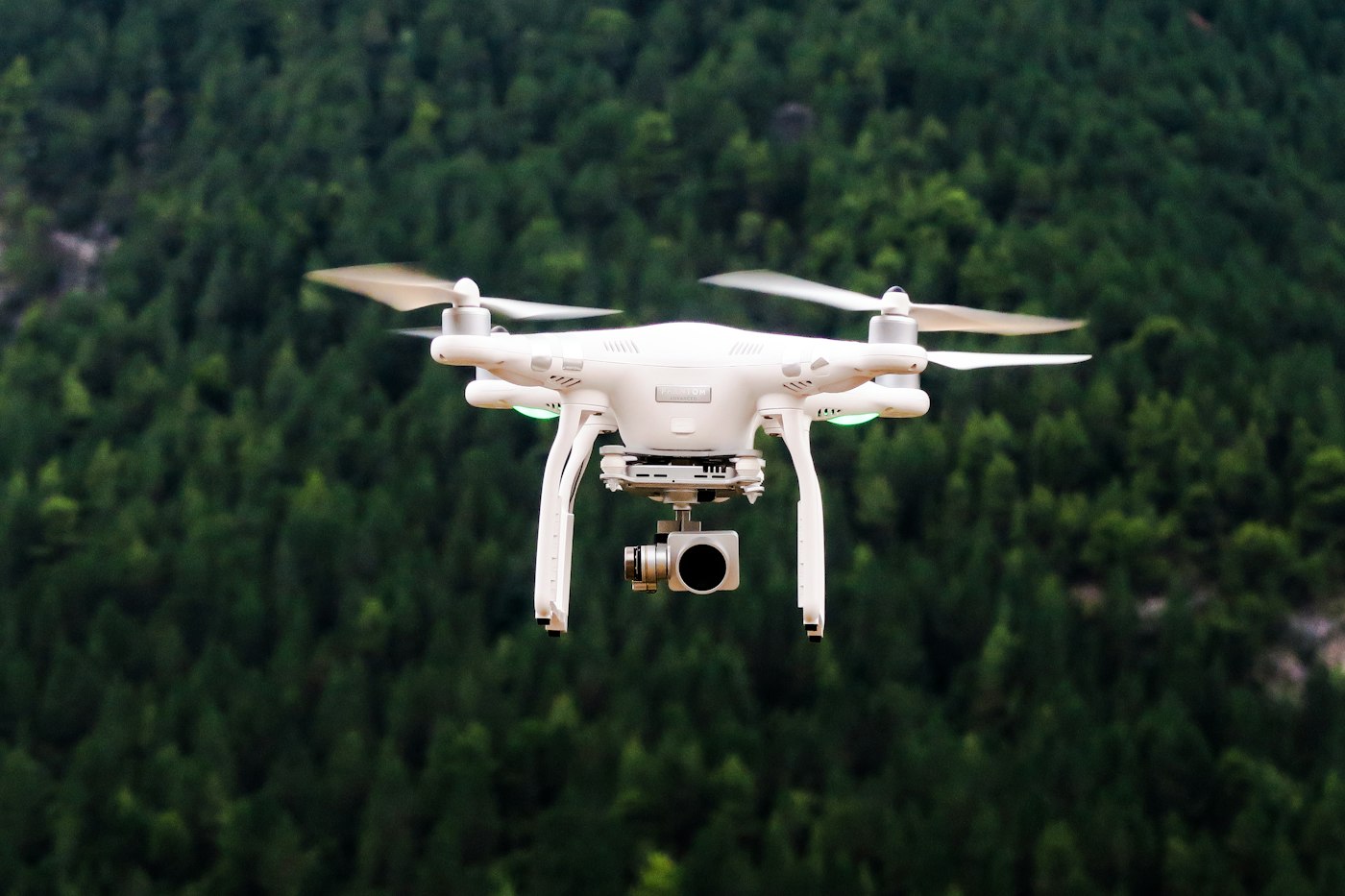
Mach Industries focuses on a family of autonomous military vehicles — drones, attack boats, and ground robots — that operate without direct human control at every step. The company’s flagship product, the Leonidas uncrewed aircraft system, can loiter for hours, carry surveillance payloads or munitions, and make targeting decisions using onboard AI. Since 2023, Mach has announced five distinct autonomous vehicle programs, ranging from small reconnaissance quadcopters to a 30-foot autonomous naval vessel called the Manta. The vehicles are designed in a modular architecture — the same control software can be swapped across air, land, and sea platforms, reducing training and logistics costs for military buyers.

How Did a 22-Year-Old Founder Drive a 4x Valuation Jump?
Ethan Thornton dropped out of MIT at age 20 to found Mach Industries in 2022. In three years, the startup has raised nearly $500 million in total equity, including the new $300 million Series B that pushed valuation from roughly $450 million to $1.8 billion. The round was co-led by a high-profile defense-focused venture firm and a sovereign wealth fund, according to TechCrunch. Thornton also completed a major acquisition — the purchase of a small sensor-manufacturing company to bring thermal and radar hardware in-house. The speed of the valuation jump — 4x in 12 months — reflects not just capital inflows but also government contract wins the company has not publicly disclosed in full.
Why Is Defense Robotics Attracting Billions Now?
Global military spending on autonomous systems is projected to exceed $120 billion annually by 2030, driven by real-world performance in Ukraine and the South China Sea. Defense robotics offers a clear value proposition over manned platforms: cheaper to produce, no risk to pilots, and capability for longer endurance. Startups like Mach Industries, Anduril, and Shield AI are competing with legacy contractors (Boeing, Lockheed Martin) by building software-defined hardware that can be updated over the air — a sharp departure from traditional 10-year acquisition cycles. The U.S. Department of Defense has launched multiple rapid acquisition programs specifically for autonomous vehicles, and Mach Industries appears to have secured early access to several of those contracts.

How Does Mach Industries Compare to Competitors?
| Startup | Latest Valuation | Total Funding | Primary Focus |
|---|---|---|---|
| Mach Industries | $1.8B | $500M | Modular autonomous air/sea/ground |
| Anduril Industries | $28B | $4.8B | AI-powered defense systems |
| Shield AI | $5.3B | $1.2B | Autonomous drone swarms |
| Helsing (EU) | $5.4B | €700M | AI for military platforms |
Mach remains significantly smaller than Anduril or Shield AI, but its valuation growth rate is among the fastest in defense tech. The company’s modular software platform — which can control multiple vehicle types from a single interface — is a differentiator that legacy contractors lack. However, Mach has not yet demonstrated large-scale production; Anduril has delivered thousands of systems, while Mach’s production numbers remain undisclosed.
What This Means for the Defense Robotics Landscape
The 4x valuation jump for Mach Industries signals that the defense robotics startup pipeline is maturing. Government customers are actively seeking autonomy suppliers that can move faster than defense primes, and venture capital has followed. For robotics integrators and hardware suppliers, this opens a new channel: defense applications now represent one of the fastest-growing end markets for autonomy components — sensors, compute modules, actuation, and AI software. The modular approach also suggests that standardised interfaces could emerge across the military, potentially creating a common ecosystem that third-party robot manufacturers could plug into. Botmarket tracks autonomous vehicle platforms across both industrial and defense domains; as this sector grows, the marketplace may expand to serve military-grade robotics buyers.
| Metric | Mach Industries (2026) |
|---|---|
| Valuation | $1.8 billion |
| Funding raised | $500 million |
| Autonomous vehicles in development | 5 |
| Founder age at founding | 20 |
| Year founded | 2022 |
Frequently Asked Questions
What is Mach Industries? Mach Industries is a defense technology startup founded by Ethan Thornton in 2022 that develops autonomous military vehicles — drones, boats, and ground robots — controlled by a shared AI software platform.
How much did Mach Industries raise in its latest round? Mach raised $300 million in a Series B round, bringing total funding to approximately $500 million and pushing its valuation to $1.8 billion.
Who invested in Mach Industries? The round was led by a well-known defense-focused venture firm and a sovereign wealth fund; exact investor names have not been fully disclosed in press reports.
What autonomous vehicles does Mach make? Mach’s lineup includes the Leonidas aerial drone, a reconnaissance quadcopter, the Manta autonomous naval vessel, a multirotor cargo drone, and a ground-based reconnaissance robot — all sharing a common control architecture.
How does Mach compare to Anduril? Anduril is much larger at $28 billion valuation with billions in delivered hardware, but Mach is growing faster relative to its base and offers a uniquely modular vehicle platform common across air, sea, and land.
Is Mach Industries a public company? No, Mach Industries remains privately held. There is no announced timeline for an initial public offering.
Conclusion
Mach Industries’ rise to a $1.8 billion valuation in just over a year underscores how quickly defense robotics has become a mainstream investment category. The startup’s modular approach to autonomous vehicles positions it to capture military contracts that demand flexibility across domains. For the broader robotics industry, this signals that autonomy is no longer a niche — it is a core national security capability.








Kummenti