
New orders in the U.S. material handling sector surged from 29% to 68% in May, according to the latest MHI Business Activity Index. The sharp rebound signals sustained demand for warehouse automation and robotics despite ongoing trade uncertainties, tariffs, and geopolitical tensions. Hiring conditions remained favorable, with 74% of respondents reporting easier hiring pipelines.
- How Did the Material Handling Sector Perform in May?
- What Drove the Rebound in New Orders and Unfilled Orders?
- How Do Tariffs and Trade Uncertainty Affect Robotics and Automation Demand?
- What Does This Mean for Buyers of Warehouse Automation?
- Frequently Asked Questions
How Did the Material Handling Sector Perform in May?
The MHI Business Activity Index, compiled by Prestige Economics, measures month-over-month changes in material handling industry conditions, with values above 50 indicating expansion and below 50 contraction. In May, the index showed a "significant improvement" from April's weakness, with several key metrics vaulting back into expansion territory.
The most striking turnaround came in the new orders category: after collapsing to just 29% in April, new orders surged to 68% in May — a 39 percentage point swing that strongly suggests April's dip was an outlier rather than the start of a sustained downturn. Unfilled orders also rebounded from 43% to 63%, while future new orders — a forward-looking measure — remained exceptionally strong at 84%, indicating expectations of healthy demand growth over the next twelve months.
| Metric | April | May | Change |
|---|---|---|---|
| New Orders | 29% | 68% | +39% |
| Unfilled Orders | 43% | 63% | +20% |
| Future New Orders | 84% | 84% | 0% |
| Hiring Conditions | 81% | 74% | -7% |
While hiring conditions eased slightly from 81% to 74%, they stayed well above the breakeven 50% mark, signaling continued labor availability that supports stronger candidate quality in hiring pipelines.
What Drove the Rebound in New Orders and Unfilled Orders?
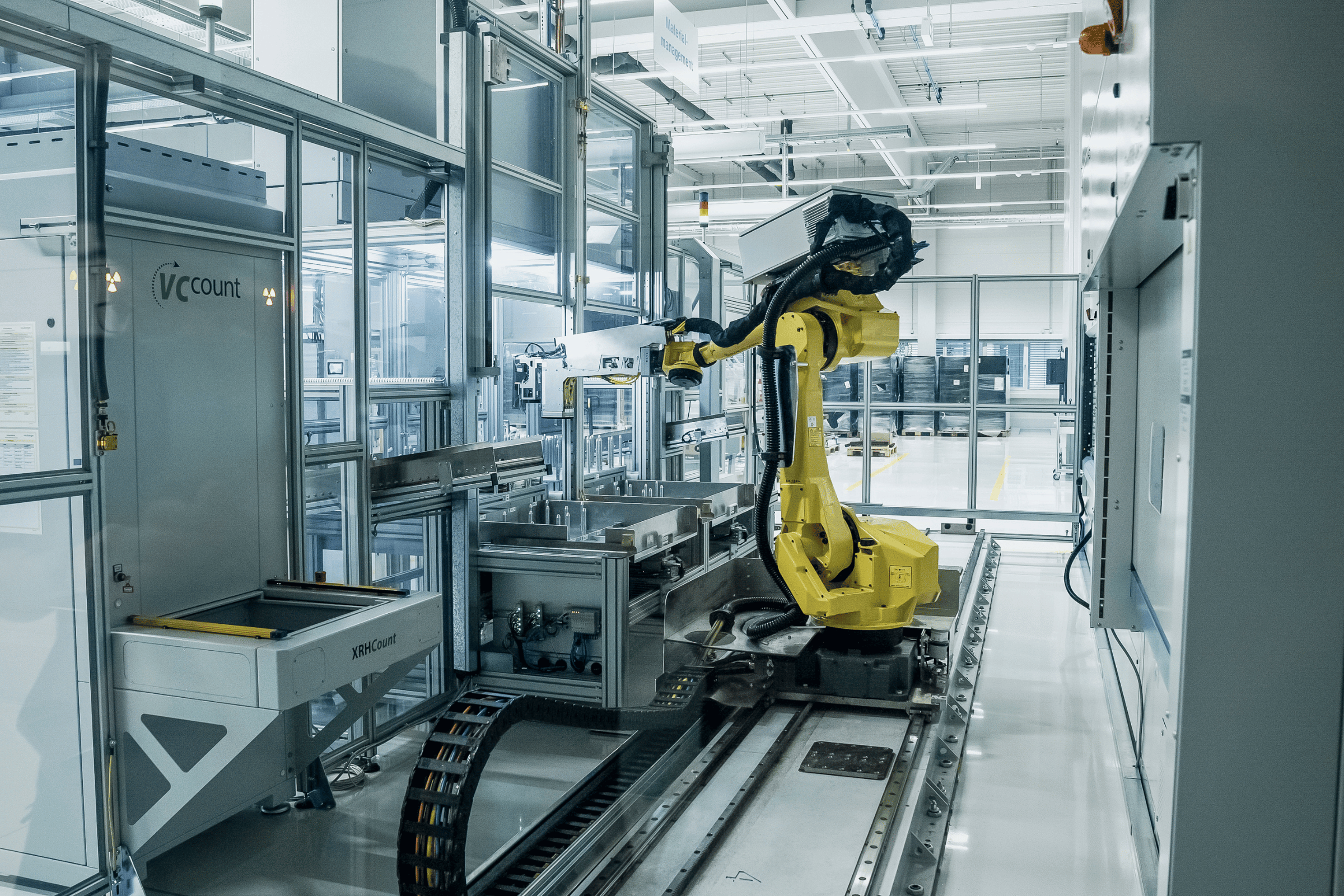
The surge in new orders and unfilled orders suggests that April's weakness was primarily noise — possibly a seasonal lull or a temporary effect of customer hesitation around policy announcements. Once the dust settled, pent-up demand for warehouse equipment and automation systems flowed back through the pipeline.
According to Prestige Economics, the improvement indicates "the weakness reported in April was likely an outlier rather than the beginning of a sustained downturn." The future new orders index holding at 84% suggests that companies have not altered their long-term investment plans for automation, despite the macro headwinds.
Respondents to the May survey did cite top concerns: tariffs, trade uncertainty, the war with Iran, higher fuel costs, and commodity price volatility. However, the fact that orders surged anyway tells a clear story: the structural drivers of warehouse automation — labor shortages, e-commerce growth, reshoring — remain powerful enough to override short-term policy anxiety.
How Do Tariffs and Trade Uncertainty Affect Robotics and Automation Demand?
This is the critical question for anyone tracking the robotics market. Headline trade wars and geopolitical uncertainty might suggest a cooling of capital investment. The May data argues the opposite: automation spending appears resilient to trade shocks, and possibly even accelerated by them.
Two dynamics explain why:
- Tariffs raise the cost of imported goods, making domestic production more attractive. Companies invest in automation to reshore manufacturing without incurring higher U.S. wages — a trend that directly boosts demand for used industrial robots and cobots (collaborative robots that work alongside humans).
- Trade uncertainty encourages labor flexibility — when you can't count on stable global supply chains, automating key processes reduces your exposure to human labor shortages and cross-border delays.
The 84% future new orders reading suggests that automation buyers are looking past the current tariff noise and planning expansions over the next 12 months. For robotics and automation companies, this is a clear signal to maintain production capacity and sales pipelines.
What Does This Mean for Buyers of Warehouse Automation?
For businesses evaluating automation investments, the May index provides three actionable signals:
- Demand is not slowing. If you're considering robot systems — whether cobots for assembly, autonomous mobile robots for transport, or humanoid robots for general material handling — the order surge suggests healthy demand that could tighten lead times. Buy now before delivery windows stretch.
- Labor availability is easing, but not replacing automation. The slight dip in hiring conditions (81% to 74%) may indicate more candidates available, but companies continue to buy automation equipment rather than simply hire more workers. The long-term trend favors robots.
- Trade risks are secondary to structural demand. The index proves that automation procurement decisions are driven by internal efficiency goals, not by monthly tariff headlines. Buyers can proceed with confidence.
The bottom line: if your facility has been on the fence about adding robotic material handling capacity, the macroeconomic argument just got stronger, not weaker.
Frequently Asked Questions
What is the MHI Business Activity Index? It is a monthly survey of material handling industry leaders conducted by Prestige Economics for MHI (Material Handling Institute). Index values above 50 indicate expansion, below 50 contraction. May's results showed a sharp rebound from April's weakness.
Why did new orders jump from 29% to 68%? The swing suggests April was an anomaly — possibly a temporary pause due to policy uncertainty — rather than a trend change. May orders returned to levels consistent with strong market fundamentals: e-commerce growth, reshoring, and labor shortages.
How do tariff concerns affect the robotics market? Tariffs can actually accelerate automation adoption because companies reshore production and use robots to offset higher domestic labor costs. The index's 84% future new orders reading confirms that trade uncertainty has not derailed automation investment plans.
Should I delay my warehouse automation purchase because of trade wars? The May data suggests the opposite: demand is strong, lead times may tighten, and tariffs are not deterring buyers. In fact, those who wait risk longer delivery and higher prices if demand continues surging.
What types of robots are most in demand for material handling? Common categories include autonomous mobile robots for transport, collaborative robot arms for palletizing and kitting, and increasingly humanoid robots for general-purpose material handling in unstructured environments.
Is the hiring difficulty improving for warehouse operators? Hiring conditions eased slightly from 81% to 74% in May, but remain well above the 50% breakeven — meaning it's still easier than normal to hire, though less so than in April. Labor availability is improving but not enough to slow automation adoption.
Conclusion
The May rebound in the MHI Business Activity Index sends a clear message to the robotics and automation industry: demand for material handling equipment — including robotic systems — remains structurally strong, resilient to tariff fears and geopolitical noise. For buyers, the window for locking in capacity before lead times stretch further may be narrowing. The data says the automation buildout is accelerating, not pausing.









ความคิดเห็น