
The first consumer humanoid home robot is here — and it costs $20,000, stands 168 cm tall, and still requires a remote human operator to handle anything complicated. That operator can see inside your home. Everything is recorded. Welcome to the brave new world of home robotics, where "autonomous" is doing a lot of heavy lifting as a marketing term.
- What Is the 1X Neo and What Can It Actually Do?
- The Hidden Human Problem: Teleoperation and Privacy
- Is $20,000 Justified? Benchmarking Against Real Alternatives
- Why Humanoid Home Robots Are Still 20 Years Away
- What This Means for Buyers
What Is the 1X Neo and What Can It Actually Do?
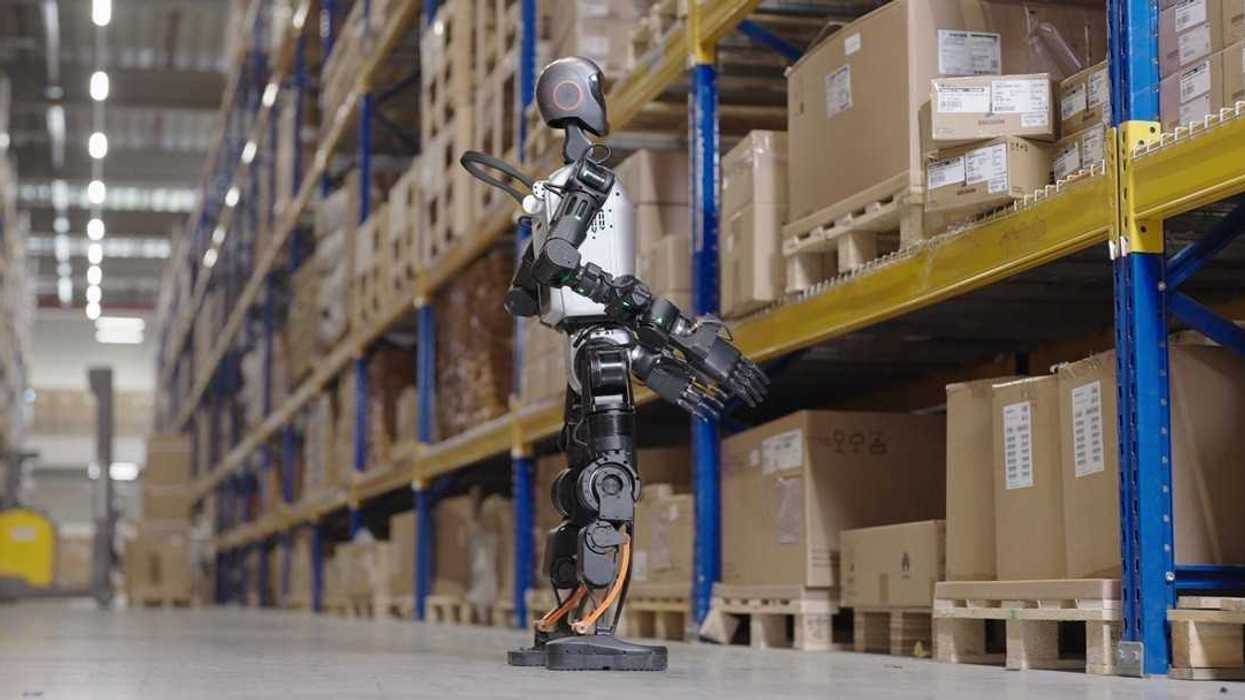
The 1X Neo is a 168 cm, 30 kg humanoid robot priced at $20,000, marketed as capable of folding laundry, loading the dishwasher, and handling general household chores. It ships with an onboard AI system but defaults to remote human control when tasks exceed its autonomous capability — which, based on current demos, is frequently.
Norwegian-US company 1X launched Neo with the tagline "the world's first consumer-ready humanoid robot designed to transform life at home." According to Robohub's coverage, that pitch glosses over a fundamental limitation: the robot's AI cannot yet handle the unpredictability of real domestic environments reliably on its own.
The hardware is genuinely impressive by robot standards. Advances in batteries, motors, and sensors — many borrowed from the electric vehicle supply chain — have made a robot this size and weight commercially viable to produce. But capable hardware and capable autonomy are very different things, and right now the gap between the two is being quietly filled by a person in a VR headset.
The Hidden Human Problem: Teleoperation and Privacy
When the 1X Neo encounters a task it cannot handle autonomously, a 1X employee wearing a VR headset remotely takes control. That operator gains a live view into your home. The session is recorded and fed back into the robot's training pipeline.
This is not a bug — it is the business model. Deployment in real homes is how 1X gathers the training data needed to eventually replace those human operators with better AI. Early customers are, in effect, paying $20,000 to participate in a data collection programme that benefits future buyers more than themselves.
The privacy surface is significant. A robot moving through your home captures spatial data, object locations, daily routines, and incidental personal details that no other consumer device comes close to matching. Unlike a smart speaker that logs voice commands, a humanoid robot with cameras and depth sensors builds a continuous, detailed model of your domestic life.
In January 2026, 1X announced a software update intended to reduce the frequency of human operator interventions — a sign the company is aware this is a liability. But "less human involvement" is not "no human involvement," and the timeline for full autonomy remains undefined.
Is $20,000 Justified? Benchmarking Against Real Alternatives
At $20,000, the 1X Neo is priced well above every meaningful household automation alternative currently available — and it delivers less reliable performance than most of them for specific tasks.
Here is how it stacks up against established options:
| Product | Price Range | Task Capability | Autonomy Level | Privacy Risk |
|---|---|---|---|---|
| 1X Neo humanoid | $20,000 | General (limited) | Partial — human fallback | High (live camera, recorded sessions) |
| Robotic vacuum (premium) | $500–$1,500 | Floor cleaning | Full autonomous | Low–Medium |
| Laundry folding machine (FoldiMate-style) | $800–$2,000 | Laundry only | Full autonomous | Minimal |
| Used cobot arm (UR3/UR5) | $8,000–$18,000 | Repeatable tasks, fixed workspace | Full autonomous (programmed) | Low |
| Standard dishwasher | $500–$1,500 | Dishes only | Full autonomous | None |
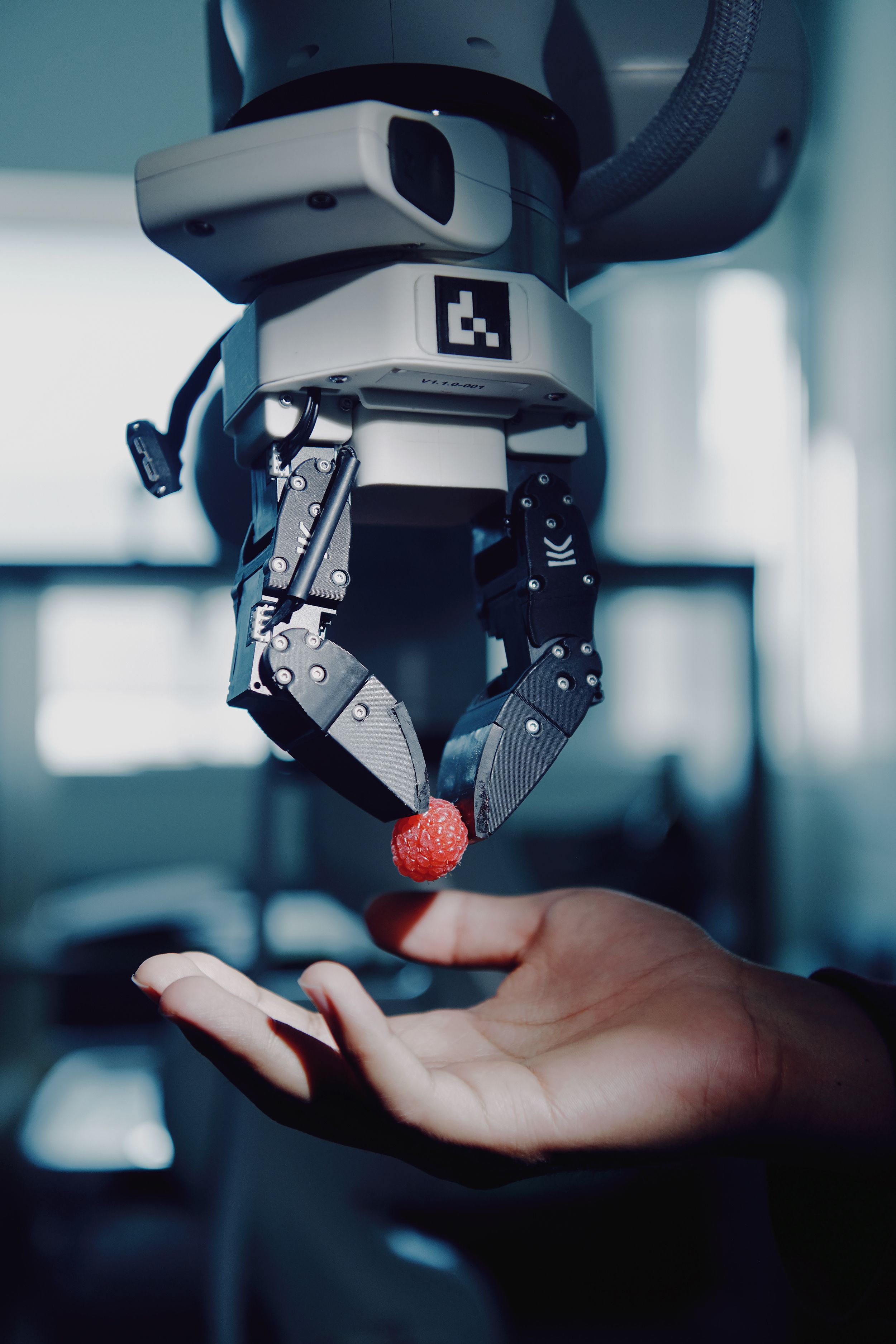
A used collaborative robot arm — available through used cobots for sale on Botmarket — can be had for between $8,000 and $18,000 depending on model and condition. A UR5, for example, delivers highly reliable, fully autonomous operation for defined repeatable tasks in a fixed workspace. It does not need a human operator standing by. It does not record your home.
The honest value case for Neo right now is thin. You are paying a premium for humanoid form factor — the ability to operate in spaces designed for humans — but the AI capability to exploit that form factor does not yet exist at the level the price demands.
Why Humanoid Home Robots Are Still 20 Years Away
The International Federation of Robotics has assessed that useful, widely accepted home humanoids may still be 20 years away — a timeline that sits in sharp contrast to current marketing claims.
The core problem is not hardware. It is data, dexterity, and the fundamental mismatch between robot capabilities and home environments.
The Uncontrolled Environment Problem
Factories work for robots because they are designed to be predictable. Every cobot on an assembly line operates in a space engineered around its limitations: fixed positions, consistent lighting, known object weights and geometries. Your kitchen is the opposite. Cups appear in different places. Lighting changes. A child's toy lands on the floor mid-task. These variations are trivial for humans and catastrophically disruptive for current robot AI.
Specialised single-function machines handle this by narrowing the problem space dramatically. A robotic vacuum solves floor cleaning by ignoring everything else. A humanoid robot, by design, cannot narrow its problem space — it has to deal with everything, which is precisely what makes general household autonomy so hard.
The Data Flywheel
More than 50 companies worldwide are currently developing humanoid robots, according to McKinsey research cited in the original Robohub analysis. Every one of them faces the same bootstrapping problem: the AI needs real-world home data to improve, but getting that data requires deploying robots into homes before the AI is ready. The result is products that are simultaneously marketed as consumer-ready and functionally dependent on human labour to operate.
Eduardo B. Sandoval, Scientia Researcher in Social Robotics at UNSW Sydney, frames this clearly: the current generation of home humanoids are data collection vehicles first, household appliances second.
What This Means for Buyers
If you are considering a humanoid home robot purchase in 2026, the evidence strongly suggests waiting. The technology is real and improving, but the current price-to-capability ratio is not favourable for most buyers.
If you want home automation today:
- Robotic vacuums and mops (Roborock, Dreame) deliver reliable, fully autonomous floor cleaning for under $1,500
- Dedicated laundry automation performs better than any general humanoid for that specific task
- Smart home integration (lighting, climate, appliances) provides broad convenience at low cost
If you are a developer or researcher:
The 1X Neo and competing platforms entering the market this year represent genuine research access. Paying $20,000 to work with a real humanoid platform — with the explicit understanding that you are also training its AI — may make sense for institutions or well-funded robotics teams. For commercial deployment, used industrial robots in structured environments remain a substantially better investment per task completed.
Watch these milestones before buying:
- Operator intervention rate drops below 10% — when companies publish this metric and it is verifiable, autonomy is becoming real
- Privacy policy clearly limits data retention and third-party access — currently, policies are vague
- Price drops below $10,000 — at that point, the form-factor premium becomes defensible for early adopters
The humanoid home robot market will mature. The companies building these systems are serious, the hardware is legitimately advancing, and the AI will improve with each year of real-world data. But the first generation of buyers is funding that future, not benefiting from it.
Frequently Asked Questions
The 1X Neo is priced at $20,000 USD. It is 168 cm tall, weighs 30 kg, and includes an onboard AI system. However, the robot currently requires remote human operator assistance for complex or unfamiliar tasks, which is a significant capability caveat at that price point.
Does the 1X Neo work fully autonomously?
No — not reliably. When the Neo encounters tasks beyond its current AI capability, a 1X employee wearing a VR headset remotely takes control of the robot. The operator can see live footage from inside your home, and sessions are recorded for AI training purposes. A January 2026 software update was announced to reduce — but not eliminate — this dependency.
What are the privacy risks of humanoid home robots?
Humanoid robots equipped with cameras and depth sensors generate detailed, continuous models of your home environment, daily routines, and personal behaviour. For the 1X Neo specifically, remote operator access and session recording mean that third-party employees can view your home interior. Unlike a smart speaker, a mobile humanoid captures far more contextual data about your life.
Are there cheaper alternatives to humanoid home robots that work better?
Yes, for specific tasks. Robotic vacuums ($500–$1,500) handle floor cleaning autonomously with high reliability. Used cobot arms priced between $8,000 and $18,000 deliver fully autonomous repeatable task performance in fixed workspaces. For defined single-function tasks, specialised machines consistently outperform general humanoids at a fraction of the price.
When will humanoid home robots actually be useful?
The International Federation of Robotics estimates that widely accepted, genuinely useful home humanoids are approximately 20 years away. The primary barriers are not hardware — which has advanced significantly thanks to EV supply chains — but AI capability in uncontrolled environments, the volume of real-world training data required, and the engineering challenge of general-purpose dexterity in spaces designed for humans.
Why do so many companies keep launching humanoid home robots if they are not ready?
Deploying robots into real homes is the fastest path to collecting the training data needed to improve AI autonomy. Early buyers effectively fund the next generation's better product. With more than 50 companies globally developing humanoid robots and significant investor pressure to show consumer traction, the incentive to launch early — ahead of genuine readiness — is considerable.
Would you pay $20,000 for a home robot that still needs a human operator — or is that a dealbreaker at any price?
The humanoid home robot category is real, the hardware is advancing, and the long-term trajectory is toward genuine household autonomy. But today's products ask buyers to pay premium prices for early-stage technology while simultaneously surrendering their home's privacy to a training pipeline. That is a trade-off worth examining carefully before any purchase decision.




Sumali sa diskusyon
Would you pay $20,000 for a home robot that still needs a human operator to handle hard tasks?