
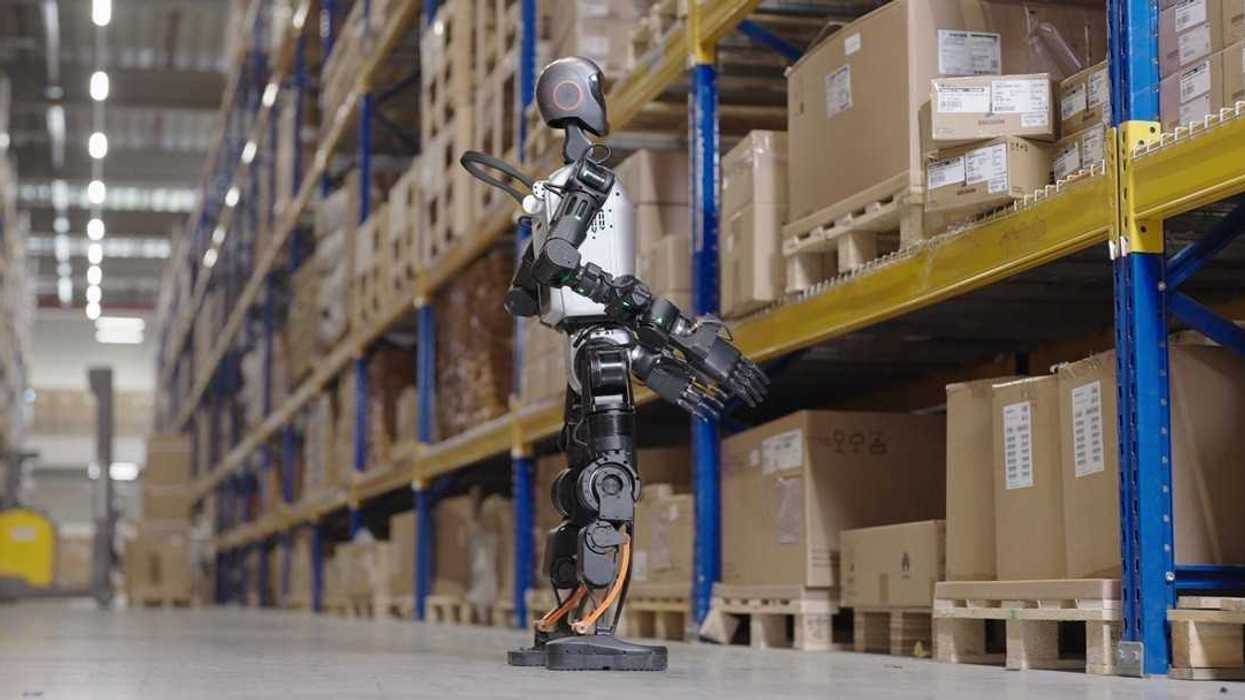
Billions of dollars in venture funding haven't solved the one problem that determines whether humanoid robots are actually useful: hands. Despite record investment in the sector, current-generation humanoids still cannot reliably perform the fine motor tasks that define most real-world industrial and domestic work — and the gap between hype and hardware capability is quietly becoming a commercial liability.
What Is the Dexterity Gap in Humanoid Robots?
The dexterity gap is the measurable distance between what humanoid robot hands can currently do and what useful real-world work actually requires. Today's leading humanoid platforms can walk, carry payloads, and navigate unstructured environments with growing confidence — but they consistently fail at tasks requiring finger-level precision: inserting a USB cable, tying surgical sutures, assembling small electronic components, or even reliably picking irregularly shaped objects from a bin.
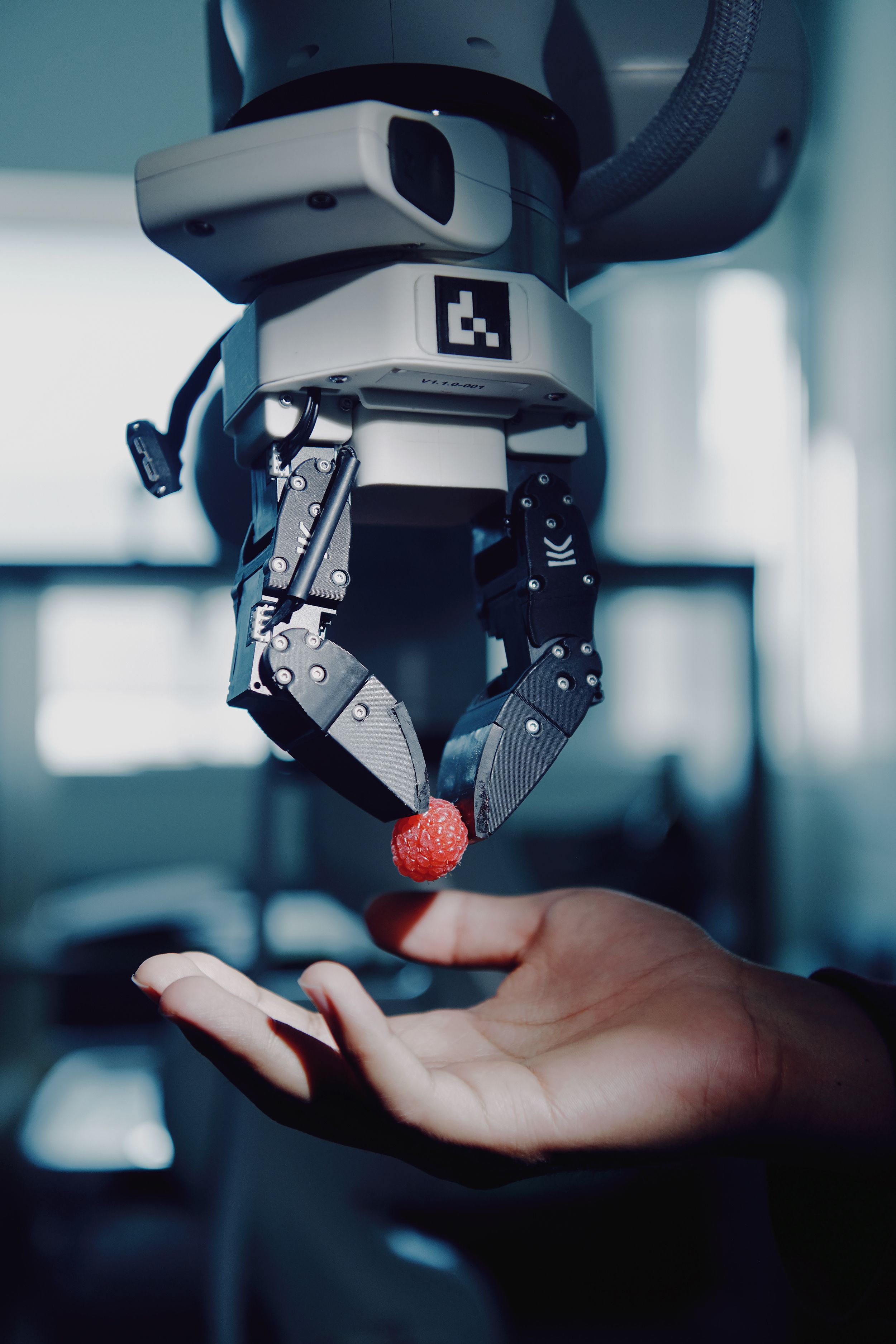
This isn't a software problem at its core. It's a compound failure spanning actuator resolution, tactile sensing density, and the near-total absence of proprioceptive feedback (the sense of force and position in one's own limbs) in commercially available robot hands. Human hands contain roughly 17,000 mechanoreceptors — sensory nerve endings that provide continuous feedback on texture, pressure, and slip. The most advanced commercial robot hands today replicate a fraction of that sensing density, and at costs that make volume deployment economically irrational.
According to TechCrunch, the consensus forming among researchers and operators is stark: the world's environments are simply not yet compatible with what humanoids can do, and the gap is wider than the investment narrative suggests.
Why Funding Alone Cannot Buy Fine Motor Skills
Throwing capital at the dexterity problem accelerates research timelines — but it does not compress the physics. The challenge is that fine motor skill in biological systems emerges from decades of embodied learning, reinforced by sensory architectures that took millions of years to evolve. Replicating that in hardware involves three interlinked bottlenecks that money cannot simply dissolve.
First, actuator resolution. Human finger joints are controlled by over 30 individual muscles and tendons per hand, many operating simultaneously with sub-millimetre precision. Current humanoid hands typically use between 6 and 12 degrees of freedom (DoF) per hand — enough for gripping, not enough for manipulation. Increasing DoF exponentially increases mechanical complexity, weight, failure points, and cost.
Second, tactile sensing. Most deployed humanoid hands have limited or no fingertip tactile sensing. Research-grade tactile sensor arrays exist — GelSight-style sensors and capacitive arrays — but they remain fragile, expensive, and difficult to integrate at scale. Without real-time tactile feedback, a robot cannot detect whether a component is slipping from its grip until it has already fallen.
Third, the training data problem. Large language models improved rapidly partly because text data was abundant and cheap to label. Dexterous manipulation training data is the opposite: it requires physical demonstration, teleoperation setups, or simulation environments that still cannot accurately model contact physics and material deformation. Sim-to-real transfer (training in simulation, deploying in the real world) breaks down precisely at the moment of contact — which is, inconveniently, when dexterity matters most.
Which Tasks Are Actually Blocking Deployment?
The tasks that most manufacturers want humanoids for are almost entirely dexterity-dependent. Consider the gap between what humanoids can do today versus what a useful factory or logistics worker does routinely:
| Task Category | Human Worker | Current Humanoid Capability |
|---|---|---|
| Bin picking (irregular objects) | Reliable | Inconsistent — high error rate on small/soft items |
| Cable routing and connector insertion | Routine | Largely unsolved at commercial reliability levels |
| Small parts assembly (screws, clips) | Fast, precise | Requires significant fixture assistance |
| Carrying and transporting boxes | ✓ | ✓ — a genuine near-term strength |
| Operating standard tools (wrenches, cutters) | Routine | Limited — grip force control is imprecise |
| Surface inspection by touch | Intuitive | Requires specialised sensor integration not standard in humanoids |
| Folding fabric or soft goods | ✓ | One of the hardest open problems in robotics |
The table reveals the pattern: humanoids are approaching competence in gross motor tasks — locomotion, transport, navigation — but fine manipulation remains a wall. The tasks they can reliably do tend to be exactly the tasks that existing specialised industrial robots and cobots already handle more efficiently and cheaply.
Humanoid Robot Depreciation: The Commercial Risk Nobody Is Pricing In
Here is the commercial exposure that the investment narrative obscures. Early buyers of current-generation humanoid platforms are acquiring hardware at prices ranging from $50,000 to $250,000 per unit, depending on platform and configuration. Those machines are being trained on proprietary workflows, integrated into facilities, and positioned as long-term assets.
But the pace of development means current-generation hardware faces steep functional obsolescence risk. When the next generation ships with meaningfully improved dexterity — better hands, denser tactile sensing, higher DoF — the resale value of today's platforms will compress sharply. Based on market data from platforms like Botmarket, early-generation humanoid and advanced cobot platforms show depreciation curves of 30–55% within 24 months of a successor generation launch, mirroring patterns seen in early collaborative robot markets circa 2015–2018.
This creates a compounding risk for buyers who commit now:
- Capability gap: The machine cannot perform the dexterous tasks you need today
- Integration cost: Significant spend goes into training, fixtures, and workflow adaptation
- Depreciation exposure: When better hardware ships, resale value drops sharply and rapidly
- Switching cost: The proprietary AI models trained on your hardware may not transfer cleanly to next-gen platforms
Buyers considering humanoid platforms should model total cost of ownership (TCO) over a 36-month horizon maximum for current-generation hardware, and factor in a conservative resale value of 30–40 cents on the dollar at that point. If the TCO math still works within a 3-year window at current capability levels, the investment may be justified. For most use cases involving significant fine manipulation, it likely does not.
You can browse humanoid robots currently listed on Botmarket to compare current platform pricing against these depreciation assumptions before committing capital.
What This Means for Robotics Buyers and Operators
For buyers and operators evaluating humanoids right now, the dexterity gap has three direct implications.
Don't buy a humanoid for its hands. Current platforms earn their keep on locomotion, transport, and gross manipulation — picking up boxes, moving materials, operating in unstructured spaces that fixed-automation cannot reach. If your workflow requires consistent small-parts handling, fine assembly, or cable work, humanoids are not yet the answer. Specialised cobots with purpose-built end effectors will outperform them at a fraction of the cost. Explore used cobots for sale on Botmarket as a lower-risk entry point for fine manipulation tasks.
Pilot programs over fleet commitments. Given the rapid development pace and the depreciation risk outlined above, committing to fleet-scale humanoid deployment on current-generation hardware is a significant financial bet on capability that doesn't yet exist. A controlled pilot of two to four units, scoped to tasks the hardware can actually perform today, is the defensible approach.
Watch the hands, not the legs. When evaluating future humanoid platform announcements, use dexterous manipulation benchmarks as your primary filter: DoF per hand, tactile sensor coverage, demonstrated performance on standardised dexterity benchmarks like the YCB Object Manipulation benchmark or equivalent. Walking demonstrations and promotional videos tell you almost nothing useful about commercial readiness.
Frequently Asked Questions
Learning-based approaches have produced genuine progress in robot manipulation, but they run into a physical ceiling. AI can improve a robot's decision-making about how to attempt a grasp, but if the hardware lacks sufficient DoF, tactile sensing, and actuator resolution, the robot's hands simply cannot execute what the AI prescribes. Current humanoid hands have roughly 6–12 DoF versus the 21+ DoF of a human hand, and minimal tactile feedback — that hardware gap cannot be closed by software training alone.
What dexterous tasks can today's humanoid robots actually perform reliably?
Most commercial humanoid platforms demonstrate reliable performance in tasks requiring gross grip: picking and placing objects larger than roughly 5cm, transporting boxes and containers, operating large push-button controls, and opening standard doors. Tasks requiring fingertip-level precision — inserting connectors, handling small fasteners, manipulating flexible or soft materials — remain well outside reliable commercial performance envelopes for current platforms.
How quickly is the dexterity gap expected to close?
Research timelines vary widely by organisation, but a realistic industry view places basic commercial-grade dexterous manipulation — comparable to a novice human assembly worker — at 5 to 10 years out for broad deployment. Some specialised applications may see earlier breakthroughs. The key milestones to track are advances in tactile sensor integration, sim-to-real contact physics, and high-DoF hand actuator cost reduction.
What is the resale risk of buying a current-generation humanoid robot?
Based on market patterns from earlier cobot generations, early-adopter humanoid hardware is likely to depreciate 30–55% within 24 months of a successor generation launch. Buyers should model maximum 36-month TCO on current hardware and factor in conservative resale assumptions of 30–40 cents on the dollar when successor platforms with meaningfully improved hands arrive.
Are there robot alternatives better suited to fine manipulation tasks today?
Yes. Purpose-built collaborative robots (cobots) with specialised end effectors — including suction arrays, parallel grippers, and soft grippers — outperform humanoid hands on most structured fine manipulation tasks. Force-torque sensor-equipped cobots from vendors like Universal Robots, Fanuc, and KUKA already handle small-parts assembly at production-grade reliability. For unstructured manipulation, delta robots and cable-driven systems cover a wide range of high-speed pick applications.
The dexterity gap isn't a temporary marketing problem that another funding round will fix — it's a physics and hardware challenge with a realistic timeline measured in years, not quarters. Until humanoid hands can match even the rough capability threshold of a human assembly worker, the commercial deployment case remains narrow, and the financial risk for early fleet buyers is real.
The honest position for most operators today: watch the hands closely, pilot carefully, and resist the pull of the investment narrative until the hardware catches up to the hype.
If you're evaluating humanoids for your facility right now — which task is the dexterity gap actually blocking for you?


Sumali sa diskusyon
Which specific task is the dexterity gap actually blocking in your facility or deployment plan?