

Last updated: May 2025
Five Unitree humanoids execute a flawless synchronised routine on a shiny competition stage — and suddenly the question isn't whether robots can move like humans, but whether moving like humans is even the point. The spring 2025 demo season has produced the most technically impressive humanoid performance reel yet, with Unitree, PNDbotics, Engine AI, and UK startup Humanoid all releasing footage that demands serious attention from buyers and engineers alike.
Which Humanoid Robots Performed Best This Spring?
Four humanoid platforms released standout demo footage in the spring 2025 cycle: Unitree's synchronised ensemble routine, PNDbotics' Adam street-dance performance, Engine AI's outdoor mobility showcase, and UK-based Humanoid's behind-the-scenes development documentary. Each clip reveals something different about where the hardware frontier actually sits right now.
Unitree led the visual spectacle. Five robots in matching red vests executed coordinated choreography with tight synchronisation — the kind of demo that wins trade show floors. As IEEE Spectrum noted, humanoids are nearing peak human performance, but that benchmark may be the wrong target entirely. Robots that simply copy human motion leave significant mechanical advantage on the table.
PNDbotics Adam took a different approach with its Chinese New Year street-dance clip. The tagline "a head-on collision between metal and beats" is marketing fluff, but the underlying motion quality is genuine — smooth weight transfer, responsive rhythm-matching, and no visible stutter during transitions. For a relatively new entrant, Adam's fluid dynamics are competitive.
Engine AI titled its clip "Get out and have fun!" — a phrase that invites the uncomfortable question of whether entertainment is still the primary value proposition for bipedal robots in 2025. The footage shows capable outdoor locomotion, but the framing underscores that real-world deployment use cases remain underdeveloped for most humanoid platforms.
Humanoid (UK) released the most substantive content: a documentary detailing how the company built its first robot in seven months and its second in five. That compression of development time — from seven months to five between iterations — is the kind of engineering velocity metric that matters far more to serious buyers than a dance routine.
What Do These Demos Actually Prove About Humanoid Capability?
Impressive choreography does not equal deployment readiness. These demos prove that motion planning, balance control, and synchronisation have advanced dramatically — but they reveal almost nothing about task completion rates, uptime reliability, or cost per operation in real environments.
The distinction matters for buyers. Synchronised dance requires pre-programmed trajectories in a controlled environment with flat, predictable surfaces. Factory-floor manipulation, logistics pick-and-place, or construction site navigation impose radically different demands: unstructured terrain, variable lighting, dynamic obstacles, and the need for real-time decision-making rather than choreographed replay.
What the Humanoid documentary does prove is that hardware iteration cycles are compressing fast. A five-month build cycle for a full humanoid platform would have been implausible three years ago. That acceleration has direct implications for buyers considering whether to purchase now or wait for the next generation — a calculus that's increasingly difficult to resolve.
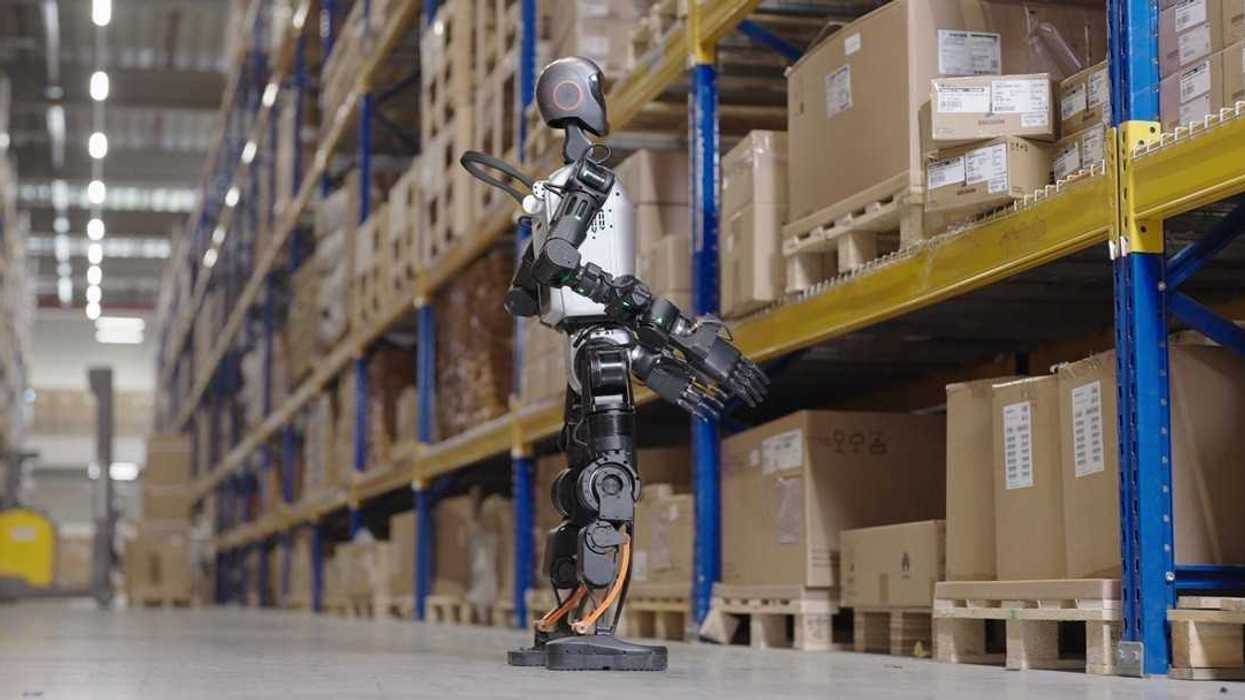
IEEE Spectrum's editorial observation cuts to the core issue: robots nearing peak human performance is not the same as robots reaching peak robot performance. Bipedal, human-form robots are inherently constrained by their anthropomorphic design. The physical configuration optimised for human environments is not necessarily optimised for robot capabilities — higher speed, greater payload, operation in environments hostile to humans, or perpetual uptime without fatigue.
How Does Unitree Compare to Rival Humanoid Makers on Price and Specs?
Unitree is currently the only humanoid manufacturer offering commercially accessible pricing, with the G1 starting around $16,000 and the H1 sitting closer to $90,000. Competing platforms from Agility Robotics, Figure, and Apptronik remain in enterprise-only or pilot-program territory, with pricing typically negotiated rather than listed.
| Robot | Manufacturer | Starting Price | Height | Payload | Status |
|---|---|---|---|---|---|
| G1 | Unitree | ~$16,000 | 1.27 m | 2 kg | Available |
| H1 | Unitree | ~$90,000 | 1.8 m | 30 kg | Available |
| Adam | PNDbotics | Unlisted | ~1.7 m | TBC | Demo phase |
| SE-R1 | Engine AI | Unlisted | ~1.67 m | TBC | Limited |
| Digit | Agility Robotics | Enterprise | 1.75 m | 16 kg | Pilot programs |
| Humanoid Gen 2 | Humanoid (UK) | Unlisted | TBC | TBC | Development |
Unitree's pricing advantage is significant. The G1 at $16,000 is the closest thing the humanoid market has to a mass-market entry point — accessible for research labs, university programs, and early-adopter enterprises that want to begin building workflows before full commercial deployment. The H1's $90,000 price tag puts it in competition with high-spec cobots on a per-unit basis, though the humanoid form factor enables different task profiles.
PNDbotics, Engine AI, and the UK's Humanoid have not published pricing. Based on current market dynamics, expect first-generation commercial units from these platforms to land in the $50,000–$150,000 range when they reach general availability — consistent with how Unitree's own H1 was positioned at launch.
What Else Launched This Week Beyond Humanoids?
This week's broader robotics releases included significant developments in drone autonomy, agricultural automation, and inspection robotics that carry real commercial weight.
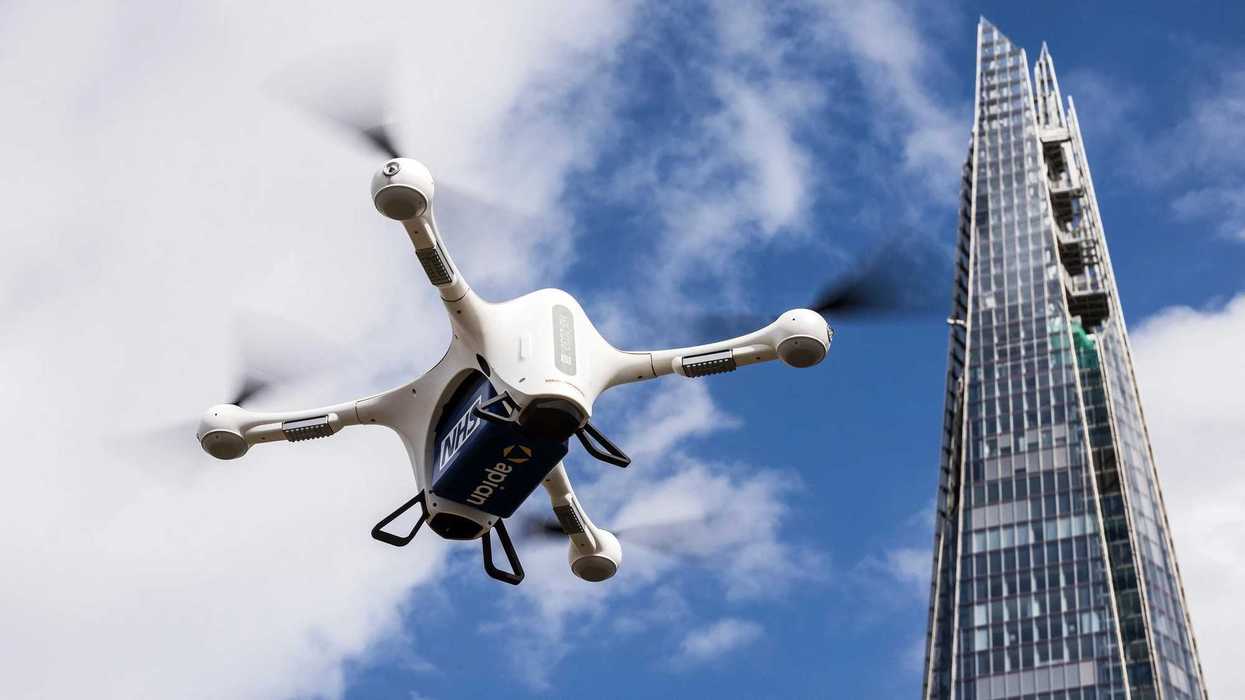
Corvus Robotics demonstrated its Corvus One drone operating at –20°F (–29°C) in a cold-chain warehouse environment, with full barcode-scanning performance maintained at extreme temperatures. Cold-storage automation is a genuinely underserved segment — the operational cost of human workers in freezer environments is substantial, and few autonomous systems are engineered to handle sustained sub-zero conditions.
DFKI's Shiva robot showed progress on strawberry picking rates in field tests. Agricultural harvesting remains one of the hardest manipulation problems in robotics due to variability in fruit position, size, colour, and the fragility of the target — Shiva's iterative improvement data suggests the gap between lab performance and field viability is narrowing.
Boston Dynamics Spot appeared in an ST Engineering MRAS case study integrating the Leica BLK ARC scanner for point-cloud data collection and digital twin creation. This is Spot doing what it does best in 2025: autonomous facility inspection with sensor payloads far beyond its original spec. The digital twin use case has strong ROI mechanics — continuous reality capture reduces the cost of maintaining accurate facility models by orders of magnitude compared to manual survey teams.
NASA's Perseverance rover demonstrated Mars global localisation — an onboard algorithm that cross-references navigation camera panoramas against orbital terrain maps to determine position within 25 centimetres, without waiting for Earth-based computation. The processing runs on the rover's helicopter base station processor, repurposed after Ingenuity's mission concluded. For terrestrial robotics buyers, the core lesson is architectural: offloading localisation to onboard compute rather than cloud infrastructure eliminates communication latency and improves reliability in environments with degraded connectivity.
What This Means for Humanoid Robot Buyers
Buyers evaluating humanoid platforms in mid-2025 face a genuinely difficult timing decision. Performance capabilities are advancing rapidly — the compression from seven-month to five-month build cycles at Humanoid UK is one data point among many — but deployment-ready use cases remain narrow for most humanoid form factors.
The Unitree G1 is the clearest near-term purchase for research and development teams. At ~$16,000, it offers the lowest entry cost in the humanoid market with a manufacturer that has demonstrated sustained iteration. If your primary need is building manipulation workflows, training AI models on embodied tasks, or testing human-robot interaction protocols, the G1 provides real capability at a price that doesn't require enterprise-level budget approval.
The Unitree H1 targets teams with higher payload and structural requirements. Its 30 kg payload capacity and 1.8 m frame make it viable for light industrial tasks where the humanoid form factor is genuinely required — environments designed around human workers where retrofitting for a wheeled or fixed-arm robot is impractical.
For teams considering platforms from PNDbotics, Engine AI, or Humanoid UK, the honest advice is to request pilot access rather than committing to purchase until commercial availability and support infrastructure are confirmed. Dance demos are encouraging. Uptime SLAs and spare parts logistics are what determine deployment success.
You can browse humanoid robots available on Botmarket to compare current listings across Unitree models and other platforms entering the market.
Frequently Asked Questions
How much does the Unitree G1 humanoid robot cost?
The Unitree G1 starts at approximately $16,000, making it the most accessible commercially available humanoid robot as of 2025. This price covers the base platform; additional end-effectors, sensors, or software integrations increase total cost. Unitree sells directly and through authorised resellers, with units shipping to research institutions and commercial buyers globally.
What is the Unitree H1 payload capacity?
The Unitree H1 supports a payload capacity of approximately 30 kg, with a standing height of 1.8 m. It is designed for more demanding physical tasks than the G1's 2 kg payload limit, and is priced around $90,000 for the base configuration.
Are humanoid robots deployment-ready for industrial use in 2025?
Most humanoid platforms in 2025 remain in pilot-program or research phases for genuine industrial deployment. Unitree's G1 and H1 are commercially available, but real-world task completion rates, uptime reliability data, and integration support for factory environments are still maturing. Narrow, well-defined tasks in semi-structured environments are the most viable near-term applications.
How fast are humanoid robot development cycles becoming?
UK-based Humanoid built its first robot in seven months and its second in five months, illustrating the compression in development cycles across the industry. Broader market trends show major platforms releasing annual or semi-annual hardware updates, compared to multi-year cycles that were standard before 2022.
What is the Corvus One cold-chain drone designed for?
The Corvus One for Cold Chain is an autonomous inventory drone engineered for permanent operation in freezer warehouse environments at temperatures down to –20°F (–29°C). It maintains full flight capability and barcode-scanning performance at those temperatures, addressing a segment where human workers face significant operational cost and health constraints.
How does NASA's Mars global localisation work, and why does it matter for terrestrial robotics?
Perseverance's Mars global localisation algorithm compares onboard navigation camera panoramas to orbital terrain maps, pinpointing the rover's location to within 25 centimetres without Earth-based computation. For terrestrial robotics, the architectural principle — onboard localisation to eliminate communication latency — is directly applicable to autonomous systems operating in GPS-denied or high-latency environments such as underground facilities, dense urban canyons, or remote industrial sites.
The spring 2025 demo season has raised the performance ceiling for humanoid robotics visibly. Whether it has raised the deployment floor at the same rate is a harder question to answer.

Sumali sa diskusyon
Which spring 2025 humanoid demo most changes your view of deployment timelines - Unitree, PNDbotics, or Humanoid UK?