What is the Agibot X2?
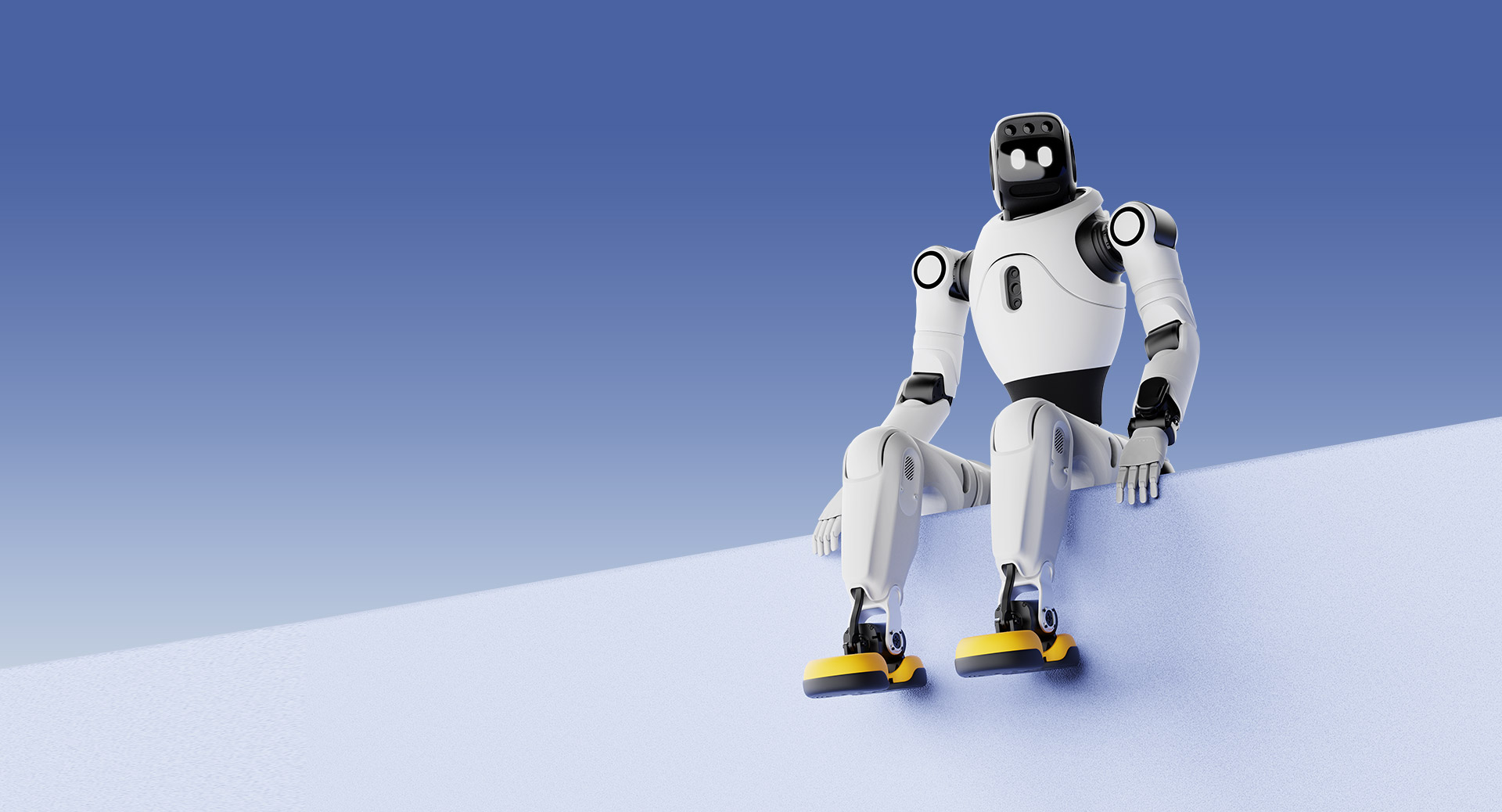
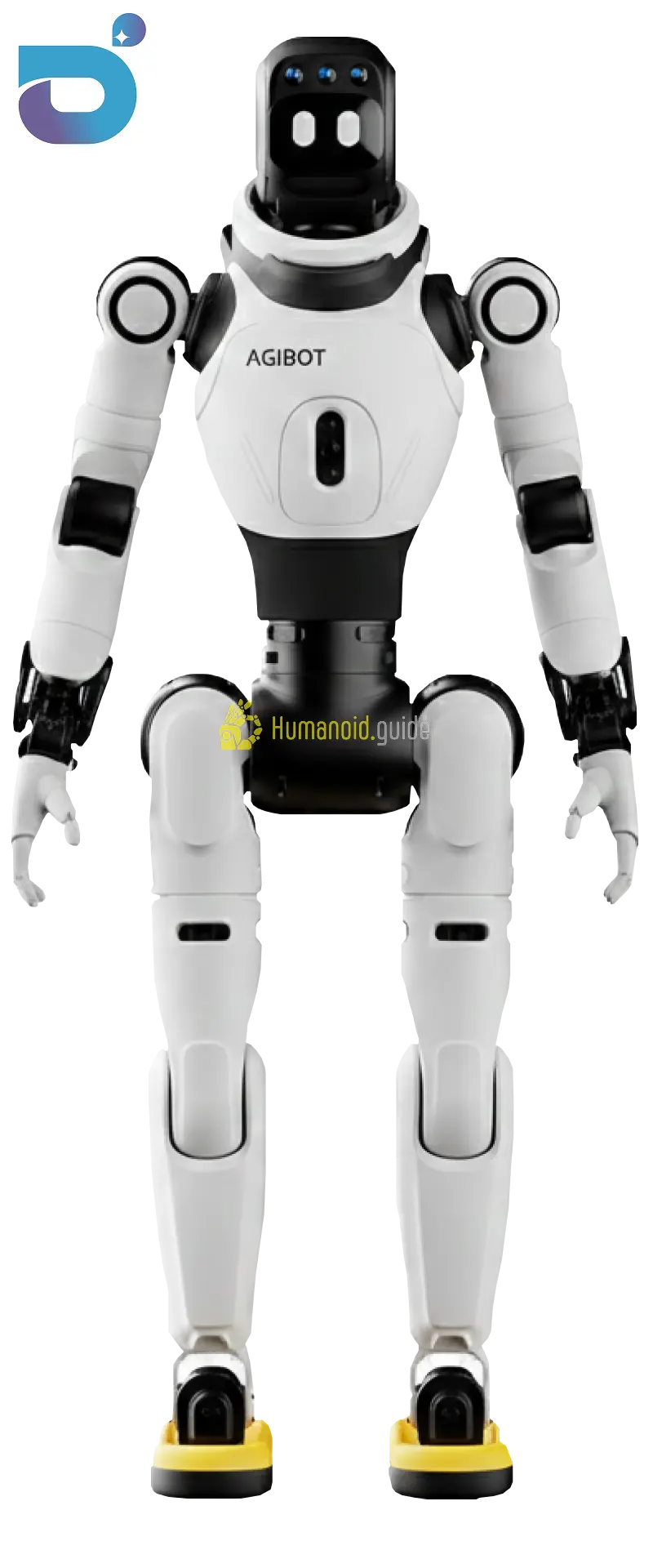
The AgiBot Lingxi X2 is a full-size humanoid robot created by Shanghai-based AgiBot Innovation (founded 2023). It succeeds the X1 with upgraded compute, stronger arms, and production-ready refinements. The robot stands 131 cm tall and weighs 35 kg, intended for research, light industrial, and service tasks. Its 44 degrees of freedom include highly dexterous 12-DOF hands, making it suitable for manipulation research. Two variants exist: the base X2 (25 body DOF) and the X2 Ultra (30 body DOF, additional sensors). The robot runs on NVIDIA Jetson Orin NX, ROS 2, and uses model predictive control for whole-body locomotion. First shown in 2024, it targets labs and early commercial pilots.
Specifications
Here are the full technical specifications.
| Spec | Value |
|---|---|
| Height | 131 cm |
| Weight | 35 kg |
| Degrees of freedom | 44 (body + hands) |
| Battery life | 2 hours (at 0.5 m/s walk) |
| Max speed | 7.2 km/h (lab peak) |
| Payload | 3 kg (arm, posture-limited) |
| Price (new) | Undisclosed (contact AgiBot) |
| Price (used range) | N/A |
Price & Value
New MSRP: Undisclosed
Used range: N/A
As a pre-commercial platform, AgiBot has not published official pricing for the Lingxi X2. Unofficial estimates point to around $34,000, a figure that would place it below the Unitree H1 ($90,000) and other research humanoids. At that price, the X2 could be a cost‑effective alternative for labs, but the lack of confirmed pricing and availability means budgets cannot be finalised. Should it enter the market, buyers must factor in costs for the modular battery system, controller, and potential software development. Depreciation is uncertain; early adopters may face sharp value drops once commercial production ramps. Compared with fully‑commercialised alternatives like the Unitree H1, the X2’s long‑term cost‑of‑ownership hinges on factory‑matched support and a stable ROS 2 ecosystem.
Who Is It For?
Best for: - University robotics labs developing whole‑body control and manipulation (44 DOF enables dexterous research) - Service robotics startups prototyping reception or guidance applications - Light industrial pilots needing a mobile manipulator with low payload (≤3 kg arm)
Not for: - Heavy industrial tasks (payload is just 3 kg, limiting tool use) - Users requiring immediate commercial support (still in development with no official pricing)
Alternatives & Comparison
The X2 competes with other sub‑$100k humanoid research platforms, but its pre‑commercial status makes direct comparison difficult.
| Model | Price | Available | Key Difference |
|---|---|---|---|
| Unitree H1 | $90,000 | yes | Higher torque actuators, established locomotion, immediate commercial availability |
| Fourier GR‑2 | Undisclosed | preorder | Focuses on rehabilitation and research, different actuator design, similar size class |
| Tesla Optimus | Undisclosed | no | Leverages Tesla’s AI stack, not yet available for external purchase |
Verdict: For labs that can wait, the X2’s sub‑$34,000 estimate makes it the budget pick, but the Unitree H1’s ready‑to‑ship reliability wins for projects with deadlines. Fourier GR‑2 offers a similar research focus with arguably more mature actuator tech, while Tesla Optimus remains an industry wildcard. If AgiBot delivers at the rumoured price with production‑grade hardware, the X2 could redefine value in research humanoids.
Use Cases & Capabilities
Whole‑Body Manipulation Research
With 44 DOF—including 12‑DOF hands—the X2 is a standout testbed for dexterous manipulation. Researchers can implement grasp planning, in‑hand manipulation, and coordinated arm‑leg motions. The NVIDIA Jetson Orin NX compute allows real‑time model predictive control, ideal for exploring whole‑body optimization. Limitations include a 3 kg arm payload, so heavy objects are out of scope, and the 2‑hour battery may restrict long experiments.
Reception and Service Pilots
The X2’s interactive RGB camera, microphone array, speaker, and optional 4G/5G module make it suited for front‑desk tasks. It can greet visitors, answer questions via a foundation model (GO‑1), and perform light navigation in lobbies. Its 131 cm height and approachable design help public acceptance. However, unverified safety certifications mean it should not be deployed unattended in crowded spaces.
Light Industrial Assistance
On a factory floor, the X2 could transport components weighing up to 3 kg, scan inventory with its RGB‑D cameras, or assist with simple assembly. The swappable battery ensures continuous uptime, and the 1.2 m/s walking speed allows efficient movement between stations. Yet, the lack of IP rating and the low payload limit its use to clean, light‑duty environments.
History & Background
AgiBot Innovation was founded in 2023 in Shanghai, China, with a mission to build general‑purpose humanoid robots. The Lingxi X2 was unveiled in August 2024 as the successor to the original X1. The base X2 offered 25 body DOF and advanced compute, while the X2 Ultra added more arm dexterity (7-DOF arms), a 3D LiDAR, and an interactive RGB‑D camera. Early demos highlighted whole‑body motion control and dexterous hands. By 2026, the robot remained in development, with units shipped to select research partners but no wide commercial release. The foundation model GO‑1, announced alongside, supports multimodal interaction. AgiBot’s other humanoids (A2 series) extend the portfolio to tall‑height service robots, indicating a rapid product‑expansion strategy.
Buying Used — What to Check
Firmware version Early‑batch X2 units may require critical software updates for stable locomotion.
Battery health The swappable 500 Wh pack degrades over cycles; verify runtime meets the 2‑hour spec.
Hand calibration 12‑DOF hands are complex; misaligned fingers can affect grasping accuracy.