What is the Leju Roban 2?
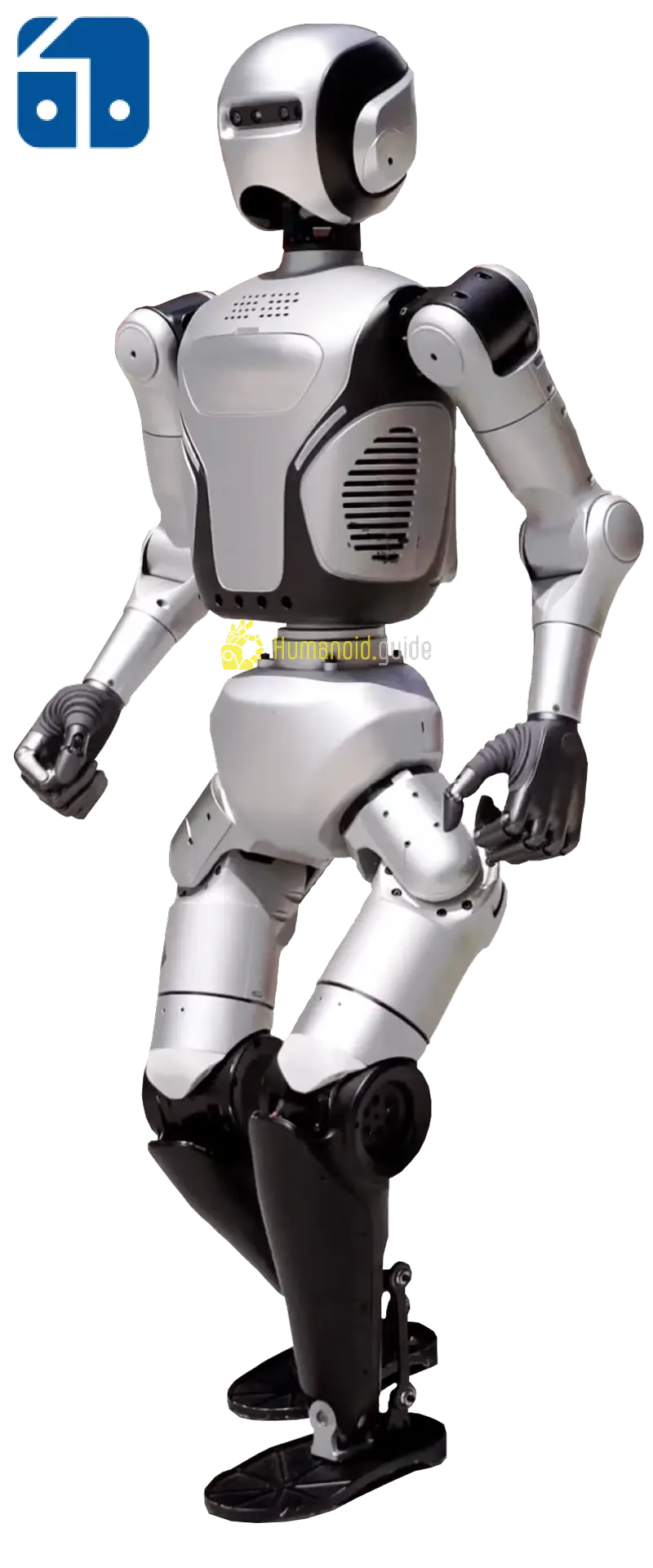
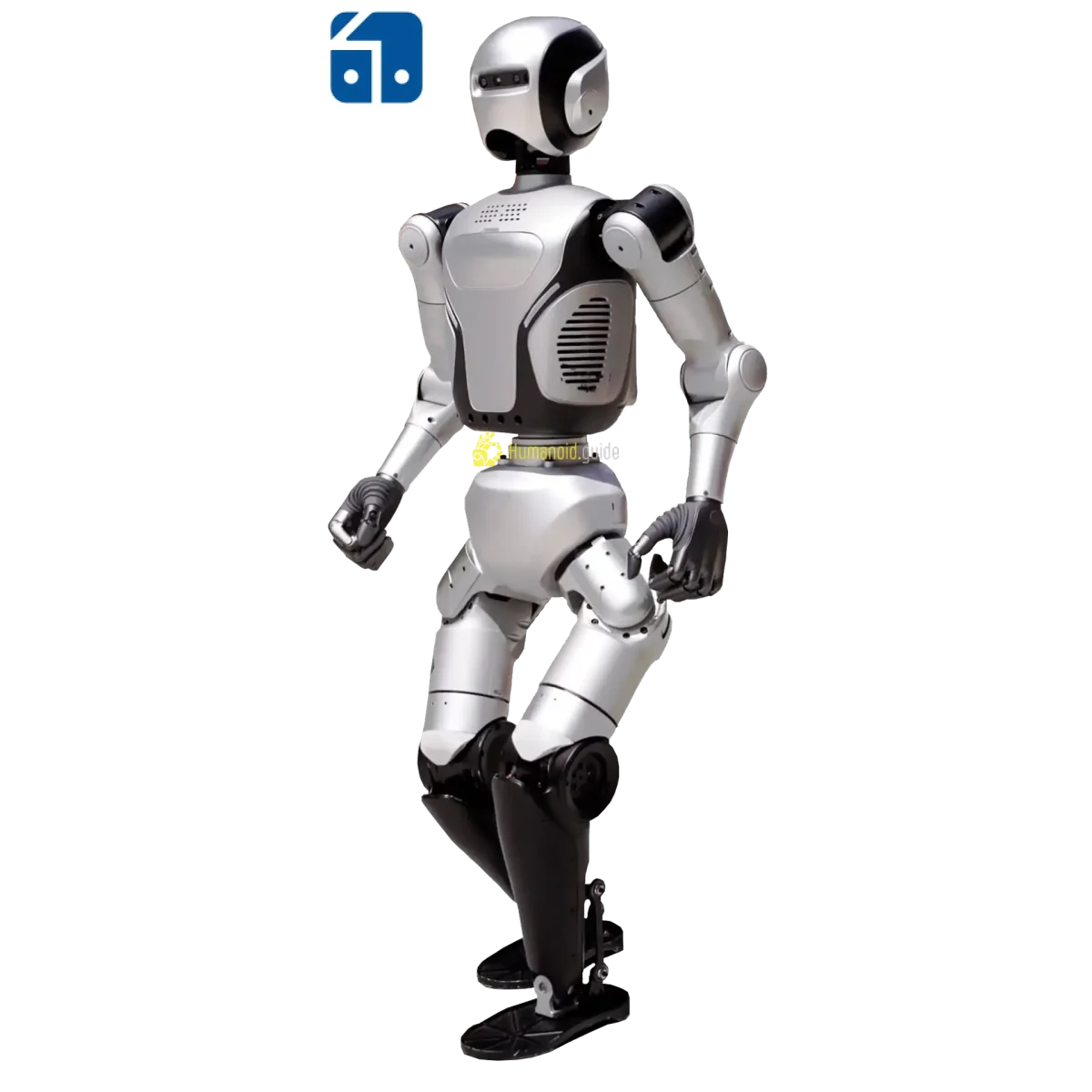
The Leju Roban 2 is a compact, 20-degree-of-freedom humanoid robot developed by Leju Robotics in Shenzhen, China. It is the second generation in the Roban series, evolving from the Roban-1 with improved bipedal stability and built-in support for imitation learning. The robot is designed as an open research and education platform, running Linux on a Raspberry Pi 4B with ROS, Python, C/C++, and Scratch programming interfaces. A 5MP camera, gyroscope, ultrasonic, infrared, and touch sensors provide perception for human-robot interaction and locomotion experiments. At just 353 mm tall and 1.5 kg, it is portable yet equipped with serial bus servos for precise motion control. The Roban 2 targets universities, robotics clubs, and STEM educators seeking a full-featured but affordable bipedal research tool.
Specifications
Here are the full technical specifications.
| Spec | Value |
|---|---|
| Height | 353 mm |
| Weight | 1.5 kg |
| Degrees of freedom | 20 |
| Battery life | 1.5 hours |
| Max speed | 3 km/h (estimated) |
| Payload | Not specified |
| Price (new) | Undisclosed (contact manufacturer) |
| Price (used range) | ~$500–$1,500 (est.) |
Price & Value
New MSRP: Undisclosed (contact manufacturer)
Used range: ~$500–$1,500 (estimated, based on comparable educational robots and limited secondary market sightings)
Leju Robotics does not publicly list a fixed price for the Roban 2; official quotes are available only through direct inquiry, a common practice for research-grade robotics. Independent market estimates place the new-unit cost between $1,000 and $2,000 for educational purchases, depending on configuration and optional sensor packages. This positions it above entry-level competitors like the Leju Aelos (~$300) but well below research humanoids such as the ROBOTIS DARwin-OP2 (~$12,000). Its value proposition lies in full ROS compatibility and a Raspberry Pi compute backbone, which reduces the need for external hardware. Depreciation is relatively steep given the niche audience, and used units occasionally appear on university surplus channels or robotics forums at 30–60% of estimated new cost. Total cost of ownership includes a Li-ion battery pack (replacement around $50), plus any custom accessories or development time, but remains accessible for grant-funded labs and well-equipped classrooms.
Who Is It For?
Best for: - STEM education programs (353 mm stature and Scratch/Python/C++ support make it safe, engaging, and curriculum-ready for middle school through university classrooms) - University robotics labs (20 DOF and ROS compatibility enable bipedal locomotion research, imitation learning, and perception experiments without building a custom platform) - AI and programming learning (Raspberry Pi 4B compute allows developers to implement custom algorithms in Python or C/C++ with a full Linux environment)
Not for: - Heavy industrial tasks (no published payload rating, and small size limits capability to desktop demos only) - Commercial service deployment (designed for education and research, not real-world human-robot interaction at scale) - Mobile manipulation applications (no grippers or arms rated for object handling, and standing payload capacity is undocumented)
Alternatives & Comparison
The Roban 2 competes in the sub-$3,000 educational and research humanoid segment, where open-source software and robust sensor suites differentiate the offerings. Below it compares to the most direct alternatives a buyer would evaluate.
| Model | Price | Available | Key Difference |
|---|---|---|---|
| UBTECH Alpha 1P | $800 (new) | yes | Comparable 20 DOF with similar size, but lacks out-of-box ROS support and a Raspberry Pi brain, limiting advanced customizability. |
| Leju Aelos | $300 (new) | yes | Smaller, entry-level humanoid from the same manufacturer; fewer DOF (about 16) and reduced sensor suite, making it less suitable for serious locomotion research. |
| ROBOTIS DARwin-OP2 | $12,000 (new) | yes | High-end research-grade humanoid with 20 DOF, open-source software, and robust community support, but priced 10x higher and much larger (45 cm tall), placing it in a different budget category. |
Verdict: For educators and researchers needing a ROS-native, Raspberry Pi-powered humanoid at an affordable price, the Roban 2 is the best pick—it punches above its weight class in software extensibility. Buyers who can tolerate a closed ecosystem and want immediate out-of-box demos may favor the UBTECH Alpha 1P, while those building locomotion algorithms on a budget can start with the Aelos and upgrade later. The DARwin-OP2 remains the gold standard for serious research but is overkill for most classroom settings.
Use Cases & Capabilities
STEM Education
The Roban 2’s compact size and multi-language programming support (Scratch, Python, C++) make it an ideal platform for teaching robotics concepts from middle school to university level. Students can assemble and program the robot to walk, recognize colors through its camera, or react to touch sensors, learning kinematics and sensor integration hands-on. Its 1.5-hour battery life is sufficient for lab sessions, and the aluminum alloy frame withstands repetitive student use. The robot ships with ROS preinstalled, allowing advanced courses to dive into SLAM or humanoid balance control without toolchain hassles.
Humanoid Locomotion Research
With 20 serial bus servos and a 3-axis gyroscope, the Roban 2 enables experimentation with walking gaits, fall recovery, and push-recovery behaviors. The Linux environment and ROS middleware let researchers deploy custom controllers, such as ZMP-based walking or reinforcement learning policies, directly on the robot’s Raspberry Pi. Its lightweight design (1.5 kg) reduces risk during testing and makes it easy to mount in motion capture volumes. While the limited top speed of 3 km/h and small foot size constrain outdoor terrain navigation, it serves as a capable testbed for algorithmic development before transitioning to larger platforms.
AI and Imitation Learning
Leju explicitly designed the Roban 2 with imitation learning support: the onboard 5MP camera and touch sensors provide rich demonstration data, while the robot’s stable bipedal stance allows safe teleoperation. Researchers can record joint trajectories and sensor streams, then train policy networks using TensorFlow or PyTorch on an external PC before deploying back. The open Linux environment means no locked-down firmware, so full low-level servo control is accessible. This makes it a cost-effective option for labs investigating human-robot skill transfer without the complexity of a full-sized humanoid.
History & Background
Leju Robotics was founded in 2016 in Shenzhen, China, with a mission to industrialize humanoid robot platforms for education, research, and business. The company launched the Roban line as a scalable research tool, introducing the first-generation Roban-1 as a bipedal platform for locomotion study. In 2021, Leju released the Roban 2, marking a significant upgrade with improved dynamic stability, a more compact form factor (353 mm), and native integration with Raspberry Pi 4B and ROS. The Roban 2 replaced older microcontrollers with a full Linux compute stack, enabling Python and Scratch programming alongside traditional C/C++. Leju simultaneously developed larger humanoids like the KUAVO series for business service roles, but the Roban line remains its dedicated educational offering. No discontinuations or major ownership changes have been reported; the Roban 2 continues to be sold directly by Leju and through international distributors as of 2026.
Buying Used — What to Check
Inspect servo gear wear Serial bus servos in small humanoids can develop backlash or dead spots after heavy classroom use; verify all 20 DOF move smoothly without audible gear noise.
Battery capacity remaining The 1.5-hour runtime depends on Li-ion cell health; used units may only hold a fraction of capacity, requiring a replacement battery (~$50) to reach original endurance.
Camera and sensor calibration The 5MP camera and touch/IR sensors can drift or fail after drops; test vision-based demos and sensor readouts before purchasing.