Alphabet's Waymo is importing thousands of Chinese-made EVs for its self-driving fleet despite U.S. tariffs and security bans.
Alphabet's Waymo is importing thousands of Chinese-made electric vehicles for its self-driving ride-hailing fleet, even as Washington blocks Chinese cars from U.S. dealer lots with tariffs and national security restrictions. The move gives the autonomous vehicle company a low-cost supply of EVs that American consumers can't buy, and it lands squarely in the middle of a growing trade battle.
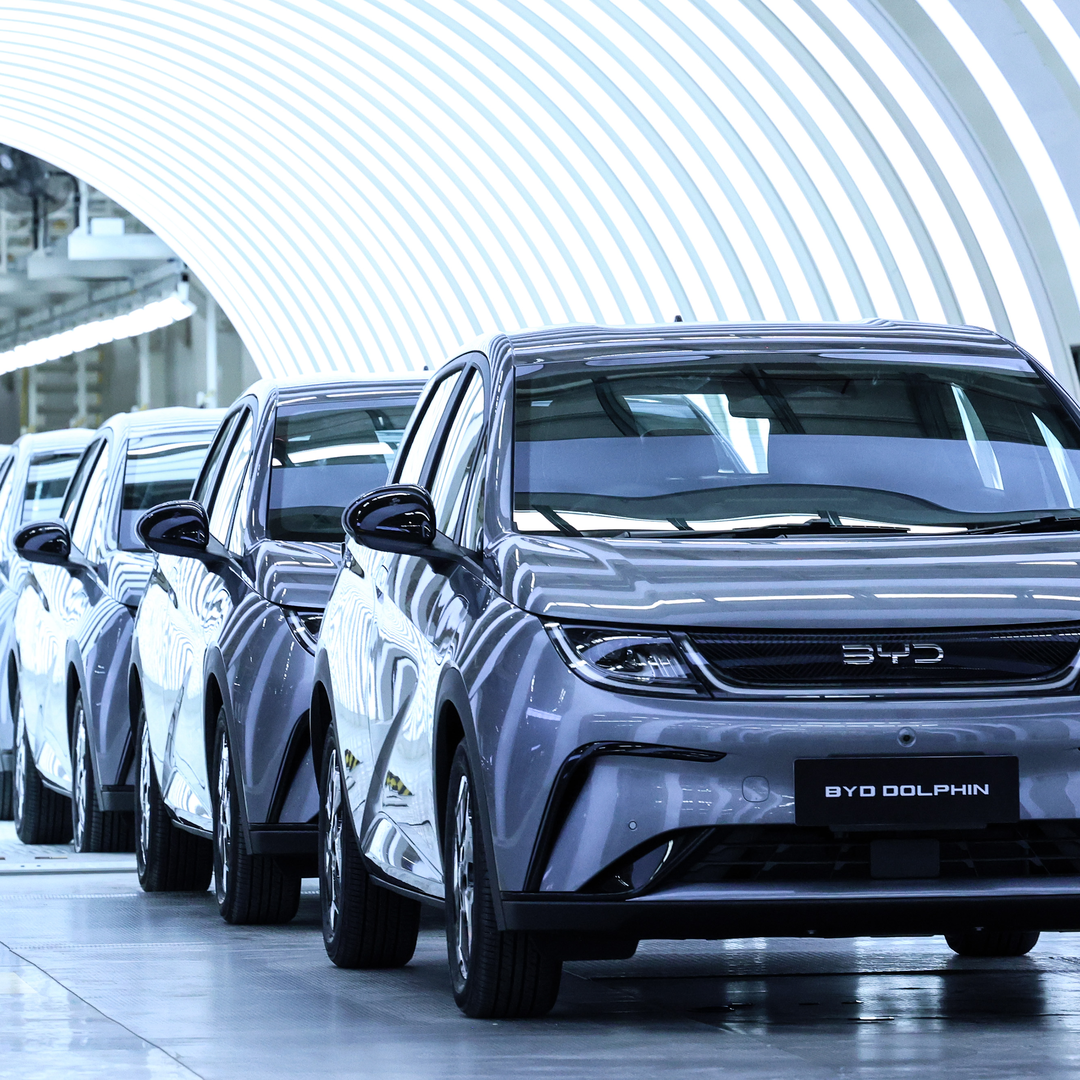
Waymo, the self-driving unit of Alphabet, has been building out its autonomous ride-hailing service in cities including Phoenix, San Francisco, Los Angeles and Austin. To support that growth, it needs vehicles, and according to Forbes, Waymo appears to be sourcing them from China, buying "by the boatload." The company has been importing thousands of Chinese-made EVs for its fleet despite the same tariffs and security restrictions that have effectively kept Chinese cars out of American dealerships.
The details of the imports are still coming to light, but the scale is significant: thousands is not a pilot program. Waymo is making a long-term bet on Chinese manufacturing for the vehicles it operates, even as U.S. trade policy treats those same vehicles as a national security threat when sold at retail.
For context, the U.S. has imposed some of its highest tariffs on Chinese-made EVs, a 100% tariff, and has been tightening rules around Chinese connected-vehicle technology in cars sold to American consumers. Yet the vehicles Waymo is importing are not destined for consumer hands. They are being deployed into its ride-hailing fleet, which is a different channel with a different set of rules.
Why the U.S. Blocks Chinese EVs
U.S. officials have argued for years that Chinese EVs pose risks on two fronts. First, they are cheap and technologically advanced enough to pressure domestic automakers. Second, the vehicles' connectivity features could be used for surveillance or remote control. In response, Washington has used both tariffs and trade law to effectively wall off the consumer market. The 100% tariff quadrupled the earlier levy, making Chinese EVs all but uncompetitive at dealerships. A wider connected-vehicle rule targeting Chinese hardware and software would go further, effectively banning the technology from U.S. roads.
The rationale mirrors the case against Chinese apps and telecom gear: data flows and supply-chain dependencies create leverage a geopolitical adversary could exploit.
But the policy was designed around retail sales. The restrictions largely apply to cars sold to the public, not to vehicles imported and titled for a company's own commercial fleet. That distinction creates an opening, and Waymo appears to be driving through it.
How Waymo Is Getting Them In
Waymo is not a carmaker. It is a service operator that buys or leases vehicles, outfits them with its self-driving systems, and deploys them across its ride-hailing network. For years, it relied on models from Western automakers. But those are premium vehicles, and Waymo wants to scale, which means it needs cheaper, higher-volume EVs built to its specifications.
Chinese automakers have become the world's largest and lowest-cost EV manufacturers. Several have already designed vehicles for autonomous fleet use, and Waymo's ties to Chinese manufacturers are well established. What is new is the scale. Importing thousands of vehicles signals that Waymo is not just testing; it is moving its core fleet to Chinese-built platforms.
The trade policy tension is hard to overstate. If a U.S. consumer tried to buy a Chinese EV at a dealer, they would face a 100% tariff and, in many cases, a de facto ban. Waymo, by importing the same kinds of cars for its own operation, is effectively creating a parallel market, one where U.S. policy on Chinese vehicles does not apply.
It is not known whether Waymo is absorbing the tariff or importing under an exemption. But given the economics, the company has clearly decided Chinese EVs are worth the trouble.
What This Means for the Industry
The biggest implication is that tariffs on Chinese EVs are beginning to look less like a wall and more like a sieve. If a single company can import thousands of Chinese-made vehicles for commercial use, the boundary between cars Americans cannot buy and cars operating on American roads becomes harder to defend.
For investors, the story underscores a two-tier market in U.S. transportation. Consumer EV companies are fighting for share under heavy tariffs, while fleet operators, especially autonomous ride-hailing companies, can access global supply chains. That gives Alphabet a structural cost advantage over consumer EV makers and legacy automakers, which are stuck buying or building in the U.S. at higher cost.
For competitors like Tesla, which sells its vehicles to consumers and has built its own manufacturing footprint, the calculus is different. Tesla does not need to import from China, but it also cannot match Chinese production costs; it has repeatedly cut prices in China to defend against fierce local competition. Waymo's approach, buy cheap vehicles and sell rides, could prove more resilient than a build-and-sell model in an environment where Chinese EVs are locked out of retail.
For U.S. policymakers, the situation is uncomfortable. The security arguments used to justify the tariffs do not disappear just because a vehicle is owned by a corporation. If the connected-vehicle rule is finalized as written, it could eventually apply to Waymo's fleet too, forcing a showdown between trade policy and one of the country's leading autonomous vehicle operators.
What's Next
Waymo's import push likely will not stay under the radar. Legislators and regulators, particularly those who championed the crackdown on Chinese vehicles, will face pressure to close what looks like a loophole. That could mean new rules targeting fleet imports or a reinterpretation of the security rule to cover connected vehicles regardless of who owns them.
For Waymo, the bet is that scale wins. The company has been expanding its ride-hailing service and has signaled plans to bring its autonomous fleet to more cities. If Chinese EVs are the cheapest way to do that, it will keep importing them and deal with the political fallout as it comes.
The coming months will reveal whether Washington treats Waymo like an exception or an end-around. Either outcome will reshape the market for Chinese EVs in America.
Conclusion
Waymo's decision to import thousands of Chinese EVs creates a striking contradiction: the same vehicles barred from U.S. dealerships are being deployed on U.S. roads by an American company. The situation tests whether tariffs and security rules can hold when a powerful domestic company sees better economics abroad. The answer will come from regulators, not automakers.