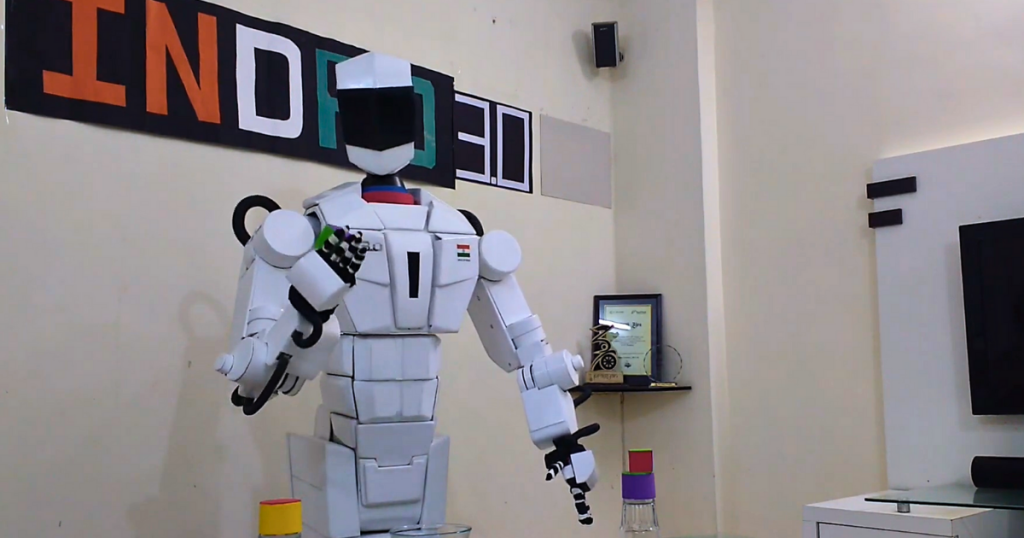
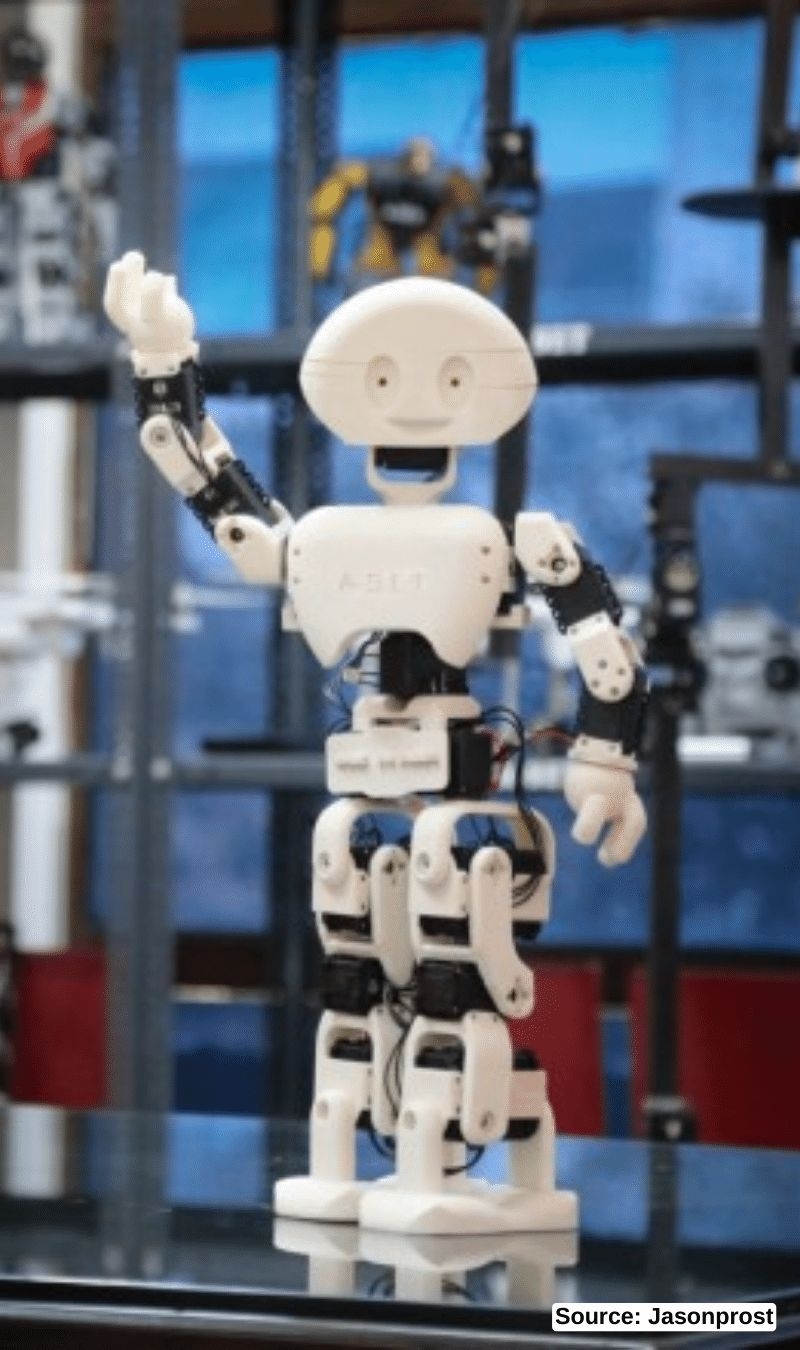
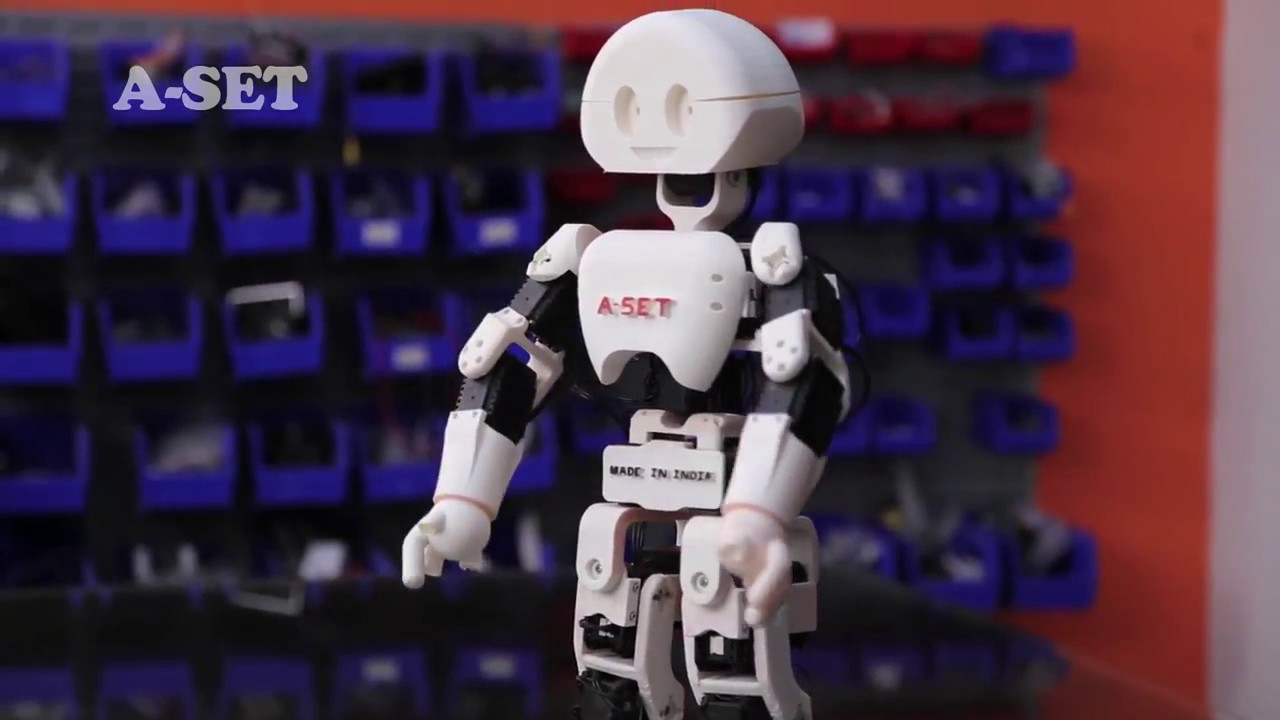
MANAV was never sold commercially. It was a research prototype, so there is no official price. A comparable DIY build with 3D-printed parts and 16 hobby servos could cost under $2,000, but no turnkey product is available.
The robot can perform pre-programmed movements like walking, dancing, and push-ups. It lacks autonomous capabilities, object manipulation, or interactive sensors, as it was designed purely for education and demonstration.
No. The robot was a one-off prototype built by ASET Training and Research Institute in New Delhi and was never commercialized. There are no authorized sellers or second-hand units known to exist.
Both are educational humanoids built from 3D-printed parts, but Poppy is actively maintained with extensive documentation, modular designs, and a large community. MANAV predates Poppy and has no ongoing support, making Poppy a far more viable option for today’s learners.
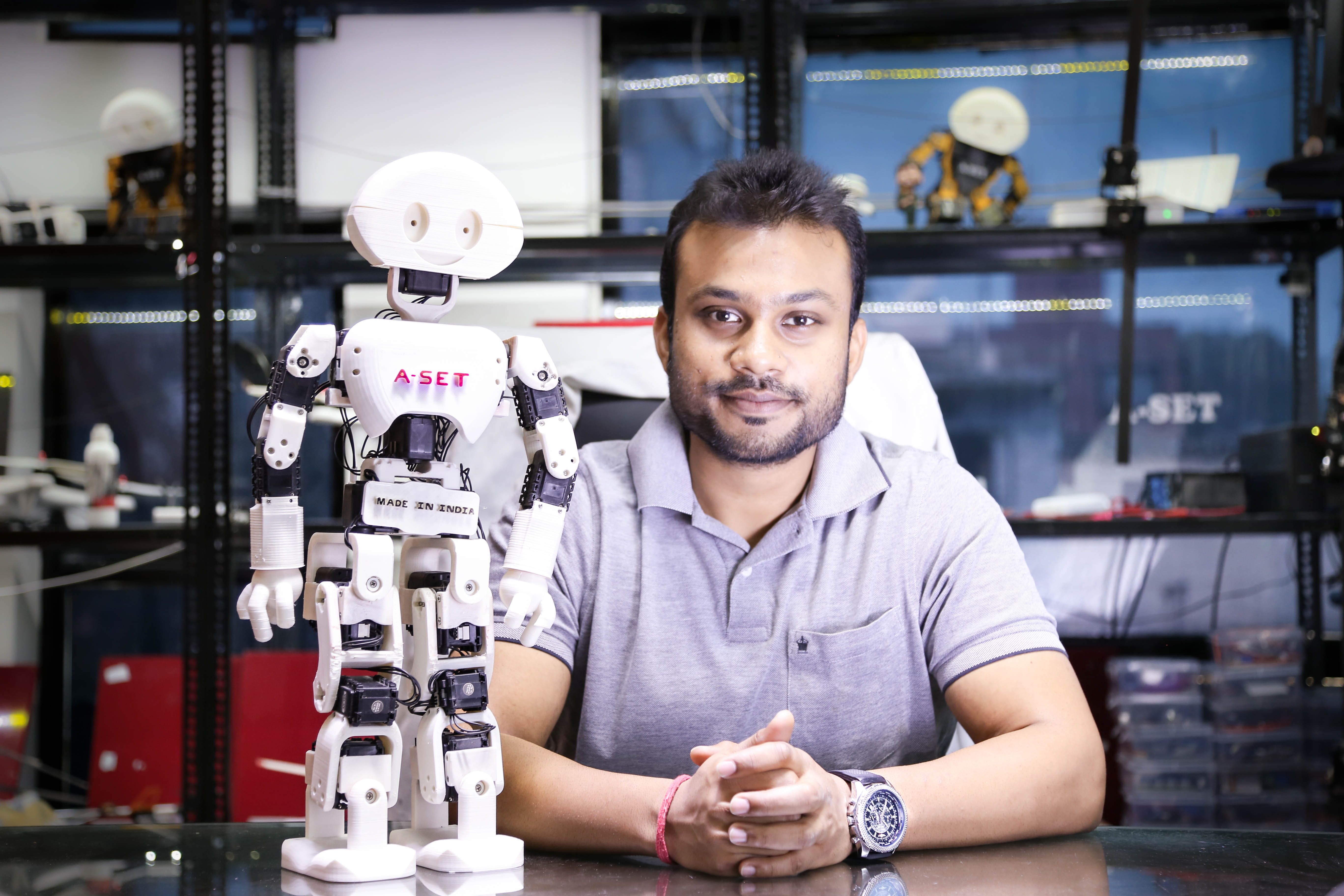
Height: 66 cm, weight: 2 kg, degrees of freedom: 27, battery life: 1.5 hours. Maximum speed and payload are not specified; the robot uses 16 hobby servo motors and an ABS plastic frame.
The robot was developed by the A-SET Training and Research Institute in New Delhi, India, under the brand name Asimov Robotics. The institute focuses on technical training and robotics education.
It has a battery life of approximately 1.5 hours under typical demonstration loads. Charging time is unknown, and the battery is not user-swappable.
No industries use it; MANAV was strictly an educational and promotional tool. It was shown in academic settings, tech expos, and media events to promote robotics education in India.