

Oracle and OpenAI are constructing one of the nation’s largest data centers in New Mexico’s Chihuahuan Desert, a region in the grips of a historic drought that killed over 200,000 acres of forest in 2025 alone. The project, named "Project Jupiter," forces the tech industry to confront the growing resource demands of AI infrastructure in water-scarce communities.
- The Scale of Project Jupiter
- New Mexico’s Water Crisis
- A Novel Approach to Water Usage
- Economic Development vs. Local Opposition
- What This Means for the Industry
The Scale of Project Jupiter
Project Jupiter will span 1,400 acres in Doña Ana County, just two miles from the Mexican border. The complex is designed to generate 2.5 gigawatts of electricity — enough to power more than half of New Mexico’s current demand — and represents a potential $165 billion investment if developers hit their targets. The site is larger than New York’s Central Park.
The data center will run Oracle’s cloud infrastructure and OpenAI’s AI workloads, making it a critical piece of the AI buildout that has driven half of all U.S. electricity demand growth in recent years.
New Mexico’s Water Crisis
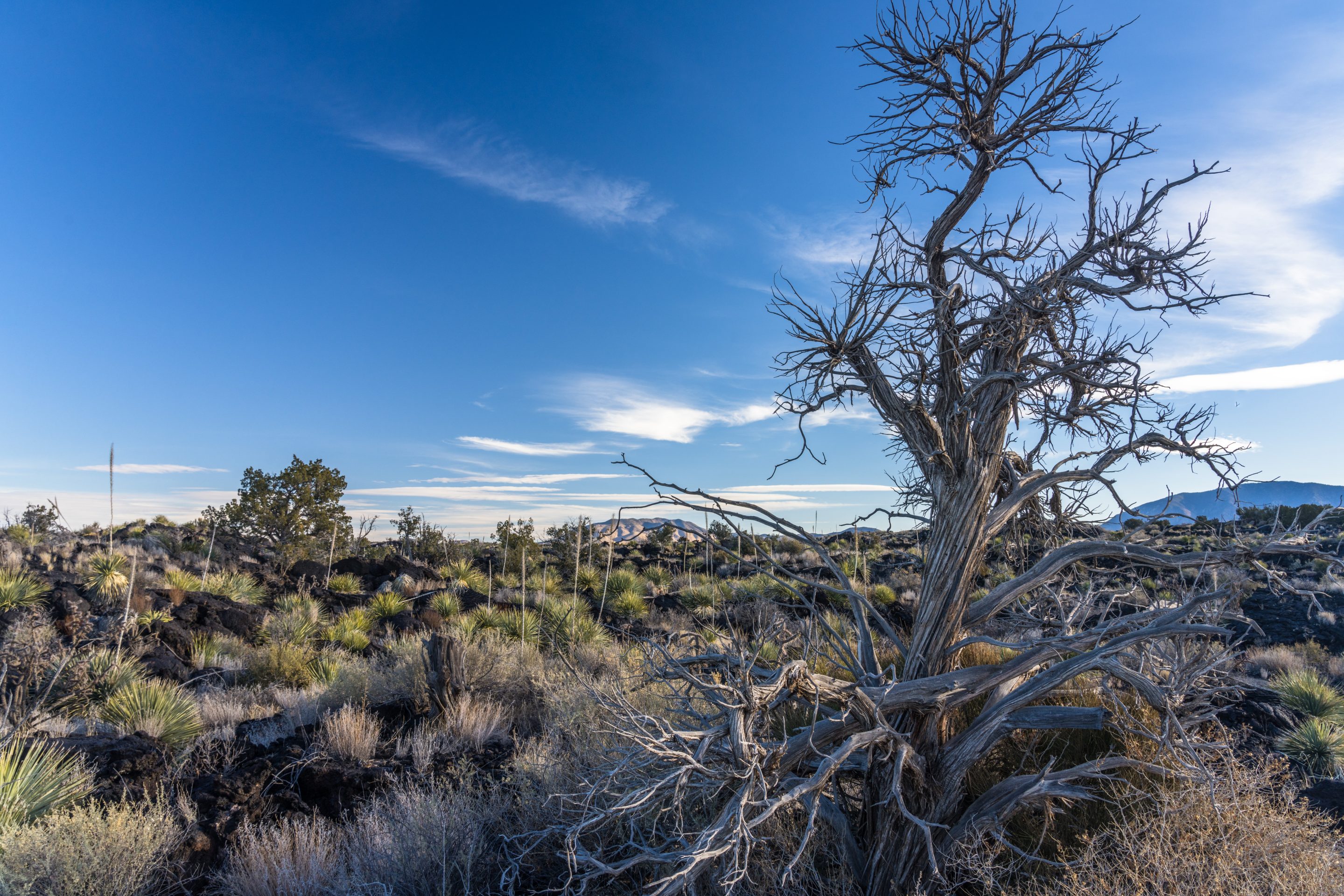
While Project Jupiter promises massive economic impact, it arrives as New Mexico faces its worst drought on record. According to the New Mexico Forestry Division’s 2025 Forest Health Conditions Report, the state recorded its second-warmest year ever, and 71% of the state was in moderate drought by the end of 2025. The lower Rio Grande is now a river of sand for most of the year, while the underlying aquifer drops by more than a foot annually.
Tree mortality hit 209,000 acres in 2025 — a 200% increase over the previous year — driven by bark beetles that thrive in drought-stressed forests. “We had a bleak winter and little to no snowpack,” said Victor Lucero, forest health program manager for the New Mexico Forestry Division. “Things may change with respect to tree mortality if things remain hot and dry.”
The state’s official 50-Year Water Action Plan projects a 25% reduction in available river and aquifer water within five decades, facing a shortage of 750,000 acre-feet without sustained action — a calculation made before the latest drought escalation.
A Novel Approach to Water Usage
Early reports suggested Project Jupiter would consume nearly a million gallons of water daily, alarming local residents and environmental groups. In response, Oracle revised its plans, switching from water-intensive natural-gas turbines to fuel cells. The company now says the combined data center and fuel cell system will use about 11 million gallons of non-potable water per year — all in closed-loop, recycled systems.
“We are excited to move forward with this updated energy solution, which reflects our commitment to both the latest innovation and community priorities,” said Mahesh Thiagarajan, executive vice president of Oracle Cloud Infrastructure, in an April statement.
Oracle has a formal goal to halve water use in water-stressed regions by 2035 and claims a 53% reduction in potable water at its owned facilities since 2015. OpenAI, newer to operating its own data centers, has not yet published a sustainability report.
The project purchased existing water rights from a nearby sod farm — 2,400 acre-feet per year — rather than drawing new water. New Mexico State Engineer Elizabeth Anderson told NPR that the transfer simply repurposes existing rights. “It’s not gonna be taking water away from farmers,” she said.
Still, the broader picture remains precarious. A January report from the New Mexico Groundwater Alliance, backed by the Environmental Defense Fund and water district officials, directly cited “water-hungry data centers” as a threat to already plunging groundwater levels, noting without proactive strategy more communities will face aquifer depletion.

Economic Development vs. Local Opposition
Doña Ana County, one of New Mexico’s poorest regions, stands to gain substantially from Project Jupiter. Developers have pledged $360 million for schools and local infrastructure, $50 million for an upgrade to the county’s deteriorating water utility, and $12 million annually to the county budget. One in four children in the county lives in poverty.
Yet the project has faced local opposition, reflecting a national trend. A Gallup poll this spring found that 71% of Americans oppose an AI data center in their local area — a higher opposition rate than nuclear power plants. Communities across the country have moved to block or delay projects worth more than $85 billion.
“What these projects can provide to communities comes as a crossroads,” noted a recent Fortune analysis, as data centers have driven half of U.S. electricity demand growth while political pressure from rising electricity costs reshapes the political landscape. Nearly 50,000 Lake Tahoe residents, for example, are scrambling for a new power source after their utility redirected electricity to serve tech facilities.
What This Means for the Industry
Project Jupiter is a bellwether for the AI infrastructure boom. As the largest data center in the U.S. comes online in one of the driest states, it forces investors and tech companies to confront a stark reality: data centers require enormous water and energy resources, and the best locations often have the least water.
- For investors: The $165 billion commitment signals confidence that AI demand will continue growing, but water and energy constraints will increasingly dictate where capital goes. Companies that secure resources early — as Oracle did with water rights — may gain a competitive advantage.
- For competitors: Microsoft, Google, Amazon, and Meta are all racing to build AI-optimized data centers. Oracle’s ability to secure massive capacity in a difficult environment could give it leverage, especially for OpenAI, which has been scaling its infrastructure rapidly.
- For the tech industry broadly: The tension between AI expansion and resource scarcity is no longer theoretical. Expect more projects to face local pushback, more companies to invest in closed-loop water systems and fuel cells, and more scrutiny from regulators. AI’s environmental footprint will become a central topic in boardroom and political debates.
Frequently Asked Questions
How much water will Project Jupiter actually use? Oracle says the data center and fuel cell system will use about 11 million gallons of non-potable water per year in closed-loop, recycled systems. That’s a sharp reduction from earlier estimates of nearly a million gallons per day.
Where is the water coming from? The project purchased existing water rights from a sod farm west of Sunland Park, New Mexico — 2,400 acre-feet per year. The state engineer says this simply reallocates existing rights and won’t take water from farmers.
Is New Mexico’s water supply at risk? The state’s 50-year Water Action Plan projects a 25% decrease in available water from rivers and aquifers, facing a 750,000 acre-foot shortage. However, state officials say Project Jupiter’s water usage, concentrated in a closed-loop system, won’t strain overall supply.
Why build a massive data center in a drought-prone area? New Mexico offers cheap land, low electricity costs, and proximity to existing grid infrastructure. The developers also secured a large block of water rights, which are increasingly hard to obtain in other states.
What alternatives to water cooling exist? Oracle switched from natural-gas turbines to fuel cells, which require less water for cooling. The company also uses closed-loop, recycled systems to minimize freshwater consumption.
What is the financial investment behind this project? Project Jupiter represents a potential $165 billion investment if fully built out, with pledges of $360 million for local schools and infrastructure, $50 million for water utility upgrades, and $12 million annually to the county budget.
Conclusion
Project Jupiter exemplifies the hard trade-offs inherent in the AI buildup: vast computing capacity in a region running out of water. Oracle and OpenAI have taken steps to minimize their impact by switching to fuel cells and closed-loop water systems, but the broader trend of data centers concentrating in drought-prone areas will only intensify as AI demand grows. The question for the industry is whether technological efficiency can outpace the resource constraints that come with operating at planetary scale.
According to the original report from Fortune, the $165 billion project is a test case for how Big Tech navigates the collision between ambitious AI infrastructure and the physical limits of water and energy.












ディスカッションに参加する
Should AI data centers be allowed in drought-prone regions if they use recycled water?