

JD.com founder Liu Qiangdong told APEC attendees that robot deliveries will eventually eliminate all human couriers — and that the Chinese e-commerce giant has already started training its 700,000 delivery workers to maintain the machines taking their jobs. The company's "Nirvana Plan" partners with 120 schools across China to retrain employees in robot maintenance, repair, and related technical skills, positioning JD for a fully automated last-mile future while attempting to manage the human cost of the transition.
- The Nirvana Plan: How JD Is Retraining 700,000 Workers for a Robot Workforce
- What JD's Robot Delivery Fleet Actually Looks Like Today
- What This Means for the 50 Million People in China's Logistics Workforce
- What This Means for Buyers
- Frequently Asked Questions
The Nirvana Plan: How JD Is Retraining 700,000 Workers for a Robot Workforce
JD.com has partnered with 120 Chinese vocational schools to train its 700,000 delivery workers and frontline staff for jobs in robot maintenance, servicing, and oversight — a structured transition program it calls the "Nirvana Plan." The initiative, announced by founder Liu Qiangdong at the 2026 APEC China CEO Forum, explicitly acknowledges that autonomous delivery robots will eventually eliminate the human courier role entirely. Instead of layoffs, JD is betting on reskilling at unprecedented scale.
According to Liu, the company does not want its employees to "be left without jobs or income." The training curriculum focuses on technical skills required to maintain and repair delivery robots for sale and similar autonomous systems. Employees transition into roles such as robot fleet operators, remote monitoring technicians, and field service engineers — jobs that pay differently but require physical presence in the same geographic territories.
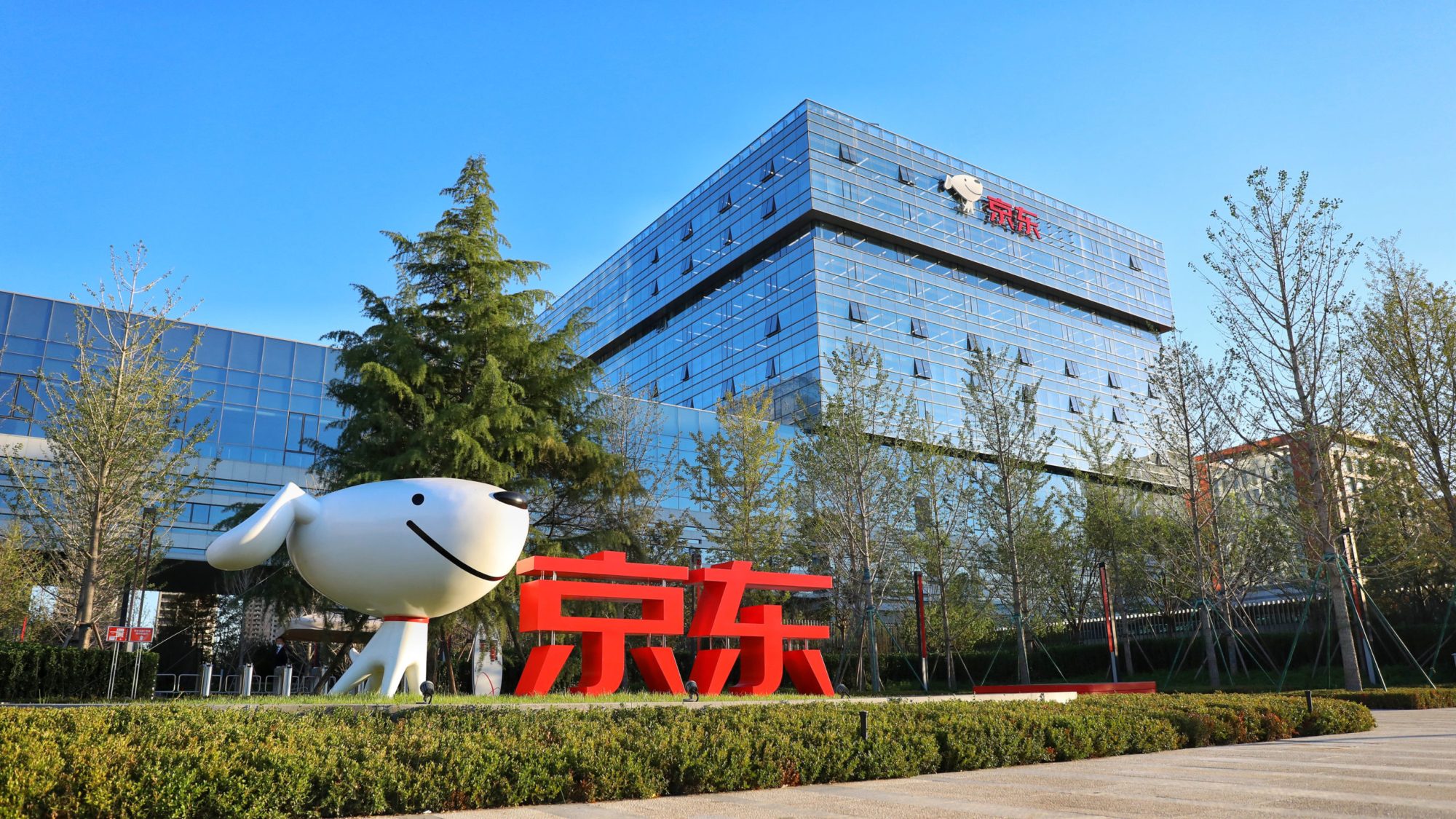
The scale is staggering. JD's delivery workforce of 700,000 exceeds the entire populations of cities like Luxembourg or Reykjavik. Training them all through 120 partner schools implies an average of roughly 5,800 workers per institution. JD has not disclosed the program's timeline, cost, or completion rates.
What JD's Robot Delivery Fleet Actually Looks Like Today
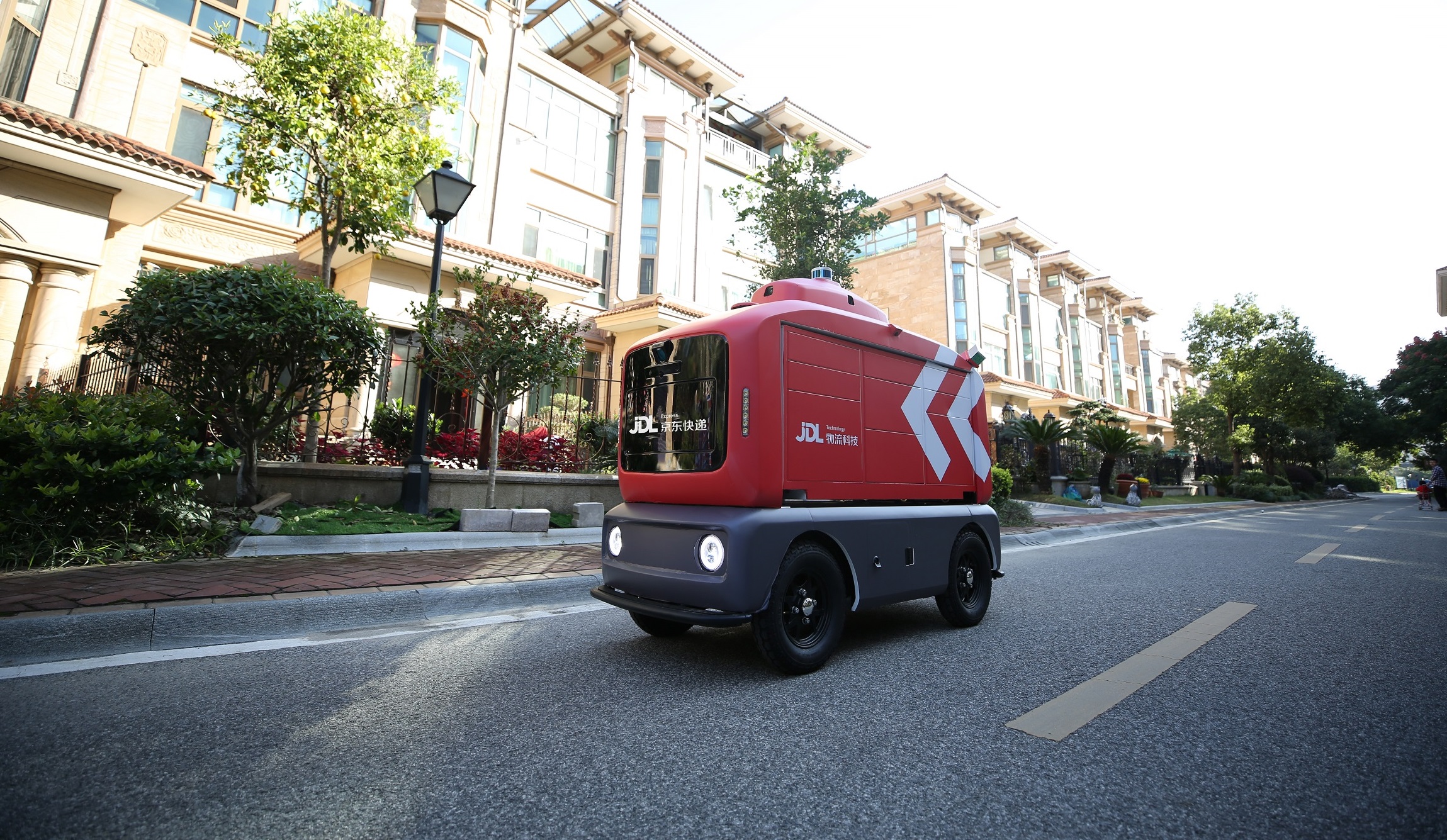
JD.com already operates one of China's largest autonomous delivery fleets, with thousands of robots making last-mile deliveries in over 30 Chinese cities. These are not prototypes or pilot programs — JD's robot delivery vehicles handle real customer orders in urban environments including Beijing, Shanghai, and Changsha. Most are curb-sized boxy units with multiple compartments that travel at pedestrian speeds on sidewalks and bike lanes.
The fleet includes both wheeled ground robots and smaller sidewalk units. JD's robots use LIDAR (Light Detection and Ranging, a laser-based sensing system) and computer vision to navigate. They can carry approximately 30-50 kg per trip depending on the model, and they operate within geofenced delivery zones. Customers retrieve packages by scanning a QR code on the robot's touchscreen to unlock their specific compartment.

JD's competitor Alibaba has deployed similar autonomous delivery through its Cainiao logistics arm, while Meituan runs drone and ground robot deliveries for food. What differentiates JD's Nirvana Plan is the explicit workforce transition strategy — most Chinese logistics companies have not announced equivalent retraining programs at this scale.
JD's Delivery Footprint vs. Competitors
| Company | Worker Count | Robot Fleet | Retraining Plan |
|---|---|---|---|
| JD.com | 700,000 | Thousands in 30+ cities | 120-school Nirvana Plan |
| Alibaba (Cainiao) | 300,000+ | Thousands in 20+ cities | None announced |
| Meituan | 7M+ riders | Drones + ground bots | Limited pilot programs |
| SF Express | 400,000+ | Small test fleets | None announced |
According to TechNode, JD's approach positions it as the most proactive major Chinese logistics employer addressing automation's workforce impact — though critics note the transition is still in early stages with uncertain outcomes.
What This Means for the 50 Million People in China's Logistics Workforce
China's logistics and delivery sector employs over 50 million people, making JD's 700,000-worker retraining plan a visible signal of an industry-wide transformation that remains mostly unaddressed at scale. If JD's prediction holds, autonomous delivery robots could eliminate a significant fraction of these roles within a decade.
The Nirvana Plan reveals an uncomfortable truth about automation: retraining does not preserve job count, it shifts job types. A delivery driver and a robot repair technician require different skill sets, different pay structures, and different career trajectories. JD's 120-partner school network can train thousands, but replacing 700,000 low-barrier-entry courier jobs with technical maintenance roles is not a 1:1 transition. Many workers may not complete the training, and the new roles may not pay equivalently.
China's government has been broadly supportive of automation and robotics as part of its "Made in China 2025" industrial policy. The Ministry of Human Resources and Social Security has identified robot maintenance as a growing occupation, and some provinces offer subsidies for automation-related training. JD's Nirvana Plan aligns with this policy direction — but it also outsources the ethical burden of workforce transition to a single corporation.
The implication for other markets — including the US and Europe, where delivery robot adoption is slower — is that a preview is already running in China. If JD scales this successfully, it could become a template for how large logistics employers handle automation's human costs. If it fails, it becomes a cautionary tale about the limits of corporate retraining.
What This Means for Buyers
If you are evaluating delivery robots for your business, JD's Nirvana Plan tells you two things: the technology is mature enough for a company to bet its entire workforce on it, and the support ecosystem (maintenance, repair, oversight) now has a training pipeline. Both reduce the risk of deploying autonomous delivery systems.
For fleet operators, the existence of institutional retraining programs means that finding technicians who understand robot hardware will become easier. China's 120-school network will produce graduates with robot-specific skills — and those skills transfer to any fleet, not just JD's.
For businesses considering a purchase, the key question is whether your deployment scale justifies the investment in training. JD's approach works because its fleet operates at massive scale. Smaller operators may still find that delivery robots for sale represent a better ROI when paired with third-party maintenance contracts rather than in-house retraining.
Bottom line: JD is effectively creating the first generation of certified robot maintenance technicians. That lowers the total cost of ownership for delivery robots across the industry — even for competitors who didn't pay for the training.
Frequently Asked Questions
How many delivery workers does JD.com employ? JD.com employs approximately 700,000 delivery workers and frontline logistics staff across China, making its delivery workforce larger than the entire population of Luxembourg.
What is JD's Nirvana Plan? The Nirvana Plan is a retraining program JD.com launched in partnership with 120 Chinese vocational schools. It trains delivery workers and frontline employees for robot maintenance, servicing, and oversight roles as the company shifts toward autonomous delivery.
When does JD.com expect to eliminate human delivery workers? JD founder Liu Qiangdong stated at the APEC forum that robot deliveries will eventually replace all human couriers but did not specify a timeline. The company continues to deploy autonomous delivery robots while operating its human workforce in parallel.
How many delivery robots does JD.com currently operate? JD.com has deployed "thousands" of autonomous delivery robots operating in over 30 Chinese cities, according to publicly available company information. The fleet handles real customer deliveries and uses LIDAR and computer vision for navigation.
What happens to JD workers who fail the retraining program? JD has not disclosed specific outcomes for workers who do not complete or pass the retraining program. The Nirvana Plan is voluntary and still in early stages, with no published data on completion rates or post-training job placement.
Are other Chinese delivery companies doing similar retraining? No major Chinese delivery company — including Alibaba's Cainiao, Meituan, or SF Express — has announced a retraining program comparable in scale to JD's Nirvana Plan. JD is currently the most proactive major logistics employer on workforce automation transition.
Conclusion
JD.com's Nirvana Plan is the most concrete signal yet that autonomous delivery is not an abstract future — it is a present-day investment large enough to rewrite the employment contract for hundreds of thousands of workers. The real test will be whether retraining at this scale actually delivers the promised transition, or whether robot deliveries simply eliminate jobs faster than new ones can be created. For now, JD is betting its workforce — and its reputation — on the answer.












ចូលរួមការពិភាក្សា
Will JD's retraining program actually place all 700,000 workers, or is it a managed layoff in different clothes?