

Blue Origin is planning to raise $10 billion in the company's first outside investment round. The massive capital infusion would be the largest ever for a private space company, signaling a dramatic escalation in the race to dominate orbital launch and satellite internet infrastructure. The move transforms Blue Origin from a founder-funded project into a major market contender.
- What Happened: Jeff Bezos Opens the Doors to Outside Capital
- Why It Matters: The Space Industry Hits a Capital Inflection Point
- Market Implications: A $10 Billion Bet on Two Fronts
- Competitive Context: Chasing the SpaceX Juggernaut
- What This Means for the Industry
- Frequently Asked Questions
- Conclusion
What Happened: Jeff Bezos Opens the Doors to Outside Capital
Blue Origin, the space company founded by Amazon's Jeff Bezos, is seeking to raise $10 billion from external investors for the first time in its 25-year history. According to SpaceNews, the fundraising effort is being orchestrated to finance the company's ambitious plans in launch services and the development of satellite constellations.
The move represents a fundamental shift in strategy for Blue Origin, which has historically been funded almost entirely by Bezos himself through regular stock sales of Amazon shares. By opening the door to outside capital, Bezos is signaling that the company's financial needs have outgrown even his immense personal fortune.

The $10 billion target is staggering by any measure. It potentially exceeds the total amount raised by any other private space company in a single round and would instantly make Blue Origin one of the best-funded private ventures in the tech industry.
Why It Matters: The Space Industry Hits a Capital Inflection Point
This fundraising push arrives at a critical moment for the commercial space sector. The industry is transitioning from a phase dominated by demonstration missions and early prototypes into a capital-intensive build-out phase where companies must invest billions into manufacturing, launch infrastructure, and satellite production.
For Blue Origin specifically, the capital requirements have become enormous. The company's New Glenn rocket — a heavy-lift launch vehicle designed to compete directly with SpaceX's Falcon 9 and Falcon Heavy — requires significant investment to scale production and achieve a reliable launch cadence. Meanwhile, Blue Origin's Project Kuiper satellite internet constellation demands its own massive capital commitment.
The decision to raise outside money suggests that Bezos recognizes the necessity of bringing in institutional capital to compete effectively. It also signals that Blue Origin may be preparing the ground for an eventual initial public offering.
Market Implications: A $10 Billion Bet on Two Fronts
The bulk of the new capital is expected to fund two parallel efforts: scaling the New Glenn launch vehicle and building out Project Kuiper, Blue Origin's planned satellite internet constellation.
Launch services remain a high-demand market. Governments and commercial operators are hungry for reliable, cost-effective access to orbit. New Glenn, with its reusable first stage and heavy lift capacity, is positioned to capture a significant share of this market if Blue Origin can demonstrate operational reliability.
Satellite internet represents an even larger opportunity. SpaceX's Starlink has already demonstrated that space-based broadband can attract millions of subscribers and generate billions in revenue. Project Kuiper aims to capture a share of this market, but it requires building and deploying thousands of satellites — an effort that demands massive upfront capital.
The $10 billion figure underscores the sheer cost of competing in modern space infrastructure. It is a bet that the demand for launch services and satellite connectivity will continue to grow exponentially.
Competitive Context: Chasing the SpaceX Juggernaut
Blue Origin's fundraising push cannot be understood without examining its primary competitor: SpaceX. Elon Musk's company has raised over $15 billion in equity financing and is now valued at roughly $350 billion. It dominates the launch market with Falcon 9 and is scaling Starlink into a major revenue generator.
SpaceX's advantages are formidable. It has a proven reusable rocket, a massive satellite constellation already in orbit, a reliable launch cadence, and deep relationships with government and commercial customers. Starlink alone is projected to generate billions in annual revenue.
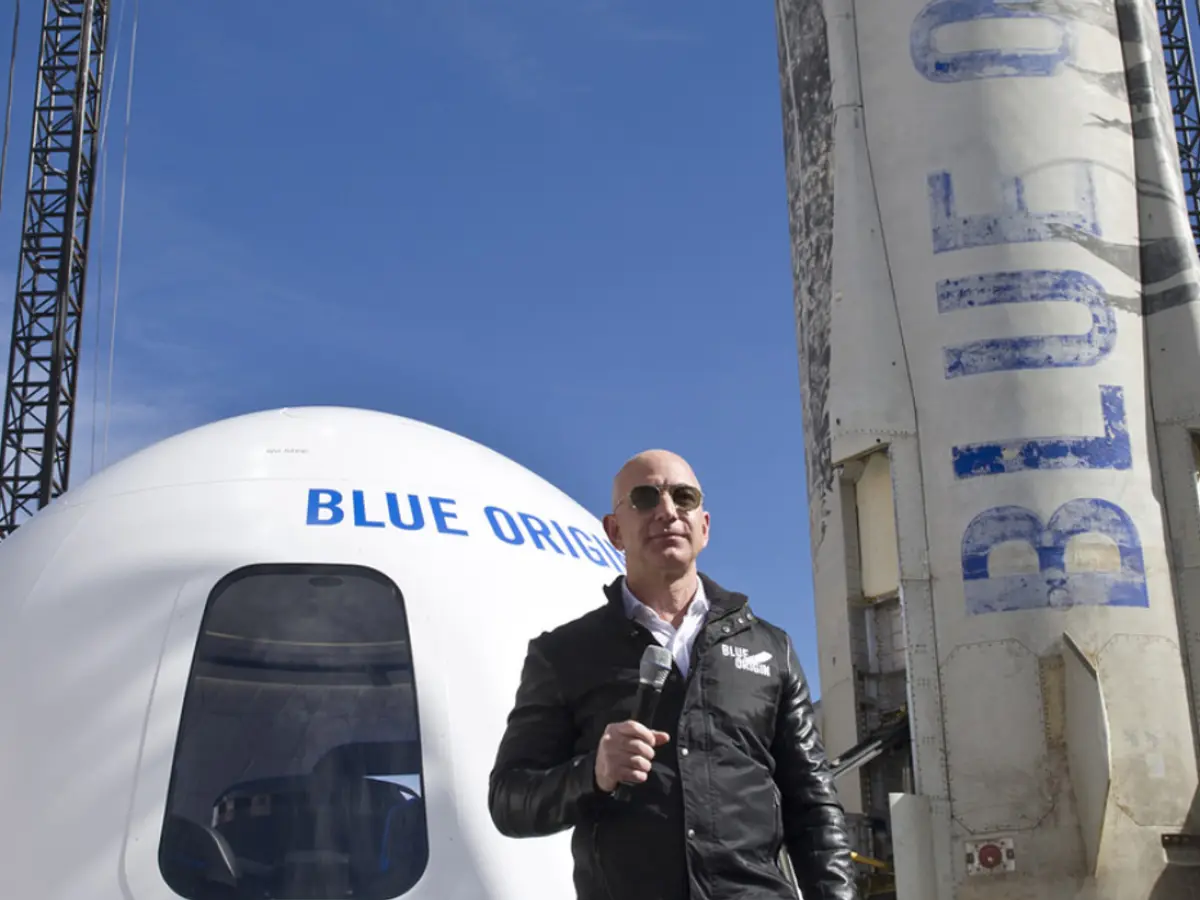
Blue Origin's path to competing requires matching SpaceX's capital intensity. New Glenn must demonstrate operational reliability comparable to Falcon 9. Project Kuiper must launch enough satellites to provide meaningful service. Both efforts require the kind of funding that Blue Origin is now seeking.
Other competitors are also moving. United Launch Alliance (ULA) continues to serve government customers. Rocket Lab is expanding beyond small launch. But the Blue Origin–SpaceX rivalry remains the central narrative in commercial space, and this fundraising round elevates the stakes.
What This Means for the Industry
For investors, the $10 billion round signals that space is no longer a speculative fringe sector. It has become a capital-intensive infrastructure market requiring institutional-scale investment. Sovereign wealth funds, pension funds, and large technology investors will likely be the primary backers.
For competitors, the barrier to entry just got higher. Competing in launch services or satellite constellations now requires billions in committed capital. Smaller players may find themselves squeezed between the scale and resources of Blue Origin and SpaceX.
For the tech industry broadly, space is becoming an essential infrastructure layer. Satellite internet, Earth observation, and orbital logistics are increasingly integrated into mainstream technology products and services. The companies that control access to space will wield significant power over the next generation of technology.
The fundraising also raises the likelihood of a Blue Origin IPO within the next few years. Bringing in outside investors typically precedes a public listing, and a $10 billion round would establish a clear valuation benchmark.
Frequently Asked Questions
Why is Blue Origin raising money now?
Blue Origin needs substantial capital to scale production of the New Glenn rocket and fund the build-out of Project Kuiper, its satellite internet constellation. The company's capital requirements have grown beyond what its founder Jeff Bezos can fund personally.
How much is Blue Origin trying to raise?
The company is seeking $10 billion in its first-ever outside fundraising round, which would be the largest single raise for any private space company.
Has Blue Origin raised outside money before?
No. Blue Origin has been funded entirely by Jeff Bezos since its founding, primarily through sales of Amazon stock.
Who might invest in Blue Origin?
Potential investors include sovereign wealth funds, large institutional investors, and strategic partners from the technology and aerospace sectors. The size of the round suggests it will involve multiple large investors.
How does this compare to SpaceX's fundraising?
SpaceX has raised over $15 billion in equity across multiple rounds. Blue Origin's single $10 billion round puts it in a similar league, though SpaceX's cumulative fundraising and $350 billion valuation remain larger.
Is this a precursor to an IPO?
Bringing in outside investors is often a step toward an initial public offering. While Blue Origin has not announced IPO plans, the fundraising round makes a future public listing more likely.
Conclusion
Blue Origin's $10 billion external fundraising push is a watershed moment for the commercial space industry. It validates the thesis that space infrastructure is a multi-trillion dollar opportunity and signals that the era of founder-funded space ventures is giving way to a new phase dominated by institutional capital. The next few years will determine whether this massive bet pays off, but one thing is clear: the race to build the infrastructure of the space economy just became significantly more expensive.






Doe mee aan de discussie
Is $10 billion enough to catch up to SpaceX, or does Blue Origin need more?