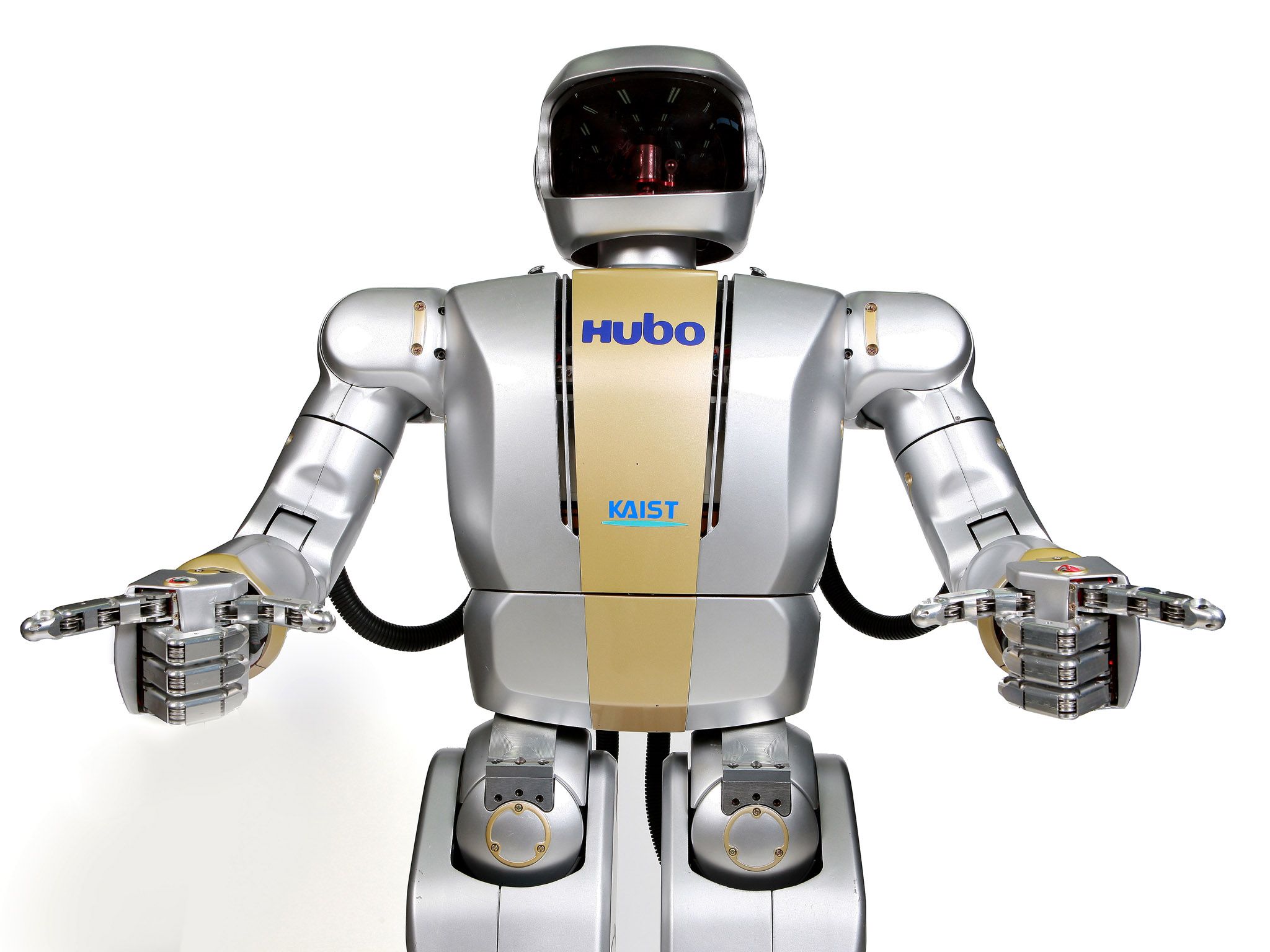
What is the Kaist Hubo Family?
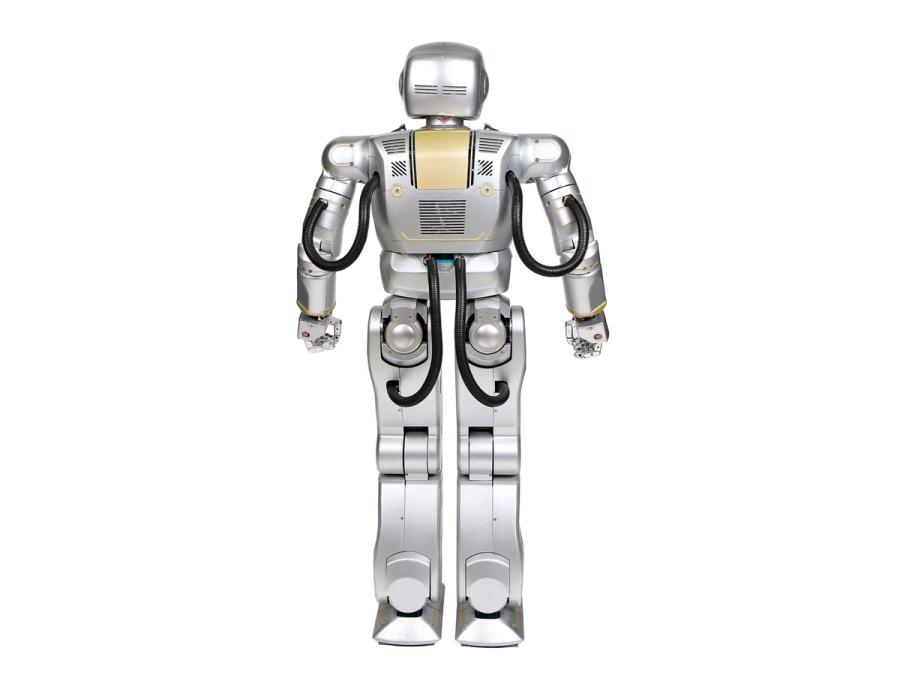
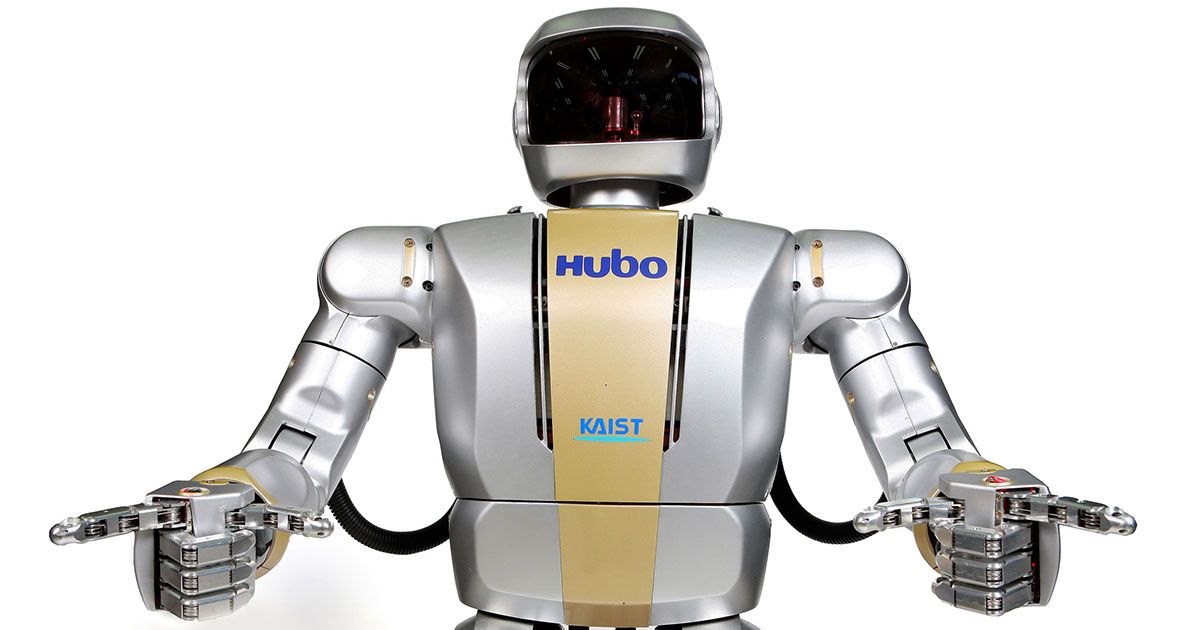
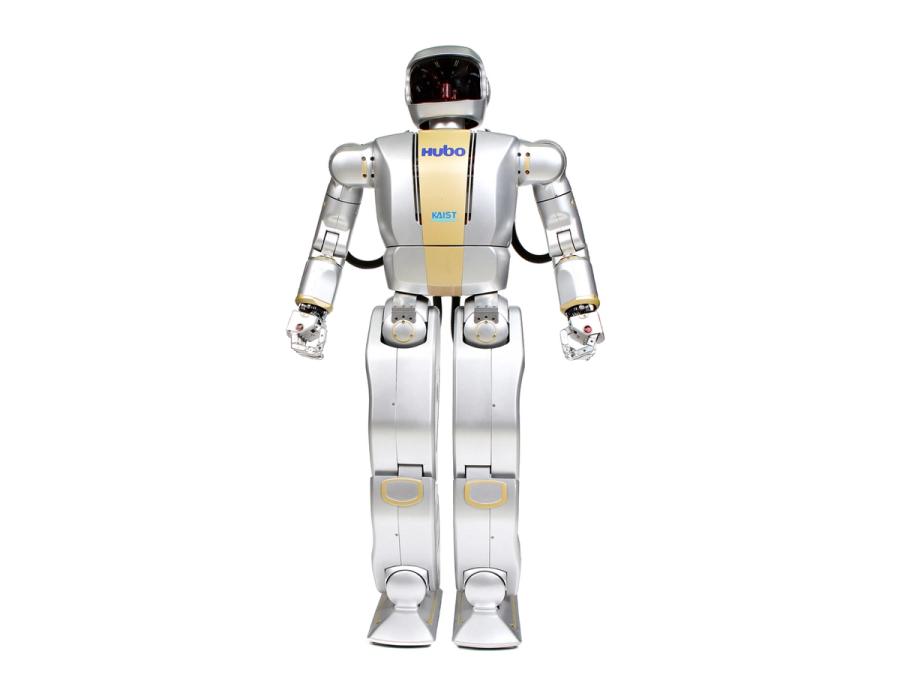
KAIST HUBO Family is a lineage of full‑size humanoid robots developed by the Hubo Lab at KAIST in Daejeon, South Korea. The robots are designed for bipedal walking research, disaster response, and human‑robot interaction. The family spans over 20 years, from the first KHR‑1 in 2002 to the wheel‑transformable DRC‑HUBO that won the DARPA Robotics Challenge in 2015. All models emphasize modularity, harmonic‑drive actuation, and ROS‑based control. They are custom‑built research platforms, not commercial products.
Specifications
Here are the full technical specifications.
| Spec | Value |
|---|---|
| Height | 160 cm |
| Weight | 80 kg |
| Degrees of freedom | 34 |
| Battery life | 1 hour |
| Max speed | 12 km/h |
| Payload | 15 kg |
| Price (new) | Not for sale (research platform) |
| Price (used range) | N/A |
Price & Value
New MSRP: Not for sale (research platform)
Used range: N/A
KAIST HUBO robots have never been sold through retail or standard distribution. A few HUBO2+ units were transferred to universities and corporate labs, but no public list price was disclosed. Industry estimates place the build cost of a late‑generation HUBO around $22,000 in materials, excluding labour. Compared to other research humanoids like iCub (open‑source, cost‑shared) or Atlas (custom, high‑security), HUBO represents a middle tier of in‑house academic investment. Since the robots do not circulate on a secondary market and are not commercially supported, no depreciation curve exists. For a laboratory, joining the KAIST collaboration network or building a derivative from published plans is the only path to access, making total cost of ownership heavily dependent on local fabrication and software integration.
Who Is It For?
Best for: - Humanoid robotics research labs (modular design and open publications enable benchmarking) - Disaster‑response prototyping (wheel‑walk transform proved effective in the DARPA challenge) - Educational institutions running advanced humanoid courses (ROS integration, documented kinematics)
Not for: - Commercial deployment in factories or logistics (no payload rating for sustained industrial use) - Budget‑constrained hobbyists (custom‑built; single units require significant funding and engineering talent)
Alternatives & Comparison
The HUBO family competes in the small space of full‑size research humanoids. Each rival takes a different approach: ASIMO aimed for smooth service, Atlas for extreme mobility, and iCub for open‑source manipulation learning.
| Model | Price | Available | Key Difference |
|---|---|---|---|
| Honda ASIMO | Undisclosed | no | First fully functional humanoid; commercial‑grade but retired |
| Boston Dynamics Atlas | Undisclosed | no | Highly dynamic, hydraulic actuation; not commercially sold |
| iCub | Undisclosed | no | Child‑size humanoid; open‑source hardware and software |
Verdict: Choose HUBO if you need a proven DARPA‑grade platform with wheel‑leg transform and a strong publication record. Pick Atlas for parkour‑level agility or iCub if open‑source manipulation research is the priority. HUBO’s middle ground — a capable biped with documented ROS integration — makes it the most adaptable academic base, but it never reached the commercial polish of ASIMO.
Use Cases & Capabilities
Humanoid Robotics Research
HUBO serves as a modular testbed for walking algorithms, whole‑body control, and sensor fusion. Its harmonic‑drive actuators and Ethernet‑based motor controllers allow precise torque control up to 34 DOF. Labs can replicate published gaits and test new vision‑based navigation with the onboard stereo cameras and LiDAR. The ROS/Ubuntu software stack also simplifies integration of machine‑learning planners. Because every major design iteration was documented in PhD theses, newcomers can adopt the platform without proprietary black boxes.
Disaster Response
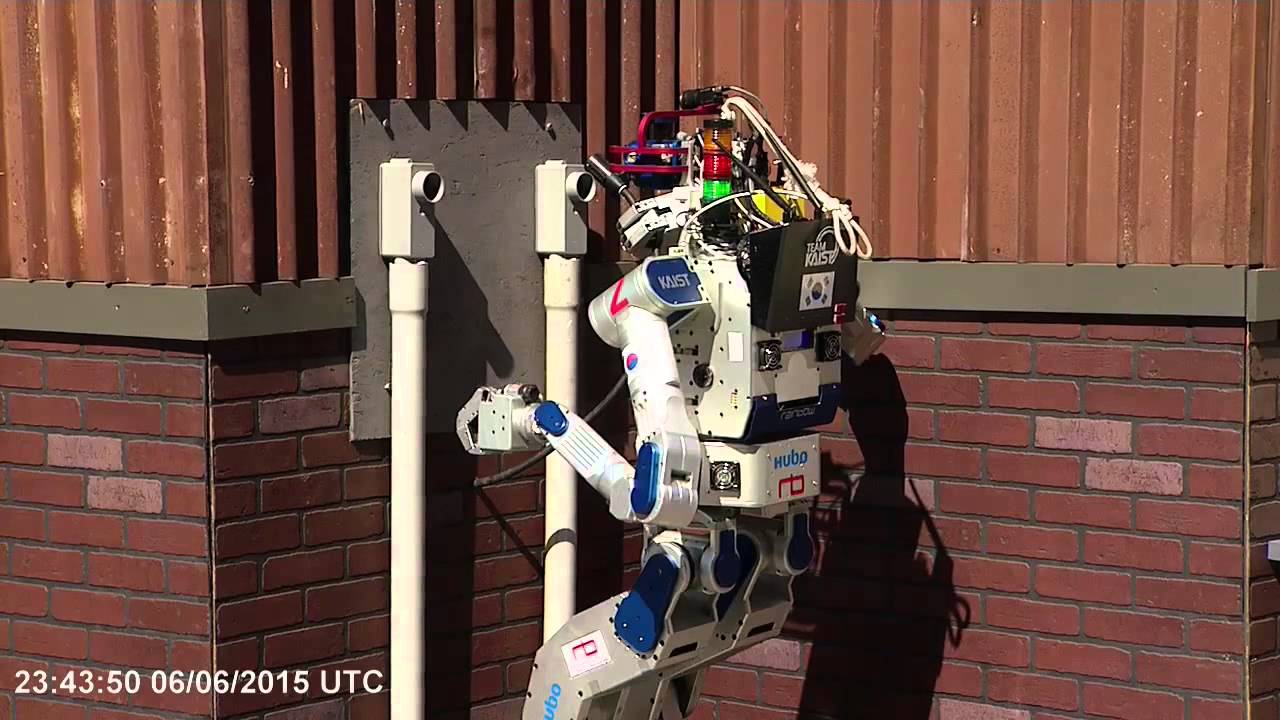
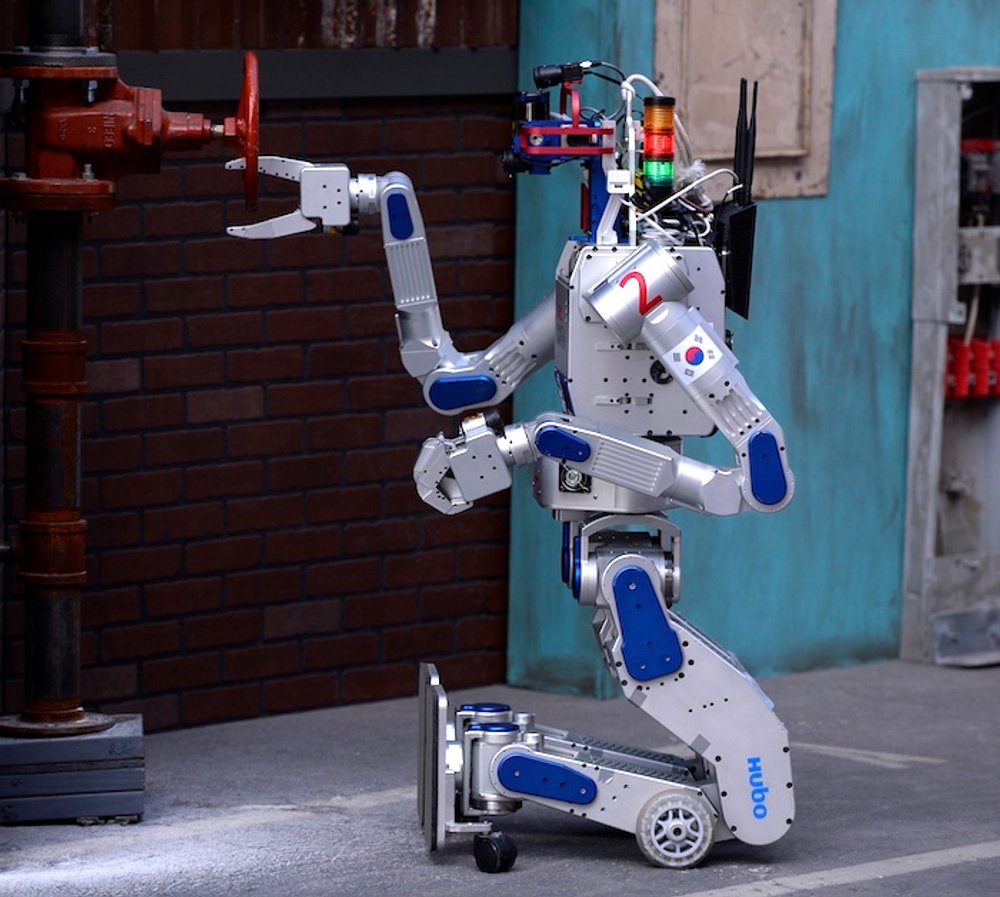
DRC‑HUBO proved the utility of a wheeled‑biped humanoid in unstructured environments. By dropping to its knees and driving on wheeled leg tips, it could traverse rubble and then stand to turn valves or operate tools. The arm payload of 15 kg per arm was sufficient to lift debris and manipulate heavy objects. On‑board LiDAR and stereo vision provided the situational awareness needed for semi‑autonomous navigation through smoke‑filled corridors, a task that earned the team first place in the DARPA Challenge.
Human‑Robot Interaction
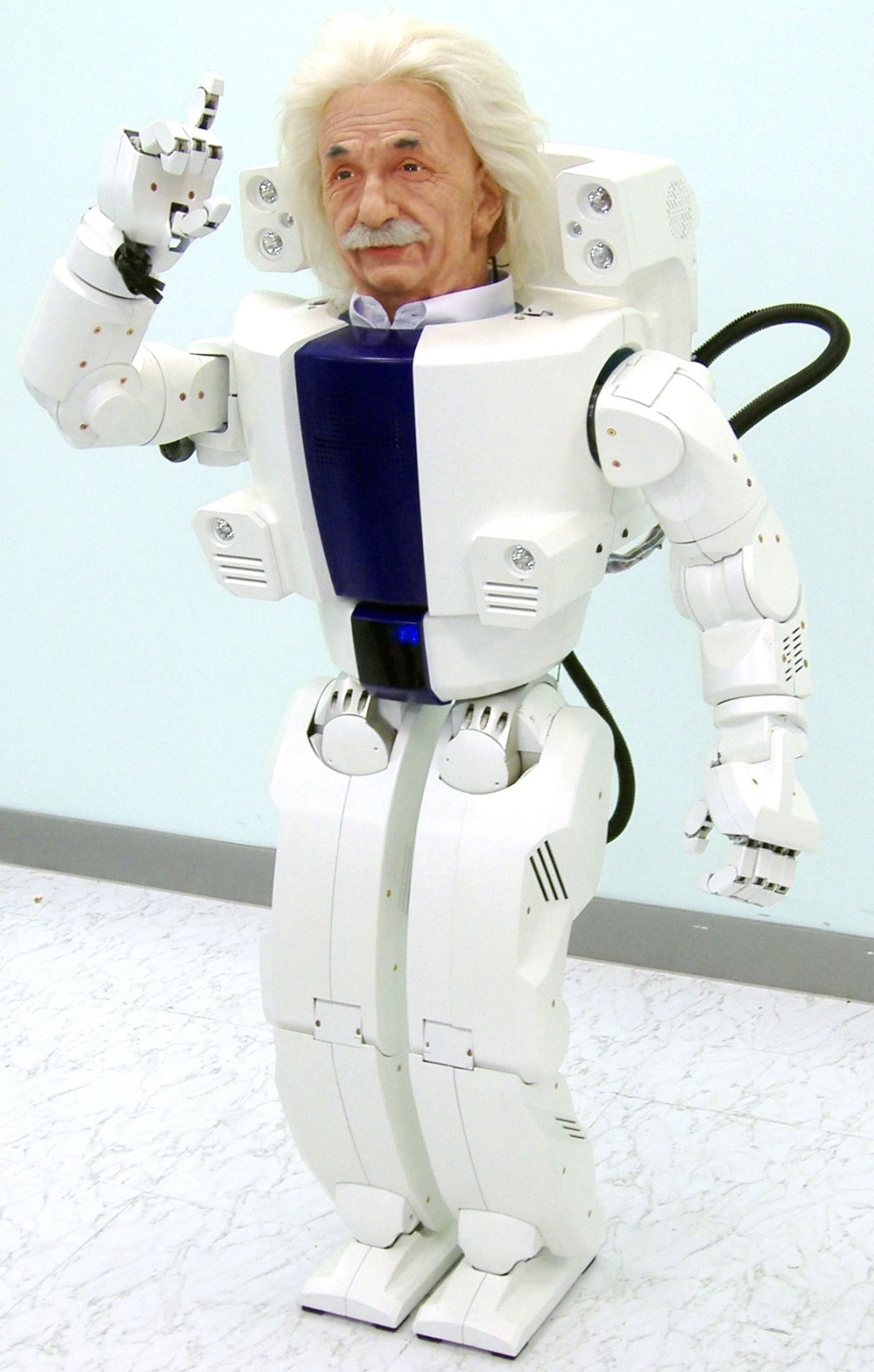
Early members like Albert HUBO featured an expressive face, making the family a platform for social HRI studies. Later models carried on with gesture recognition and voice interfaces, enabling experiments in trust, collaboration, and assistive scenarios. The ROS middleware supports standard HCI packages, allowing researchers to rapidly prototype dialogue systems and adaptive behaviour trees without low‑level motor tuning.
Education and Outreach
Several HUBO derivatives have been loaned or transferred to partner universities (e.g., Drexel, UESTC) for graduate‑level robotics courses. Students practice inverse kinematics, dynamic simulation, and real‑time control on a full‑size humanoid. Because the hardware and software are not commercial products, the learning curve includes fabrication and low‑level debugging, giving students deep insight into mechatronic integration that simpler educational robots cannot provide.
History & Background
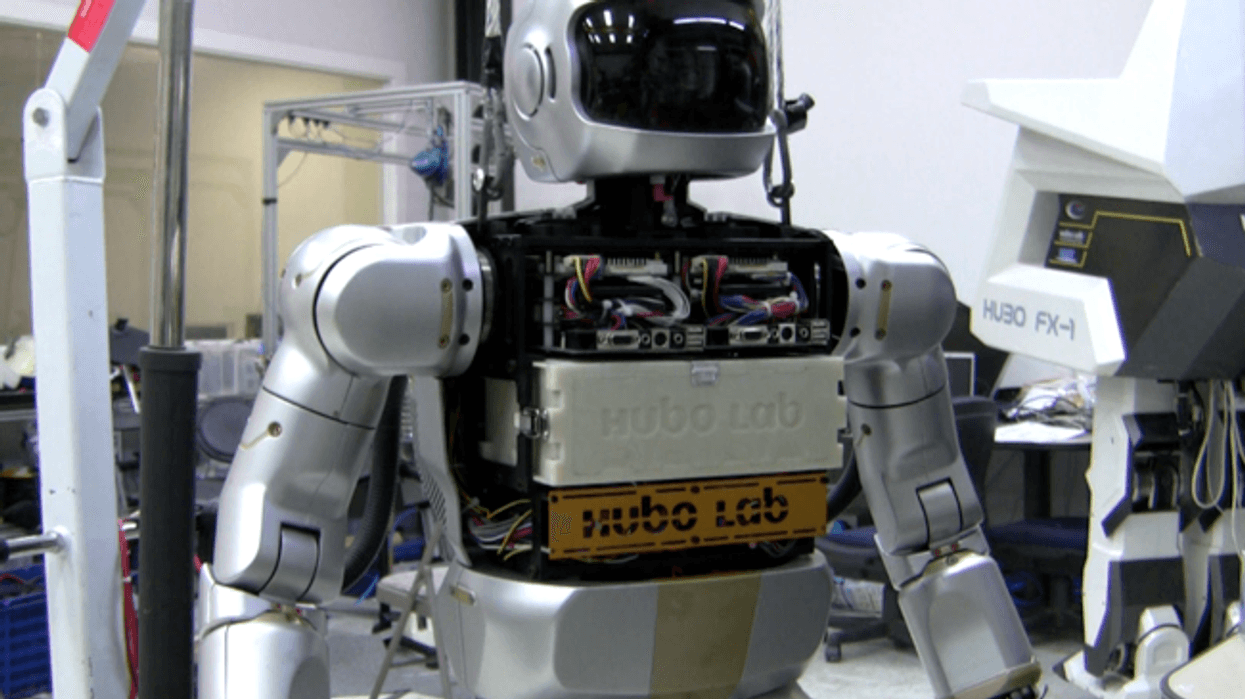
KAIST Hubo Lab built the first HUBO, KHR‑1, in 2002 under Professor Jun‑Ho Oh. The family evolved rapidly: KHR‑2 (2004) improved walking speed, and KHR‑3 (2005) reached a stable 1.25 km/h walk. Albert HUBO (2005) added an expressive head. Hubo 2 (2009) introduced lighter construction and running at 3.6 km/h. The lab’s crowning achievement was DRC‑HUBO (2015), a transforming robot that won the DARPA Robotics Challenge by combining bipedal walking with knee‑wheeled driving. A hybrid version, Hubo FX‑1, explored electric‑hydraulic actuation. The lab remains active, focusing on whole‑body dynamics and disaster robotics, with new iterations occasionally demonstrated at ICRA or IROS.
Buying Used — What to Check
Verify software support No manufacturer support; ROS packages may be outdated and require porting to current Ubuntu/ROS versions.
Inspect harmonic drives and sensors High‑torque actuators and force/torque sensors are custom‑machined and cannot be replaced with off‑the‑shelf parts.
Confirm lithium‑ion battery health Early packs degrade; a replacement must match the specific voltage and form factor designed for the robot, with no commercial supplier.