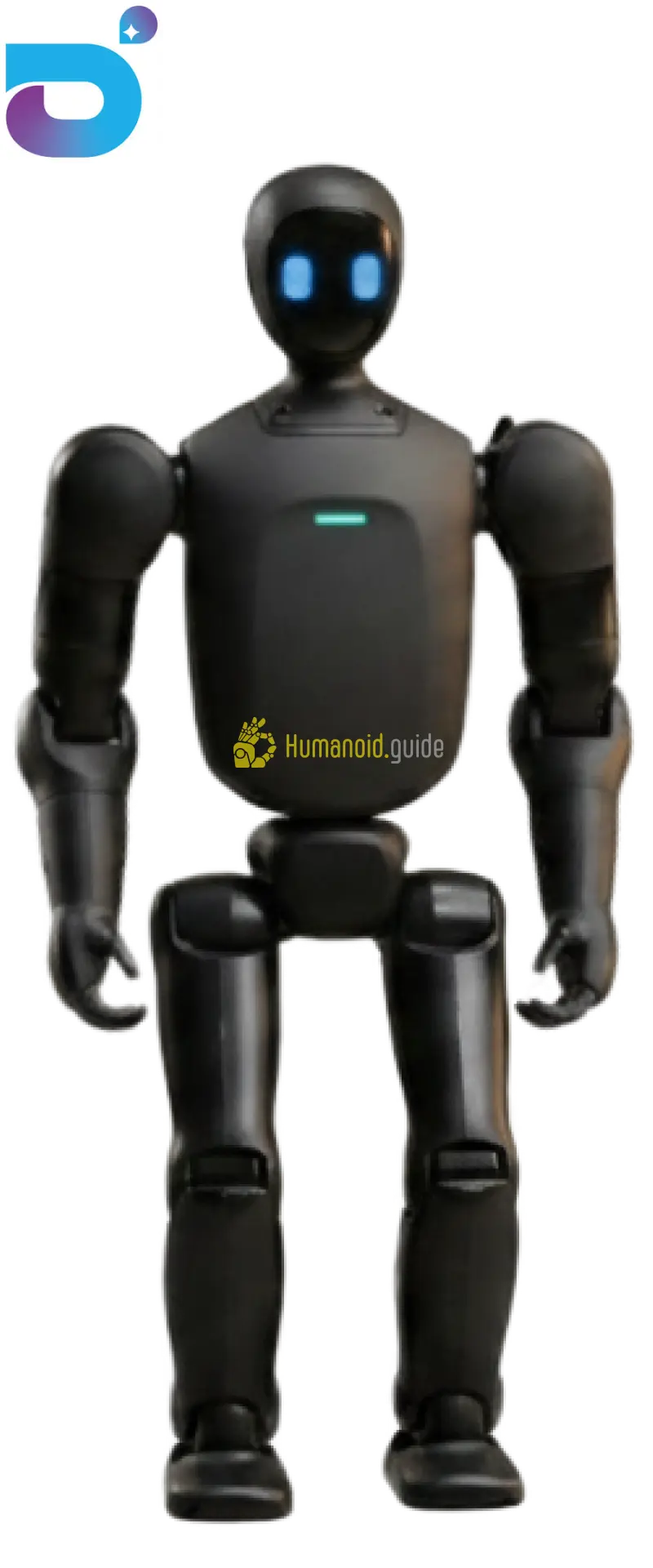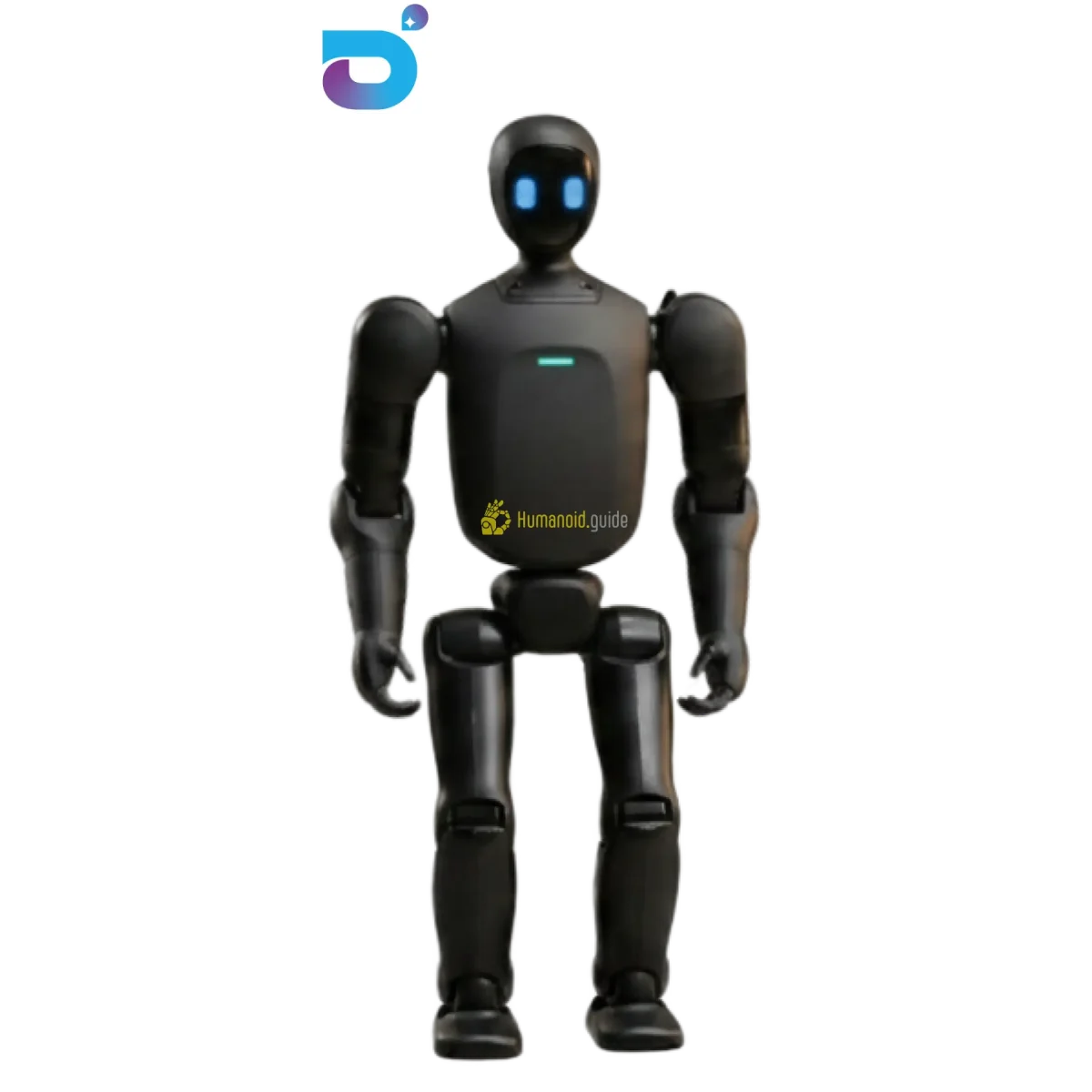
What is the Agibot Quester1 Q1?
The AgiBot QUESTER1 Q1 is a compact humanoid robot built by AgiBot (China) for AI research and education. Standing 79 cm tall and weighing 20 kg, it is designed for safe, accessible interaction. The robot features 24 degrees of freedom, 5-finger hands, a 3-hour battery, and a max walking speed of 2.5 km/h. Its computing stack includes an embedded CPU and small AI accelerator, running a Linux-based robotics OS with possible external LLM integration. Sensing comes from 720p–1080p cameras, and connectivity spans Ethernet, USB, and Wi‑Fi. With electric servo motors and harmonic gearboxes, the Q1 is built from aluminum and plastic composites. Unveiled in late 2025, it represents AgiBot’s push into personal humanoid robotics but remains pre‑order only with no public price.
Specifications
Here are the full technical specifications.
| Spec | Value |
|---|---|
| Height | 79 cm |
| Weight | 20 kg |
| Degrees of freedom | 24 |
| Battery life | 3 hours |
| Max speed | 2.5 km/h |
| Payload | 4 kg |
| Price (new) | Undisclosed (contact manufacturer) |
| Price (used range) | N/A |
Price & Value
New MSRP: Undisclosed (contact manufacturer)
Used range: N/A
AgiBot has not released any pricing information for the QUESTER1 Q1 as of mid‑2026, requiring prospective buyers to inquire through the company’s website or authorized distributors. Given its positioning as a “personal humanoid” and its modest specifications, industry watchers expect it to undercut larger research platforms—potentially falling in the $10,000–$25,000 range to compete with the Unitree G1 (~$16,000). Until pricing is confirmed, total cost of ownership remains speculative, but buyers should consider the Linux‑based OS’s open‑source potential, which may reduce software licensing costs. Because no used market exists yet, depreciation is unpredictable, though educational robots often experience steep drops once newer models appear. AgiBot’s warranty and support terms also remain unknown, adding further uncertainty.
Who Is It For?
Best for: - University robotics labs seeking affordable multi‑robot platforms (24 DOF + Linux OS enables dexterous manipulation research) - Educational institutions needing a safe, small humanoid for hands‑on AI programming courses
Not for: - Heavy industrial tasks (payload is only 4 kg, no ruggedized build) - Buyers needing immediate delivery or public pricing (still pre‑order)
Alternatives & Comparison
When evaluating the QUESTER1 Q1, two relevant alternatives emerge: the already‑shipping Unitree G1 and AgiBot’s own open‑architecture X1. Both are small humanoids aimed at research and education, but they differ in size, capabilities, and maturity.
| Model | Price | Available | Key Difference |
|---|---|---|---|
| Unitree G1 | ~$16,000 | yes | 23–43 DOF, 4.5 km/h, larger (127 cm, ~35 kg), with extensive ROS 2 support and active developer community |
| AgiBot X1 | Undisclosed | preorder | 34 DOF, 130 cm, 33 kg, open‑architecture with user‑supplied compute, designed for DIY LLM/ROS development |
Verdict: For labs that need a robot today with proven reliability, Unitree G1 is the clear winner. If you value the smallest possible footprint and are willing to wait, the Q1 could be compelling—assuming its eventual price and software ecosystem match the promise. The X1 offers more DOF but with a payload of just 0.5 kg, making it less suitable for manipulation tasks that the Q1’s 4 kg arm can handle.
Use Cases & Capabilities
AI Research
The QUESTER1 Q1’s 24 degrees of freedom, compact form, and Linux‑based robotics OS make it a versatile platform for embodied AI and reinforcement learning research. Its on‑board CPU and small AI accelerator can run lightweight models locally, while optional LLM integration via Ethernet or Wi‑Fi enables language‑conditioned experiments. The 5‑finger hands with approximately 8–12 DOF per hand (depending on final version) allow dexterous manipulation studies. However, the limited payload of 4 kg and 3‑hour battery may restrict prolonged autonomous tasks without recharging.
Education
Designed for safe human‑robot interaction, the Q1 is ideally sized for classroom settings—its 79 cm height and 20 kg weight allow students to work alongside it with minimal safety infrastructure. The platform runs a Linux‑based OS, enabling curriculum in Python, ROS 2, and AI development. With 720p–1080p camera and built‑in connectivity, instructors can build labs around vision‑guided manipulation, sensor integration, and basic locomotion. The 3‑hour battery covers typical lab sessions, but the IP20 rating means it must stay indoors. Its relatively low cost (if targets are met) could allow departments to deploy multiple units, a major advantage over pricier research robots.
Light Service Prototyping
In a pre‑commercial state, the Q1 can be used as a concept platform for personal assistant robots—fetching small objects, guiding visitors, or performing interactive demos. Its 2.5 km/h walking speed and 4 kg arm strength are sufficient for indoor light tasks, and the embedded AI accelerator may enable on‑device object recognition. However, the absence of any outdoor navigation or higher IP rating limits it to controlled indoor environments. Developers should treat it as a proof‑of‑concept rather than a deployable product.
History & Background
AgiBot is a relatively young Chinese robotics company that emerged in the 2020s, quickly building a broad portfolio of humanoid and wheeled robots including the G1, X1, X2, A2, and the GO‑1 vision‑language model. The QUESTER1 Q1 was officially unveiled on December 31, 2025, and given its first international public showing at CES 2026 in Las Vegas. Unlike AgiBot’s larger, industrial‑focused A2 and X2 lines, the Q1 is aimed squarely at the personal and educational market. No direct predecessor exists, making the Q1 a new product family. The company has not disclosed manufacturing locations or initial production volumes, but the CES demo suggest it is moving toward production readiness. As of 2026, the Q1 remains in pre‑order status with no shipping date.
Buying Used — What to Check
Verify battery health Battery degradation is likely in heavily used units; a degraded cell can cut runtime significantly.
Inspect actuator condition Actuator wear from extended use may lead to precision loss; early Q1 units may not have long‑term reliability data.
Check software licensing The Linux OS may be tied to the original owner, and future software updates could be restricted; clarify transferability.