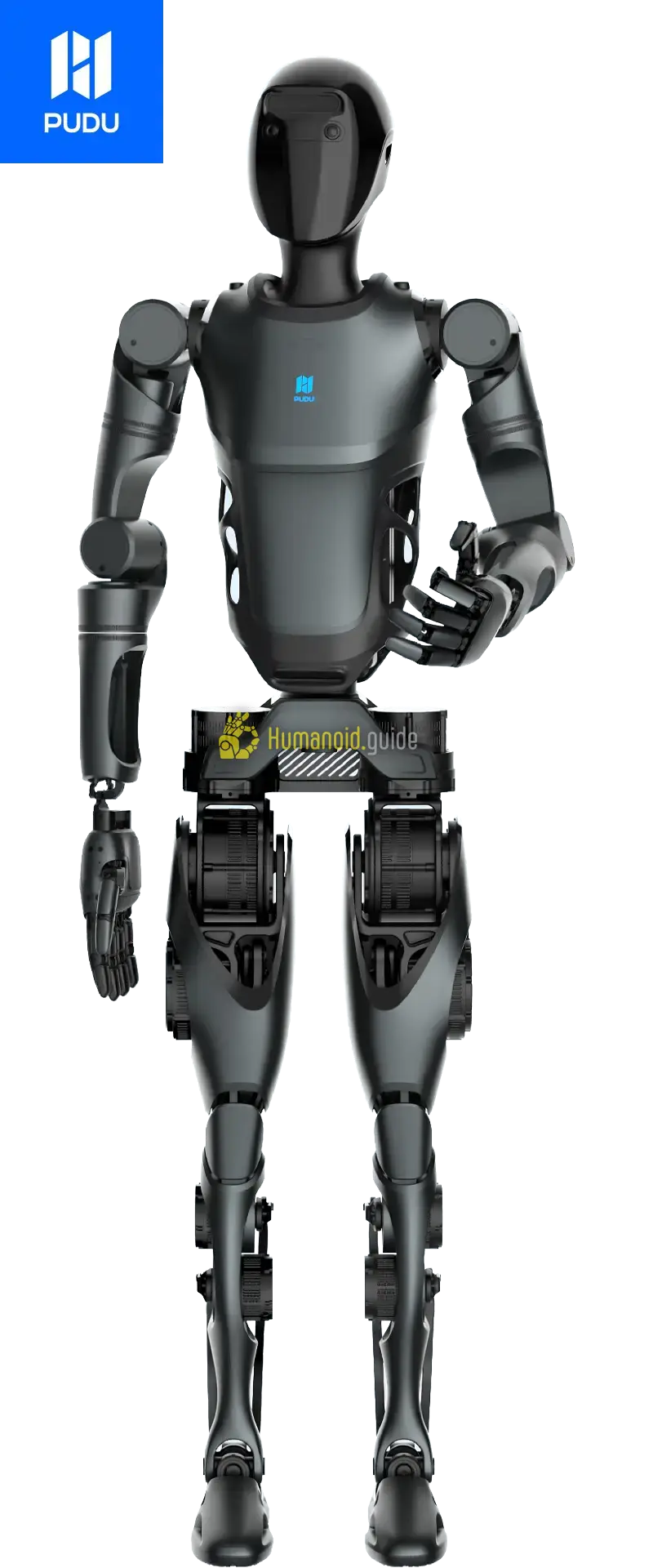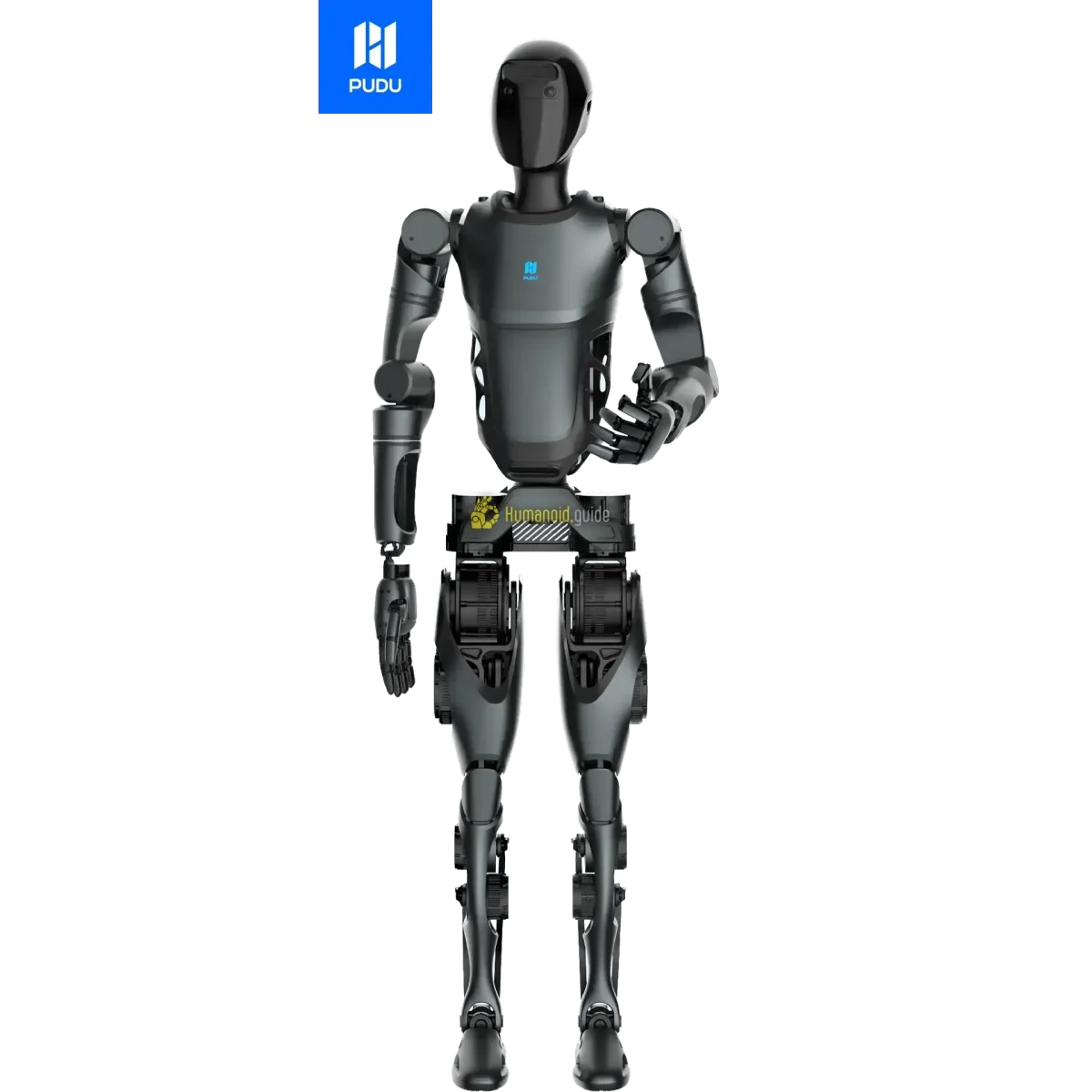
What is the Pudu D9?
The Pudu D9 is a full-size humanoid service robot developed by Pudu Robotics, a Shenzhen-based company founded in 2016. Designed as an evolution of the D7 delivery robot with enhanced manipulation capabilities, the D9 targets indoor logistics and hospitality environments. It stands 170 cm tall, weighs 60 kg, and features 42 degrees of freedom for whole-body motion and dexterous manipulation. The robot is equipped with RGB and depth cameras, tactile sensors, and an IMU for navigation and interaction. Reported specifications include a 20 kg payload capacity and a top speed of 7.2 km/h. The D9 is currently in the prototype stage, with no confirmed release date.
Specifications
Here are the full technical specifications.
| Spec | Value |
|---|---|
| Height | 170 cm |
| Weight | 60 kg |
| Degrees of freedom | 42 |
| Battery life | 8 hours |
| Max speed | 7.2 km/h |
| Payload | 20 kg |
| Price (new) | $100,000 |
| Price (used range) | N/A |
Price & Value
New MSRP: $100,000
Used range: N/A
The Pudu D9 is reported to have a target price around $100,000, though this figure is unconfirmed and likely preliminary. At this price point, it competes with other service humanoids like the Fourier GR-2 (~$100,000) and UBTECH Walker S (undisclosed but estimated similar range). For a prototype robot, the D9 offers promising manipulation specs (42 DOF, 20 kg payload) that, if delivered, would provide strong value in indoor delivery and light logistics. However, without a proven production timeline or field-test data, depreciation and total cost of ownership remain uncertain. Buyers should anticipate higher upfront costs for early-adopter support and potential service contracts. Compared to dedicated wheeled delivery robots (e.g., Keenon T5), the D9's humanoid form factor may offer operational flexibility but at a premium. Overall, the D9's value proposition hinges on successful commercialization and reliability.
Who Is It For?
Best for: - Indoor hospitality and food service environments that need a humanoid form for customer interaction and light object delivery — the D9's 20 kg payload and manipulation arms suit table service and small item transport. - Research labs exploring humanoid service robots for indoor logistics, where the D9's 42 DOF and sensor suite provide a platform for embodied AI experiments.
Not for: - High-volume 24/7 logistics operations — the unproven battery life (8 hours unverified) and lack of ingress protection pose reliability risks. - Outdoor or rugged settings — no published weatherproofing or off-road capability.
Alternatives & Comparison
The Pudu D9 enters a niche for humanoid service robots targeting indoor delivery, with few direct competitors. Below are alternatives that potential buyers may consider.
| Model | Price | Available | Key Difference |
|---|---|---|---|
| Fourier GR-2 | ~$100,000 (est.) | preorder | General-purpose humanoid with similar payload and speed, but larger battery and more established developer support |
| Keenon T5 | Undisclosed (contact for quote) | yes | Wheeled delivery robot widely deployed, no manipulation, lower cost likely |
| Reliable Robotics R1 | Undisclosed | preorder | Large-screen delivery robot with robust navigation but no humanoid features |
Verdict: For businesses that specifically need a full-size humanoid to perform both delivery and light manipulation, the Pudu D9 is a compelling prototype, but its pre-commercial status makes the Fourier GR-2 a safer bet given its more advanced development stage. If humanoid form is not critical, wheeled alternatives like Keenon T5 offer proven, lower-cost delivery without the complexity. The D9 wins for innovation-focused pilots, but operational reliability remains unproven.
Use Cases & Capabilities
Indoor Hotel Delivery
The D9 can navigate hotel corridors and elevators to deliver luggage, room service orders, or amenities directly to guests, using its arms to place items on counters or hand them over. Its 170 cm height allows natural human-robot interaction, and the 20 kg payload covers most small-to-medium delivery needs. Vision sensors enable obstacle avoidance and mapping, while the bipedal locomotion suits carpeted or uneven hotel floors. However, battery life must be sufficient for a full shift, and certification for public guest areas is still pending.
Restaurant Service
In casual or fine dining, the D9 can serve dishes, clear plates, and interact with patrons due to its humanoid appearance. Manipulation arms let it handle trays, glasses, or cutlery, and the 42 DOF allow dexterous movements like sliding plates onto a table. At 60 kg, it is safe to operate around customers, but its speed of 7.2 km/h is adequate for busing without startling diners. Integration with restaurant POS systems remains a requirement, and the prototype status means no large-scale deployment track record.
Healthcare Material Transport
The D9 could deliver lab samples, medications, or linens within clinics and hospitals, using its arms to open doors or press elevator buttons. A 20 kg payload is suitable for most medical transport tasks, and the humanoid form may improve acceptance in patient-facing areas. The reported sensor suite (RGB-D cameras, IMU) supports safe navigation around equipment and people. However, strict hygiene protocols and reliability expectations in healthcare demand a ruggedized, validated design, which the D9 has not yet achieved.
Light Warehouse Logistics
In small-to-medium warehouses, the D9 can pick and place items up to 20 kg from shelves or carts, bridging gaps between autonomous mobile robots and manual labor. Bipedal locomotion allows it to step over minor obstructions and reach varied heights, while the manipulation arms enable simple assembly or sorting tasks. Its 8-hour battery estimate suggests a full-shift capability, but real-world endurance under load is unknown. The absence of ingress protection and validated uptime would limit deployment to dry, clean, pilot-scale operations.
History & Background
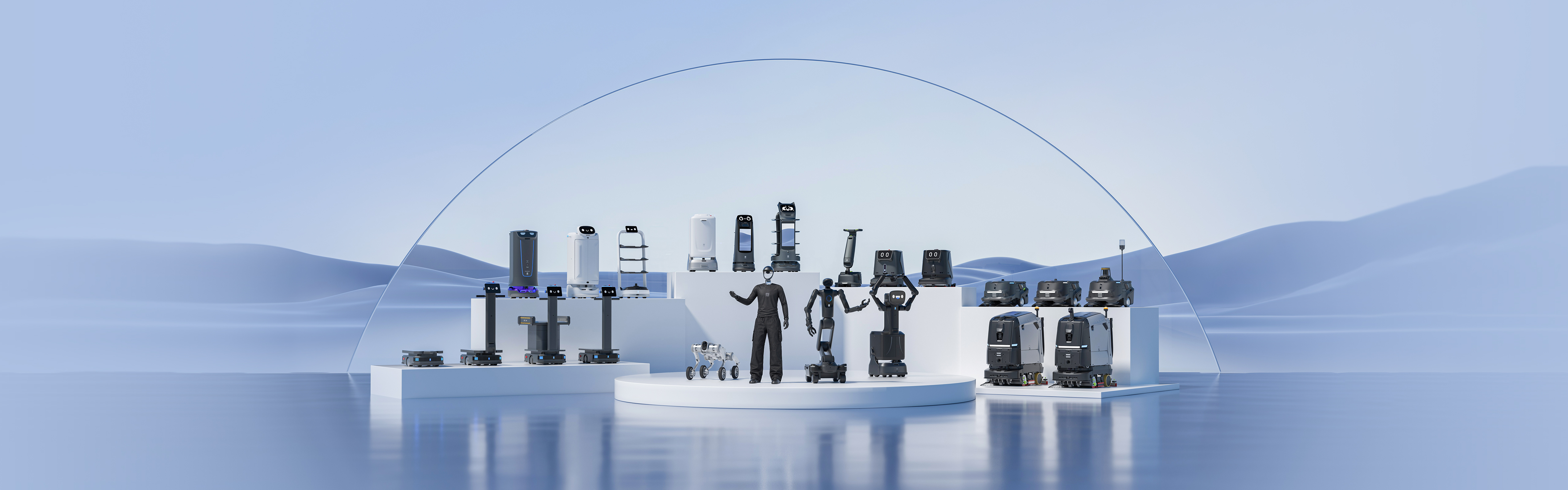
Pudu Robotics was founded in 2016 by Felix Zhang in Shenzhen, China, becoming a major provider of autonomous delivery and cleaning robots with models like BellaBot, KettyBot, and PuduBot. The company entered the humanoid space with the D9, first built in 2025 as an evolution of its D7 delivery platform. The D7 was a wheeled robot for indoor logistics, and the D9 added bipedal locomotion and dual manipulation arms to enable a broader range of service tasks. Pudu unveiled the D9 as a prototype in early 2025, targeting hospitality, food service, and healthcare. As of 2026, the robot remains in development with no production date announced, but the company has actively showcased its capabilities to potential enterprise customers through demo videos and trade shows.
Buying Used — What to Check
Verify payload and battery runtime Early production units may have endurance or strength limitations; confirm against final datasheet.
Inspect build quality and sensors Prototype-stage robots could have calibration drift or mechanical wear in joints and hands.
Confirm service and parts availability As a new humanoid from a delivery-robot maker, spare parts and repair support may be limited globally.