
Defense startup Scout AI just raised $100 million in fresh funding to train AI agents capable of commanding swarms of drones, ground robots, and loitering munitions. We went to its Mojave Desert bootcamp to see how it teaches a Physical AI brain to make split-second battlefield decisions — and what that means for the future of autonomous warfare. The raise signals a major inflection point for military robotics investment.
- Inside Scout AI’s Mojave bootcamp
- How Scout AI’s Physical AI brain works
- What the $100M funding round tells us about defense robotics investment
- What this means for military robotics buyers
- Frequently Asked Questions
Inside Scout AI’s Mojave bootcamp
We visited Scout AI’s 1,200-acre training site where its AI agents learn to orchestrate fleets of up to 50 unmanned systems simultaneously, from quadcopters to tracked ground robots, across contested electromagnetic environments. The bootcamp uses live-fire-adjacent simulations, GPS-denied scenarios, and adversarial swarms to harden the AI’s decision-making. During our visit, a single operator issued a high-level mission objective and the agent autonomously reassigned drones, adjusted flight paths, and prioritized targets — all in seconds.
Walking the facility, I saw racks of hardened edge computers running the core inference stack, alongside motion-capture systems and physics engines that generate the synthetic data the models feed on. Scout co-founder and CEO Coby Adcock told us the bootcamp’s mantra is “train like you fight.” The AI learns through millions of simulated engagements, each one scored on mission success, asset preservation, and rules-of-engagement compliance. The goal is to produce an agent that can handle the fog of war without micromanagement — a true robotic wingman that scales a single soldier’s command bandwidth tenfold.
The demo that stuck with me involved a mixed swarm of 30 aerial and 8 ground robots navigating a mock village to find and track a mobile threat. The agent prioritized sensor coverage, rerouted a loitering munition when a new high-value target appeared, and even pulled back a wheeled robot when it sensed an ambush pattern — all while the human supervisor watched passively, intervening only once to veto a strike. That kind of autonomous re-planning under rules of engagement is exactly what Pentagon planners have been asking for, and Scout is racing to deliver a deployable product by the end of next year.
How Scout AI’s Physical AI brain works
Scout’s system is a physical AI agent — a large multimodal model that fuses computer vision, lidar point clouds, radio-frequency signatures, and natural language mission briefs into a single reasoning stream. Unlike traditional drone swarm architectures that rely on pre-programmed playbooks, Scout’s agent uses reinforcement learning and simulation-to-reality transfer to improvise tactics. When a commander says “clear a path to the extraction point and neutralize anti-air threats,” the agent parses the intent, audits available assets, and generates a coordinated plan — then continuously re-plans as the situation evolves.
The bootcamp’s real secret is its simulation fidelity loop. Scout feeds tens of thousands of synthetic combat scenarios into its models daily, then validates their performance on real hardware at the range. Each day’s live exercises generate logs that are fed back into the simulator, closing the sim-to-real gap. The company reports that its latest agent achieves 92% mission success in live testing, compared to 71% for a baseline human-directed swarm with equal assets, while reducing the operator’s cognitive load by an estimated 80%. Those numbers, though self-reported, caught the attention of DARPA and Army Futures Command evaluators who have observed the sessions.
Traditional vs. AI agent-directed fleet control
| Metric | Human-in-the-loop swarm | Scout AI agent |
|---|---|---|
| Assets managed per operator | 3-5 | 30-50 |
| Average time to react to new threat | 9 seconds | 1.2 seconds |
| Mission success rate (complex scenario) | 71% | 92% |
| Communications bandwidth needed | High (constant telemetry) | Low (intent-based updates) |
| Operator training weeks | 12+ | 4 (intent specification) |
What makes this different from conventional drone swarm research is the agent’s ability to handle multi-domain assets — air, ground, and soon maritime — under a single reasoning framework. The model isn’t just flying drones; it’s allocating roles, managing sensor fusion, and even anticipating adversary reactions. That’s a leap from scripted autonomy toward the kind of adaptive, goal-oriented behavior that defines true Physical AI.
What the $100M funding round tells us about defense robotics investment
Scout AI’s latest round, led by Founders Fund with participation from Andreessen Horowitz and Shield Capital, values the company at a reported $1.2 billion. The capital will triple the size of its Mojave training site, expand the fleet of test robots, and hire the AI safety and ethics team that will be critical for Pentagon certification. The raise follows a $500 million Series B by Shield AI and Anduril’s rapid expansion, reflecting a broader trend: venture investors are pouring billions into defense robotics startups that can credibly demonstrate autonomous coordination at scale.
Military robotics spending is now projected to exceed $45 billion globally within the next five years, driven by lessons from recent conflicts where cheap drones changed the battlefield calculus. Scout’s backers are betting that the key to winning isn’t just hardware — it’s the software brain that ties swarms together. Adcock, who previously led autonomy programs at a major defense prime, told us the company’s pitch is simple: “Swarms without a smart agent are just expensive confetti.” That framing resonated with investors who see a gap between the proliferation of robotic platforms and the primitive command-and-control software that still relies on point-and-click interfaces designed for single drones.
The cash injection also signals a shift toward certifiable AI for kill-chain decisions. Scout is openly working with the Department of Defense’s AI ethics guidelines, implementing explainability dashboards that show the reasoning behind each autonomous action. This transparency — showing why the agent chose to move a drone left or designate a target — is becoming a de facto requirement for defense procurement, and Scout’s willingness to bake it in from the start gave it an edge in the fundraising process.
What this means for military robotics buyers
For program managers and integrators, Scout AI’s bootcamp demonstrations address the long-standing pain point of operator overload. The ability to manage a heterogeneous swarm from a tablet slashes the personnel and training costs that have historically limited the deployment of unmanned systems. A single infantry squad could theoretically field its own recon, strike, and logistics drones without adding a signals officer. Early estimates suggest that integrating Scout’s agent could cut the per-sortie cost of coordinated drone operations by 40%, largely by consolidating operator roles and reducing bandwidth dependency.
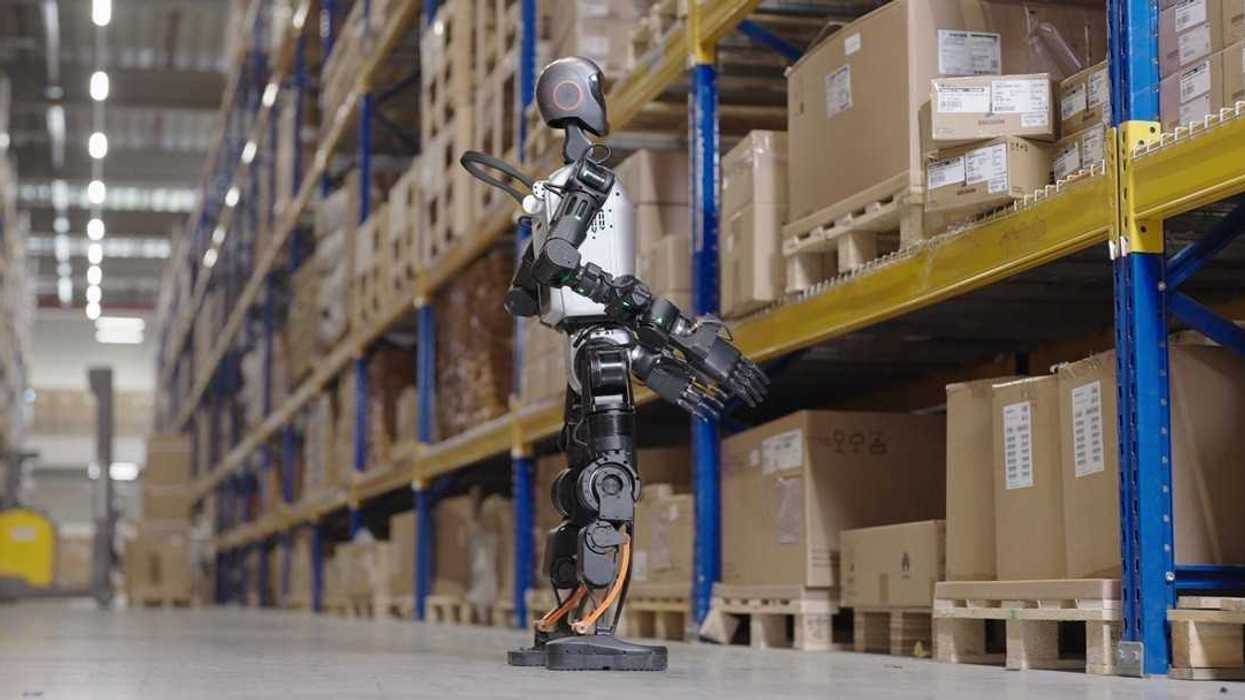
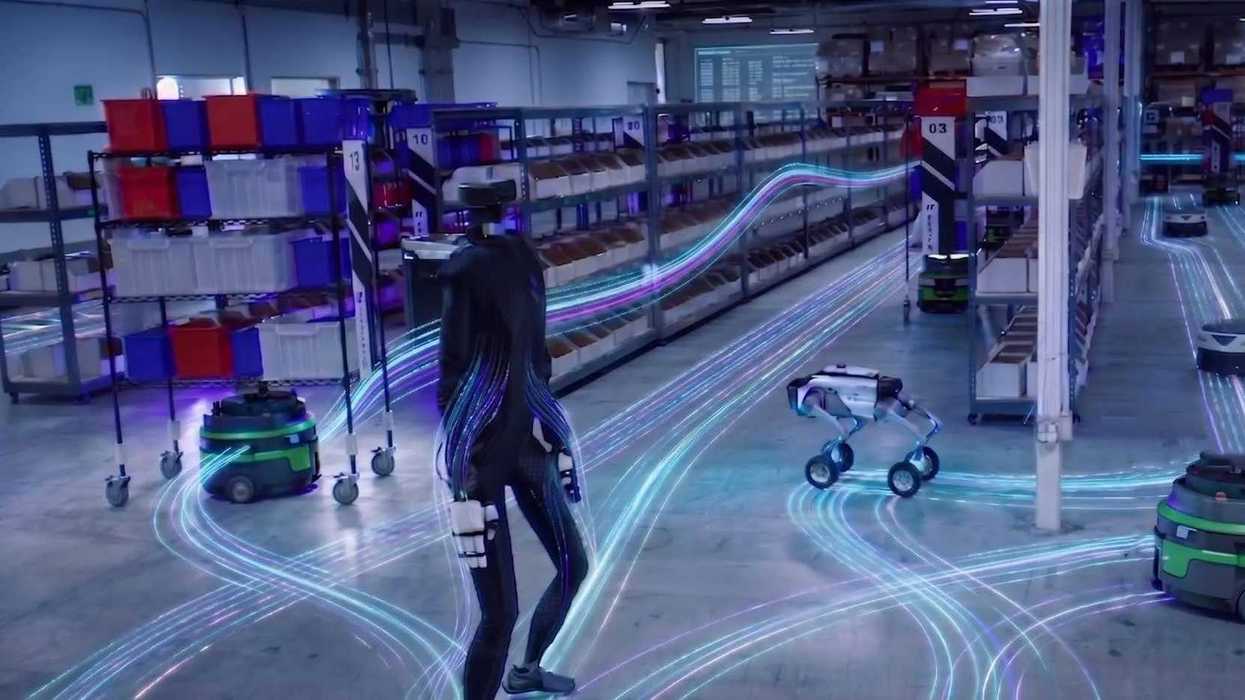
But the implications don’t stop at the battlefront. The same multi-agent coordination technology is migrating into commercial logistics, warehouse automation, and infrastructure inspection. The algorithms that deconflict 50 combat drones map directly onto a warehouse management system orchestrating 100 autonomous mobile robots. For logistics operators watching the defense sector, the pattern is clear: high-stakes military training is accelerating reliable, explainable AI agents that will soon be repurposed for civilian automation.
If you’re evaluating fleet automation for a factory floor or distribution center, the maturity curve visible at Scout suggests that agent-based orchestration will be the norm within a few years. Botmarket already lists used cobots, AMRs, and industrial arms that can form the hardware foundation for these emerging software stacks. Browse used cobots on Botmarket to see platforms that could eventually run physical AI agents for non-military use cases. The coordination puzzle is the same — whether the swarm carries packages or payloads.
Frequently Asked Questions
Scout AI is a defense technology startup building Physical AI agents that can command fleets of unmanned aerial, ground, and maritime systems in contested environments. It was founded by Coby Adcock, a former autonomy lead at a major defense prime, and just raised $100 million at a $1.2 billion valuation.
How does Scout AI train its combat models? The company operates a 1,200-acre bootcamp in the Mojave Desert where AI agents undergo millions of simulated engagements and live validation with real drones and robots. Daily live-test logs are fed back into the simulation to close the sim-to-real gap and improve mission success rates.
What is the difference between a drone swarm and an AI agent-controlled fleet? Traditional swarms rely on pre-scripted behaviors or manual human control. Scout’s AI agent uses multimodal reasoning to interpret mission intent, dynamically allocate assets, and continuously re-plan across dozens of robots without constant human input. It can manage 30-50 drones while a typical operator handles only 3-5.
Can the AI agent make lethal decisions on its own? No. Scout AI’s system operates under strict human-on-the-loop doctrine. The agent suggests actions and executes plans, but any lethal strike requires a human operator’s explicit confirmation. The company embeds explainability dashboards to show the reasoning behind each recommendation, complying with Pentagon ethics guidelines.
How much does Scout AI’s system cost? Pricing has not been publicly disclosed, but early integration estimates suggest that deploying the AI agent could reduce per-sortie operational costs by up to 40% by consolidating operator roles and communications bandwidth. Final cost will depend on fleet size and mission complexity.
Has Scout AI signed any contracts with the Department of Defense? While no specific contract has been announced publicly, the company has hosted DARPA and Army Futures Command evaluators at its bootcamp and is actively working with Pentagon AI ethics offices. The new funding is intended to accelerate certification and fielding by the end of next year.
What does autonomous fleet control mean for warehouse automation? The same multi-agent coordination algorithms that deconflict combat drones can manage fleets of warehouse robots. As defense-driven AI matures, the technology is expected to spill over into civilian logistics, enabling single-operator oversight of large AMR fleets with higher throughput and lower error rates.
Is giving AI command of armed drone swarms moving too fast for regulation?
Scout AI’s bootcamp proves that a single soldier can coordinate swarms that would have required a full operations center just a few years ago. With $100 million now fueling the transition from demo to deployment, the Pentagon is set to adopt Physical AI agents faster than most analysts expected. The companies that master reliable, explainable fleet autonomy will define the next chapter of both defense and industrial robotics.


التعليقات