
Two full-size humanoid robots faced off in an MMA-style cage in Shenzhen on July 19, and even after one robot's head was kicked off, it continued throwing punches — catching Elon Musk's attention. The viral event demonstrates that hydraulic-driven humanoids can absorb significant damage and keep operating, a durability benchmark that matters far beyond entertainment.
- What Happened at the EngineAI Robot Fight?
- Why Does This Matter for Humanoid Robot Development?
- How Does the EngineAI T800 Compare to Other Humanoids?
- What This Means for Robotics Buyers and Enthusiasts
What Happened at the EngineAI Robot Fight?
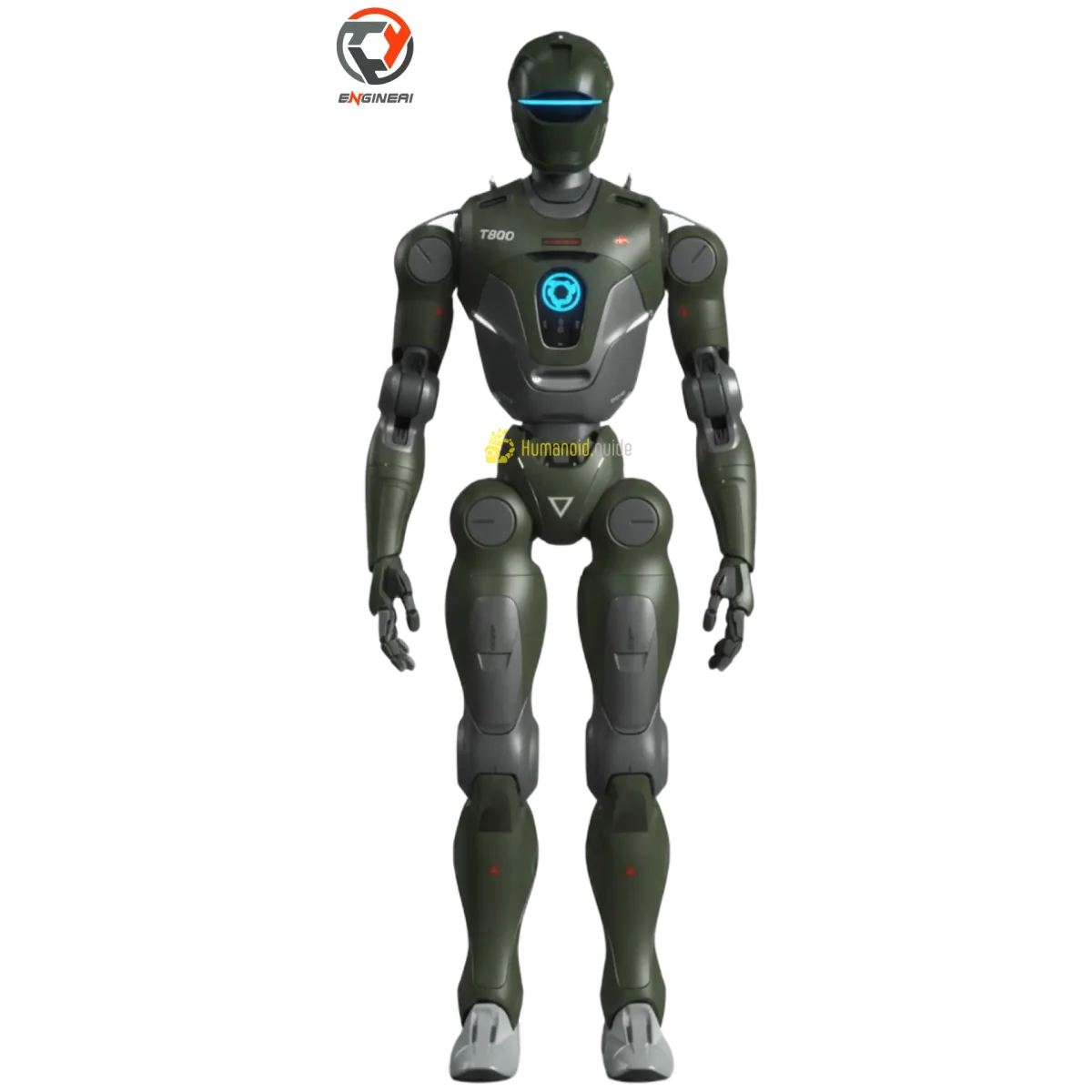
On July 19, Chinese humanoid maker EngineAI pitted two of its T800 robots against each other inside an octagonal MMA cage in Shenzhen. The robots — each standing 1.73 meters (5 ft 8 in) and weighing 75 kilograms (165 lbs) — exchanged jabs, spinning kicks, and takedowns. The most dramatic moment came when one robot's head was knocked clean off by a kick.
EngineAI’s robots kept fighting even after losing their heads.
The headless robot continued to throw punches and absorb hits because its core control system is mounted in the torso, not the head. The company billed it as the world’s first industrial-grade humanoid robot free-fighting competition. Elon Musk reposted the video on X with the comment: "Robot fights are fun."

Why Does This Matter for Humanoid Robot Development?
Beyond the viral spectacle, the fight showcases a critical engineering trait: ruggedness. For humanoid robots to work in factories, warehouses, or homes, they must be able to withstand falls, bumps, and collisions without catastrophic failure — especially when their sensors (mounted in the head) are compromised.
The T800’s ability to continue fighting after losing its head means its navigation and balance systems rely on more than just head-mounted cameras and LIDAR. The torso-mounted controller uses proprioceptive feedback — internal sensors that track joint position and force — to maintain stability. This is a design choice EngineAI made deliberately: the robot can operate in degraded mode if its primary sensors are damaged.
For the broader robotics industry, the event acts as a real-world stress test that bench tests can't replicate. Hydraulic joints, which the T800 uses, provide more power and shock absorption than electric motors but are more complex to control. The fight demonstrated that hydraulics can handle high-impact combat without leaking or failing — a sign that the technology is maturing beyond laboratory conditions.
How Does the EngineAI T800 Compare to Other Humanoids?
The T800 targets the same market as Tesla Optimus, Figure 02, and Unitree H1 — full-size general-purpose humanoids for industrial and service tasks. Here’s how it stacks up:
| Feature | EngineAI T800 | Tesla Optimus | Unitree H1 |
|---|---|---|---|
| Height | 173 cm | 173 cm | 180 cm |
| Weight | 75 kg | 73 kg | 47 kg |
| Actuation | Hydraulic joints | Electric motors | Electric motors |
| Top speed | Not disclosed | ~2 m/s | 3.3 m/s (running) |
| Payload | Not disclosed | ~20 kg | ~30 kg |
| Head sensors | Stereo cameras, LiDAR | Cameras, radar | Intel RealSense, LiDAR |
The T800’s hydraulic system gives it a strength-to-weight advantage for high-force tasks, but hydraulic systems are generally less energy-efficient and noisier than electric. The robot fight’s emphasis on combat may signal EngineAI’s ambition in entertainment or even security applications, though the company primarily markets the T800 for industrial inspection and logistics.

What This Means for Robotics Buyers and Enthusiasts
For potential buyers of humanoid robots — whether for research, entertainment, or industrial use — the T800’s cage match provides two useful data points:
- Durability is being taken seriously. A robot that can survive a head-loss-level impact and keep working is a robot that can survive a fall on a factory floor. That reduces downtime and repair costs.
- Entertainment value could accelerate public acceptance. Viral moments like this build mainstream awareness of humanoids, which can drive investor interest and consumer curiosity. For companies like EngineAI, proving their robot can “take a punch” may help attract buyers who want a rugged, field-serviceable platform.
However, buyers should note that combat-capable hydraulics add weight, cost, and maintenance complexity. For most warehouse or service tasks, electric-driven humanoids like the Unitree G1 (lighter, quieter) remain more practical. The T800 is best suited for environments where physical robustness is paramount — such as disaster response, outdoor patrol, or heavy-lift scenarios.
If you're considering a humanoid robot for your operation, compare rugged platforms like the T800 alongside other humanoid robots for sale on BotMarket.
Frequently Asked Questions
What robots fought in the cage match? Two EngineAI T800 full-size humanoid robots, each 1.73m tall and weighing 75kg, equipped with high-strength hydraulic joints.
Why didn't the headless robot stop fighting? Its core control system is housed in the torso, not the head. The robot relied on proprioceptive feedback (internal joint position sensors) and balance algorithms to continue operating after losing its head-mounted sensors.
How did Elon Musk react? Musk reposted a video of the fight on X (formerly Twitter) on July 19 with the comment “Robot fights are fun.”
Is EngineAI a major humanoid robot company? EngineAI is a Shenzhen-based startup less known than Tesla, Figure, or Unitree, but the T800 competes in the same full-size humanoid category. The viral fight has significantly raised its profile.
Does the T800 use hydraulics or electric motors? The T800 uses hydraulic joints, which provide higher force output and impact resistance than electric motors but are louder and less energy-efficient.
Where can I buy or learn more about the EngineAI T800? EngineAI primarily sells to enterprise and research customers in Asia. For comparable humanoid robots with global availability, check quadruped and humanoid platforms on BotMarket.
Conclusion
The EngineAI T800 cage fight was more than a viral gimmick — it proved that humanoid robots can absorb serious damage and keep functioning, a milestone for real-world ruggedness. While combat robots won't replace factory workers tomorrow, events like this push the hardware development cycle faster. Musk's nod could also accelerate funding and public interest in physical robotics. For the first time, watching a robot get its head kicked off is actually a good sign for the industry.







Zapojte se do diskuse
Would you trust a humanoid whose head can be kicked off and still operate?