
Researchers have developed motion planning algorithms that significantly extend the lifespan of continuum robots — flexible, snake-like machines used in surgery and industrial inspection. By combining genetic pathfinding with multi-criteria decision-making, the new approach reduces motor wear and mechanical damage while maintaining accuracy.
What the Researchers Built
The team from IHP — Leibniz-Institut für innovative Mikroelektronik and Taras Shevchenko National University of Kyiv created a motion planning framework that intentionally sacrifices path optimality in favor of robot longevity. They took two classic pathfinding algorithms — Genetic Algorithm (GA) and A* search — and added an Analytical Hierarchy Process (AHP) layer that scores each candidate path against four resilience-focused criteria:
- Travel distance – shorter paths reduce energy consumption
- Motor damage – paths that avoid high-torque movements preserve actuators
- Mechanical arm damage – paths that limit extreme bending reduce structural fatigue
- Accuracy – paths that keep the robot close to target waypoints maintain task quality
The AHP component weights these criteria to produce a single "resilience score" for every path. The modified algorithms then select the path that best balances all four factors rather than simply the shortest route.
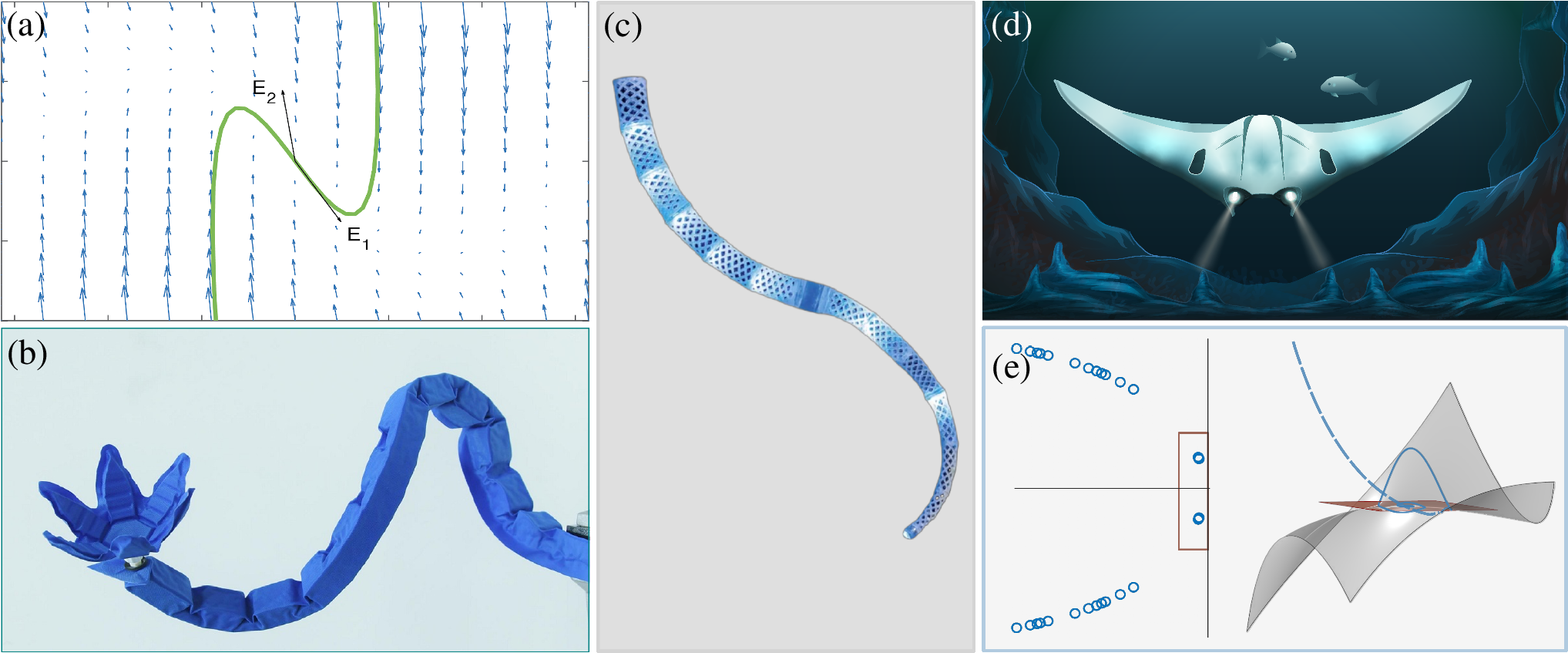
The researchers tested their approach in two simulated environments: one containing both single and multiple waypoints, and another with only multiple waypoints. The simulated robot model was simplified but still incorporated real-world constraints like motor torque limits and arm bending radii observed from a physical prototype.
Key Results
The experiments revealed a clear performance divide between the two algorithms:
- Genetic Algorithm (GA) execution time remained constant regardless of environment complexity. In both the single/multi-path and pure multi-path environments, GA completed path planning in roughly the same time.
- *A execution time increased sharply* when moving from the simple environment (single + multi path points) to the complex environment (only multi-path points). The A algorithm struggled with the combinatorial explosion of waypoints.
- Path diversity was significantly higher for GA compared to A*. GA explored a wider variety of routes, distributing wear across different sections of the robot arm and motors. This diversity directly increases system resilience by preventing concentrated fatigue.
- Multi-criteria optimization worked as intended — paths selected by the AHP-enhanced algorithms showed measurable reductions in estimated motor damage and mechanical bending stress compared to standard shortest-path approaches, though specific quantified reductions were not disclosed in the public abstract.
The researchers note that GA's population-based search naturally generates multiple path candidates, whereas A* focuses on refining a single efficient route. This makes GA inherently better suited for resilience-focused planning.
How It Works
Continuum robots pose unique planning challenges. Unlike rigid-link robots with fixed joints, continuum robots bend continuously along their length. Each movement distributes stress across tendons, motors, and flexible backbone segments. Repeated high-stress paths can cause premature failure.
The AHP decision framework works in three steps:
- Pairwise comparison – For each candidate path, the algorithm compares it against every other path on each of the four criteria. It builds a comparison matrix where each entry represents the relative importance of one criterion over another for that specific path pair.
- Priority vector calculation – Using eigenvector analysis, AHP derives a numerical weight for each criterion. These weights reflect how much each candidate path "prefers" distance vs. motor damage vs. mechanical damage vs. accuracy.
- Consistency check – The algorithm verifies that the pairwise comparisons are logically consistent. If not, it flags the path set for re-evaluation.
For the Genetic Algorithm variant, the AHP score becomes the fitness function. GA evolves a population of paths over generations, selecting those with best resilience scores to breed new candidates. For A, the AHP score replaces the standard heuristic cost. Instead of minimizing Euclidean distance, A minimizes the weighted sum of the four criteria.
Both algorithms run offline before the robot begins motion. The planner generates a full path from start to goal, then the robot executes it. This approach suits surgical or inspection tasks where paths are known in advance. The researchers used two simulated environments: one with mixed waypoint types (single intermediate points and multi-point sequences) and one with only multi-point sequences representing more complex industrial trajectories.

A key engineering insight: GA’s population size acted as a natural diversity buffer. Even when the environment became more complex (more waypoints), the genetic operators — crossover and mutation — continuously generated new route variants. A*, by contrast, greedily expanded the best solution and got trapped in narrow corridors of the search space, causing execution time to spike.
Why This Matters for Robotics
Continuum robots are expensive and difficult to maintain. Their flexible backbone and tendon-driven actuation wear out faster than conventional robot joints. In applications like transoral surgery, industrial pipe inspection, or nuclear decommissioning, robot downtime is not just costly — it can stop entire operations.
The ability to plan paths that deliberately reduce motor and mechanical stress could double or triple the time between maintenance cycles. This is especially valuable in hazardous environments where access for repair is limited. For example, a continuum robot inspecting a chemical reactor could run longer without needing tendon replacement.
The work also demonstrates a broader principle: optimal path planning (minimal distance or time) is not always the best for system longevity. Robotics buyers and fleet operators should consider "resilience-aware" planners when evaluating automation options. Platforms like BotMarket’s industrial robot marketplace list many rigid-arm robots, but the same multi-criteria approach could be applied to any articulated system. Collaborative robot arms used in manufacturing could also benefit from stress-distributing motion plans.
Furthermore, the use of AHP provides a transparent, explainable way to trade off different operational goals. Operators can explicitly prioritize motor life over speed, or accuracy over energy use — and the algorithm will reflect those priorities in its path choices.
Limitations and Open Questions
The study relies on simulated environments with a simplified robot model. Real continuum robots have complex, nonlinear dynamics — tendon friction, hysteresis, and material creep — that were not modeled. The four resilience criteria (distance, motor damage, mechanical damage, accuracy) were treated as independent but in practice they interact: a path that reduces motor damage might increase mechanical bending stress.
The AHP weighting parameters were likely set manually. In real deployments, optimal weights would need to be learned from operational data, and they may change as the robot ages. No experiments on a physical robot were reported, so the actual impact on time-to-maintenance remains untested.
Finally, the GA outpaced A in complex environments, but its path diversity comes at the cost of unpredictability. For safety-critical applications like surgery, a deterministic planner (A or its variants) with explicit diversity constraints might be preferred over a stochastic one.
Frequently Asked Questions
What is a continuum robot? A continuum robot is a flexible, snake-like robot that bends continuously along its length rather than moving through discrete joints. They are used in minimally invasive surgery, pipe inspection, and search-and-rescue.
How does the Analytical Hierarchy Process improve path planning? AHP evaluates each candidate path against multiple criteria — distance, motor damage, mechanical stress, and accuracy — and assigns a combined resilience score. The planning algorithm then selects the path with the best score rather than just the shortest route.
Which algorithm performed better for complex environments? The Genetic Algorithm maintained constant execution time across different environment complexities, while A* slowed down significantly in multi-path environments. GA also generated more diverse paths, distributing wear across the robot.
Can this approach be used on existing industrial robots? Yes, the multi-criteria decision framework is algorithm-agnostic and can be added to any motion planner. Operators of rigid-arm robots can similarly optimize for joint wear or energy consumption by modifying their path planning costs.
Conclusion
This research offers a practical method for extending continuum robot lifespan through smarter path planning. By adding multi-criteria decision-making to standard genetic and search algorithms, the team showed that path diversity and stress awareness can be achieved without sacrificing task accuracy. The next step is validating these results on physical hardware — and then integrating resilience-aware planning into commercial robot controllers.