What is the Agibot A2 W?
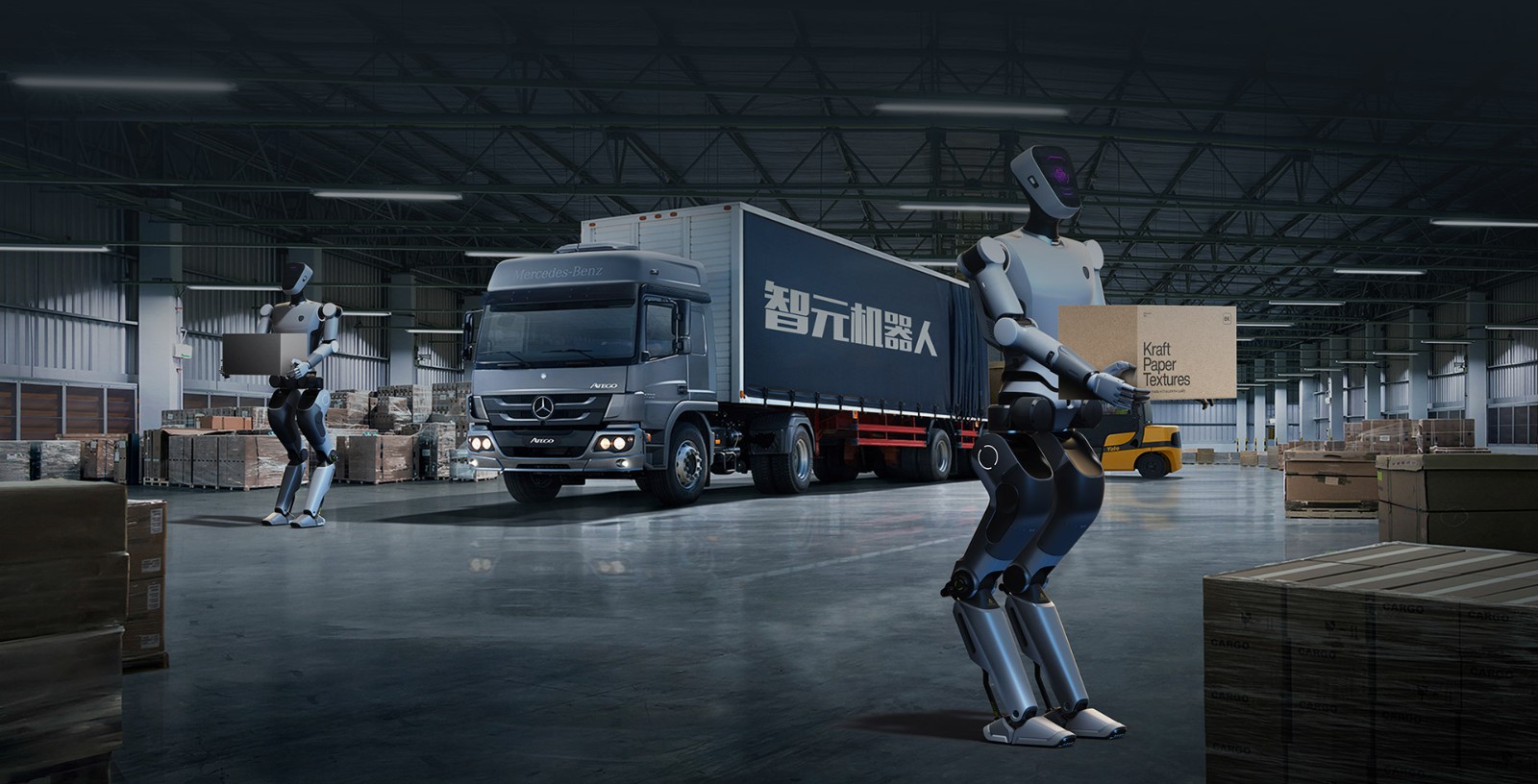
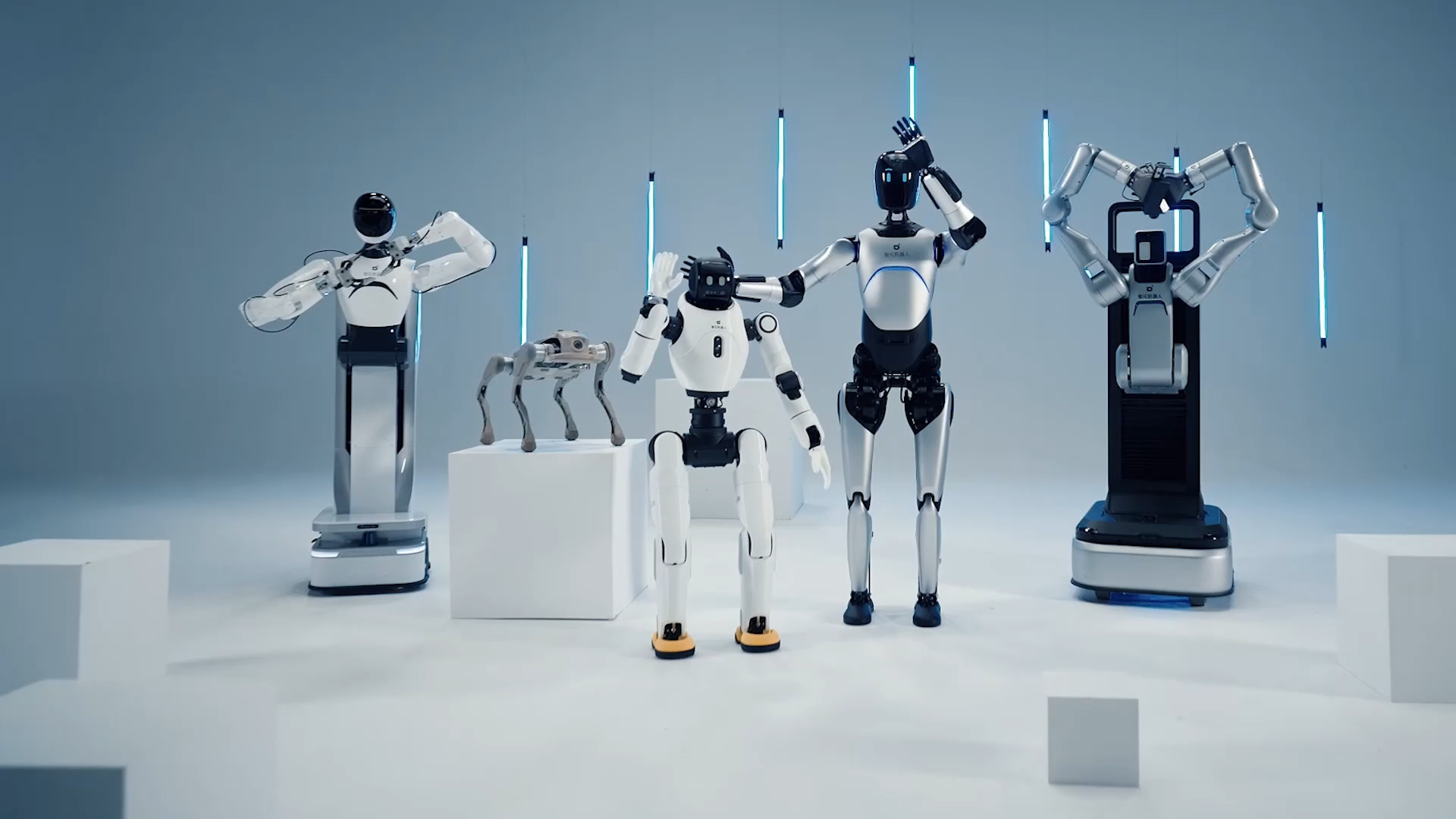
The AgiBot A2‑W is a dual‑arm wheeled humanoid designed for industrial automation, warehouse logistics, and research. Built by AgiBot (Shanghai), it features an aluminum alloy frame with composite panels, 22 degrees of freedom (7 per arm, 5‑finger hands), and a wheeled base for stable, continuous operation. Rated at IP20, it carries up to 12 kg while moving at an estimated 5.4 km/h. The robot runs a Linux‑based robotics framework (likely ROS/ROS2) with 5G, Ethernet, and Wi‑Fi connectivity, and supports embodied AI with potential LLM integration. Its limited production status and enterprise‑only deployment make it a rare, specialized platform for high‑value material handling and assembly tasks.
Specifications
Here are the full technical specifications.
| Spec | Value |
|---|---|
| Height | 163 cm |
| Weight | 230 kg |
| Degrees of freedom | 22 |
| Battery life | 5 hours |
| Max speed | ~5.4 km/h (estimated, based on AgiBot G2 wheeled platform) |
| Payload | 12 kg |
| Price (new) | Undisclosed (contact manufacturer) |
| Price (used range) | N/A — no secondary market yet |
Price & Value
New MSRP: Undisclosed (contact manufacturer)
Used range: N/A
AgiBot has not published a list price for the A2‑W; buyers must contact the manufacturer directly. Because the robot is deployed only in pilot projects, no used units currently exist, making resale value purely speculative. Compared with other wheeled humanoids like Sanctuary AI Phoenix (also undisclosed), the A2‑W offers similar industrial‑grade specs at an unknown price point. Future depreciation will depend on how quickly AgiBot scales production and whether newer models replace this early pilot version. Organizations considering the A2‑W should budget for custom integration, as the final cost likely includes engineering support beyond the hardware price.
Who Is It For?
Best for: - Enterprise logistics teams piloting humanoid‐assisted picking in warehouses (12 kg payload, wheeled stability) - Research labs exploring embodied AI and LLM integration on a full‑sized mobile manipulator - Manufacturers testing humanoid automation for assembly lines where mobility and dual‑arm manipulation are needed
Not for: - Outdoor or uneven‑terrain operations (wheeled base requires flat, smooth floors) - High‑moisture or dusty environments (IP20 rating is not sealed) - Buyers seeking immediate off‑the‑shelf deployment — this is a pilot‑stage product requiring OEM engagement
Alternatives & Comparison
The AgiBot A2‑W competes in a niche segment of full‑sized wheeled humanoids. Below are the closest alternatives buyers might consider.
| Model | Price | Available | Key Difference |
|---|---|---|---|
| Sanctuary AI Phoenix | Undisclosed | preorder | Upper‑body hydraulic humanoid on omnidirectional wheeled base; 7 DOF arms, high‑resolution tactile hands. |
| Rainbow Robotics RB‑Y1 | Undisclosed | available | Wheeled dual‑arm robot (not full humanoid) with 14 DOF per arm, better suited for repetitive manufacturing tasks. |
Verdict: The A2‑W is a natural fit for organisations already engaged with AgiBot's AI ecosystem. Its humanoid form factor gives it an edge in tasks requiring whole‑body object manipulation. However, the RB‑Y1 offers a more mature, commercially available platform for simpler pick‑and‑place, while the Phoenix might outperform in dexterous assembly. Buyers should evaluate the A2‑W's integrated AI stack and pilot support against these trade‑offs.
Use Cases & Capabilities
Warehouse Picking and Packing
The A2‑W’s wheeled base and 12 kg payload allow it to navigate warehouse aisles, pick items from shelves, and pack orders. Dual 7‑DOF arms with 5‑finger hands enable handling of varied shapes. The 5‑hour battery life covers a shift, and 5G/Ethernet connectivity integrates with warehouse management systems. Being a pilot platform, it is best suited for controlled pilot zones rather than high‑throughput live operations.
Industrial Assembly Line Assistance
In manufacturing, the A2‑W can perform parts feeding, inspection, or light assembly alongside human workers. Its IP20 rating limits deployment to clean indoor environments. The robot’s real‑time processing and Linux‑based ROS enable integration with PLC networks and vision systems. AgiBot’s support for embodied AI could allow the robot to learn new tasks through demonstration, though this capability is still under development.
Research Platform for Embodied AI
With potentially integrated LLM and ROS2, the A2‑W is an attractive platform for universities and corporate R&D labs studying mobile manipulation. The full humanoid upper body on a stable wheeled base simplifies locomotion research while still providing dexterous hands. Researchers should note the limited availability and the need for direct collaboration with AgiBot to access advanced AI modules.
Logistics Material Handling
The A2‑W can transport totes and bins up to 12 kg across a factory floor or warehouse. Its wheeled design enables faster and more stable travel compared to bipedal humanoids, with an estimated top speed of 5.4 km/h. Connectivity options allow it to receive commands from fleet management software. However, the robot’s 230 kg weight and lack of autonomous navigation details mean deployment requires infrastructure preparation.
History & Background
AgiBot (AGIBOT Innovation (Shanghai) Technology Co., Ltd.) is a Chinese humanoid robotics company headquartered in Shanghai. The A2‑W was first built in 2024 as part of the A2 series that includes the A2 Ultra (bipedal) and A2 Lite. The wheeled variant targets industrial automation, logistics, and research labs, offering a stable base for dual‑arm manipulation without the complexity of bipedal walking. Production remains limited, with pilot deployments at select enterprise sites. As of 2026, AgiBot continues to refine the A2‑W’s AI integration and field tests, while also developing next‑generation platforms like the Genie G2. The company has not disclosed a timeline for mass production.
Buying Used — What to Check
Confirm payload and runtime 12 kg payload and 5‑hour battery are based on manufacturer claims; verify with real‑world data if any used unit becomes available.
Inspect wheel drive and base condition The wheeled base is critical for stability; wear on motors or transmission could affect performance in industrial settings.
Verify AI and LLM integration status The robot’s embodied AI features may require specific software licenses or updates from AgiBot that may not transfer with a used unit.