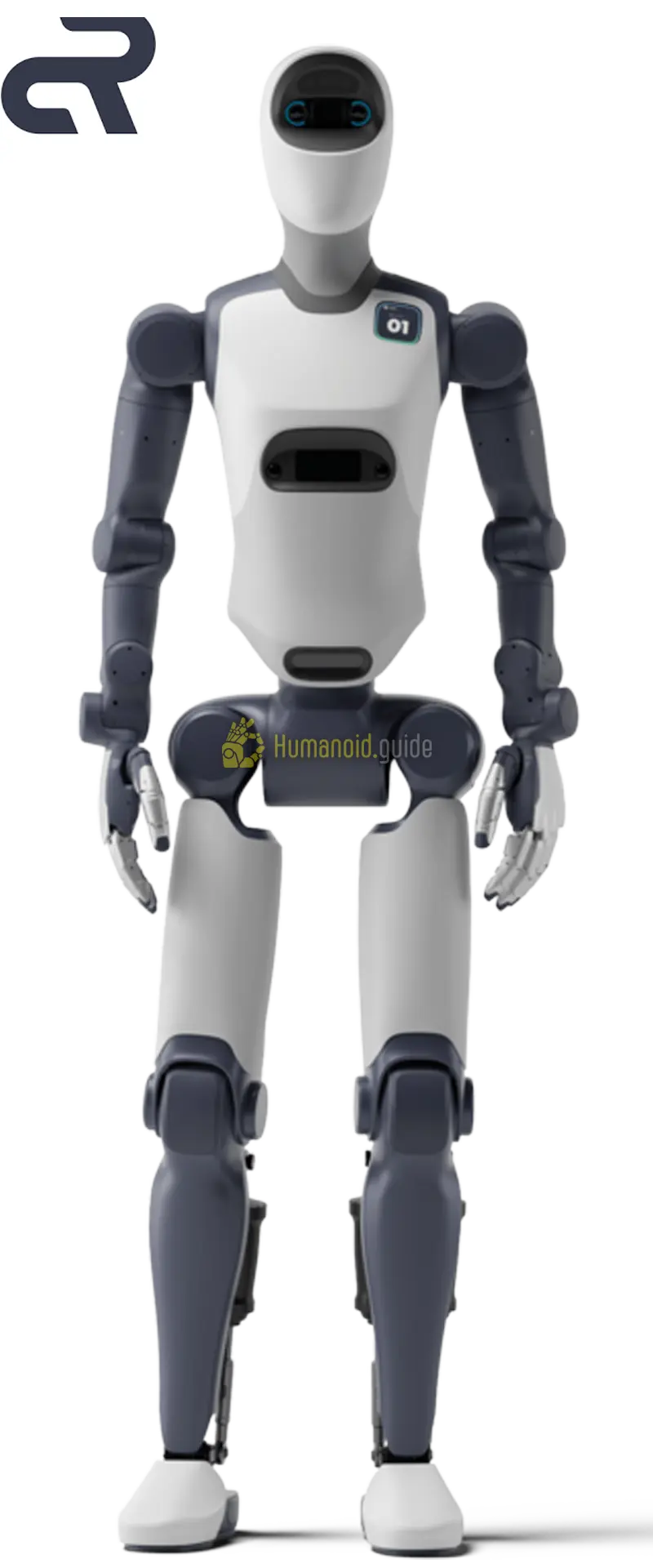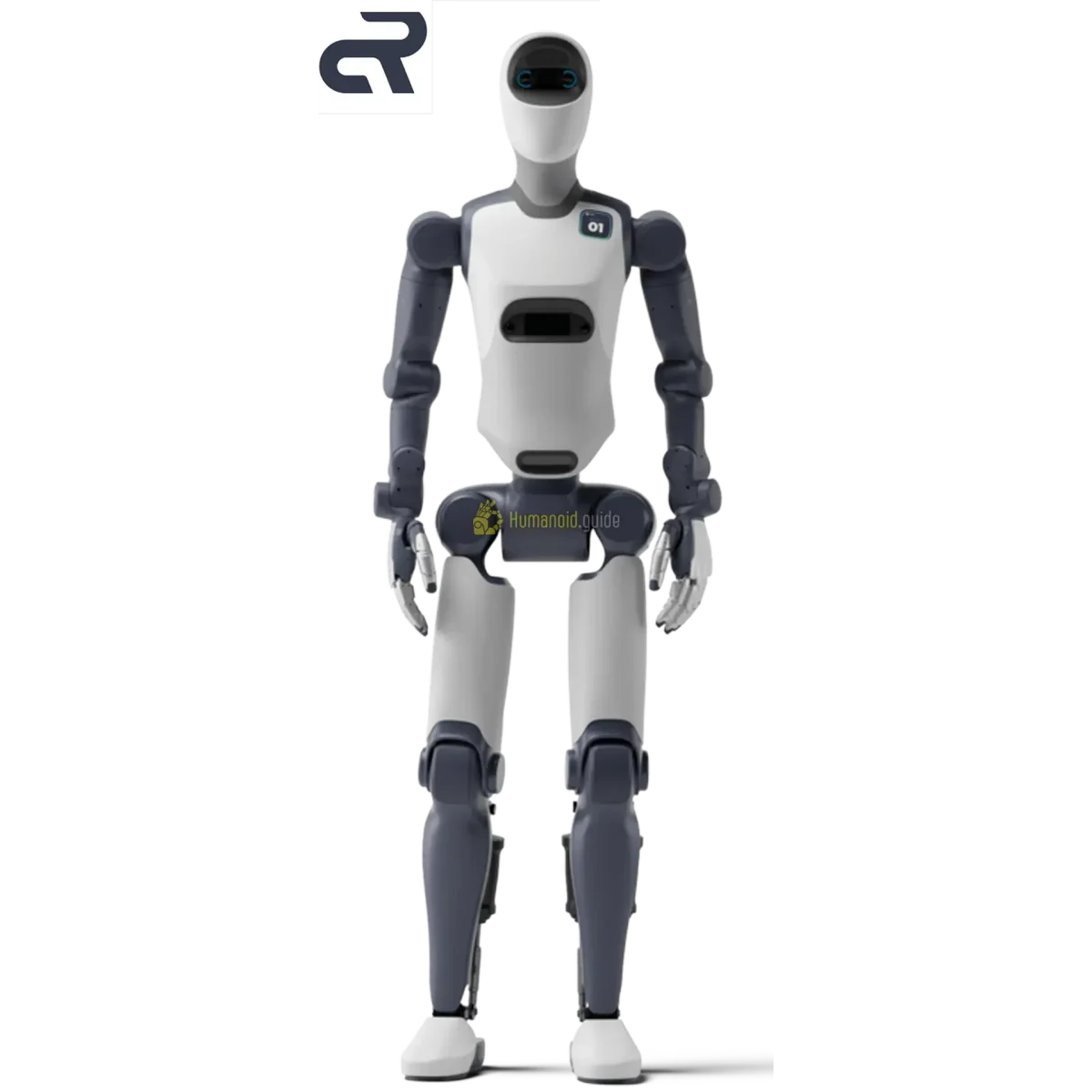
What is the Agile One?
The Agile One is a full-size humanoid robot developed by Agile Robots SE, a Munich-based spinoff of the German Aerospace Center (DLR) founded in 2018. Standing 170 cm tall and weighing 65 kg, it features a soft silicone outer shell and a deliberate focus on safe human-robot interaction. With 40 overall degrees of freedom and dexterous 21-DOF hands, the Agile One is designed for service roles in healthcare, elderly care, hospitality, and education. It runs on an AI stack named AgileCore, which integrates robotic foundation models for natural language interaction and autonomous decision-making. The robot can walk at up to 7.2 km/h, carry payloads of approximately 20 kg, and operate for about 3 hours on a single charge. Though pre-order only as of 2026, the Agile One represents a step toward physically embodied AI in daily human environments.
Specifications
Here are the full technical specifications.
| Spec | Value |
|---|---|
| Height | 170 cm |
| Weight | 65 kg |
| Degrees of freedom | 40 |
| Battery life | 3 hours |
| Max speed | 7.2 km/h |
| Payload | 20 kg |
| Price (new) | Undisclosed (contact manufacturer) |
| Price (used range) | N/A |
Price & Value
New MSRP: Undisclosed (contact manufacturer)
Used range: N/A
Agile Robots has not publicly disclosed the price of the Agile One; a placeholder figure of $50 in some scraped listings is clearly an error and should be ignored. Given the DLR heritage, the bipedal form factor, and the dedicated AI stack, the real cost is likely to be high—comparable to other full-size commercial humanoids that range from $80,000 to well over $150,000. Potential buyers must contact the manufacturer directly for a quote. Without any public retail transactions, no used market exists, so buyers cannot yet purchase a second-hand unit. However, once production ramps up, depreciation could be steep if the robot remains service‑focused rather than industrial. The overall value will depend on the final price and how effectively the robot can be deployed in real care or hospitality settings; until then, the Agile One is a speculative investment.
Who Is It For?
Best for: - Healthcare and elderly care pilot programs (soft silicone exterior and natural language interface make it safe for close human contact) - Hospitality and education institutions seeking an interactive, mobile guide (bipedal locomotion and voice interaction) - Research labs exploring embodied AI and human-robot interaction (DLR lineage and foundation model control)
Not for: - Cost-sensitive buyers (no public price, but it is likely to be a premium robot) - Heavy industrial lifting or high-speed logistics (payload is only 20 kg and max speed 7.2 km/h) - Outdoor or extreme environments (no stated ingress protection and the soft shell may not withstand harsh conditions)
Alternatives & Comparison
The Agile One competes in the emerging market of service-oriented humanoids. Its closest alternatives range from wheeled interaction robots like Pepper to bipedal, more industrial models such as the UBTECH Walker.
| Model | Price | Available | Key Difference |
|---|---|---|---|
| SoftBank Pepper | $20,000 | yes | Wheeled, touchscreen, no manipulation capabilities |
| UBTECH Walker | Undisclosed (likely >$100,000) | enterprise | Bipedal, larger payload, industrial-grade sensors |
Verdict: For public-facing service where safe, soft contact and natural conversation matter more than raw power, the Agile One is a strong choice—Pepper is more affordable but cannot walk or manipulate objects. For industrial tasks requiring high payload and proven ruggedness, UBTECH Walker wins. At this early stage, most buyers should request a live demo of the Agile One and compare its actual interaction quality against the competition before committing.
Use Cases & Capabilities
Patient Guidance & Assistance in Hospitals
The Agile One can escort visitors to wards, explain procedures using natural speech, and carry light medical supplies. Its soft exterior is designed to be safe around frail patients, and the 3-hour battery covers a typical half-day shift. The robot’s 21‑DOF hands could eventually handle simple objects like paperwork or medication trays, though this has not been demonstrated in a clinical study yet. Deployment in a real hospital would require integration with the facility’s scheduling system and careful navigation training to avoid crowded corridors.
Companionship in Elderly Care
With a friendly appearance and the ability to maintain conversations, the Agile One can reduce loneliness among seniors. It can remind residents about appointments, lead group activities, or simply provide a presence that reacts with facial-like expressions via its head and arm gestures. The bipedal mobility allows it to move from room to room, though staff would need to manage battery swaps. The lack of clinical trial data means its long-term effect on well-being is unproven, but the form factor is deliberately non-threatening.
Interactive Guide in Museums & Hotels
In a hospitality setting, the Agile One can greet guests, provide directions, and answer questions via its foundation-model language processing. Its walking speed of 7.2 km/h matches a brisk human pace, so it can lead groups through a lobby or exhibition hall. The soft silicone shell reduces the risk of injury if someone bumps into the robot, a critical requirement in public spaces. Limited endurance (3 hours) and the need for Wi‑Fi connectivity mean it is best suited for indoor use with well‑placed charging docks.
Education & Research Platform
Universities and corporate R&D labs can use the Agile One to study whole-body motion planning, human-robot interaction, and foundation model integration. Its DLR roots guarantee a sophisticated control architecture, and the 40 DOF provide ample flexibility for experiments. The robot comes with AgileCore, which is likely extensible, allowing researchers to code new behaviors. Cost remains a barrier—without a public price, labs on tight budgets may wait for clearer commercial terms or seek smaller, cheaper platforms.
History & Background
Agile Robots SE was founded in 2018 as a spin‑off from the German Aerospace Center (DLR), an institution with a long history of humanoid robotics including the TORO and Justin robots. The company initially focused on AI‑driven industrial automation and software, later applying that expertise to a full‑size humanoid. The Agile One was first shown in 2024, marking the firm’s entry into the service humanoid market. It is a first‑generation robot, developed around the AgileCore software stack that combines robotic foundation models trained on large industrial datasets with natural language interaction. As of 2026, the Agile One remains in pre‑order status, with pilot deployments in healthcare, elderly care, and hospitality. Agile Robots has not announced any hardware revisions or a broader rollout schedule, and the robot is still considered a pre‑commercial product. The DLR lineage gives it solid credibility in control and safety engineering, but the lack of mass production means its long‑term market impact is yet to be seen.
Buying Used — What to Check
Verify production authenticity Early units may be pre‑production prototypes without full safety certification; ensure it is a genuine commercial version.
Battery health test The 3‑hour runtime can degrade; a used unit with a worn battery may only last 1–2 hours, undermining its usefulness in long shifts.
Software license transfer AgileCore and the foundation models may be tied to the original purchaser; confirm that updates and support can be transferred.