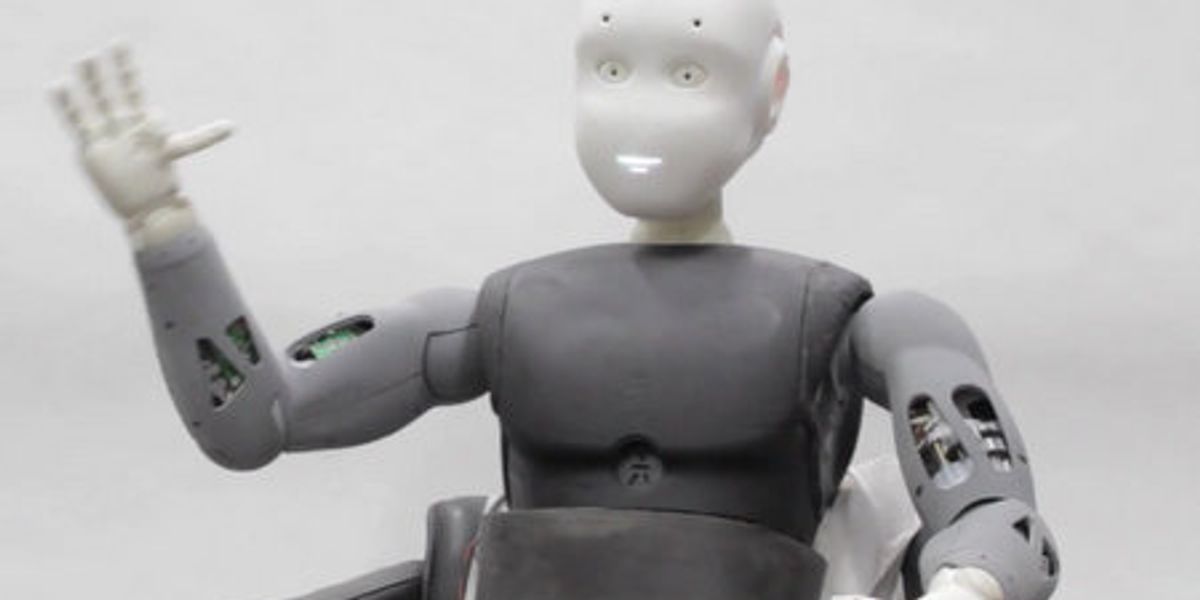
What is the Aldebaran Romeo?
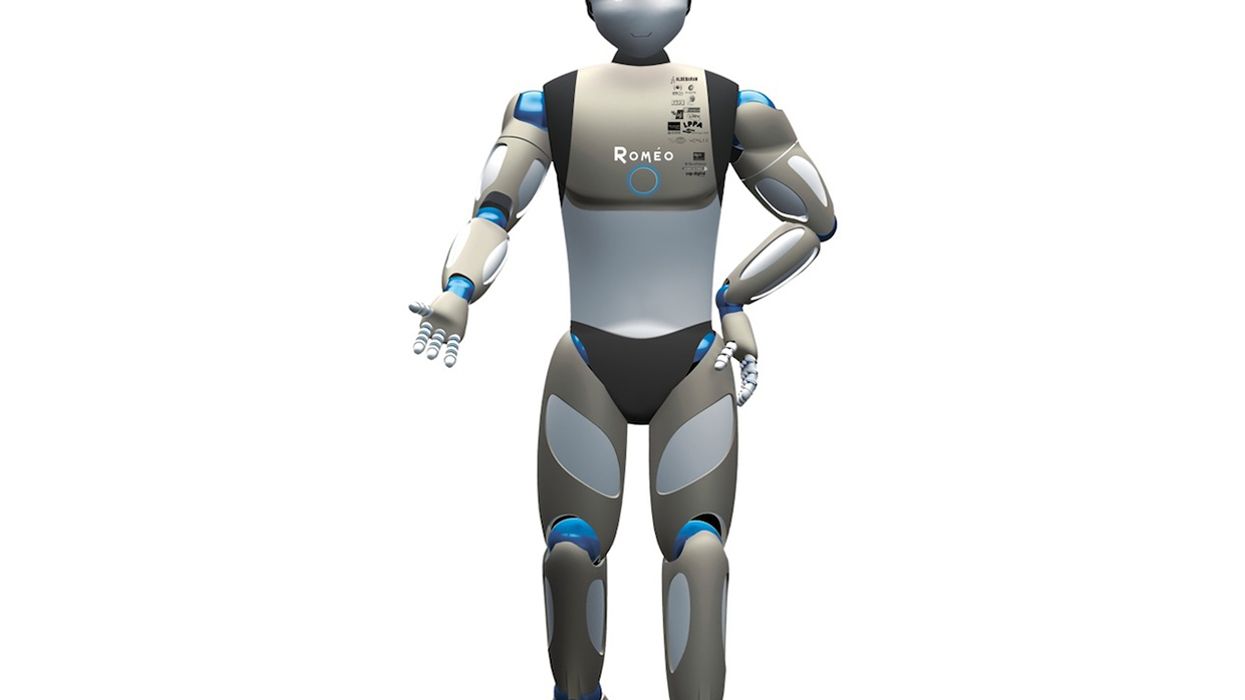
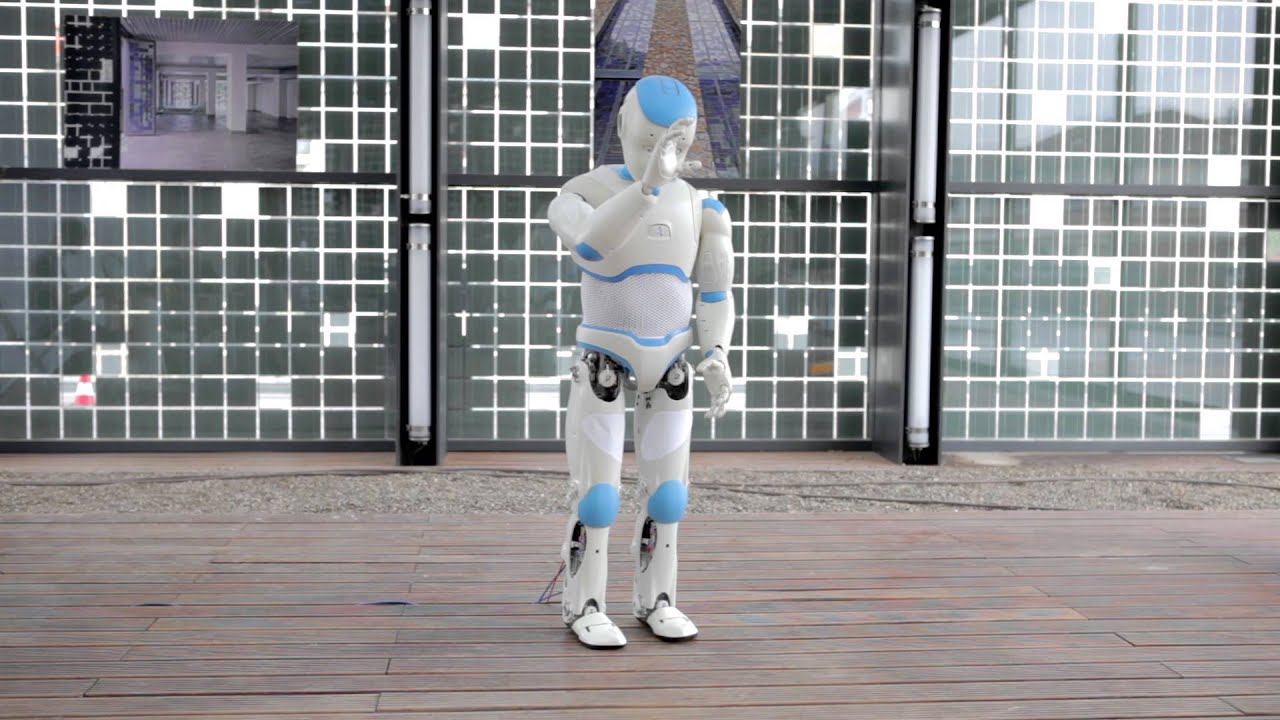
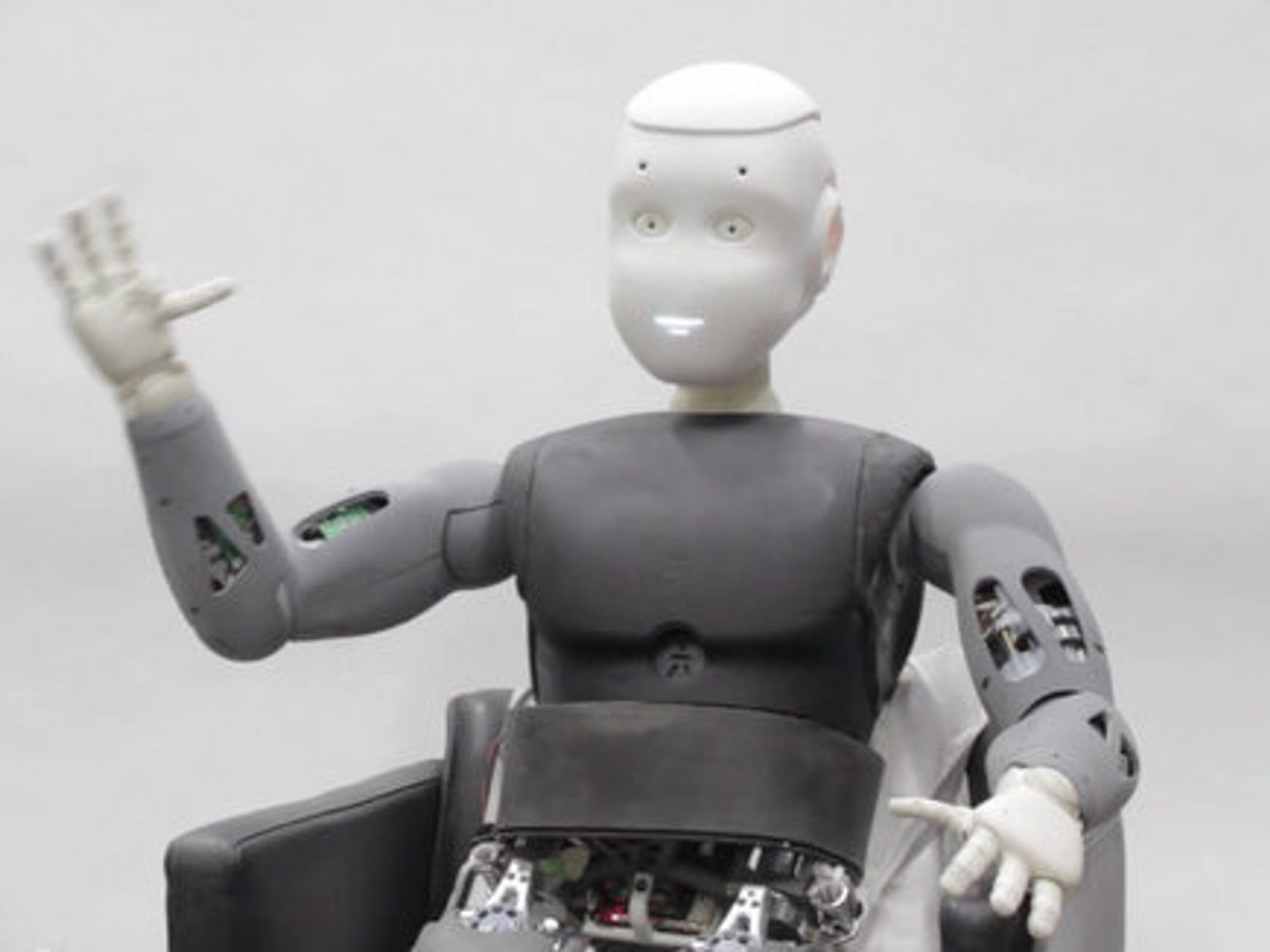
The Romeo is a full-size research humanoid developed by Aldebaran Robotics (now SoftBank Robotics Europe) in Paris, France, as a platform for home assistance and social interaction studies. Standing 1.4 m tall and weighing 40 kg, it was designed to aid elderly and disabled individuals. The robot features 37 electric degrees of freedom, stereo cameras, an IMU, sonar sensors, and tactile skin for natural human-robot interaction. Its computing runs on an Intel Atom with Linux, enabling real-time perception and navigation. Unlike Aldebaran's compact NAO educational robot, Romeo targeted real-world caregiving scenarios such as fetching objects and assisting with mobility. Despite its advanced capabilities for its time, the robot remained a government-funded prototype and never entered commercial production.
Specifications
Here are the full technical specifications.
| Spec | Value |
|---|---|
| Height | 1,400 mm |
| Weight | 40 kg |
| Degrees of freedom | 37 |
| Battery life | Not published |
| Max speed | 0.5 km/h |
| Payload | 2 kg |
| Price (new) | Undisclosed (never sold commercially) |
| Price (used range) | N/A |
Price & Value
New MSRP: Undisclosed
Used range: N/A
The Romeo project had an estimated cost of approximately €250,000 ($270,000) for collaborative research partners, but this was never a formal retail price as the robot was not a commercial product. It was funded entirely through the French government's 'Romeo' initiative and several research institutions, making its development cost irrelevant for potential purchasers. As a non-commercial platform, the Romeo has no depreciation curve and no market value; any remaining units are held by academic labs and are not for sale. For those seeking a comparable full-size bipedal research humanoid today, the PAL Robotics REEM-C is commercially available at around $360,000, offering higher degrees of freedom and active manufacturer support. In contrast, the Romeo's value is purely historical—it demonstrated the feasibility of assistive humanoids but never transitioned into a practical product.
Who Is It For?
Best for: - Academic HRI labs exploring assistive humanoid interaction with a lightweight, compact platform (40 kg, 1.4 m) and open Linux software stack - Museums or robotics history collections seeking a representative full-size humanoid from the early 2010s - Researchers replicating seminal social robotics studies (stereo vision, tactile sensing, personal assistance) with a documented, reproducible platform
Not for: - Commercial deployment in healthcare or retail—never certified, no warranty, no production parts available - Industrial or heavy-lift tasks—maximum payload is only 2 kg and the robot was not designed for rugged environments - Users wanting a walker with significant range—battery runtime was never officially published and walking speed is limited to 0.5 km/h
Alternatives & Comparison
While the Romeo was a pioneering full-size humanoid for social assistance, today it must be compared against contemporary research platforms that serve similar roles. The most relevant alternatives are the PAL Robotics REEM-C and, for contrast, the smaller Aldebaran NAO.
| Model | Price | Available | Key Difference |
|---|---|---|---|
| PAL Robotics REEM-C | $360,000 | yes | Higher DOF (44), commercially sold with active support, modern computing, and wider research community |
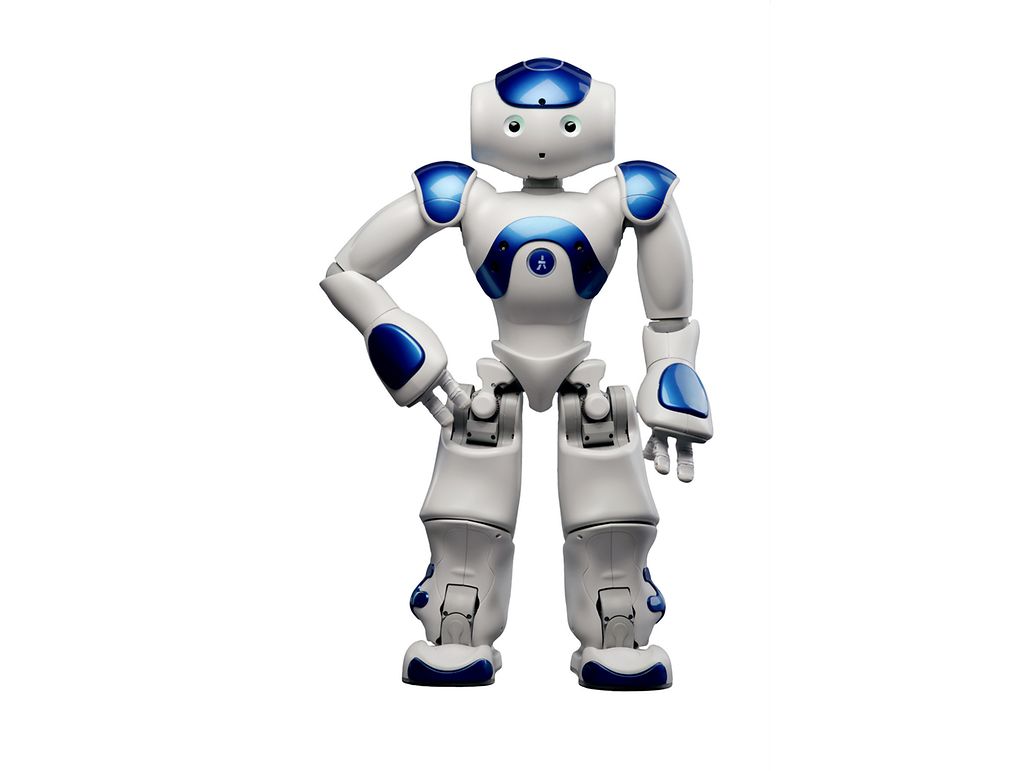
| Aldebaran NAO | $8,000 | yes | Small 58-cm educational humanoid, unsuitable for life-size caregiving tasks but widely used in HRI education |
Verdict: For research labs requiring a full-size bipedal humanoid that can actually be purchased and deployed, the REEM-C is the clear modern winner with its superior specs and manufacturer backing. The Romeo is only viable as a historical artifact; its capabilities are far outclassed by even budget educational robots today. The NAO suits education-focused HRI labs but cannot replicate the physical scale of assisted-living tasks.
Use Cases & Capabilities
Elderly Care Assistance Research
The Romeo was specifically designed to study how humanoids can assist seniors. Its 1.4 m child-like height allowed it to reach tabletops and navigate home environments designed for wheelchairs, while 37 DOF enabled expressive gestures and object manipulation. The stereo camera and tactile sensors allowed the robot to detect a person's presence and respond to touch, essential for safe interaction. Researchers tested tasks like fetching a bottle, walking alongside a person, and reminding about medication. However, the 0.5 km/h walking speed made real-time navigation slow, and the unpublished battery life limited extended in-home trials.
Human-Robot Interaction Studies
Romeo served as a platform for multimodal HRI, combining speech, facial expressions, body gestures, and tactile feedback. Its Intel Atom compute running Linux allowed integration with academic software stacks for emotion recognition and dialogue management. Labs used the robot to study trust, social presence, and proxemics in assistive scenarios. The tactile skin covering key body parts provided rich sensor data for socially aware touch responses, a feature uncommon in research humanoids at the time. Limitations included the relatively low computing power, which constrained real-time AI processing, and the lack of a true battery autonomy rating, making all-day experiments difficult.
Academic Robotics Platform
Romeo was a flagship platform for several French and European robotics labs focusing on whole-body control, bipedal walking, and mobile manipulation. Its open Linux OS and custom middleware allowed researchers to modify low-level motion planning and perception pipelines. The robot's 37 electric actuators provided sufficient flexibility to prototype fall recovery, stair climbing (slowly), and compliant manipulation. Despite these capabilities, the platform was not actively maintained after 2016, and spare parts are unavailable, making it unsuitable for new research groups without deep in-house robotics expertise.
History & Background
Aldebaran Robotics was founded in 2005 in Paris by Bruno Maisonnier, quickly gaining fame with the NAO humanoid. In 2009, the French government launched the 'Romeo' project to develop a human-sized assistive robot for the elderly, with Aldebaran as the lead integrator, alongside academic partners like LAAS-CNRS and INRIA. The first Romeo prototype was unveiled at the Innorobo trade show in March 2012, standing 1.4 m tall and capable of walking, grasping, and recognizing people. The project ran for several years, with iterations focusing on improved balance and navigation. In 2015, SoftBank acquired Aldebaran, forming SoftBank Robotics Europe; management shifted commercial priority to the Pepper and NAO robots. Romeo never transitioned to a commercial product and was quietly discontinued by 2017. Today, the Romeo project remains a significant milestone in European humanoid robotics history, demonstrating the feasibility of life-sized home assistants but highlighting the challenges of cost and reliability.
Buying Used — What to Check
Verify unit provenance Only a few prototypes were built; ensure the robot is not stolen lab equipment and has clear ownership history.
Check battery condition Battery runtime was never published, and a degraded power source could render the robot inoperable for more than a few minutes.
Test all actuators The 37 electric motors and gearboxes may have wear or electrical faults after years of disuse; replacement parts are unavailable.