What is the Allex Wirobotics?
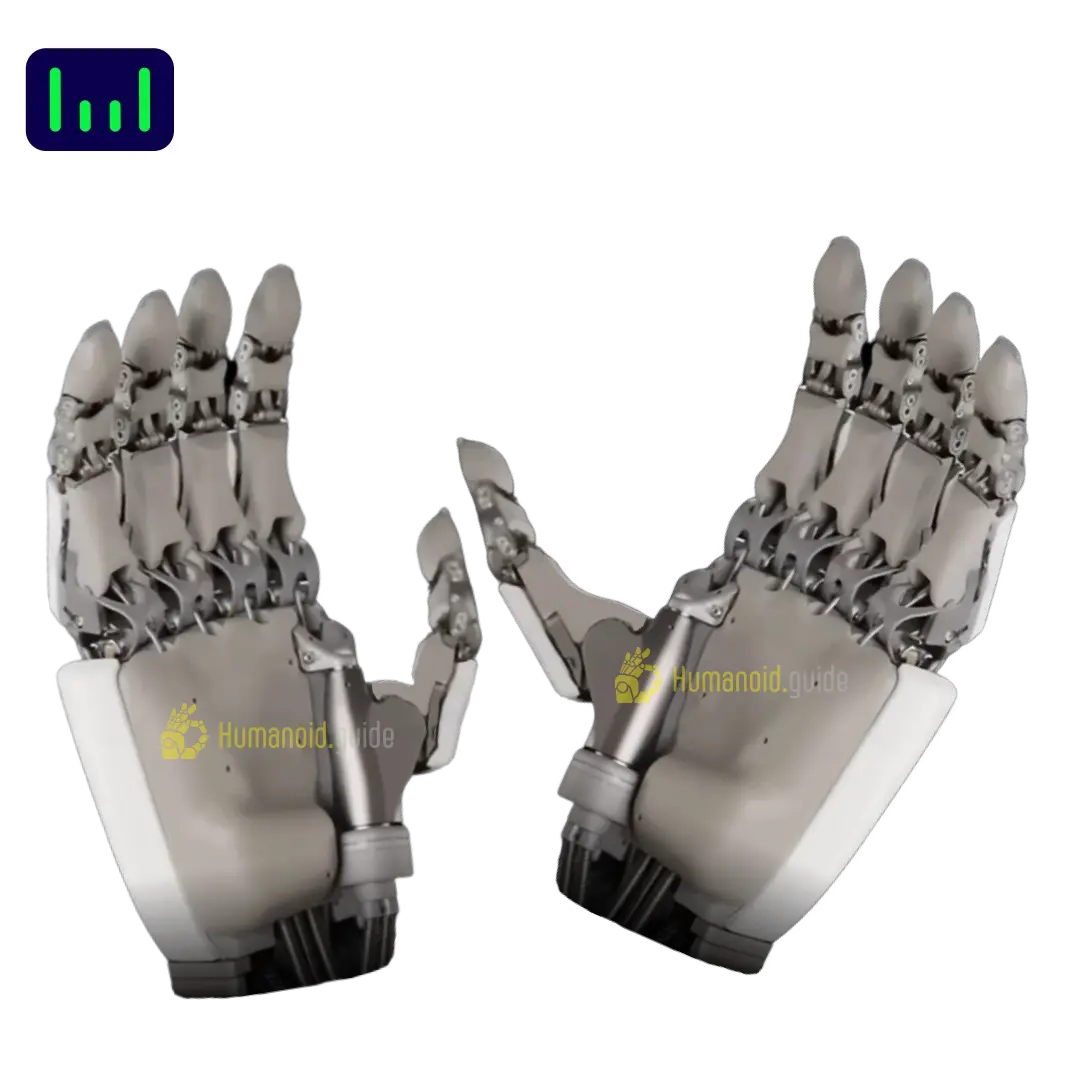
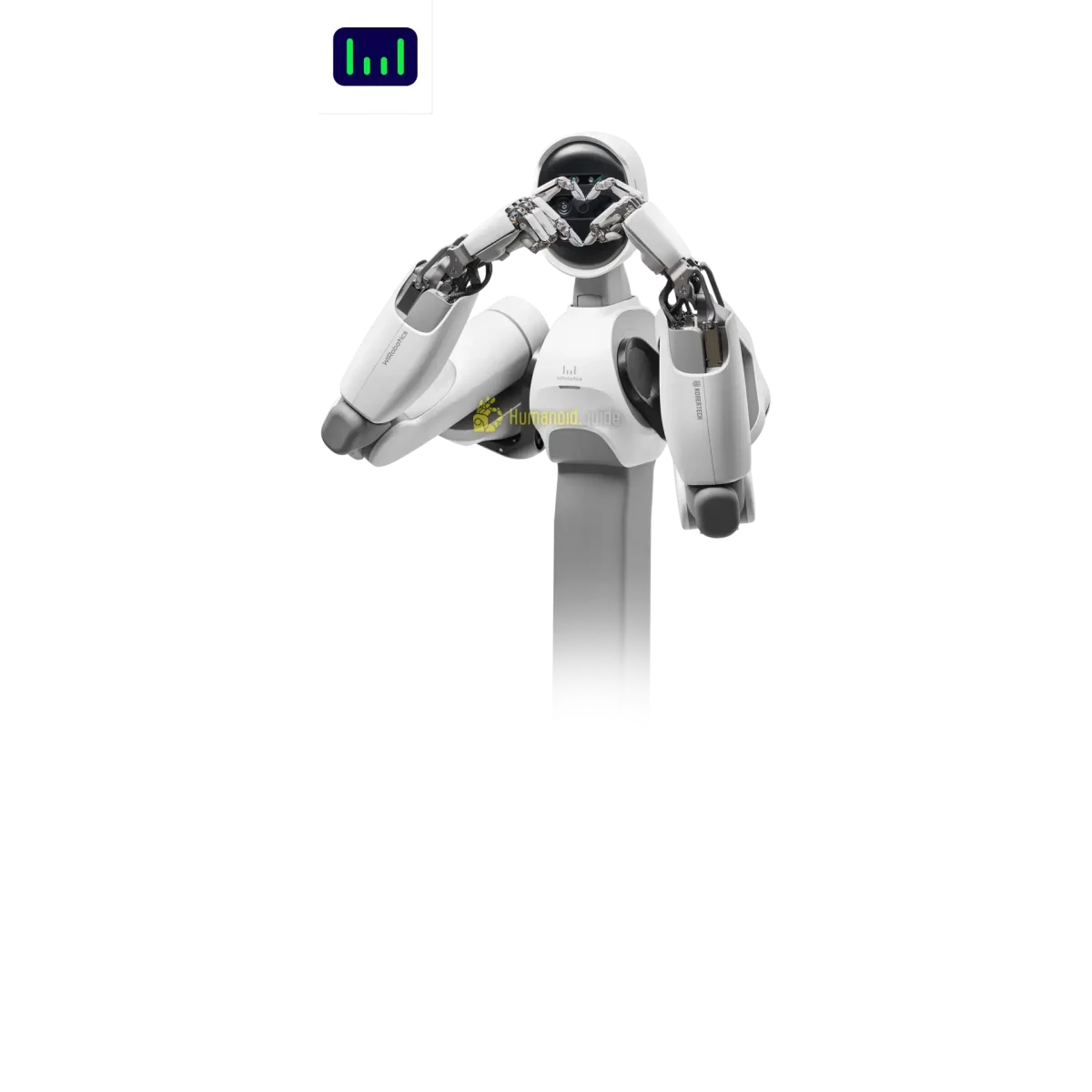
The WiRobotics ALLEX is an upper-body-only humanoid robot developed by South Korea-based WiRobotics. Unveiled in August 2025, it is a research platform designed for dexterous manipulation tasks. The robot features two arms, each equipped with a 15-degree-of-freedom, five-finger hand. Using proprietary ultra-low-friction electric actuators, the ALLEX achieves human-like responsiveness and can handle payloads over 3 kg per arm with a hook grip strength exceeding 30 kg. The arm/hand assemblies weigh approximately 5 kg each, making the system compact for integration into mobile bases or static workcells. Currently in development, it is targeted at applications in commercial cleaning, home service, and logistics. As an upper-body system, ALLEX has no lower body, so no standing height is specified.
Specifications
Here are the full technical specifications.
| Spec | Value |
|---|---|
| Height | N/A (upper-body only) |
| Weight | ~10 kg (arm assemblies) |
| Degrees of freedom | 43 (total, preliminary) |
| Battery life | ~2 hours (prototype) |
| Max speed | N/A (no lower body) |
| Payload | 3 kg per arm, 30 kg hook grip |
| Price (new) | Undisclosed (contact manufacturer) |
| Price (used range) | N/A |
Price & Value
New MSRP: Undisclosed (contact manufacturer)
Used range: N/A
As a pre-commercial prototype, the WiRobotics ALLEX has no publicly listed price. Potential buyers should contact the manufacturer directly for research partnership or pilot program pricing. Its value proposition lies in its advanced dual-hand dexterity and proprietary actuation, which could reduce the cost of automation tasks requiring fine manipulation. Compared to other upper-body humanoid research platforms like those from Engineered Arts or Rainbow Robotics, the ALLEX may be competitively priced if it reaches mass production, but current costs are unknown. Depreciation outlook is premature, but early adopters may see higher long-term value through collaboration.
Who Is It For?
Best for: - Research institutions exploring dexterous manipulation and human-robot interaction (15-DOF hands enable complex grasping studies) - Commercial cleaning companies prototyping autonomous cleaning with delicate surface handling - Logistics and warehousing operations requiring bin-picking and flexible sorting
Not for: - Heavy industrial tasks requiring full-body mobility (no lower body or payload rating beyond 3 kg per arm) - Production environments needing immediate, off-the-shelf reliability (prototype with no commercial support infrastructure)
Alternatives & Comparison
For upper-body humanoid platforms with dexterous manipulation, the ALLEX competes with research-focused robots like the Shadow Dexterous Hand and the Rainbow Robotics RB-W1 upper body.
| Model | Price | Available | Key Difference |
|---|---|---|---|
| Shadow Dexterous Hand | ~$100,000 (est.) | yes | Industry-standard but far more expensive and no integrated arm/torso |
| Rainbow Robotics RB-W1 Upper Body | Undisclosed | preorder | Dual-arm mobile platform with AI integration, also from South Korea |
| Engineered Arts Ameca | ~$133,000 (est.) | yes | Expressive humanoid head and torso but without high-payload arms |
Verdict: The ALLEX offers a unique combination of high-dexterity hands and lightweight arm assemblies at a potentially lower cost than the Shadow Hand. For research labs focused on manipulation, the ALLEX's 15-DOF per hand and backdrivable actuators are compelling. However, buyers seeking an integrated, full-body platform with facial expressions and mobility should consider Ameca or the RB-W1. Because ALLEX is still in prototype phase, early access may require partnership, but it promises a cost-effective dexterous manipulation system.
Use Cases & Capabilities
Dexterous Manipulation Research
Academic and industrial labs can use the ALLEX platform to advance grasping algorithms, force control, and human-robot collaboration. The 15-DOF hands with integrated load cells and backdrivability allow researchers to test delicate object handling, tactile feedback models, and complex assembly tasks. Because the arms are lightweight (~5 kg each), they can be mounted on various workstations or mobile bases. The platform’s open SDK and ROS compatibility (as indicated by early spec sheets) enable rapid prototyping of new manipulation behaviors.
Commercial Cleaning Assistance
The ALLEX’s precise force control and fine manipulation make it suitable for cleaning tasks that require gentle handling of surfaces, such as wiping glass, polishing, or dusting irregular objects. In commercial environments like hotels or offices, a dual-arm setup could process multiple cleaning steps simultaneously, reducing labor. Although currently stationary due to missing lower body, integration with a wheeled base would allow navigation between rooms. Pilot programs with cleaning service providers could explore overnight autonomous cleaning in controlled spaces.
Logistics Bin-Picking and Sorting
In warehouses or fulfillment centers, the ALLEX can tackle bin-picking tasks that involve picking mixed, irregular items from totes. A 3 kg per arm payload covers many e-commerce goods, and the high grip strength (30 kg hook grip) ensures secure handling of heavy items. Its ability to sense force and position in real time reduces damage to fragile products. Integration with vision systems and existing warehouse management software could streamline small-order fulfillment, though cycle times may be slower than traditional two-finger grippers.
Home Service Robots
The ALLEX’s dexterity suits in-home assistance for the elderly or disabled, such as fetching objects, opening doors, and operating small appliances. Its lightweight arms pose lower risk of injury in domestic settings, especially given the backdrivable actuators. However, the current lack of mobility restricts it to a fixed location (e.g., kitchen countertop) until a mobile base is added. As a research prototype, long-term reliability and safety certifications for home use remain unvalidated.
History & Background
WiRobotics, a South Korean robotics company, unveiled the ALLEX platform in August 2025. The robot was designed to demonstrate proprietary ultra-low-friction electric actuator technology and advanced hand dexterity. The company has been developing high-performance actuators for several years, with the ALLEX serving as a showcase for humanoid manipulation capabilities. No earlier generations of ALLEX have been announced, and as of 2026 the system remains a pre-commercial prototype with no publicly sold units. Reports indicate a strategic partnership with RLWRLD for potential LLM integration, suggesting future intelligence upgrades. The company’s near-term roadmap may include adding a lower body to enable full humanoid mobility, though no official timeline has been released.
Buying Used — What to Check
Verify actuator integrity Proprietary ultra-low-friction actuators are critical for performance; replacements may be expensive and not off-the-shelf.
Check hand calibration and sensor functionality The 15-DOF hands require precise calibration and may not have user-accessible calibration tools.
Inquire about software support and warranty As a prototype, ongoing software updates and repair support may be limited.