What is the Andromeda Abi?
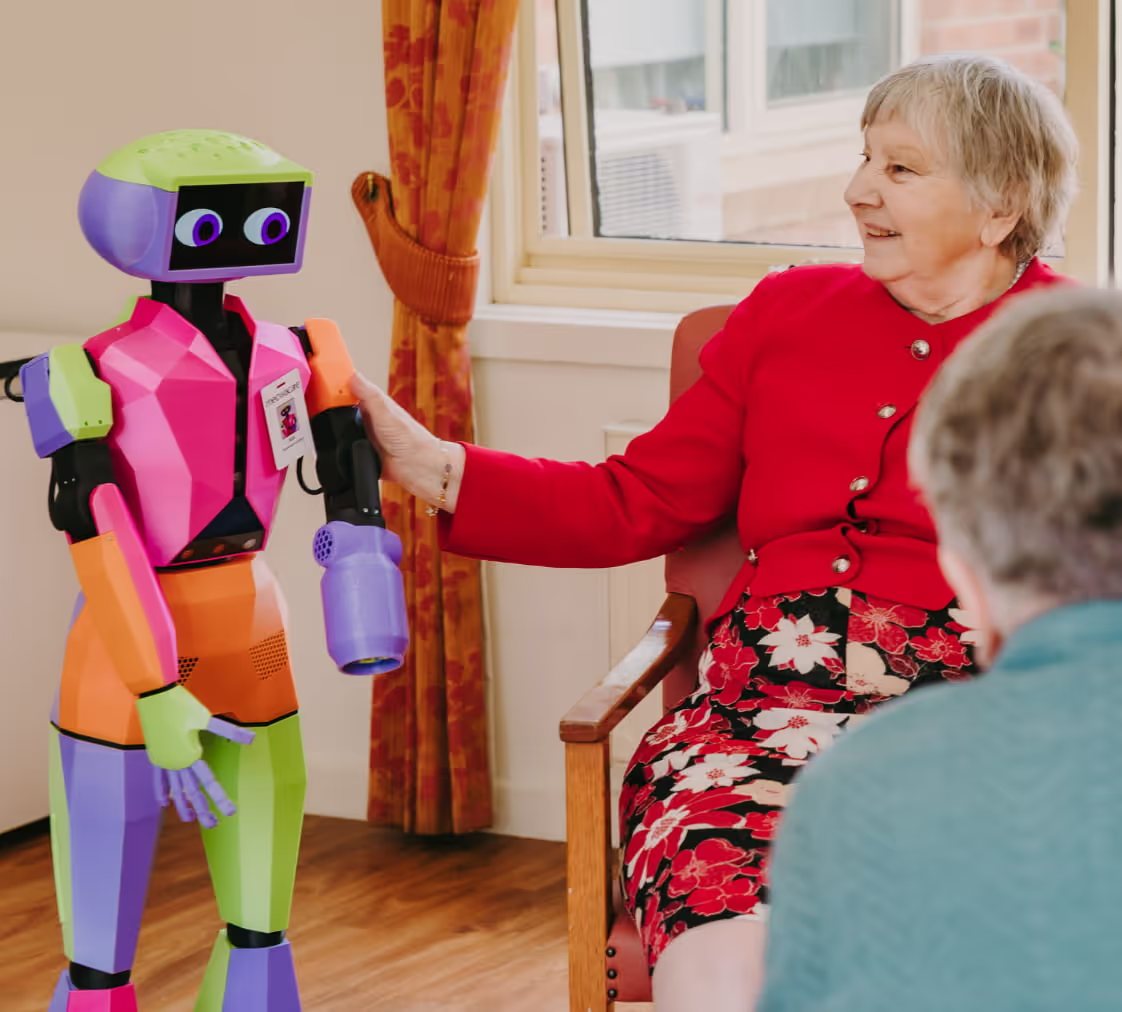
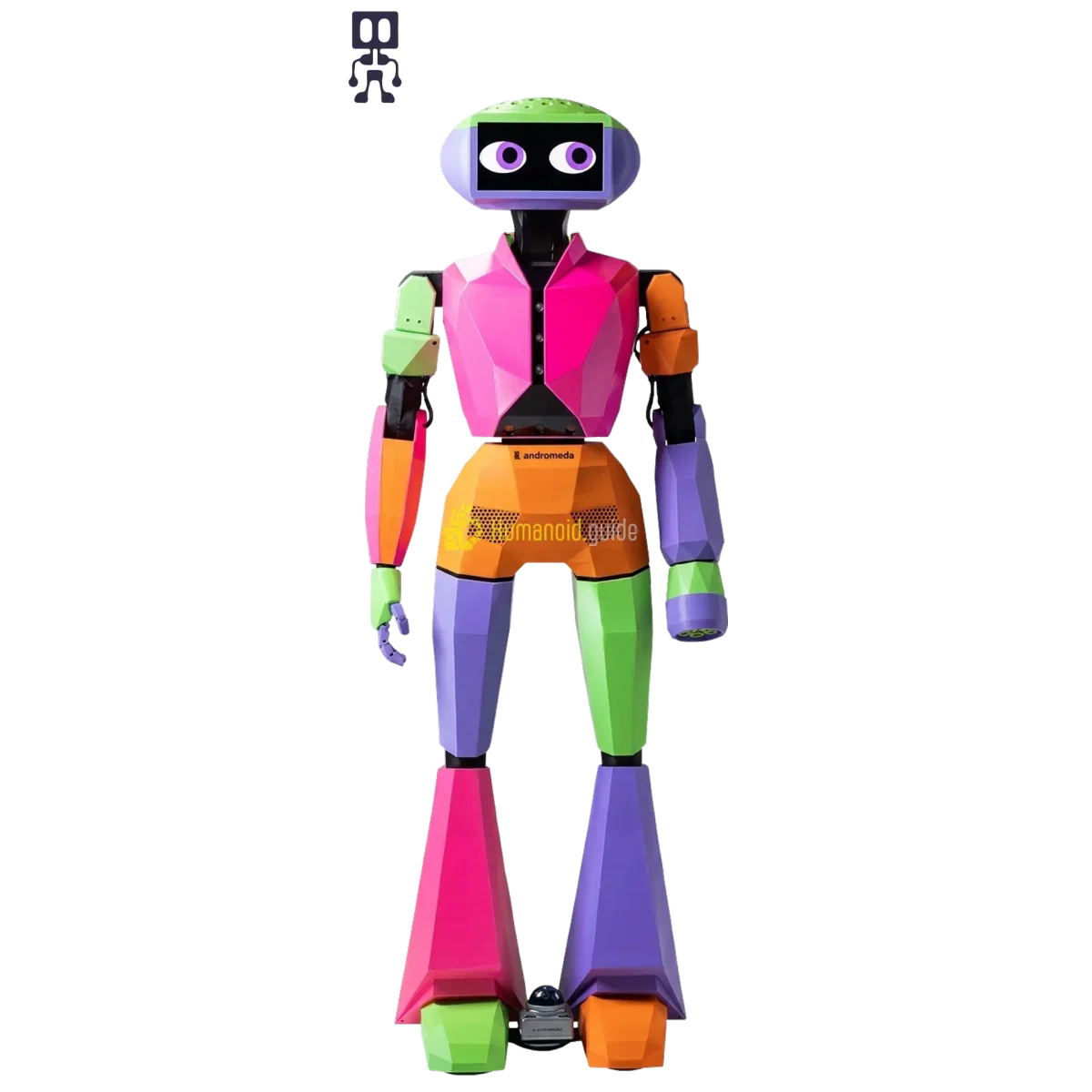
The Abi is a collaborative humanoid robot developed by Andromeda Robotics, headquartered in Australia. Designed for daily living assistance in residential and commercial settings, it can fetch objects, tidy rooms, and provide medication reminders. The robot stands 160 cm tall and weighs 40 kg, with 12 degrees of freedom (4 per hand), enabling basic manipulation and mobility. It uses electric servo motors, a plastic and aluminum frame, and integrates LLM for conversational interaction. Targeted at education, healthcare, hospitality, and retail, the Abi was first built in 2024 and remains in production, priced at $25,000 USD.
Specifications
Here are the full technical specifications.
| Spec | Value |
|---|---|
| Height | 160 cm |
| Weight | 40 kg |
| Degrees of freedom | 12 |
| Battery life | 3 hours |
| Max speed | 3 km/h |
| Payload | 4 kg |
| Price (new) | $25,000 |
| Price (used range) | $15,000 – $20,000 (est.) |
Price & Value
New MSRP: $25,000
Used range: $15,000 – $20,000
At $25,000, the Abi is one of the most affordable humanoid robots targeting household and light commercial tasks. Compared to more dexterous humanoids like Figure 01 or Tesla Optimus (with undisclosed but likely higher prices), Abi offers a pragmatic set of capabilities for repetitive fetching and monitoring. As a relatively new product with low unit volumes, depreciation curves are not yet well-established, but resale values are likely to hover between $15,000 and $20,000 for well-maintained units. Ongoing costs run low—electricity and rare servo maintenance are the main expenses—and the platform's simple hardware keeps total cost of ownership attractive. Buyers must accept a 4 kg payload limit and 3-hour battery cycle, which restrict intensive or heavy-duty use. For organizations wishing to pilot a humanoid assistant without massive capital outlay, the Abi offers a compelling cost/benefit ratio.
Who Is It For?
Best for: - Assisted living facilities testing humanoid companions for resident engagement and medication reminders. - University robotics labs needing an affordable bipedal platform for human-robot interaction research. - Retail or hospitality businesses wanting a programmable greeter or information robot that can interact naturally with customers.
Not for: - Heavy industrial material handling (payload limited to 4 kg, no rugged IP rating). - Round-the-clock operation without frequent charging (battery lasts only 3 hours).
Alternatives & Comparison
The Abi competes with a handful of affordable humanoid robots aimed at service and home assistance, though many competitors remain in stealth or are priced significantly higher.
| Model | Price | Available | Key Difference |
|---|---|---|---|
| Tesla Optimus | Undisclosed | preorder | Industrial-grade build with much higher payload, but still in development with no public price. |
| Figure 01 | Undisclosed | preorder | Advanced dexterity and AI-driven task learning, not yet mass-produced or priced for consumers. |
| 1X Neo | ~$50,000 (est.) | yes | Wheeled bipedal design smoothens indoor navigation, but costs roughly double the Abi. |
Verdict: For buyers seeking a currently available, budget-friendly humanoid platform for non-strenuous tasks, the Abi is the most practical choice. Tesla Optimus and Figure 01 promise greater capabilities but remain unavailable and will likely cost far more. 1X Neo offers better mobility indoors but at double the price. We recommend the Abi for hospitality, education, and care pilots where lower cost and immediate availability outweigh raw performance.
Use Cases & Capabilities
Assisted Living and Elder Care
Deployed in aged-care facilities, the Abi moves around common areas to remind residents about medication schedules, fetch small items like glasses or remote controls, and provide conversational companionship. Its 160 cm height makes it non-intimidating, and the integrated LLM supports natural, empathetic interactions that reduce loneliness. However, the 4 kg payload limits it to lightweight objects, and staff should plan charging breaks around the 3-hour runtime. The robot’s plastic and aluminum frame is easy to clean and maintain in a care environment. Early pilots in Australian aged-care homes have shown promising resident engagement, though large-scale reliability data is still emerging.
Hospitality and Retail Greeting
In hotel lobbies or retail stores, the Abi can greet guests, provide directions, and answer frequently asked questions through its LLM-powered speech. It can also move autonomously to guide visitors to a specific point. The humanoid form factor adds novelty and draws customer attention, boosting brand recall. On a single 3‑hour charge, it can cover the main entrance area during peak hours, but for all-day operation, operators will need to swap batteries or schedule downtime. The $25,000 price point is accessible for many independent businesses compared to more expensive service robots.
Education and Research Platform
University labs use the Abi as an affordable humanoid platform for studying human-robot interaction, indoor navigation, and manipulation. With 12 DOF and standard electric servo motors, it is easier to program and maintain than high-complexity research humanoids. The built‑in LLM integration allows natural language experiments without additional setup. Its low payload and battery life are acceptable in controlled lab settings, and students can safely operate it thanks to its lightweight 40 kg frame and indoor IP20 rating. Used units available on BotMarket further reduce acquisition costs for academic budgets.
Home Assistant for Daily Tasks
For tech‑savvy households, the Abi can fetch drinks from the fridge, tidy countertops, and remind family members of appointments. Its 3 km/h walking speed is sufficient for indoor navigation, and the LLM enables conversation and task clarification. The 4 kg payload covers typical household items like books, tablets, or small groceries. A full charge lasts about 3 hours of mixed activity, so it may need a mid‑day recharge. While not suitable for heavy cleaning or outdoor use, the Abi introduces practical humanoid assistance at a fraction of the price of larger robots, making it an attractive first step into home robotics.
History & Background
Andromeda Robotics, an Australian start-up, unveiled the Abi humanoid robot in 2024 as a companion and assistant primarily for aged care and assisted living. The design philosophy centers on empathy and natural conversation, leveraging LLM integration to create a socially engaging user experience. Driven by the need for non‑invasive support with daily chores and medication adherence, the Abi was engineered to be lightweight (40 kg) and relatively simple, using off‑the‑shelf servo motors and a plastic‑aluminum frame to keep costs down. Although initially pitched for elder care, interest from education, hospitality, and retail led to broader positioning. As of 2026, the Abi is in active production and has been deployed in several pilot programs in Australia and abroad, but no large‑scale manufacturing figures have been publicly disclosed. The company has indicated ongoing software updates and potential hardware iterations, but a detailed public roadmap has yet to be published. The robot remains Andromeda Robotics’ sole product, and the firm’s website focuses on personalized robot companions for care environments.
Buying Used — What to Check
Verify payload rating Some early listings may quote 5 kg, but the manufacturer states 4 kg. Confirm with seller which rating applies to the specific unit.
Battery health The 3‑hour runtime degrades with charge cycles; request a runtime test log to ensure it meets your shift requirements.
LLM integration status Software updates may affect conversational abilities; ensure the unit includes the latest firmware and any subscription requirements for the LLM backend.