What is the Apptronik Valkyrie?
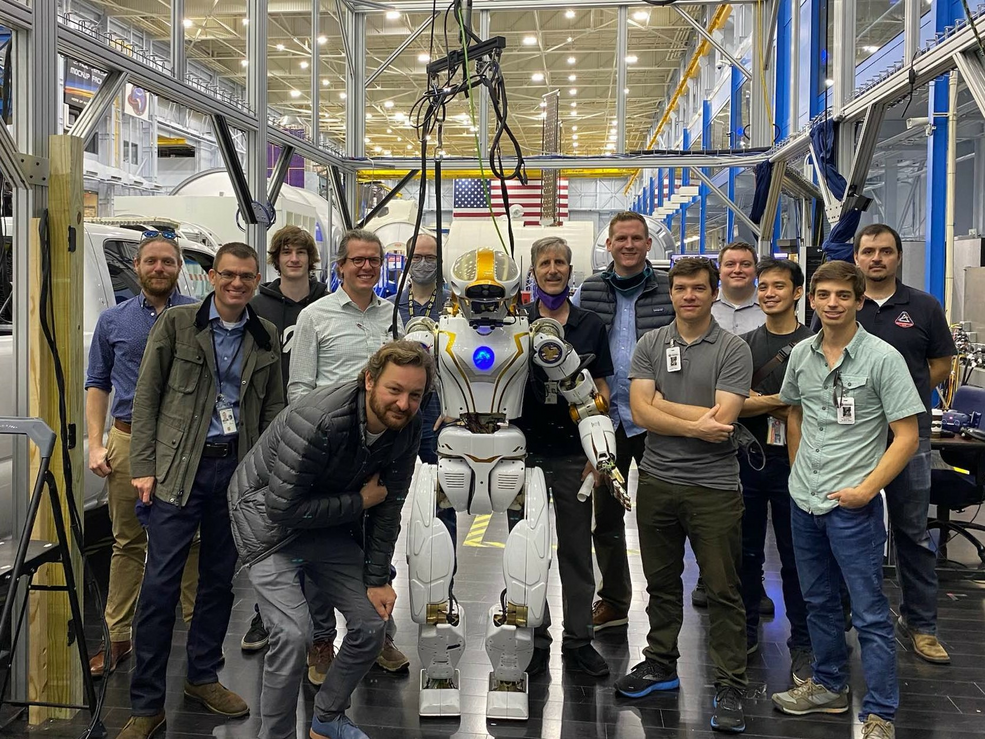
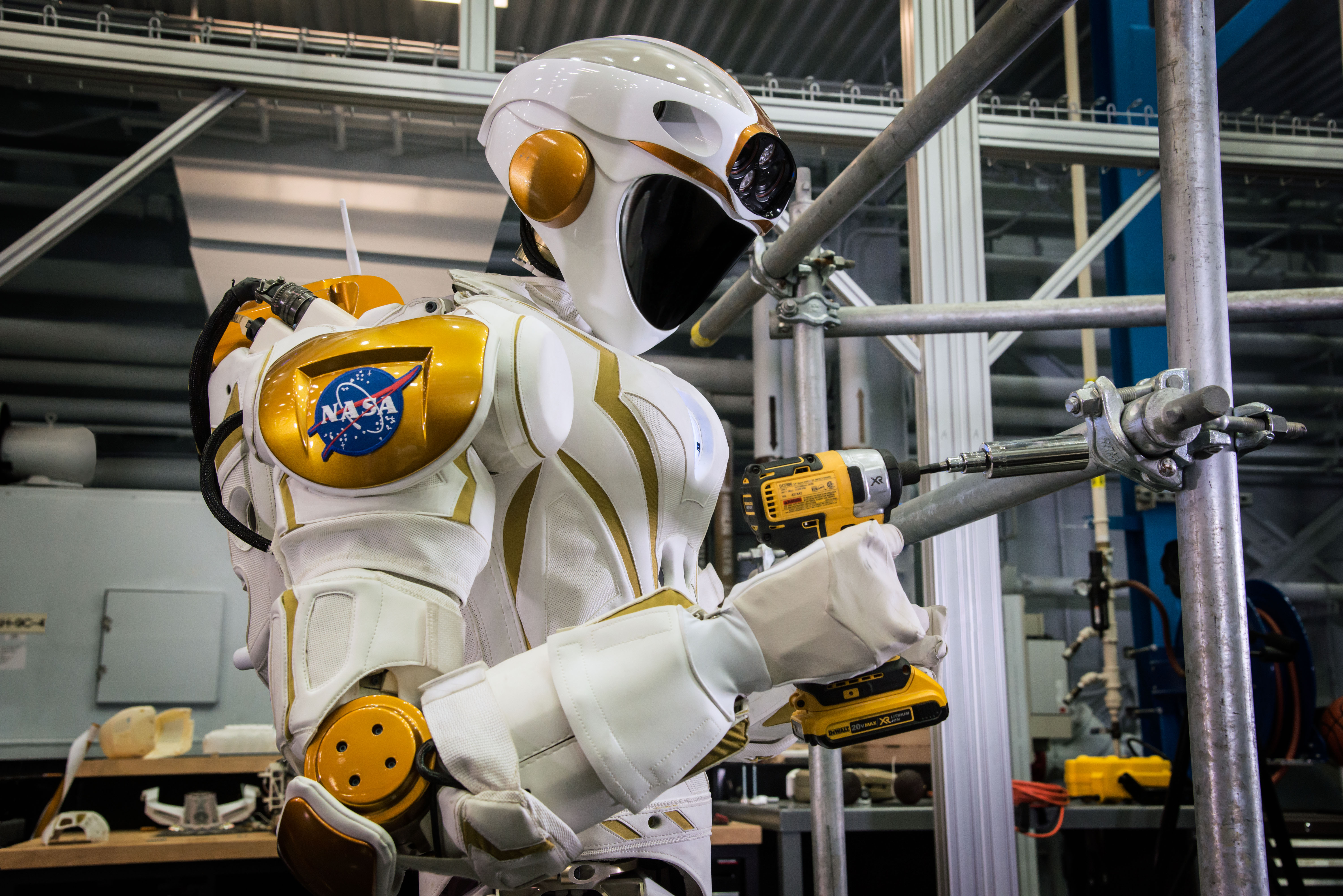
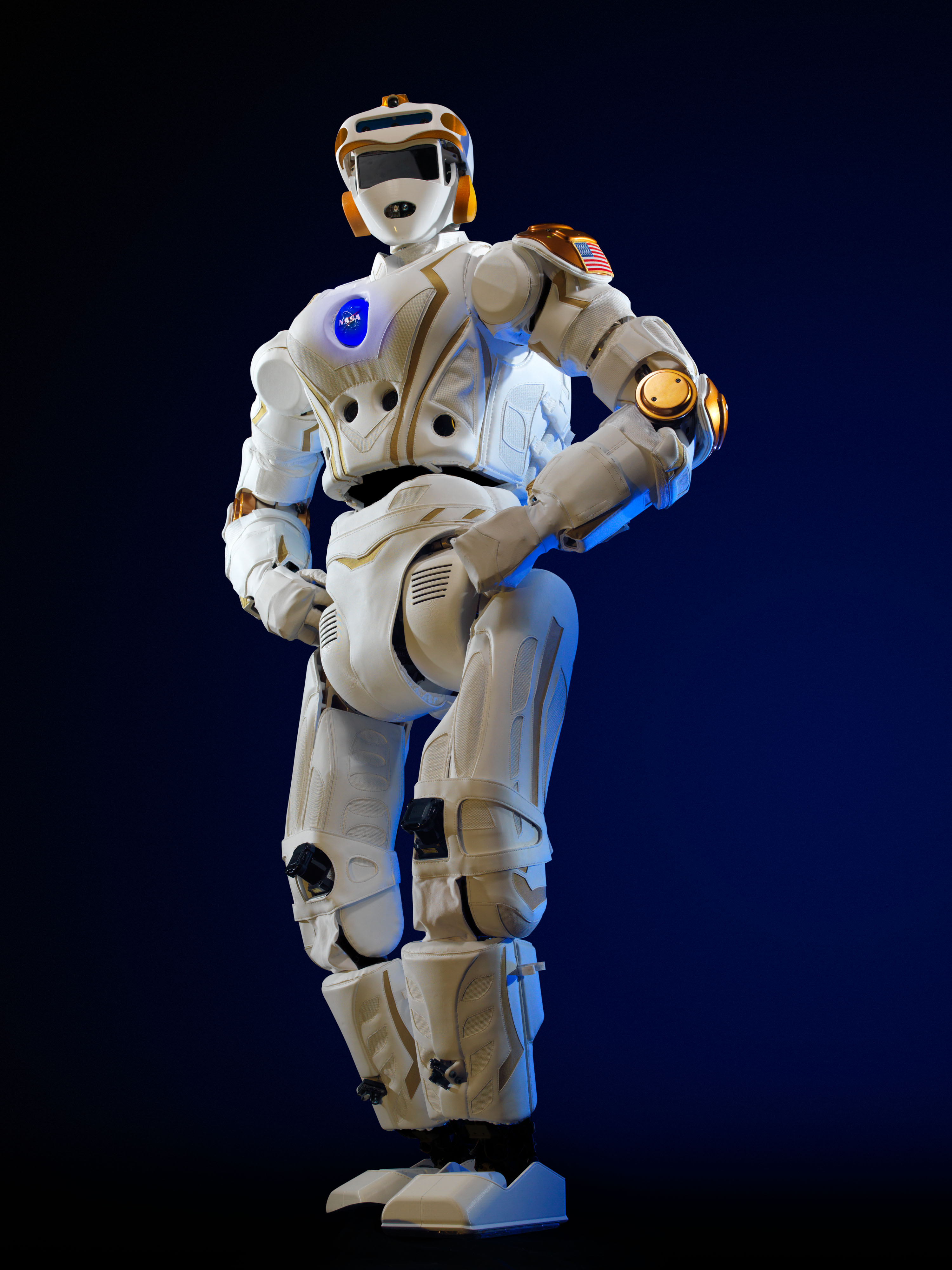
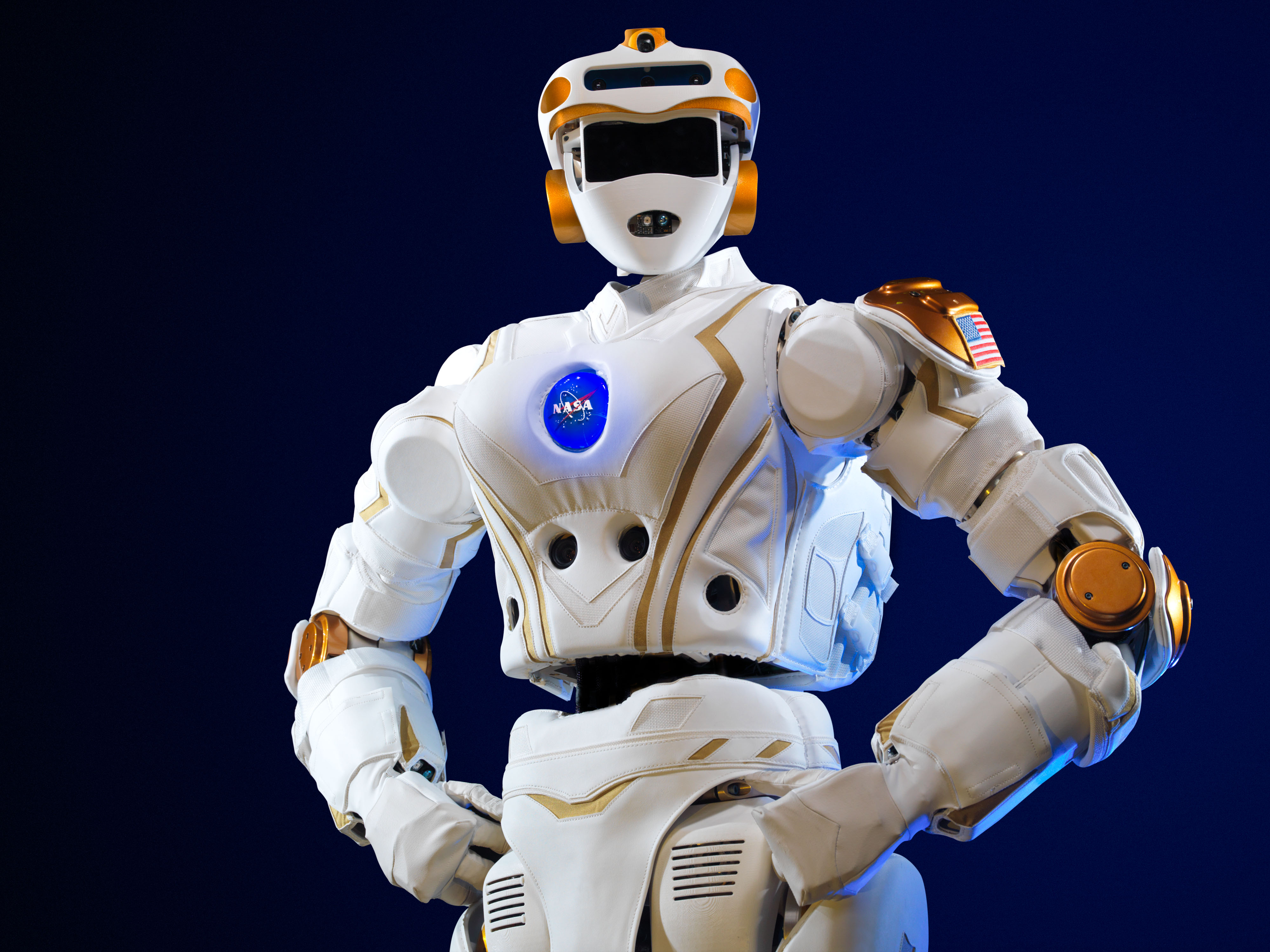
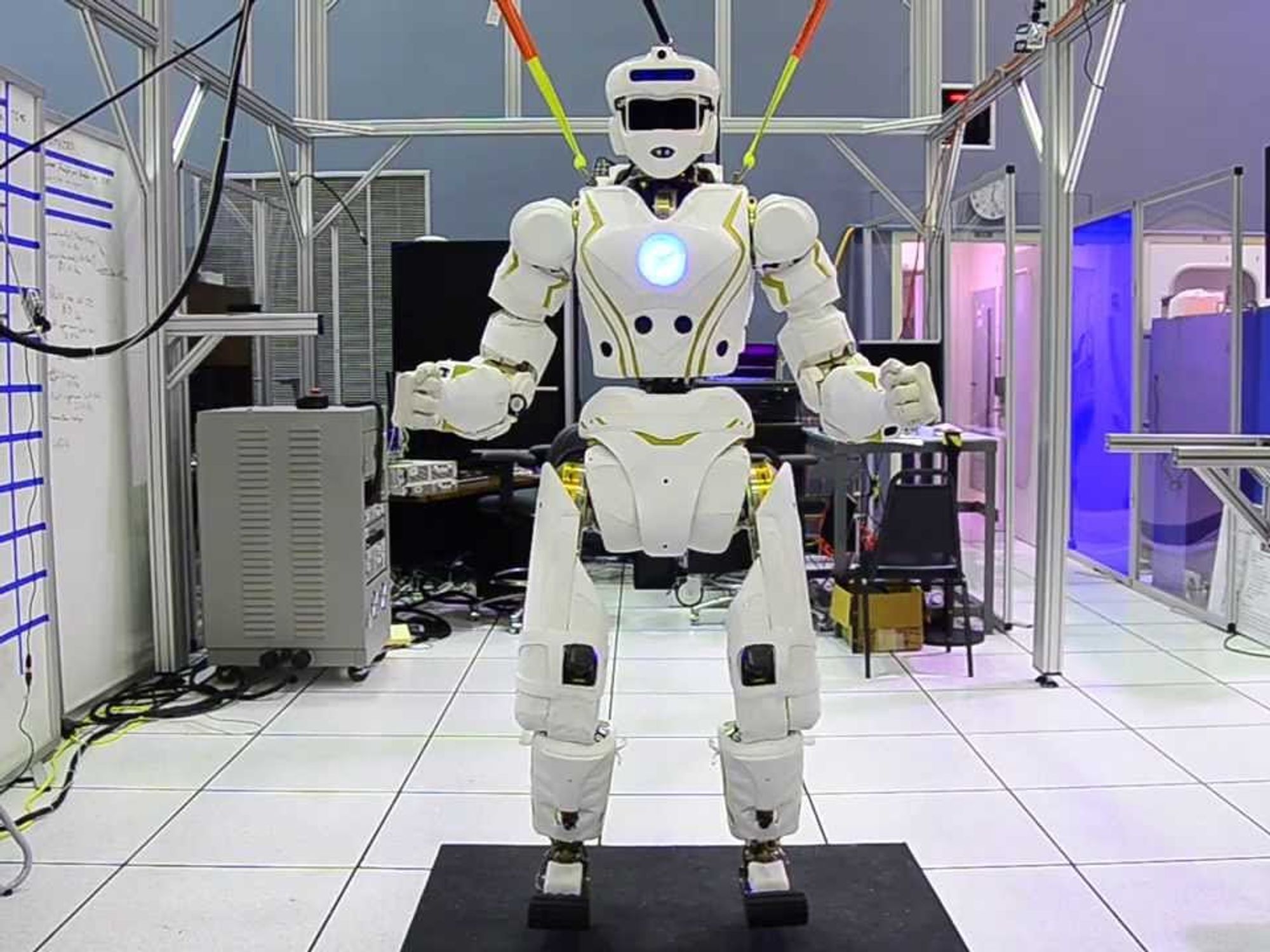
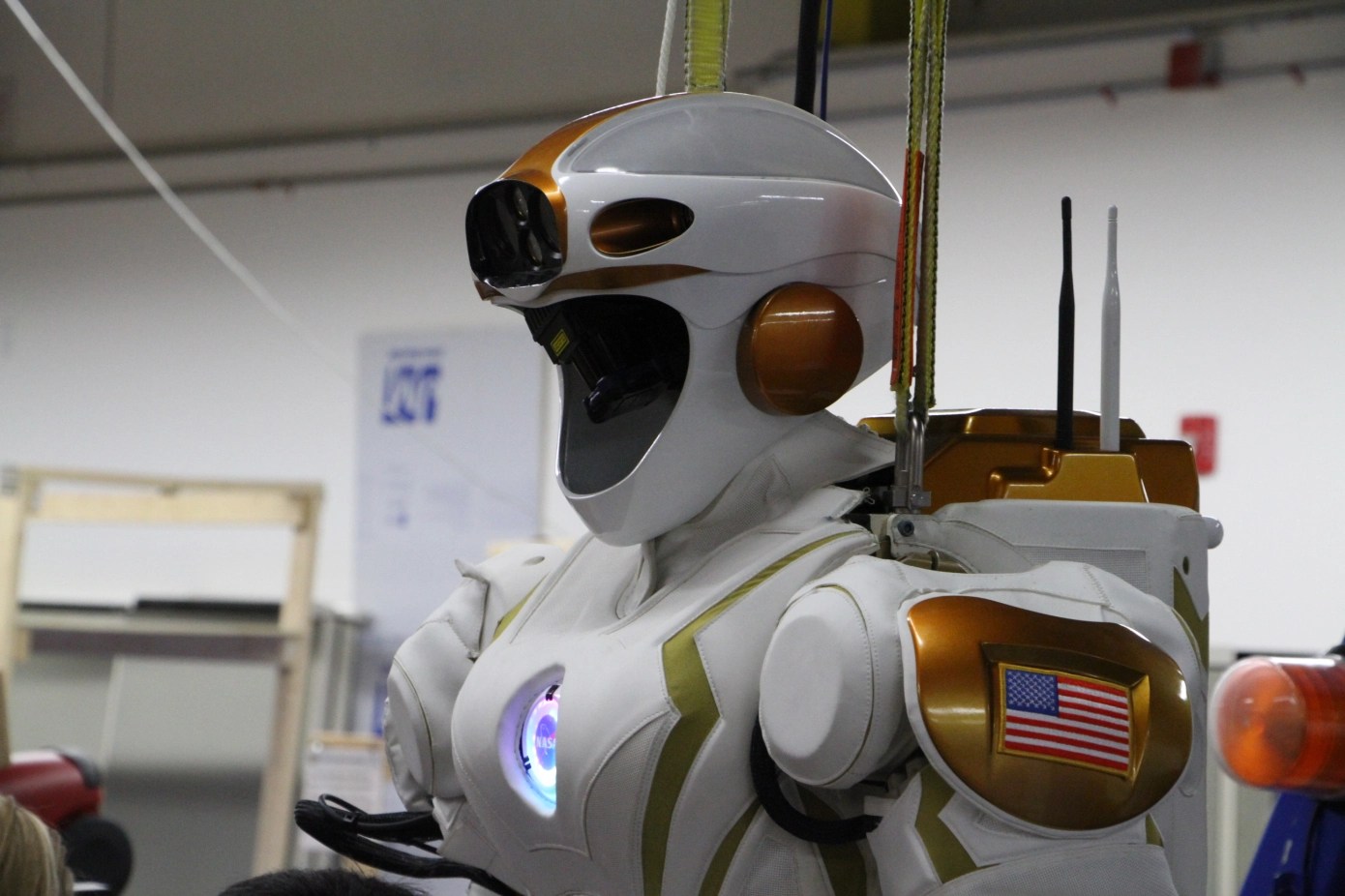
The Apptronik Valkyrie is a full-body humanoid robot originally designed and built by NASA’s Johnson Space Center in Houston, Texas, for the 2013 DARPA Robotics Challenge. It stands 190 cm tall, weighs 125 kg, and features 44 degrees of freedom, including dexterous hands with 8 DOF each. Its series elastic actuators provide compliant, human-safe interaction, while a sensor suite of LIDAR, stereo cameras, IMU, and joint torque sensors enables semi-autonomous operation in unstructured environments. Often called R5, the robot is a research platform aimed at space exploration, disaster response, and advanced manipulation tasks. Apptronik, founded in 2016 by University of Texas at Austin researchers who contributed to Valkyrie’s development, later supported NASA with upgrades, though Apptronik itself never sold a Valkyrie-branded robot.
Specifications
Here are the full technical specifications.
| Spec | Value |
|---|---|
| Height | 190 cm |
| Weight | 125 kg |
| Degrees of freedom | 44 |
| Battery life | 1 hour |
| Max speed | 5.4 km/h |
| Payload | Not specified |
| Price (new) | Undisclosed |
| Price (used range) | N/A (research only) |
Price & Value
New MSRP: Undisclosed
Used range: N/A
Valkyrie has never been offered for commercial sale; it remains a NASA-funded research platform with no public price tag. As a result, there is no secondary market, and any valuation would be purely speculative. Comparable full-body humanoid research robots like Boston Dynamics Atlas are similarly unavailable for purchase, while commercial alternatives such as Agility Robotics’ Digit start at $250,000, giving a rough order-of-magnitude for humanoid systems. If a future commercial derivative were developed, its cost would likely exceed $500,000 given the advanced actuation and sensor suite. Without a price history, depreciation and total cost of ownership cannot be calculated.
Who Is It For?
Best for: - Space robotics research labs (NASA-developed, designed for extraterrestrial surface operations and space-grade reliability) - Disaster response R&D programs (high dexterity and 44 DOF for uneven terrain navigation and manipulation in hazardous environments) - University labs with NASA or government collaboration (access to a unique full-body platform for manipulation and locomotion studies)
Not for: - Commercial warehouse operations (research-only, no payload rating, only 1-hour battery life) - Educational programs or hobbyists (no available units, complex maintenance, and no support outside of select partnerships)
Alternatives & Comparison
Valkyrie sits among a handful of advanced humanoid research robots, notably the Boston Dynamics Atlas and the commercially oriented Digit from Agility Robotics. Each targets a different stage of development: pure research, dynamic locomotion benchmarking, and industrial adoption.
| Model | Price | Available | Key Difference |
|---|---|---|---|
| Boston Dynamics Atlas | Undisclosed | no | Atlas excels at dynamic whole-body athleticism (backflips, parkour), while Valkyrie focuses on compliant manipulation for human spaces and space missions. |
| Agility Robotics Digit | $250,000 | yes | Digit is a production-ready biped for logistics with simpler arms and no dexterous hands; Valkyrie is a full-body research humanoid with true hand manipulation. |
Verdict: For space agencies and research teams requiring a NASA-grade, dexterous humanoid platform, Valkyrie remains a top candidate despite its unavailability on the open market. For those who need to deploy a bipedal robot in a warehouse today, Digit is the only buyable option. Atlas is a benchmark in dynamic locomotion but is even less accessible than Valkyrie.
Use Cases & Capabilities
Space Exploration Research
Valkyrie was explicitly designed for extraterrestrial surface operations, such as habitat construction, sample collection, and maintenance tasks on the Moon or Mars. Its 44 DOF and series elastic actuators allow it to manipulate tools and open doors in low-gravity, unstructured environments. A LIDAR and stereo vision system provides localization and mapping, while joint torque sensors help it adapt to soft terrain. NASA continues to test Valkyrie for autonomous and teleoperated tasks, though its 1-hour battery life remains a significant constraint for long-duration EVAs.
Disaster Response Simulation
The robot was built for the DARPA Robotics Challenge, which simulated a disaster scenario requiring clearing debris, turning valves, and driving a vehicle. Valkyrie’s compliant actuation and human-like form make it well-suited to navigating collapsed buildings and operating tools designed for humans. Its sensor fusion, including IMU and LIDAR, helps it maintain balance on uneven rubble. However, high power consumption and the need for frequent battery swaps limit continuous operation in extended missions.
Humanoid Locomotion & Manipulation Studies
As one of the few full-body humanoid research platforms available to select partners, Valkyrie enables fundamental research in whole-body control, grasping, and human-robot interaction. Its 44 DOF, including 8-DOF hands, allows investigation of dexterous manipulation with objects of various shapes and weights. Universities and NASA labs have used it to develop algorithms for autonomous task planning in cluttered environments. The robot runs on Linux (ROS), making it accessible for custom software development, though the complex maintenance and high cost of components limit widespread academic adoption.
History & Background
Valkyrie was designed and built by NASA’s Johnson Space Center in Houston for the 2013 DARPA Robotics Challenge, with the goal of creating a humanoid capable of assisting in disaster scenarios. The robot, also known as R5, weighed 125 kg and stood 1.9 m tall with 44 degrees of freedom, featuring series elastic actuators for safe human interaction. After the challenge, the platform was provided to two university teams for further research. In 2016, former University of Texas at Austin researchers who had worked on Valkyrie founded Apptronik, which later supported NASA with upgrades and maintenance. Despite its advanced capabilities, Valkyrie was never commercially sold, and Apptronik has no product under the Valkyrie name. The robot remains a research asset within NASA and select academic partners, informing next-generation humanoid designs.
Buying Used — What to Check
Verify actuator maintenance history Series elastic actuators are critical for compliant motion and expensive to repair; neglected maintenance can lead to performance loss.
Check battery health and remaining runtime Original 1-hour runtime degrades with age; a worn battery may not sustain a full work cycle.
Assess sensor calibration LIDAR and stereo cameras require periodic recalibration; misaligned sensors degrade autonomous navigation and object recognition.