What is the Asimov Robotics Manav?
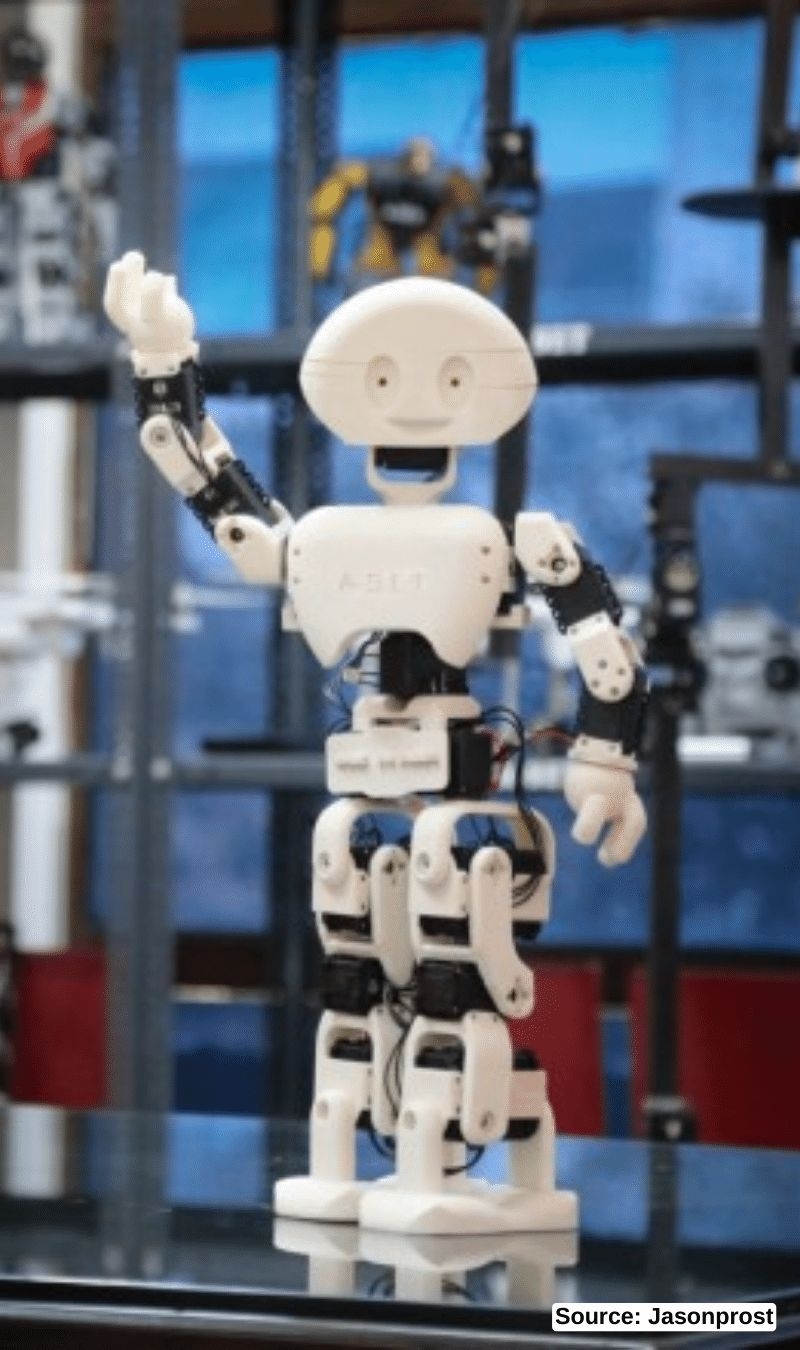
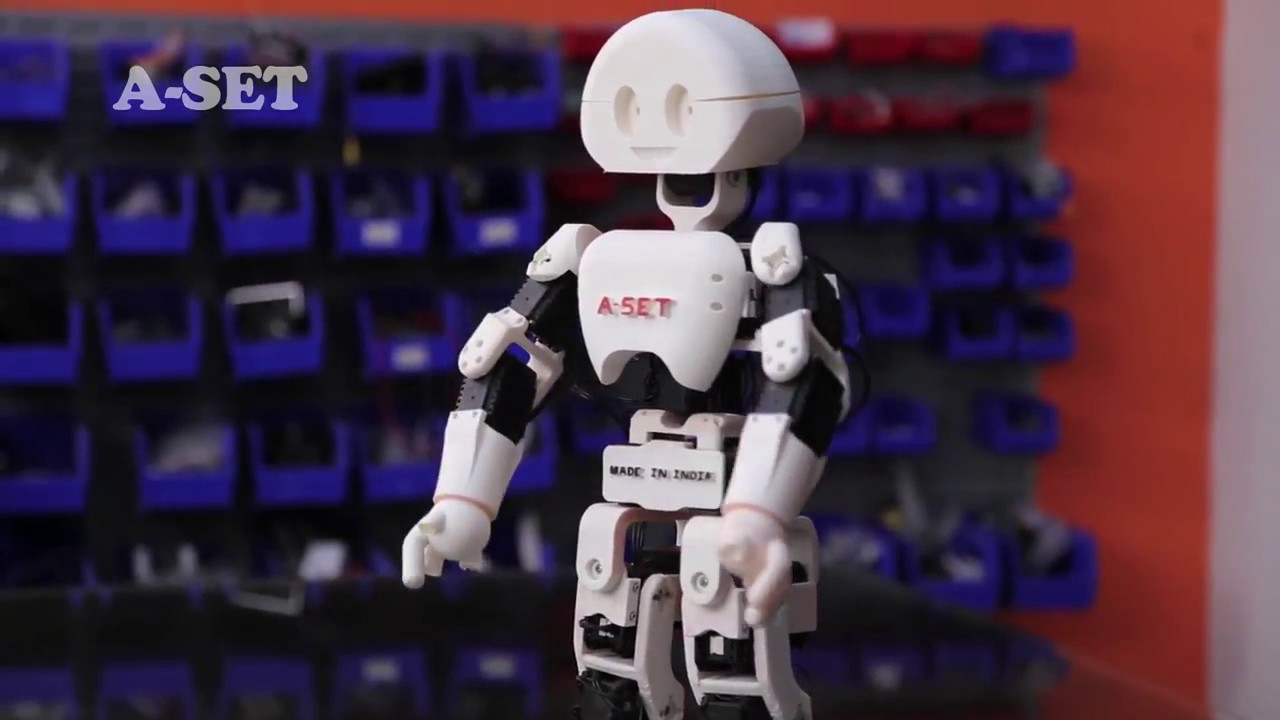
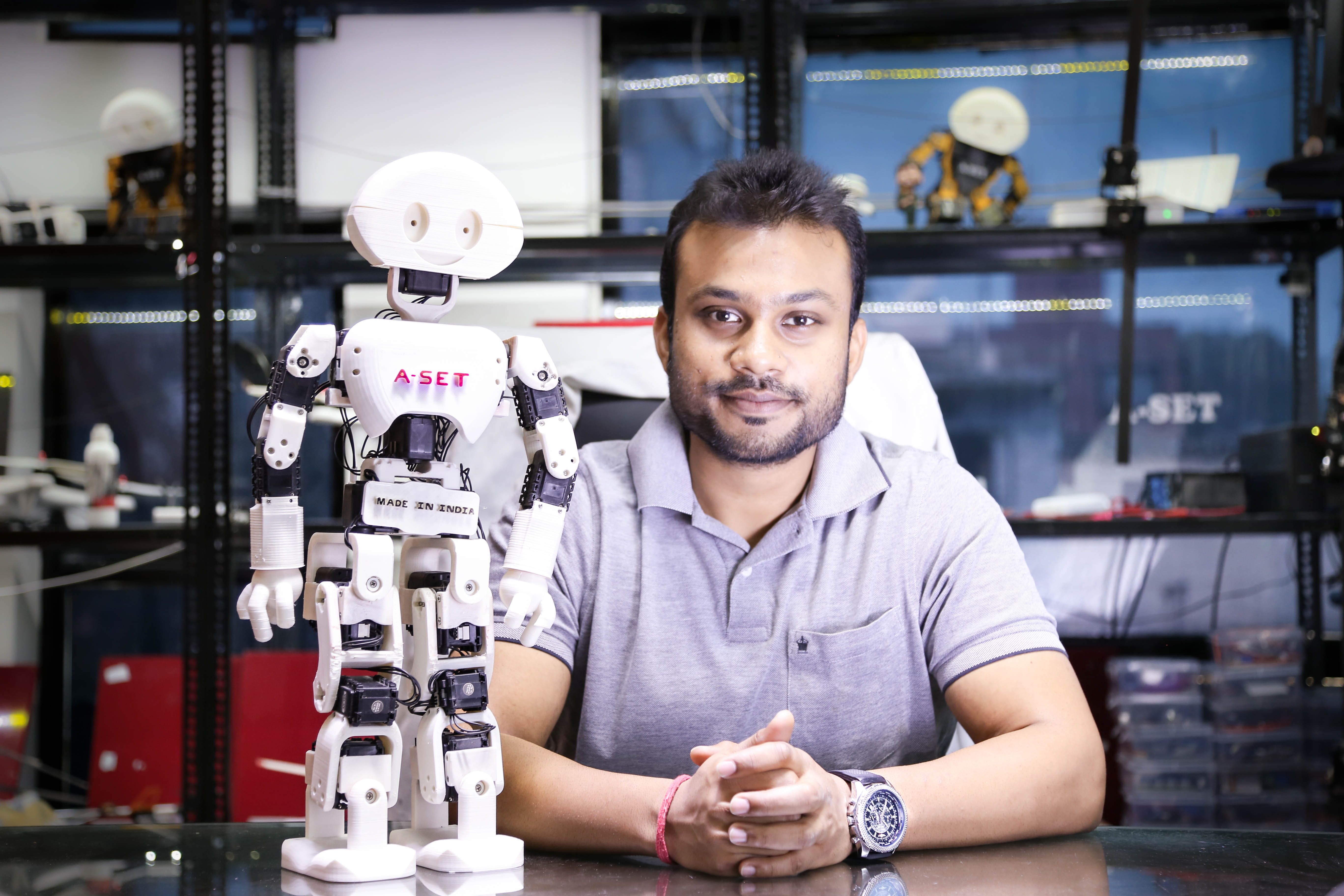
The Asimov Robotics MANAV is a child-sized, 3D-printed humanoid robot developed by the A-SET Training and Research Institute in New Delhi, India. Unveiled in 2014, it is notable as India’s first 3D-printed humanoid. Constructed from ABS plastic and 16 servo motors, the robot stands 66 cm tall and weighs just 2 kg. It was created as an educational tool to familiarize students with humanoid robotics — teaching assembly, programming, and maintenance. MANAV never entered commercial production; instead, it served as a research platform for demonstrating basic motions like walking, dancing, and push-ups, and for promoting India’s ‘Make in India’ initiative in robotics.
Specifications
Here are the full technical specifications.
| Spec | Value |
|---|---|
| Height | 66 cm |
| Weight | 2 kg |
| Degrees of freedom | 27 |
| Battery life | 1.5 hours |
| Max speed | Not specified |
| Payload | Not applicable |
| Price (new) | Undisclosed |
| Price (used range) | N/A |
Price & Value
New MSRP: Undisclosed
Used range: N/A
MANAV was never offered for sale — it was a one-off research platform built to promote robotics education in India. As such, there is no new or used market value. From a learning perspective, its open design (3D-printable parts, readily available servo motors) made it a low-cost concept, but actual build cost was borne by the institute. For educators today, similar open-source projects like Poppy or InMoov offer far more mature, community-supported alternatives at similarly low material costs. Without official pricing, we can estimate that a functionally equivalent build using off-the-shelf servos and a 3D printer could be assembled for under $2,000 in parts. However, the MANAV lacked the sensors and robust software that commercial alternatives like the $7,000 SoftBank NAO provide. Its true value lay in proving that India could produce a recognizable humanoid platform, inspiring a generation of roboticists.
Who Is It For?
Best for: - STEM educators wanting a hands-on humanoid robotics project to assemble and program (low material cost and open design) - Indian schools and colleges seeking a locally developed robotics teaching tool - Robotics hobbyists interested in building a 3D-printed humanoid from scratch (design files may be available)
Not for: - Anyone looking to buy a turnkey robot (never sold commercially, no known units outside the original lab) - Industrial or service applications (no payload capacity, limited sensors, no autonomy beyond basic demo movements)
Alternatives & Comparison
The MANAV sits in a niche of low-cost, education-focused humanoid robots that existed before the current boom in open-source designs. It is compared here with other platforms that target STEM learning.
| Model | Price | Available | Key Difference |
|---|---|---|---|
| Poppy | Undisclosed (open-source) | no (DIY) | Modular, scalable design for research and education, actively maintained by a French consortium |
| InMoov | Undisclosed (open-source) | no (DIY) | Life-sized, 3D-printed parts, strong community of makers and educators |
| NAO | $7,000 (new) | yes | Commercial product with advanced sensors, software, and proven durability; much higher cost |
Verdict: For a build-it-yourself robot, the Poppy humanoid is the best modern alternative with far more documentation and ongoing support. InMoov offers a life-scale option for more ambitious makers. NAO remains the premier choice for schools that can afford a professional, supported platform. The MANAV, while historically significant, has no active ecosystem and cannot be purchased; its plans, if ever released, would now be outdated. We recommend Poppy for anyone inspired by MANAV’s vision.
Use Cases & Capabilities
School & College Demonstrations
MANAV was designed as a captivating demonstrator for Indian technical institutes, attracting attention with pre-programmed moves like walking, dancing, and push-ups. Its small size (66 cm) made it easy to transport and show to large audiences, while the transparent plastic construction let students see the servo motors and linkages in action. Teachers used it to spark conversations about kinematics, electronics, and programming, often building the robot from a kit of 3D-printed parts. With a battery life of 1.5 hours, the robot could run a full class period without recharging, though it lacked sensors for any interactive or autonomous behavior.
STEM Curriculum Project
The core educational value of MANAV was in assembling the robot. Students learned to fit 3D-printed ABS parts together, wire 16 standard servo motors, and flash simple motion sequences via a microcontroller. This kind of project-based learning aligns with modern STEM curricula and can be completed with a budget of a few hundred dollars for hardware, not counting the 3D printer. Because the robot’s design is reportedly open, institutions could modify and scale it. However, the lack of a published software framework meant that instructors had to develop their own code, requiring a solid background in robotics.
Academic Research on Low-Cost Humanoids
For university labs, MANAV demonstrated that a functional humanoid could be built from off-the-shelf parts at a fraction of the cost of commercial platforms like NAO. Researchers studying bipedal locomotion or low-cost automation found it a valuable reference, especially in countries with limited research budgets. At 2 kg, the robot was easy to test and safe to modify, allowing rapid iterations of gait algorithms. Despite its limited dynamic capabilities (no published top speed or payload), the project proved that additive manufacturing could make humanoid robotics more accessible, paving the way for more advanced open-source designs.
National Robotics Showcase
MANAV gained brief national fame as India’s first 3D-printed humanoid, appearing in news articles and tech expos. It served as a symbol of the country’s growing capabilities in frugal engineering and aligned with government campaigns like ‘Make in India.’ The robot’s public appearances helped attract funding and interest for subsequent robotics programs at ASET and beyond. While its technical specs were modest, the PR impact was significant — it inspired a wave of student robot clubs and maker spaces across India to attempt their own humanoid builds, often using similar 3D-printing techniques.
History & Background
The MANAV robot was developed in 2014 by the A-SET Training and Research Institute in New Delhi, India, under what appears to be the brand ‘Asimov Robotics.’ It was built to showcase that a functional humanoid could be made using 3D printing and economical components — 16 standard servo motors and ABS plastic — at a time when most humanoids were expensive research machines. The 66 cm tall robot could walk, dance, and do push-ups, and it drew national media attention as India’s first 3D-printed humanoid. The institute had a broader mission to bridge the skills gap in robotics and automation, and MANAV was part of that outreach. Despite its promise, the robot never progressed beyond a laboratory prototype. No commercial units were sold, and there is no evidence of follow-up models or publicly released design files. The robot’s legacy lies in inspiring Indian students and demonstrating the potential of DIY humanoid robotics, though it has since been eclipsed by more advanced open-source projects.
Buying Used — What to Check
Verify it is a genuine MANAV The robot was never sold commercially; any unit on the market would be the original prototype or a replica, and documentation is scarce.
Inspect 3D-printed plastic parts ABS plastic degrades over time, especially at joints, and may have become brittle or warped after years of disuse.
Test all 16 servo motors Servos are the critical moving components; they can wear out or fail, and replacements must match the original torque and size specs.