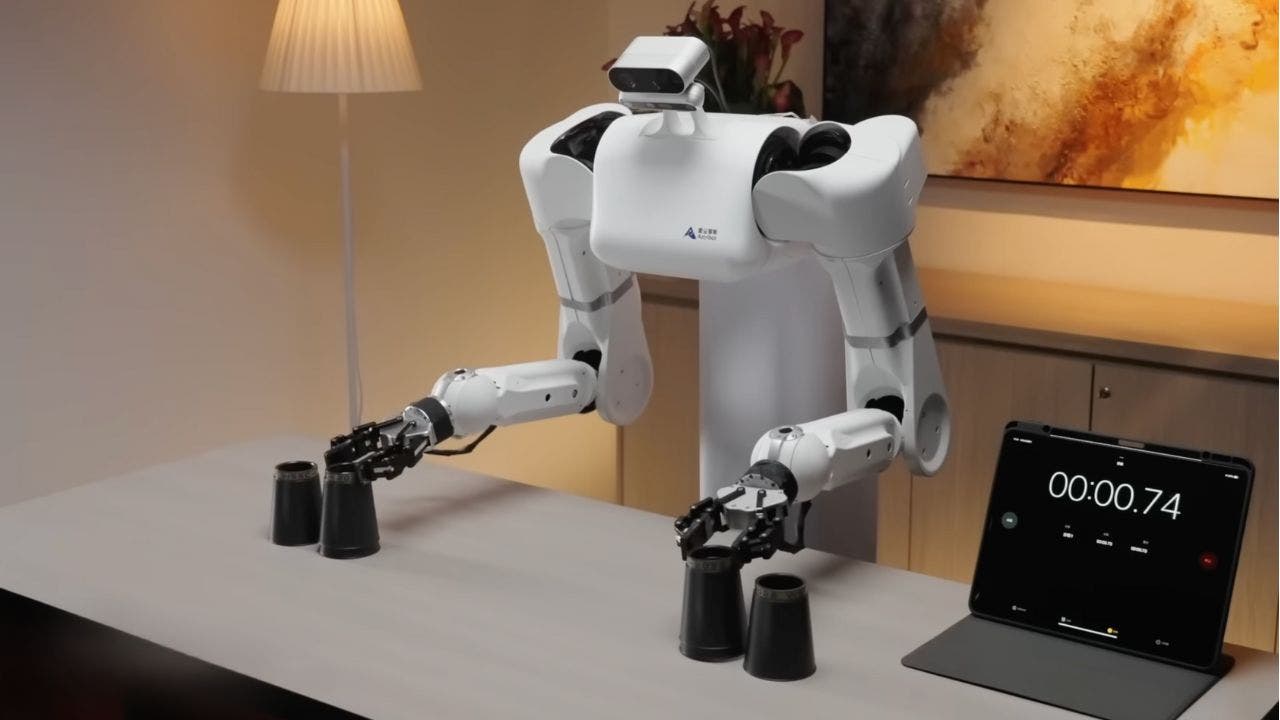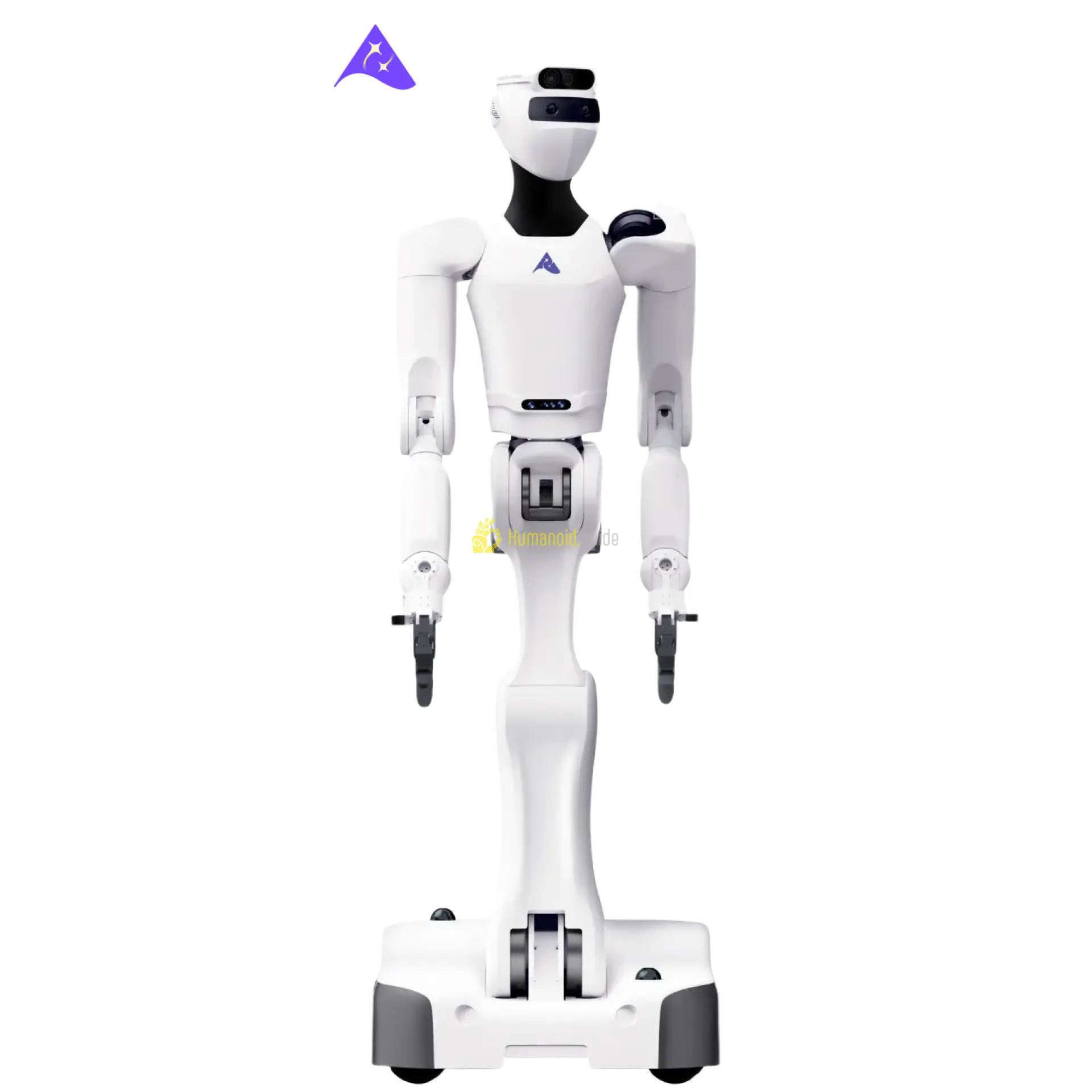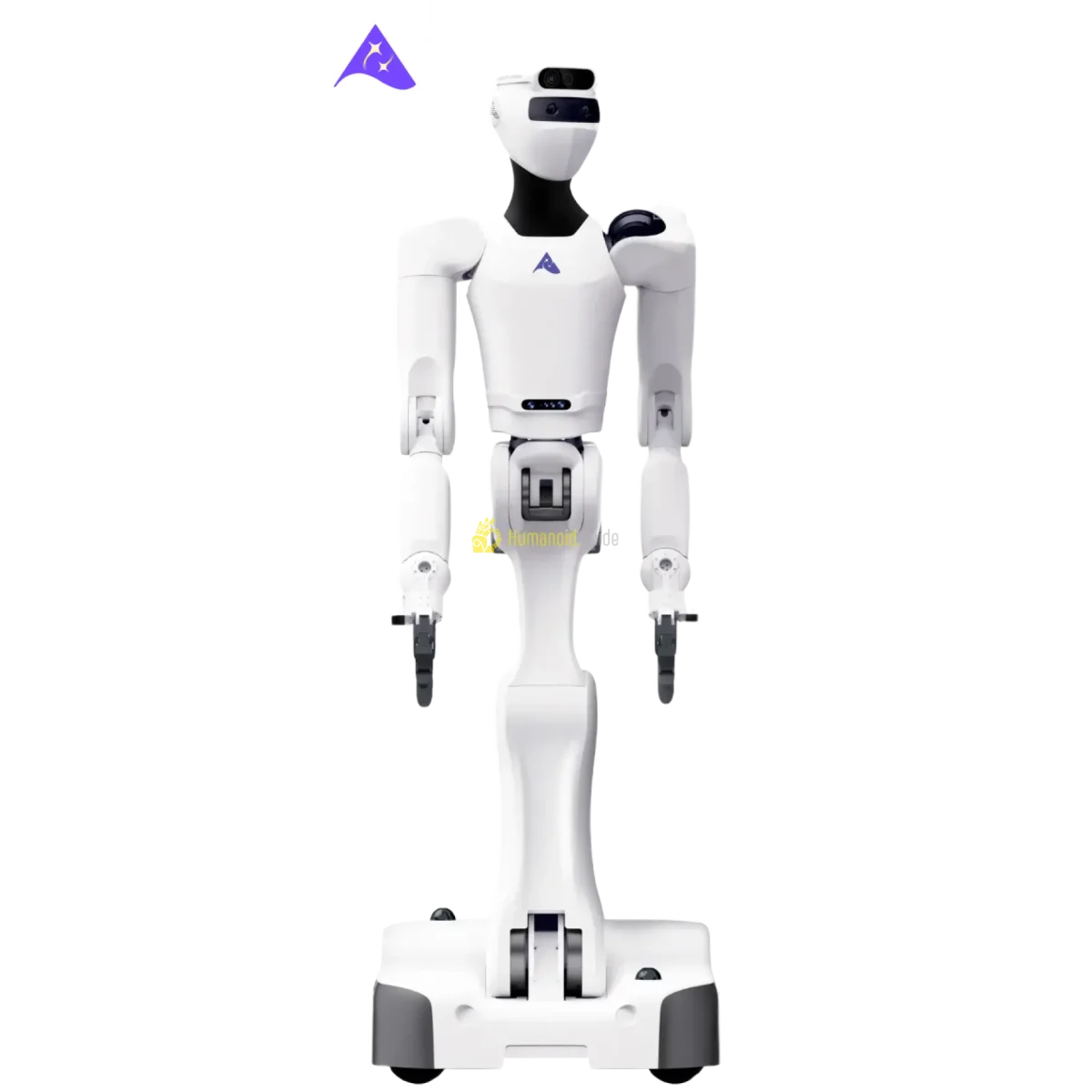
What is the Astribot S1?
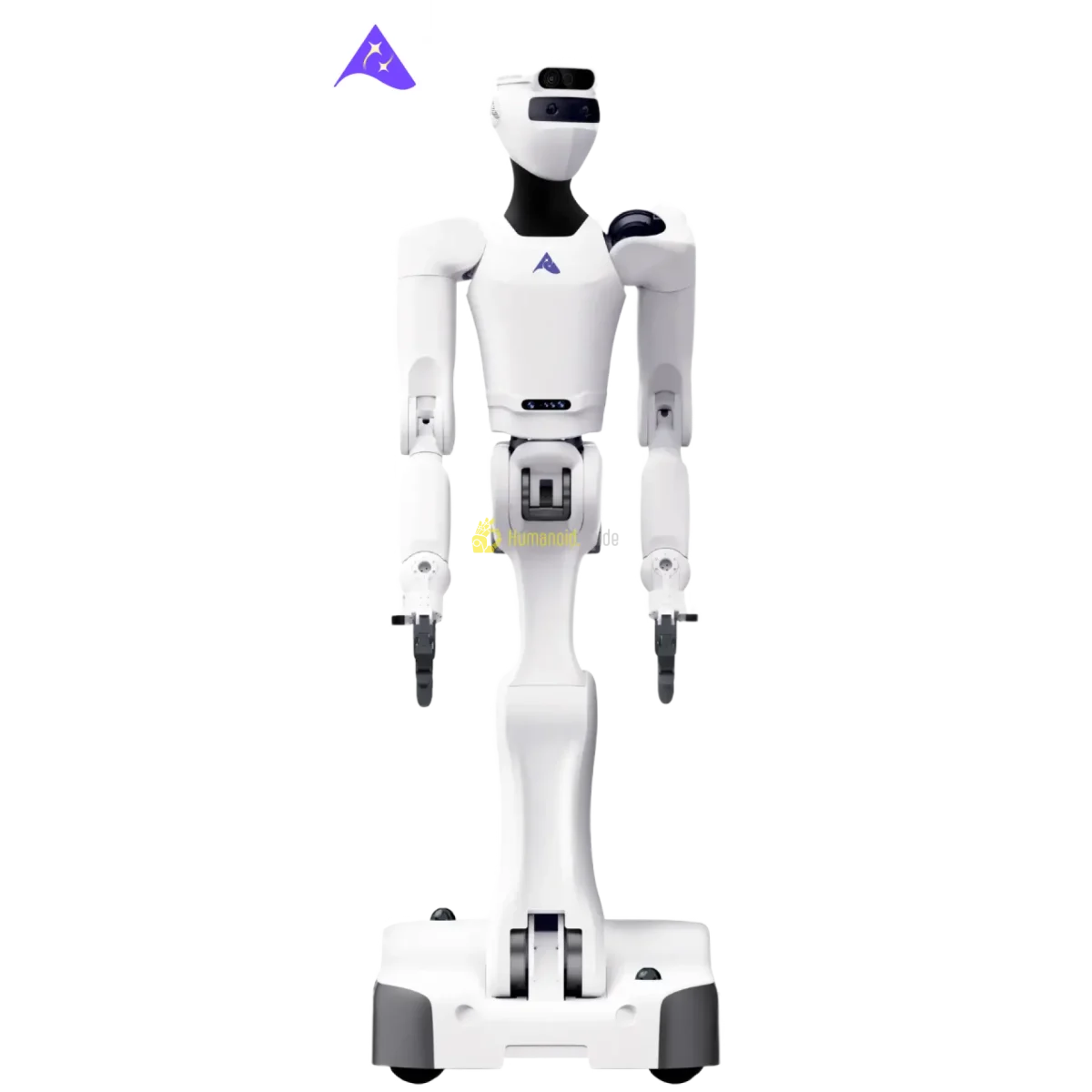
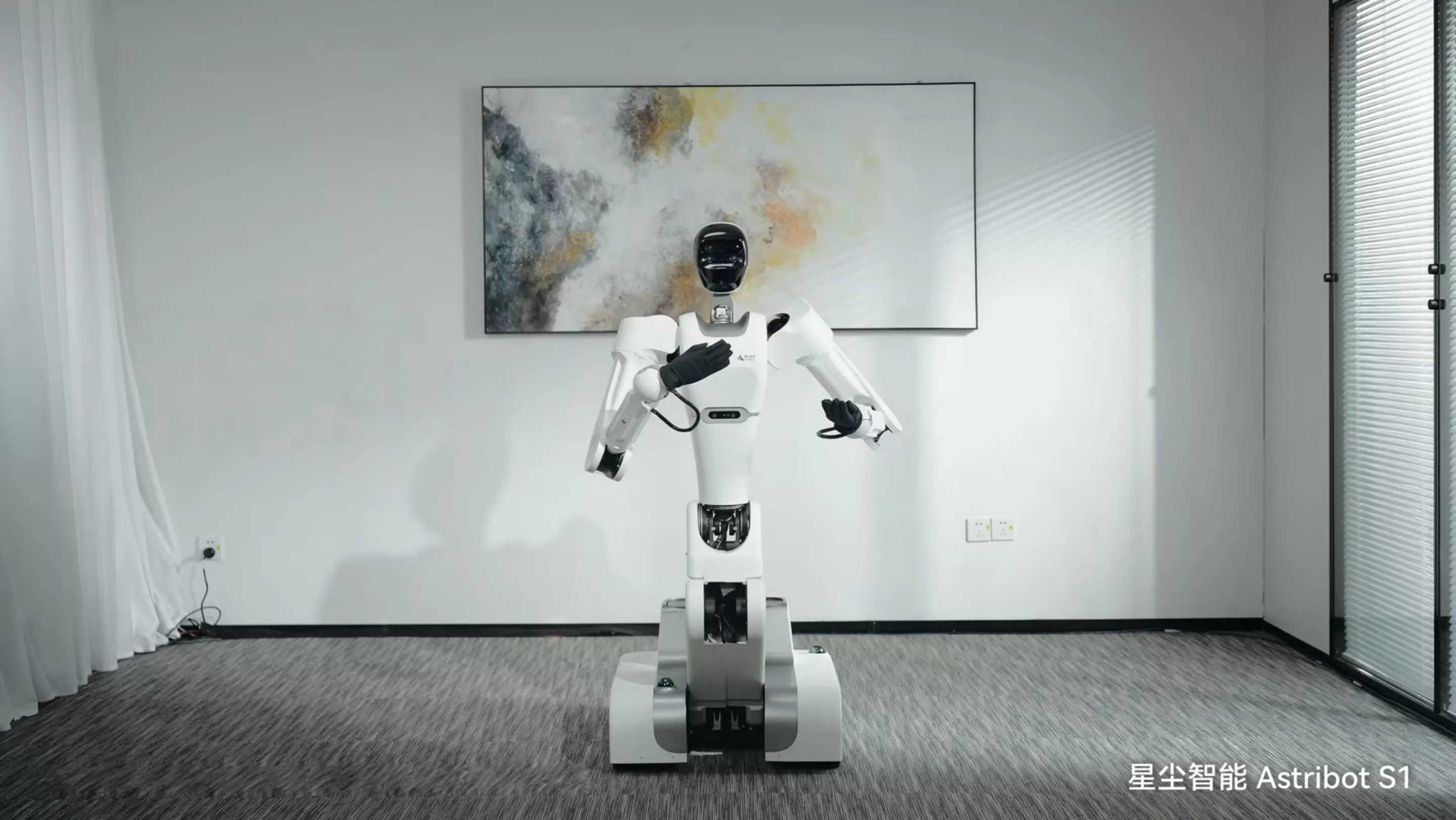
The Astribot S1 is a stationary or wheeled-base humanoid torso robot built by Astribot (Stardust Intelligence), a Shenzhen-based robotics startup founded in 2022. Designed as a dexterous manipulation platform, the S1 emphasizes high-speed arm motion, with end-effector speeds up to 10 m/s — among the fastest in the humanoid class. It features a total of 26 degrees of freedom (14 in arms, 12 in dexterous hands), a 10 kg payload capacity, and a suite of sensors including 3D depth cameras and stereo vision. The robot targets service applications such as household chores, meal preparation, and light manufacturing, operating on a stable platform or wheeled base without bipedal legs. It is currently in development and not yet commercially released.
Specifications
Here are the full technical specifications.
| Spec | Value |
|---|---|
| Height | 170 cm |
| Weight | 80 kg |
| Degrees of freedom | 26 |
| Battery life | 4 hours |
| Max speed | 10 m/s |
| Payload | 10 kg |
| Price (new) | $99,000 (est.) |
| Price (used range) | N/A |
Price & Value
New MSRP: $99,000 (estimated)
Used range: N/A
The Astribot S1’s indicative price of $99,000, as estimated by industry aggregators, positions it competitively among the new generation of humanoid robots aimed at service and light industry. For comparison, the bipedal Unitree H1 costs $90,000 but offers walking mobility, while the Fourier GR-2 and Tesla Optimus are yet to announce public pricing. The S1's value lies in its unmatched end-effector speed, which could accelerate pick-and-place or food preparation tasks significantly, potentially offering a rapid return on investment in high-throughput settings. However, buyers should note that the price is not officially confirmed and all specifications remain preliminary. Depreciation and resale value are uncertain given the robot’s pre-commercial status, though early adoption may carry higher risk and lower used prices once production scales. Total cost of ownership will also depend on maintenance, software licensing, and integration costs that are not yet defined.
Who Is It For?
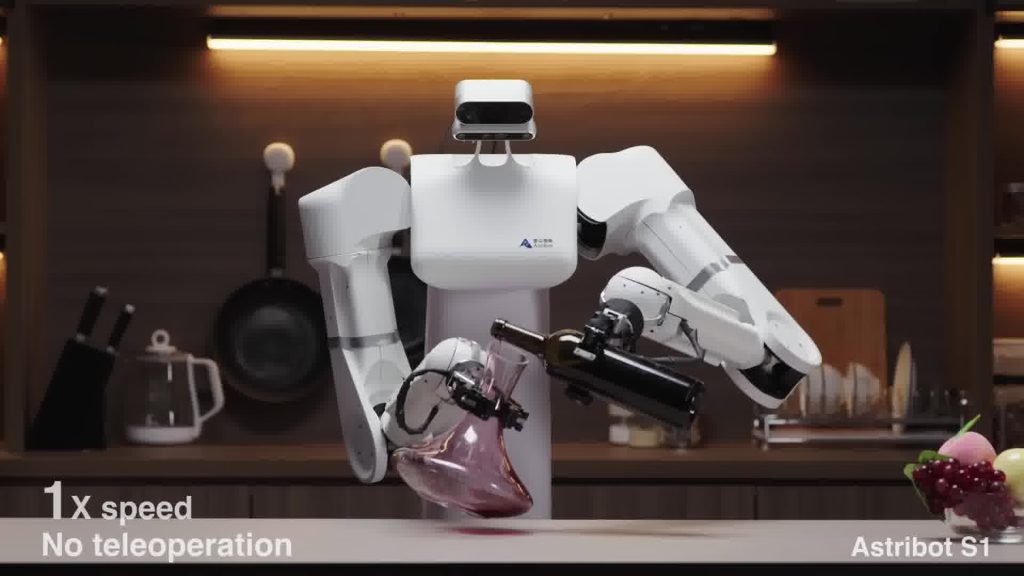
Best for: - Research labs exploring high-speed manipulation (10 m/s arm tip speed enables unprecedented dexterity experiments) - Light manufacturing lines needing fast, precise picking and placing (10 kg payload, 26 DOF) - Hospitality settings requiring automated meal prep or drink serving (detailed dexterity in stationary setup)
Not for: - Applications requiring bipedal locomotion (no legs, stationary or wheeled base only) - Heavy industrial tasks (payload limited to 10 kg, not built for rugged environments) - Outdoor field operations (likely low IP rating, indoor use only)
Alternatives & Comparison
The Astribot S1 enters a competitive field of next-generation humanoid robots aimed at service and light industrial markets. Key competitors include bipedal humanoids with walking capabilities and advanced manipulation, though none match the S1’s extreme arm speed.
| Model | Price | Available | Key Difference |
|---|---|---|---|
| Unitree H1 | $90,000 | yes | Bipedal locomotion, full-body humanoid, dynamic walking, less emphasis on fine manipulation |
| Fourier GR-2 | Undisclosed | preorder | Bipedal humanoid with advanced joint flexibility and higher payload capacity |
| Figure 02 | Undisclosed | preorder | General-purpose bipedal humanoid with integrated OpenAI AI for broader task scope |
| Tesla Optimus | Undisclosed | no | Full humanoid with walking and manipulation, deep learning focus, mass production intent |
Verdict: If your application demands ultra-fast stationary manipulation — such as high-speed sorting, cooking, or lab automation — the S1 is unmatched and likely the best choice. However, for environments requiring full mobility like warehouse roaming or dynamic walking over uneven terrain, the Unitree H1 or Figure 02 offer bipedal locomotion that the S1 lacks. The S1 also undercuts the still-unpriced Fourier GR-2 and Tesla Optimus in estimated cost, making it an attractive option for early adopters willing to accept pre-commercial risk.
Use Cases & Capabilities
High-Speed Dexterous Manipulation
With an arm tip speed of 10 m/s, the Astribot S1 can perform rapid pick-and-place, sorting, and assembly tasks far faster than typical humanoid robots. This capability is ideal for high-throughput manufacturing lines or logistics centers where cycle time is critical. The 26 degrees of freedom, including 12 in its dexterous hands, allow it to handle diverse objects with precision. However, the robot’s 10 kg payload limits it to lighter items, and its stationary mounting means conveyor systems must bring workpieces to it.
Household Chores and Meal Preparation
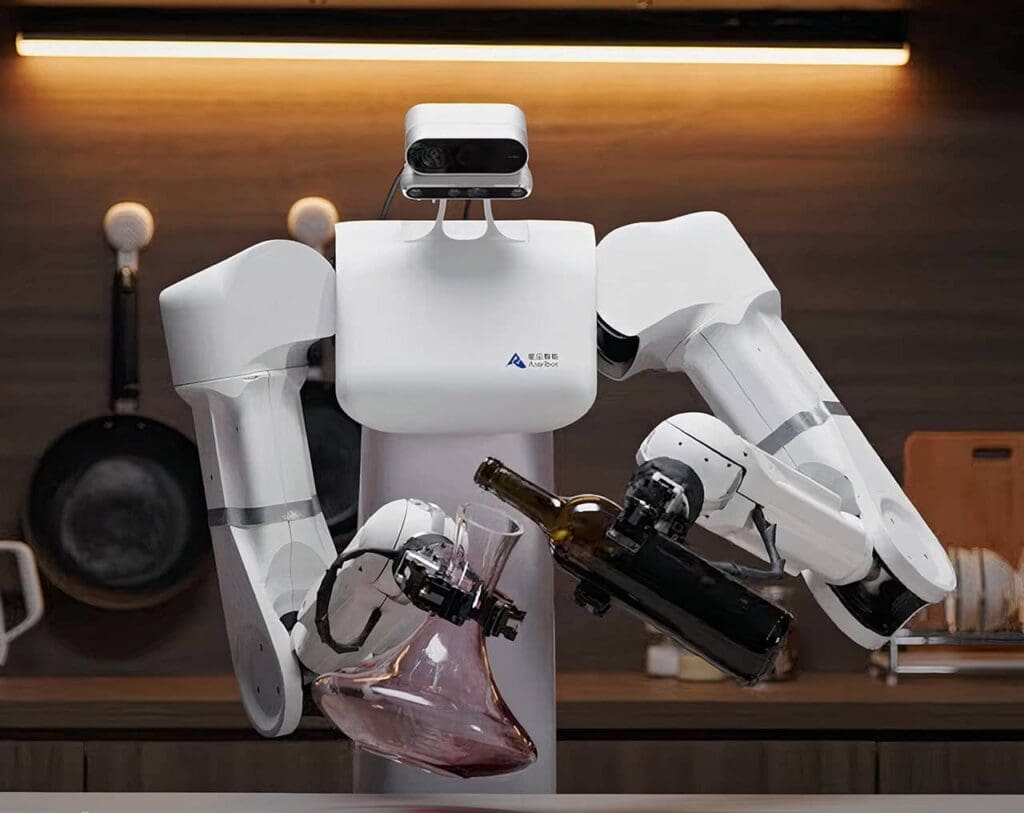
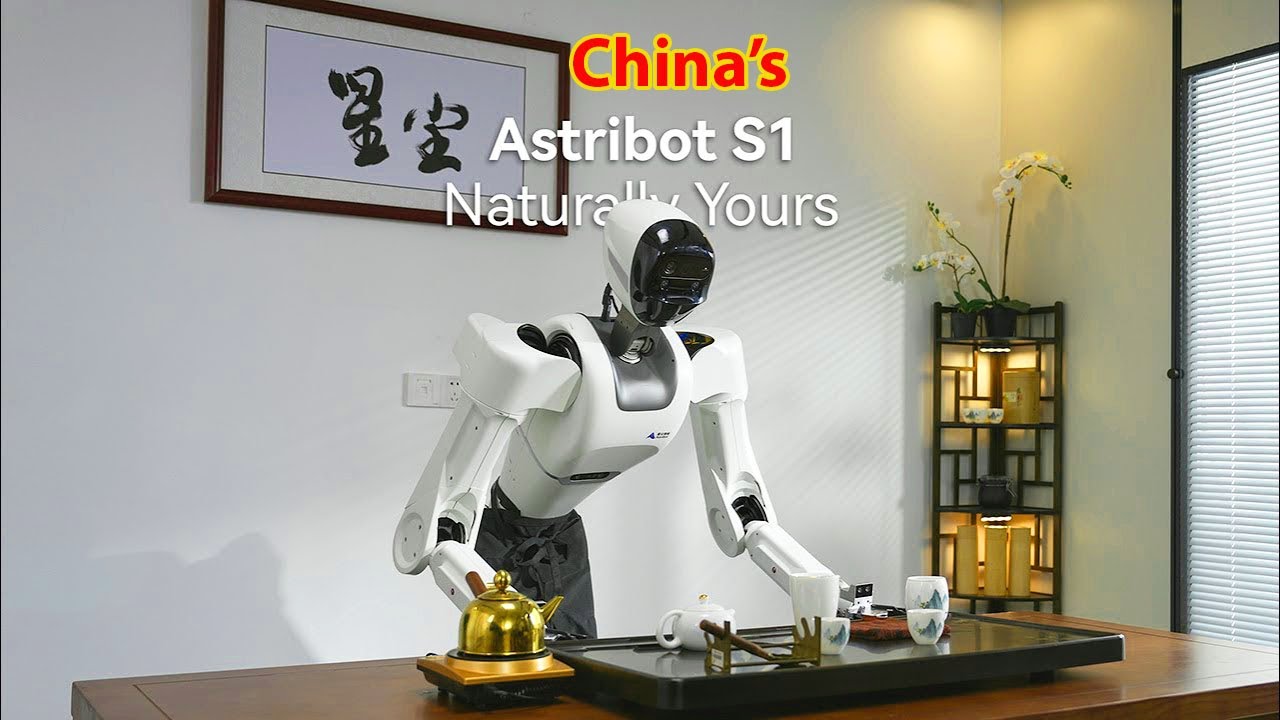
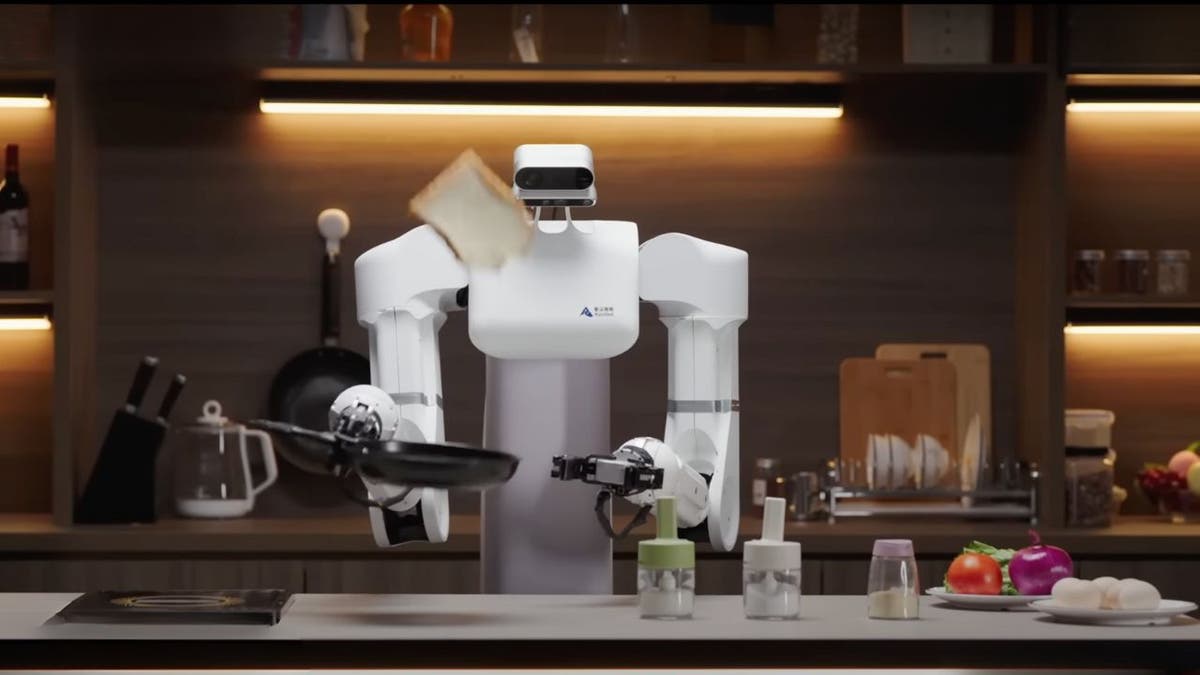
The S1 demonstrated cooking, pouring, and cleaning tasks in its reveal videos, suggesting it could serve as a robotic household assistant. Its combination of fast arm movement and fine hand control enables delicate tasks like slicing vegetables or arranging plates. The compact, wheeled platform can navigate kitchen floors, though it lacks the ability to climb stairs or reach high cabinets without a custom base. Battery life of 4 hours allows a full session of meal prep before recharging.
Assistive Care and Healthcare Support
The robot’s dexterity and safe interaction design (safe with humans) make it a candidate for assistive care in hospitals or elder-care facilities. It could fetch items, serve meals, or help with rehabilitation exercises. Its arm speed could quickly deliver medications or samples, but its 10 kg payload restricts it from lifting patients. The S1’s stationary nature means it cannot follow a person room-to-room without a mobile base, but within a designated workspace, it could be highly effective.
Light Manufacturing and Logistics
In e-commerce warehouses or small parts assembly, the S1’s high-speed manipulation can boost throughput for tasks like kitting, packaging, or component placement. The robot’s sensor suite (3D depth, stereo vision) enables reliable object recognition and handling. Its cost, while estimated at $99,000, could be justified by productivity gains compared to slower, less dexterous industrial arms. However, the lack of official repeatability specs and IP rating may restrict deployment in dusty or wet settings until verified.
History & Background
Astribot, the consumer-facing brand of Shenzhen-based Stardust Intelligence, was founded in 2022 to develop advanced humanoid robots for service applications. The company unveiled the S1 in early 2024 through a series of viral demonstration videos showing the robot performing tasks like cooking, serving drinks, and high-speed sorting. These demos highlighted the S1’s extraordinary arm speed of 10 m/s — far exceeding typical humanoid speeds — and drew significant media attention. As of 2026, the S1 remains a pre-production prototype with no confirmed release date. The company has not disclosed any subsequent generations or variants, focusing on refining the dexterous manipulation capabilities of this first model. Astribot is positioned among a wave of Chinese humanoid startups competing with Unitree, Fourier Intelligence, and others in the rapidly evolving service robotics market.
Buying Used — What to Check
Verify payload rating Payload capability is critical for your task; confirm the actual maximum payload directly with Astribot.
Check battery health and runtime Nominal runtime is 4 hours, but battery degradation in pre-production units may be unknown; test for your usage needs.
Confirm calibration and repeatability No official repeatability specs have been published; end-effector accuracy will determine suitability for precision tasks.