What is the Atlas?
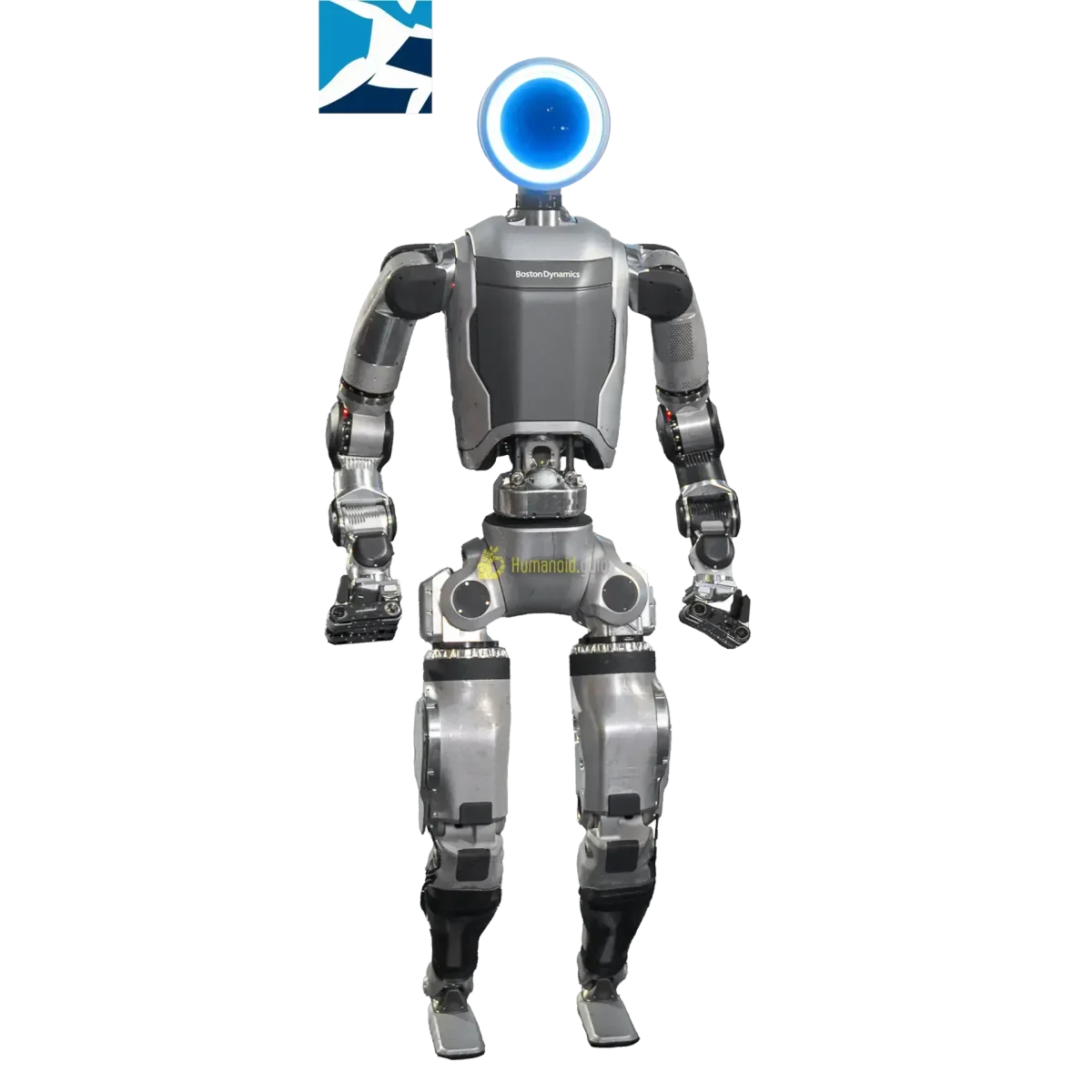
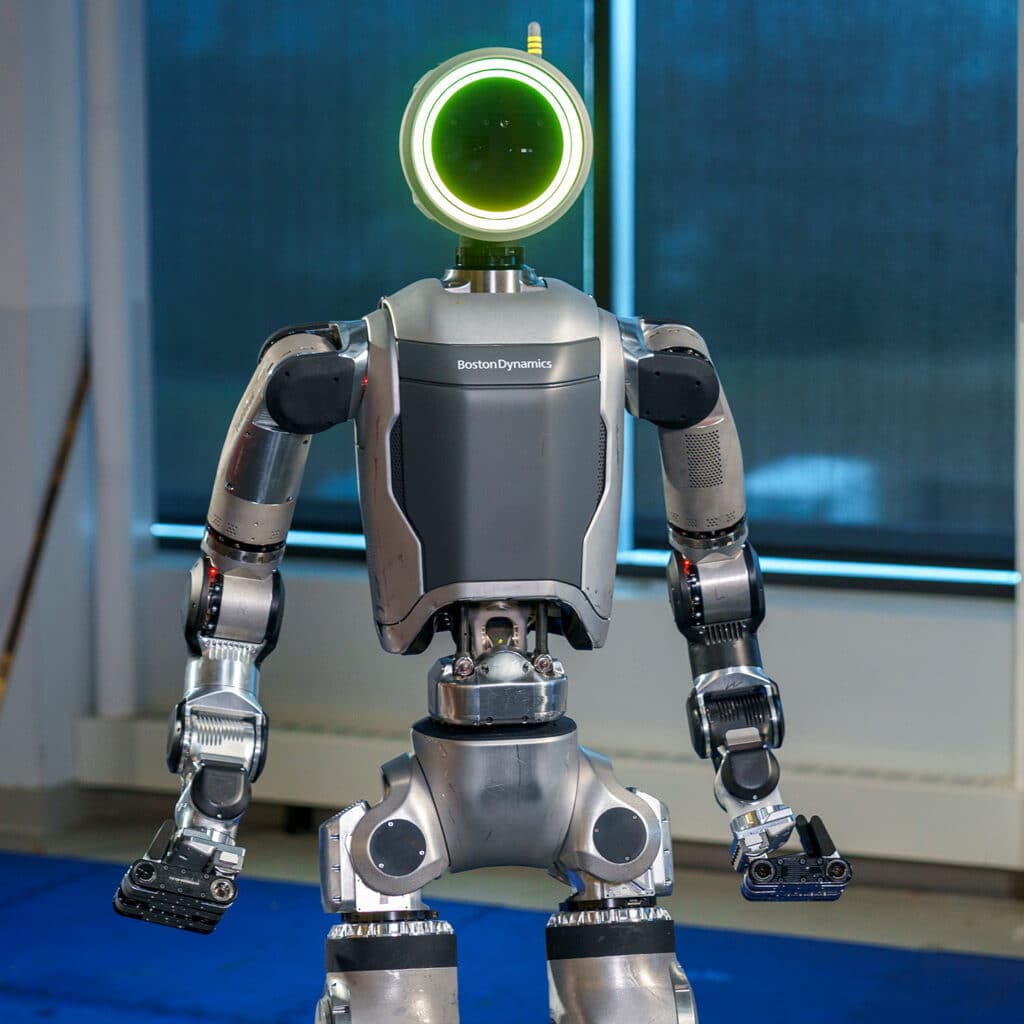
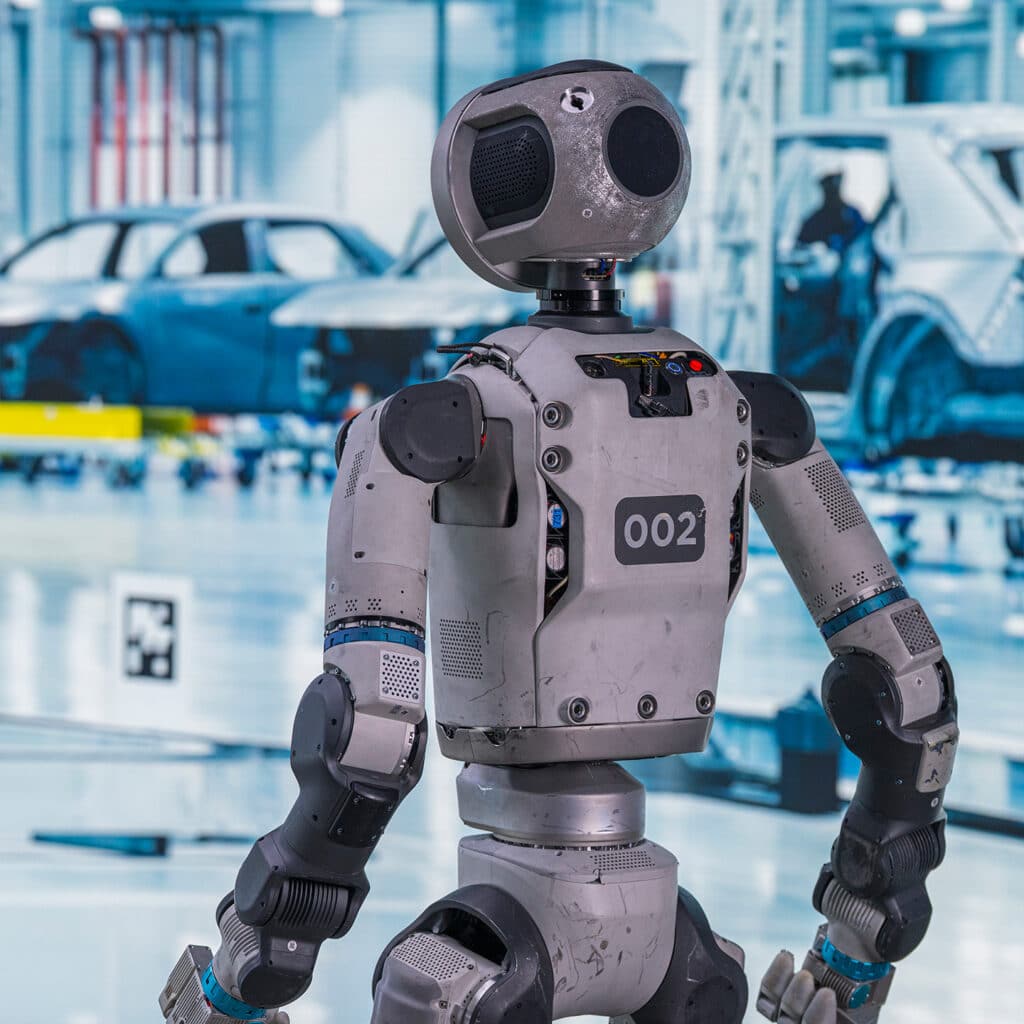
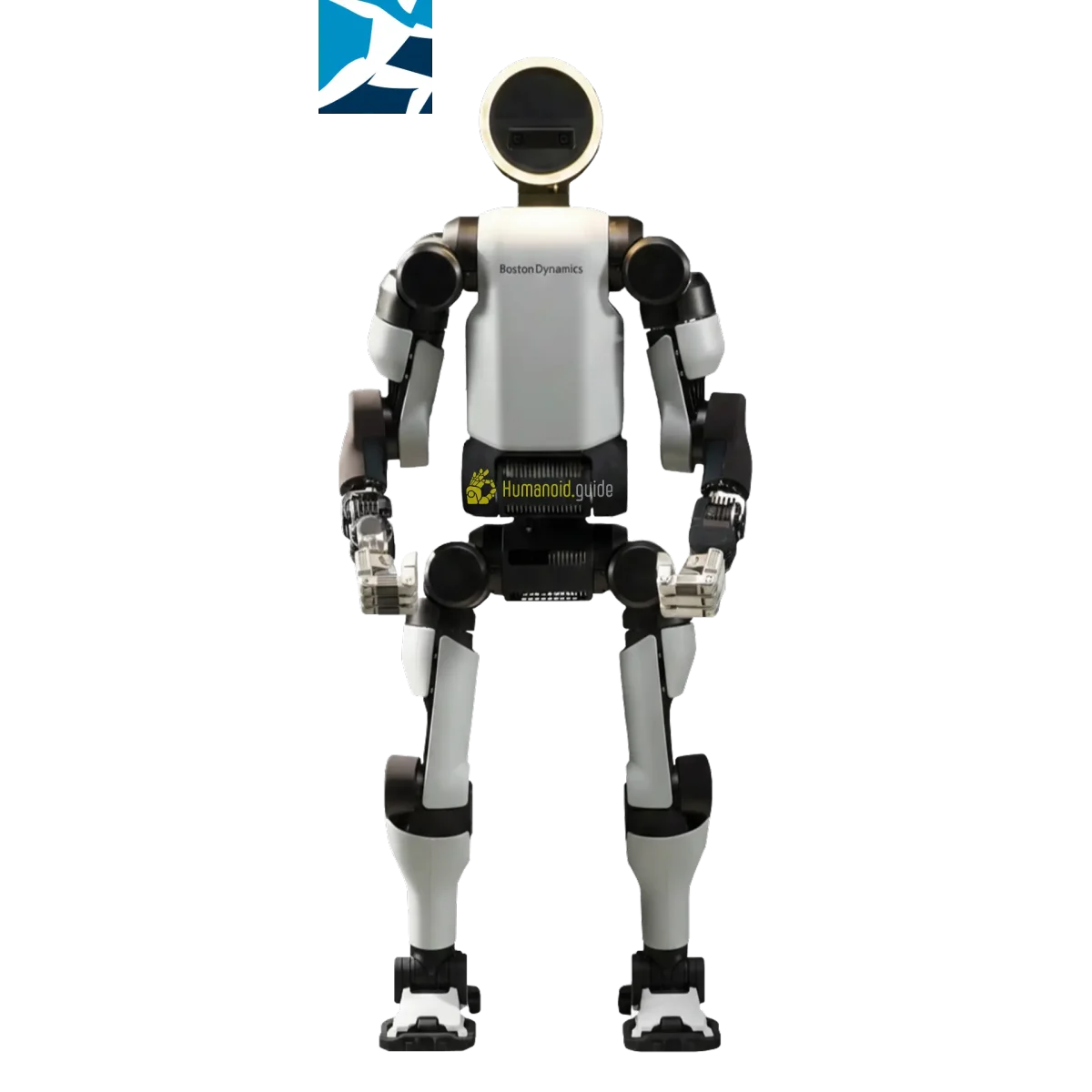
The Atlas is Boston Dynamics’ advanced, fully electric humanoid robot, designed for real-world industrial and automation tasks. Manufactured in Waltham, Massachusetts, it combines dynamic mobility, intelligent perception, and dexterous manipulation with 56 degrees of freedom. Its 360° vision system and IP67 rating enable operation in harsh environments. Atlas can walk at 9 km/h, carry 30 kg, and run for up to 4 hours on a charge. Unlike its hydraulic predecessor, the current generation (2024) uses fully electric actuators for quieter, more efficient movement. Boston Dynamics targets manufacturing, logistics, and warehouse applications, with early production units available through the company’s enterprise integration platform, Orbit.
Specifications
Here are the full technical specifications.
| Spec | Value |
|---|---|
| Height | 190 cm |
| Weight | 90 kg |
| Degrees of freedom | 56 |
| Battery life | Up to 4 hours |
| Max speed | 8 km/h |
| Payload | 30 kg |
| Price (new) | $120,000 |
| Price (used range) | N/A (limited release) |
Price & Value
New MSRP: $120,000
Used range: N/A (limited release, no secondary market yet)
At $120,000, the Atlas humanoid sits at the premium end of industrial robotics, justified by its peerless dynamic mobility and Boston Dynamics’ decades of R&D. There is no used market pricing yet due to limited production, but if demand grows, depreciated units could settle around $60,000–80,000 after several years of service. For a single robot, the cost compares favorably against two or three fixed industrial arms plus an AGV, given Atlas’s versatility—it can walk, manipulate, and inspect in one package. Total cost of ownership must factor in Orbit software integration, periodic maintenance on 56 electric joints, and site-specific safety assessments. No lease or rental options are available, so the full capital outlay is required upfront. Buyers should view Atlas less as a commodity and more as a strategic automation investment with a potential 3–5 year payback in labor savings and process flexibility.
Who Is It For?
Best for: - Industrial manufacturing lines requiring flexible, mobile manipulation (30 kg payload, 360° vision, IP67) - Logistics warehouses needing a robot that can walk, climb stairs, and palletize in dynamic layouts - Research labs exploring humanoid locomotion, AI-vision integration, and advanced manipulation (56 DOF, potential DeepMind AI integration) - Harsh-environment facilities (foundries, chemical plants) that can exploit Atlas’s IP67 rating and rugged titanium/aluminum frame
Not for: - Small businesses or labs with budgets under $100,000—the $120,000 price tag plus integration costs are prohibitive - Heavy outdoor construction where a 30 kg payload may be insufficient for moving structural materials - Operations requiring 24/7 uptime without breaks—the 2–4 hour battery life means frequent charging or swappable battery policies are needed
Alternatives & Comparison
Atlas competes with a growing field of general-purpose humanoids, though few can match its dynamic athleticism and robust industrial pedigree.
| Model | Price | Available | Key Difference |
|---|---|---|---|
| Tesla Optimus | Undisclosed (expected $20,000–$30,000) | no | Far lower target cost, Tesla ecosystem integration, but still in prototyping—no commercial availability yet |
| Agility Digit | $250,000 | yes | Logistics-optimized, smaller footprint, but limited manipulation dexterity and higher price |
| Figure 02 | Undisclosed (competitive range) | preorder | Advanced AI-driven dexterity, full humanoid form, but no proven field experience or IP rating disclosed |
Verdict: For buyers who need a proven, rugged, and immediately deployable humanoid for dynamic industrial tasks, Atlas is the clear winner—its IP67 rating and electric actuator reliability give it a head start. If you can wait 12–18 months and prioritize low unit cost, Tesla Optimus could disrupt the market at a fraction of the price. Agility Digit is a better fit if your primary need is logistics and you have the budget for a specialized platform; for general-purpose AI integration testing still in development, Figure 02 may catch up but remains unproven.
Use Cases & Capabilities
Industrial Manufacturing Assistance
Atlas navigates factory floors using its 360° vision and dynamic walking, locating machinery and tools without the need for floor-level guidance systems. It can lift up to 30 kg, place components into CNC machines, and perform quality checks with its tactile hands. The IP67 rating allows it to work through dust, coolant spray, and occasional washdowns, making it suitable for metal fabrication and automotive assembly lines. Limitation: repetitive high-speed pick-and-place cycles are still better served by traditional robotic arms.
Logistics and Warehousing
In a bustling distribution center, Atlas can walk between aisles, climb stairs to mezzanines, and palletize boxes of various sizes. Its ability to perceive and adapt in real time reduces the need for pre-mapped routes, allowing deployment in facilities that evolve daily. Battery life of 4 hours typical operation means it can cover an entire shift with a single charge break. However, for pure box-moving throughput, a fleet of dedicated AGVs may still offer better speed per dollar.
Harsh Environment Inspection
With an IP67 ingress protection rating and a titanium/aluminum structure, Atlas can enter high-temperature, wet, or corrosive areas that are hazardous for humans. Equipped with its 360° vision system and potential sensor payloads, it performs routine rounds to check gauges, detect leaks, and report anomalies without human exposure. This reduces safety man-hours in foundries, chemical processing plants, and offshore platforms. The challenge remains that Atlas’s electric actuators may require more frequent maintenance in extremely corrosive atmospheres.
Research and AI Development Platform
Universities and corporate R&D labs use Atlas to push the boundaries of whole-body motion planning, reinforcement learning, and human-robot interaction. The 56 DOF and tactile hands provide a rich testbed for dexterous manipulation algorithms, while the potential integration with LLMs via DeepMind partnerships opens avenues for natural language tasking. Although the $120k price is steep for most academic budgets, a few well-funded labs have secured units, securing valuable data for the broader robotics community.
History & Background
Boston Dynamics was founded in 1992 as a spin-off from MIT’s Leg Lab, initially focused on legged robots like BigDog. The first Atlas was revealed in 2013 for DARPA’s Robotics Challenge, powered by hydraulic pumps and tethered for power. Over several generations, Atlas learned to run, jump, and do backflips, becoming an internet sensation. In 2024, the company unveiled the fully electric Atlas—a complete redesign that swapped noisy hydraulics for custom electric actuators, yielding a sleeker white-and-blue look and a quieter, more energy-efficient platform. Ownership transitions shaped the company: Google acquired it in 2013, SoftBank in 2017, and Hyundai Motor Group in 2021. The electric Atlas is the first iteration purpose-built for commercial sale, entering early production with select enterprise partners in 2024–2025, and ramping availability into 2026.
Buying Used — What to Check
Verify actuation hours and maintenance logs Electric actuators have limited cycle lives; early adopters may have pushed units hard in testing, so a low-hour unit is critical.
Confirm Orbit software license transfer Enterprise integration software may be tied to the original customer account, adding cost if not transferable.
Inspect frame and joint for impact damage Despite IP67, falls or collisions during dynamic tasks can bend titanium or aluminum components, compromising safety.