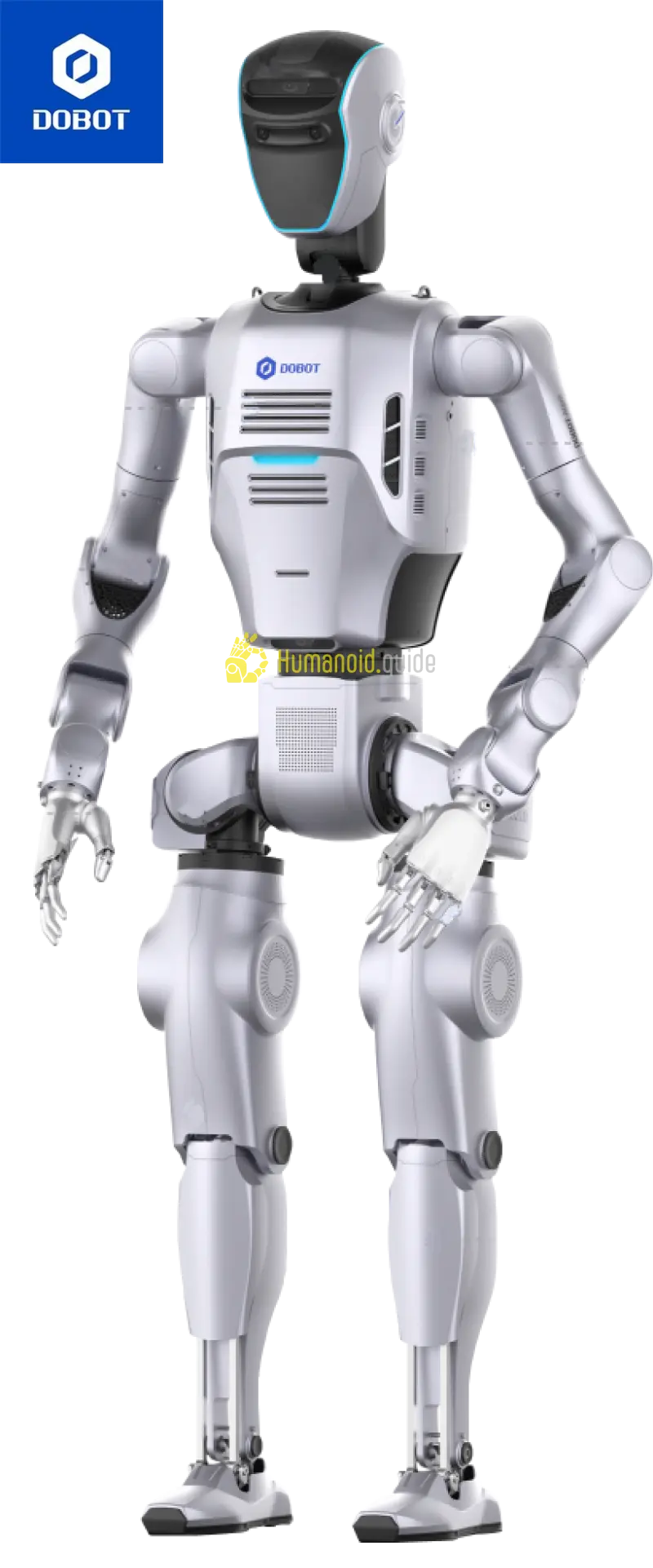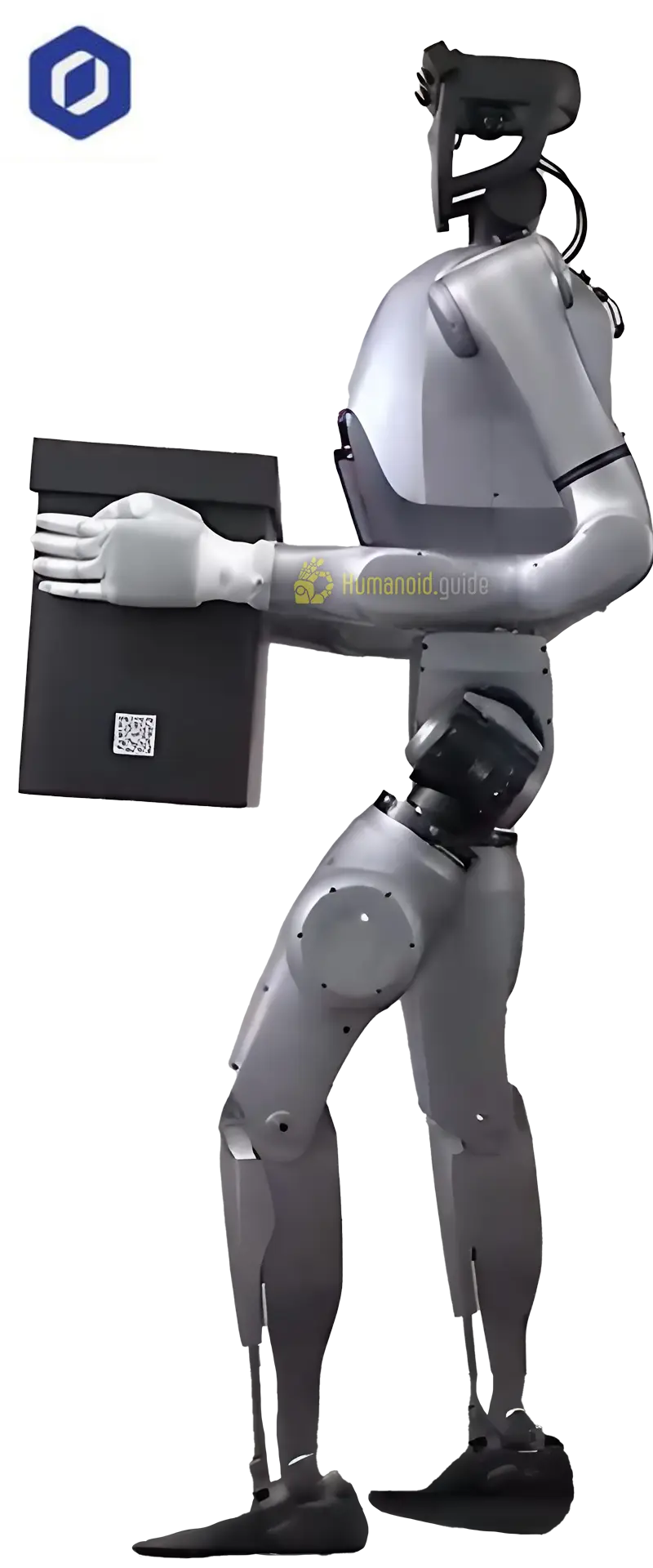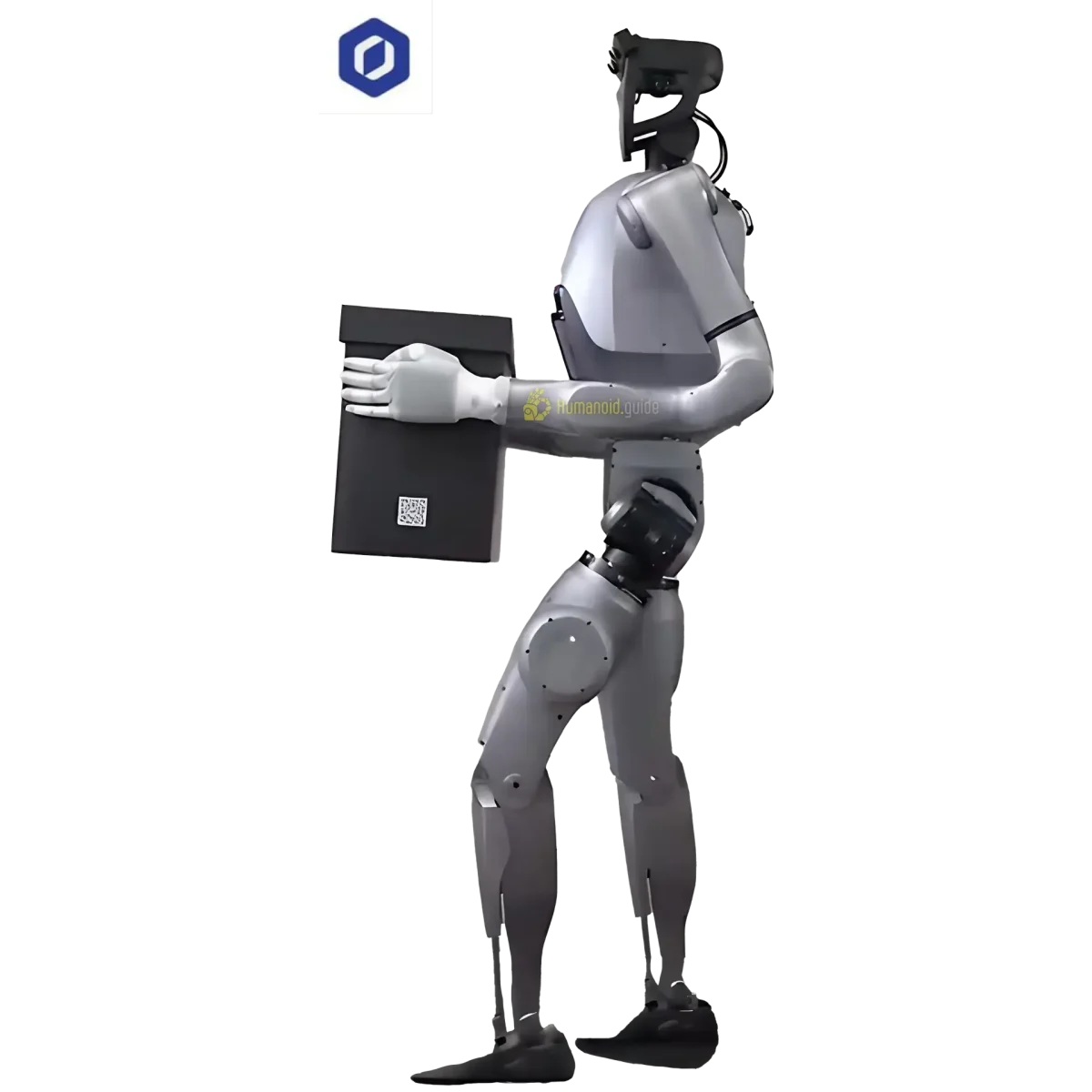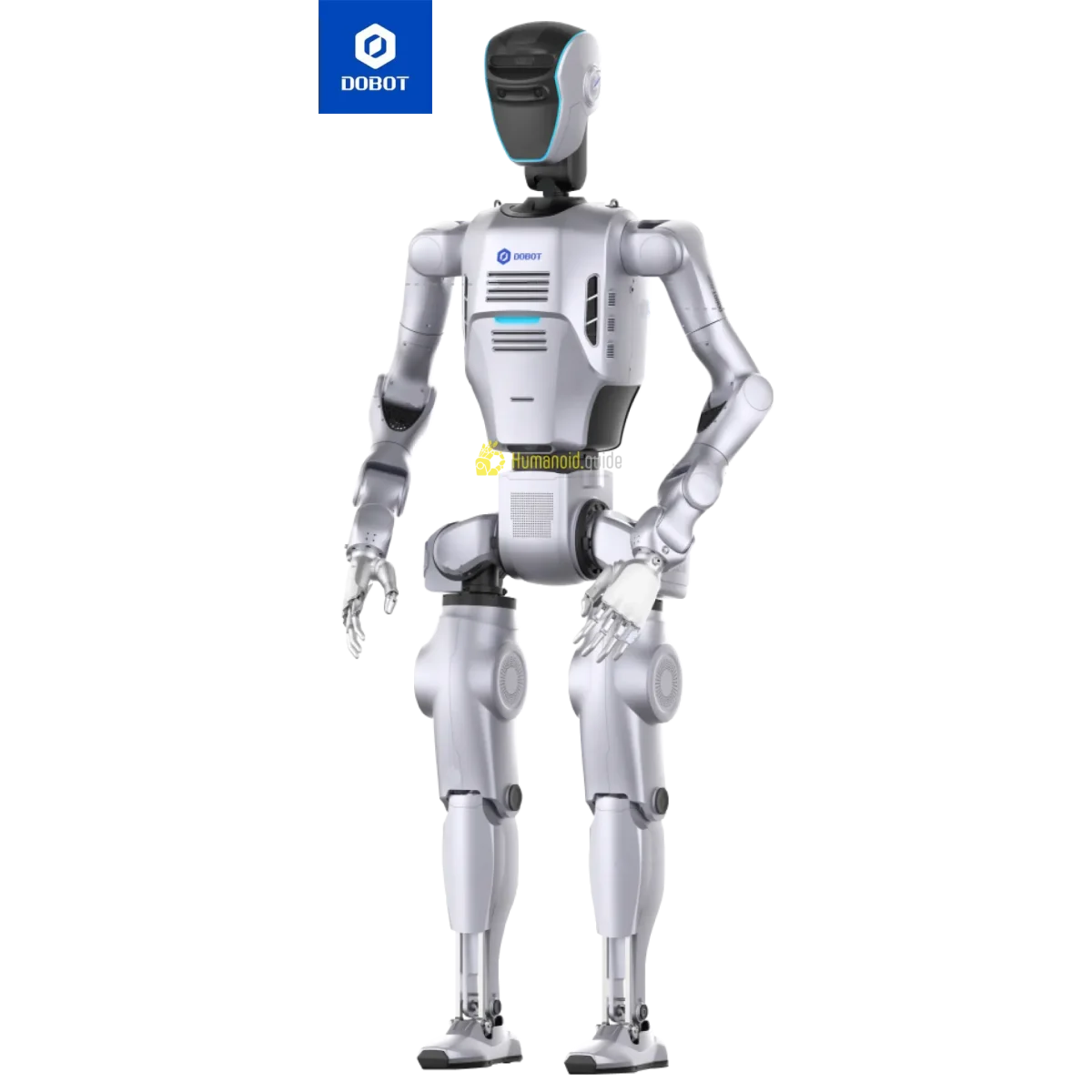
What is the Atom?
DOBOT Atom is a bipedal humanoid robot developed by DOBOT Robotics, headquartered in Shenzhen, China. Standing 1.53 meters tall and weighing 62 kg, it features 41 degrees of freedom and 1:1 human-arm kinematics, enabling precise, human-scale manipulation. Equipped with an Intel RealSense D455 depth camera and a Full HD RGB camera, the Atom targets laboratory research, light manufacturing, and service industry applications. Its arm payload capacity of 5 kg and exceptional 0.05 mm repeatability make it suitable for delicate tasks like lab work and assembly. Unveiled in Nagoya in 2025, Atom represents DOBOT's expansion from collaborative arms into full humanoid robotics, entering a competitive space alongside Unitree G1 and others.
Specifications
Here are the full technical specifications.
| Spec | Value |
|---|---|
| Height | 1,530 mm |
| Weight | 62 kg |
| Degrees of freedom | 41 |
| Battery life | 2.3 kWh (runtime not published) |
| Max speed | Not published |
| Payload | 5 kg |
| Price (new) | ~$27,500 (est.) |
| Price (used range) | N/A (pre-order — no secondary market yet) |
Price & Value
New MSRP: ~$27,500 (est.)
Used range: N/A (pre-order — no secondary market yet)
At an estimated ~$27,500, the DOBOT Atom undercuts many industrial bipedal humanoids, making it a compelling proposition for labs and small factories. It costs more than the Unitree G1 ($16,000) but offers higher precision (0.05 mm repeatability) and a 1:1 arm configuration for dexterous tasks. With no battery runtime published, buyers should budget for downtime or extra batteries. Depreciation is uncertain because no used units exist yet, but as an early-adopter pre-order, resale value may hold if demand outpaces supply. Total cost of ownership will hinge on software licensing, maintenance contracts, and potential upgrades to the Atom Max variant. Prospective buyers should verify all-in costs directly with DOBOT distributors.
Who Is It For?
Best for: - University robotics labs seeking a dexterous bipedal platform for manipulation research (41 DOF and 0.05 mm repeatability) - Electronics manufacturers needing precise assembly automation at an accessible price point - Hospitality venues wanting an interactive humanoid greeter with realistic arm motions
Not for: - Heavy material handling (5 kg arm payload limits lifting beyond small components) - Outdoor or rugged environments with no IP rating published - Applications requiring autonomous high-speed navigation (max walking speed not disclosed)
Alternatives & Comparison
The budget bipedal humanoid market is heating up, with the DOBOT Atom competing mainly against the Unitree G1 and, at a higher price, the Fourier GR-1.
| Model | Price | Available | Key Difference |
|---|---|---|---|
| Unitree G1 | $16,000 | yes | Lower price, lighter build, less precision |
| Fourier GR-1 | ~$50,000 (est.) | preorder | Higher payload, greater brand legacy in humanoids |
Verdict: For budget-conscious buyers needing fine motor control, the DOBOT Atom’s 0.05 mm repeatability and 1:1 arm kinematics give it an edge over the cheaper Unitree G1. However, the G1’s proven availability and lower entry price make it a safer bet for price-sensitive deployment. The Fourier GR-1 offers more mature sensing if budget allows.
Use Cases & Capabilities
Laboratory Research
Atom’s 41 DOF and precise repeatability make it ideal for automating delicate lab tasks such as pipetting, sample handling, and microassembly. The onboard Intel RealSense depth camera enables visual servoing, while the 1:1 arm configuration allows it to use standard labware designed for humans. Researchers can program custom motions via DOBOT’s SDK, integrating with existing lab information systems. Its compact 1.53 m height fits easily into standard lab benches. The 5 kg arm payload is sufficient for most glassware and reagents, though heavy repetitive lifting may require the Atom Max variant.
Light Manufacturing
In electronics assembly and small-part kitting, the Atom’s 0.05 mm repeatability ensures consistent quality. The bipedal design lets it navigate factory floors and work alongside human operators without fixed infrastructure. With 2.3 kWh battery, it can operate for a shift before swapping batteries, though runtime per charge isn’t specified. Its dual-arm coordination enables tasks like connector insertion and screw driving. The low price point makes multi-robot fleets feasible for small and medium enterprises.
Service Industry
Atom can serve in hospitality and retail by greeting customers, delivering items, and assisting with basic inquiries. Its human-like appearance and smooth motion create a non-threatening interaction. The Full HD RGB camera supports facial recognition and gesture understanding. However, limited arm payload restricts it to light items like brochures, drinks, or small packages. Integration with DOBOT’s cloud platform enables remote updates and scenario management.
History & Background
DOBOT, founded in 2015 in Shenzhen, China, initially gained recognition for its line of desktop robotic arms. In 2025, the company unveiled its first full humanoid robot, the DOBOT Atom, at a high-profile event in Nagoya, Japan, signaling a strategic move into bipedal general-purpose robotics. The Atom platform consists of a single generation so far, with a higher-spec 'Atom Max' variant announced for heavier payloads. The robot’s development emphasizes energy efficiency—Dobot claims 42% less power consumption than traditional bipedal gaits—and a 2.3 kWh battery. Mass production and global deliveries are slated to begin shortly after its debut, positioning Dobot as a pioneer in affordable humanoid labor.
Buying Used — What to Check
Verify payload rating Payload and runtime are critical for real-world tasks; early units may have undocumented limits.
Check battery health 2.3 kWh battery degradation could reduce already unpublished runtime; ask for cycle count.
Inspect joint smoothness 41 DOF mechanisms can develop backlash; test all axes under load.