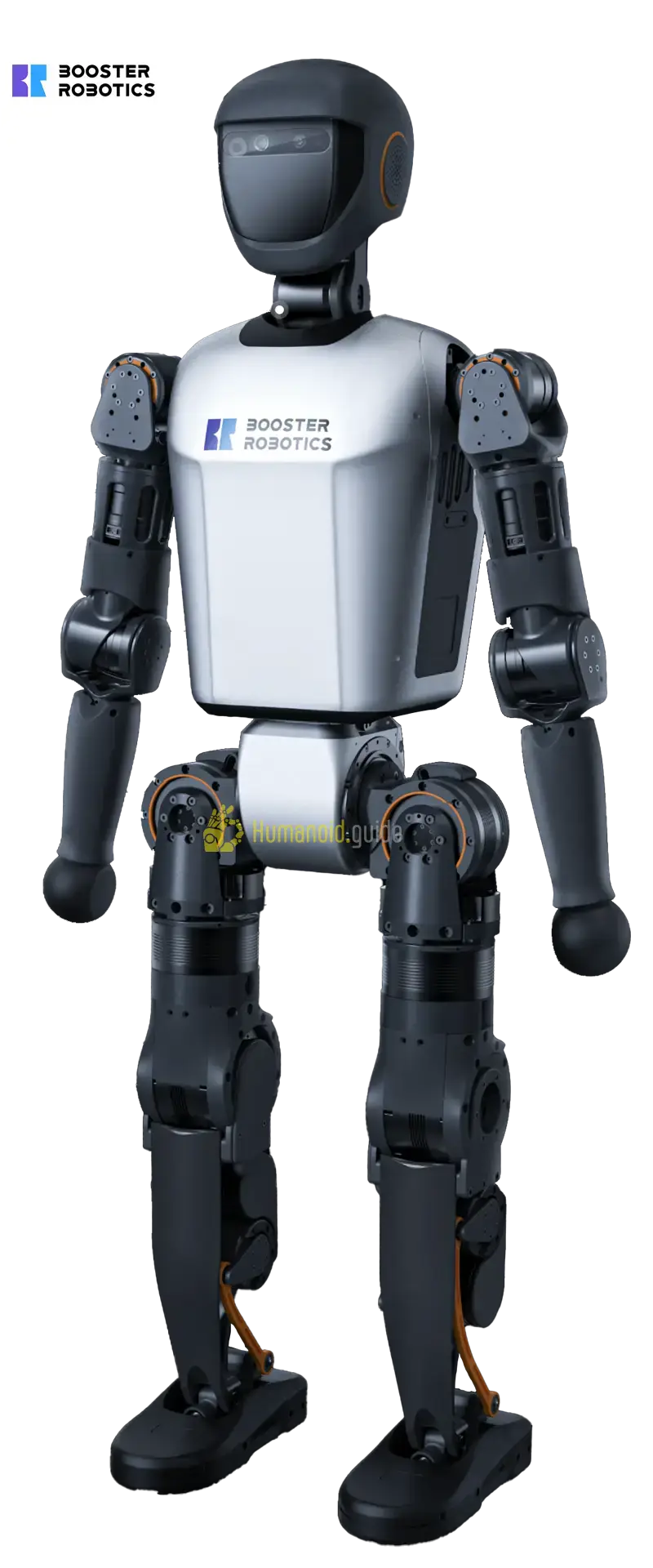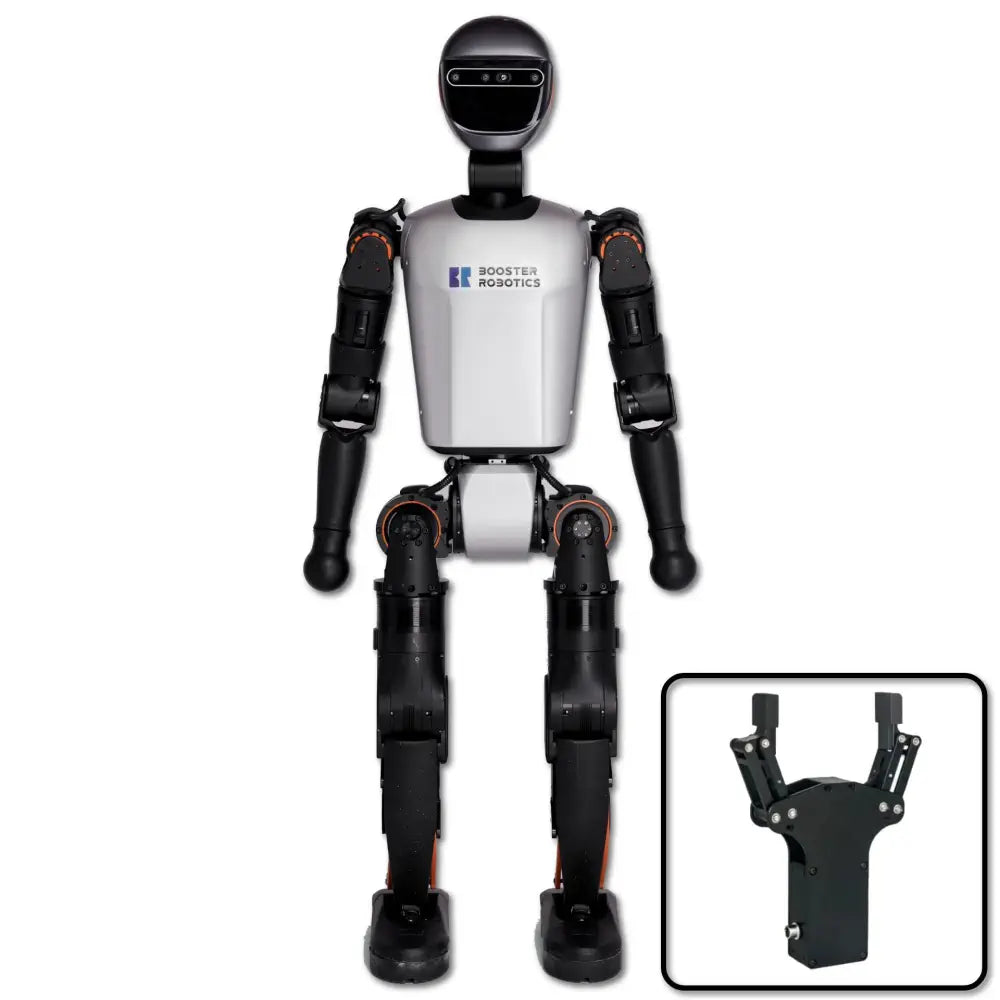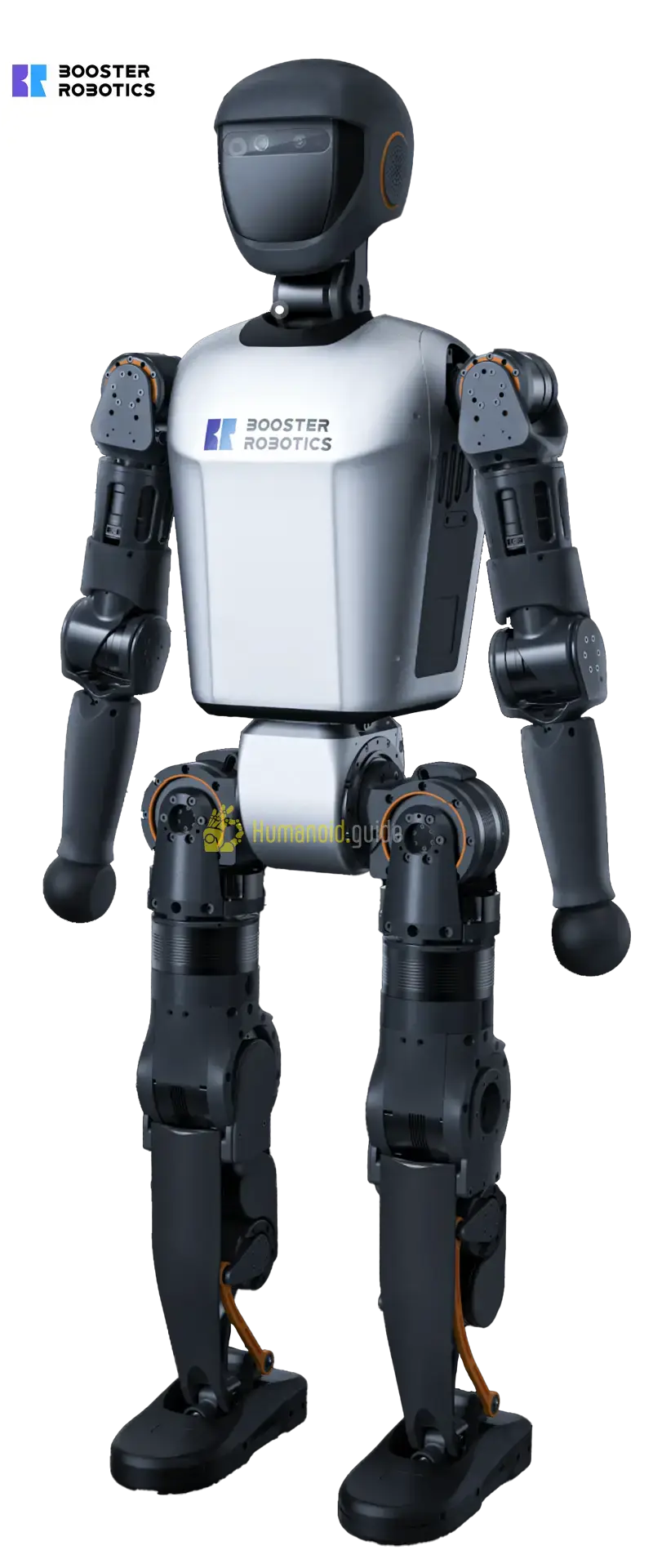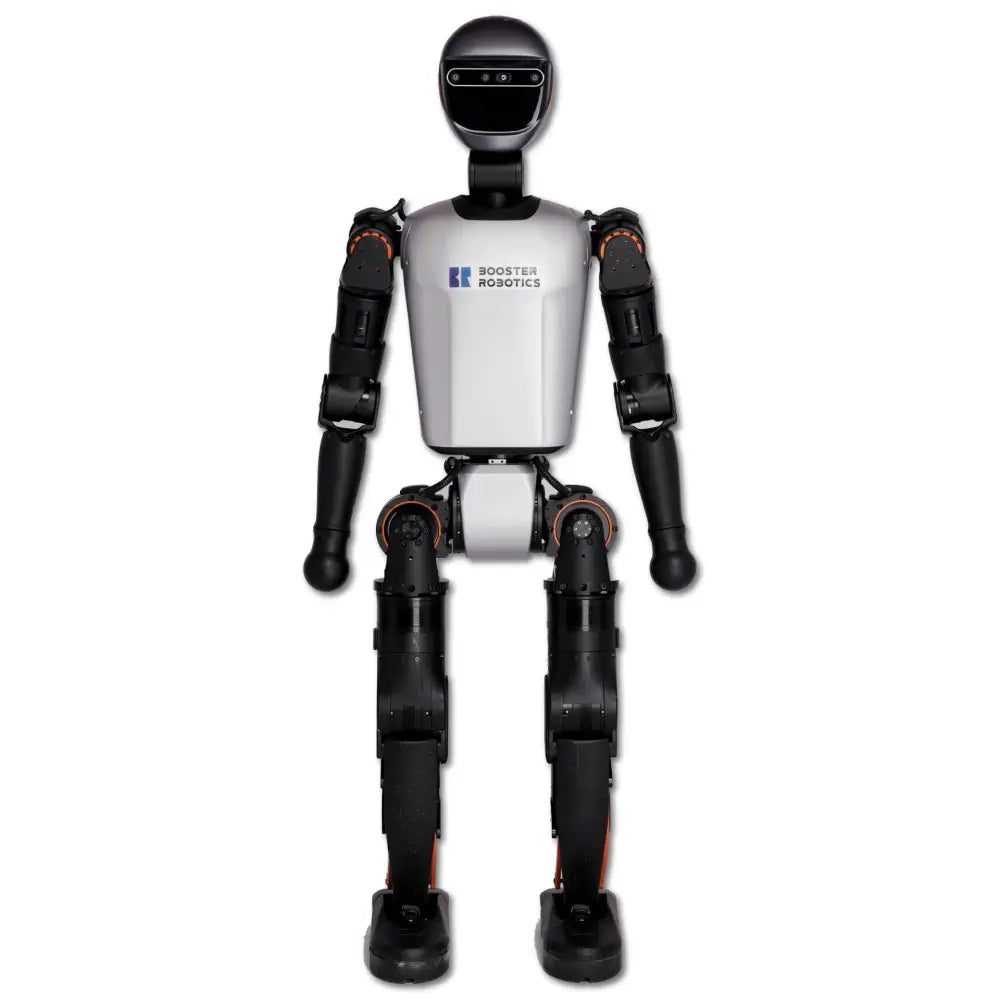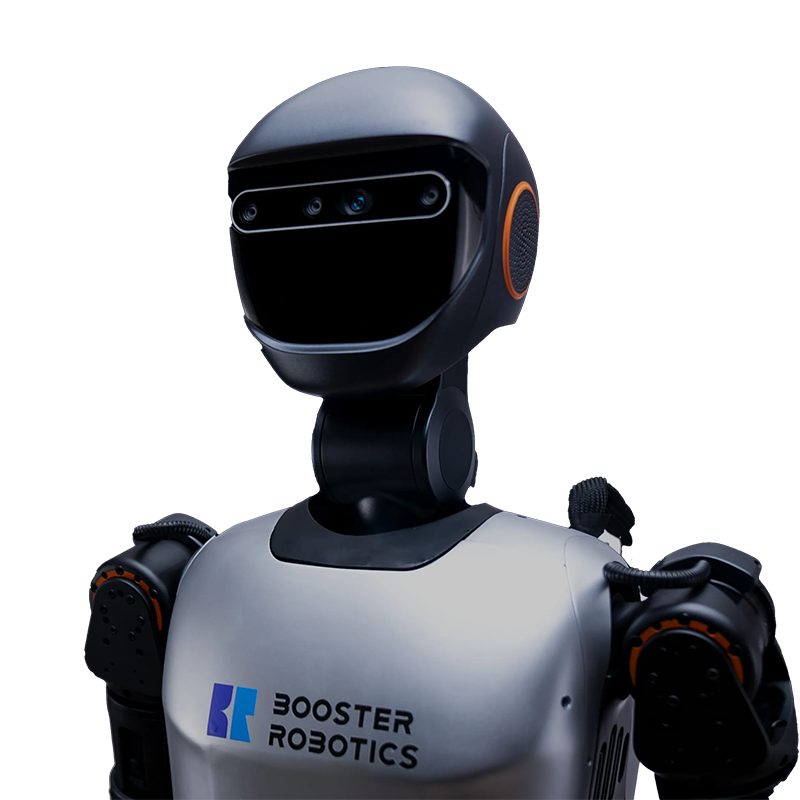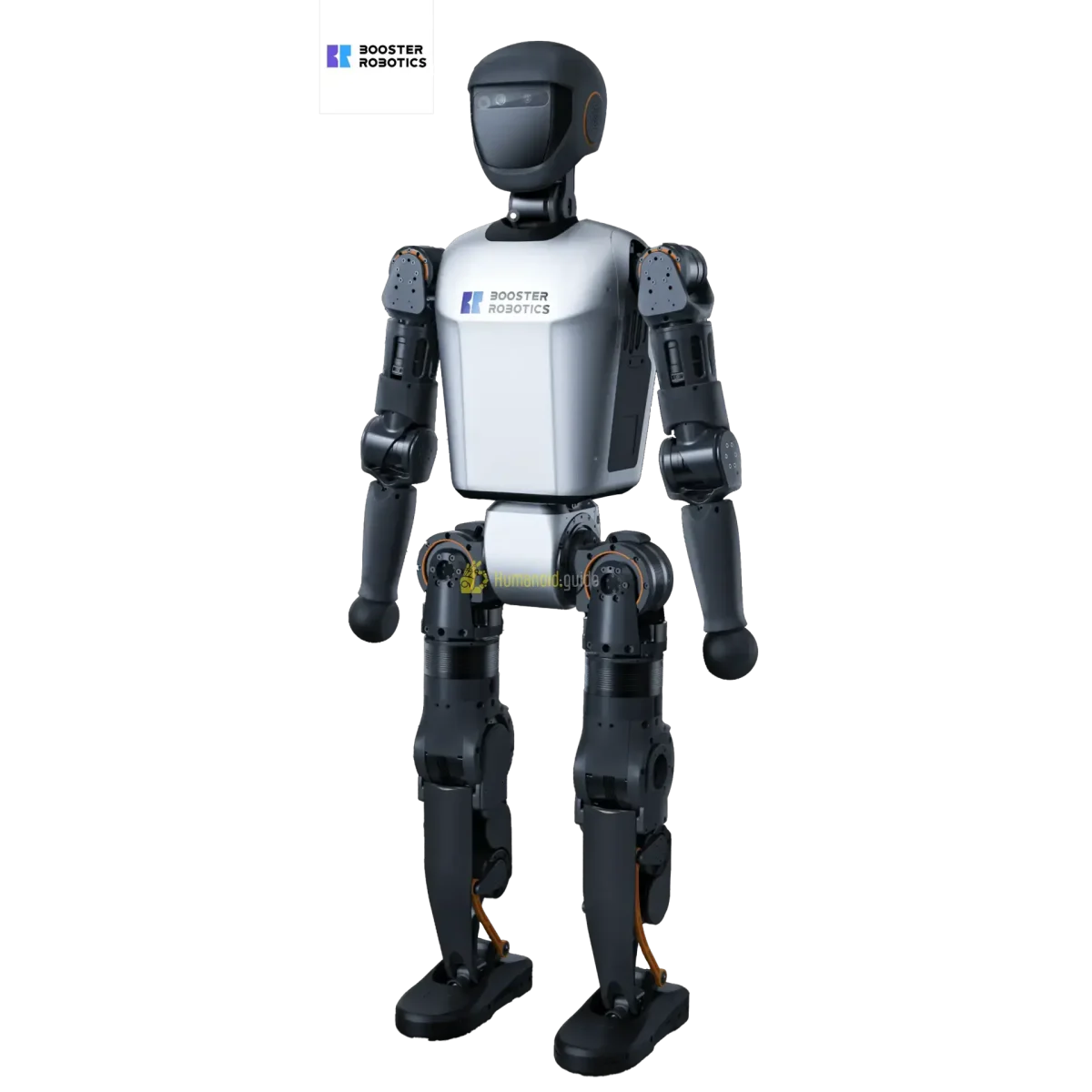
What is the Booster T1?
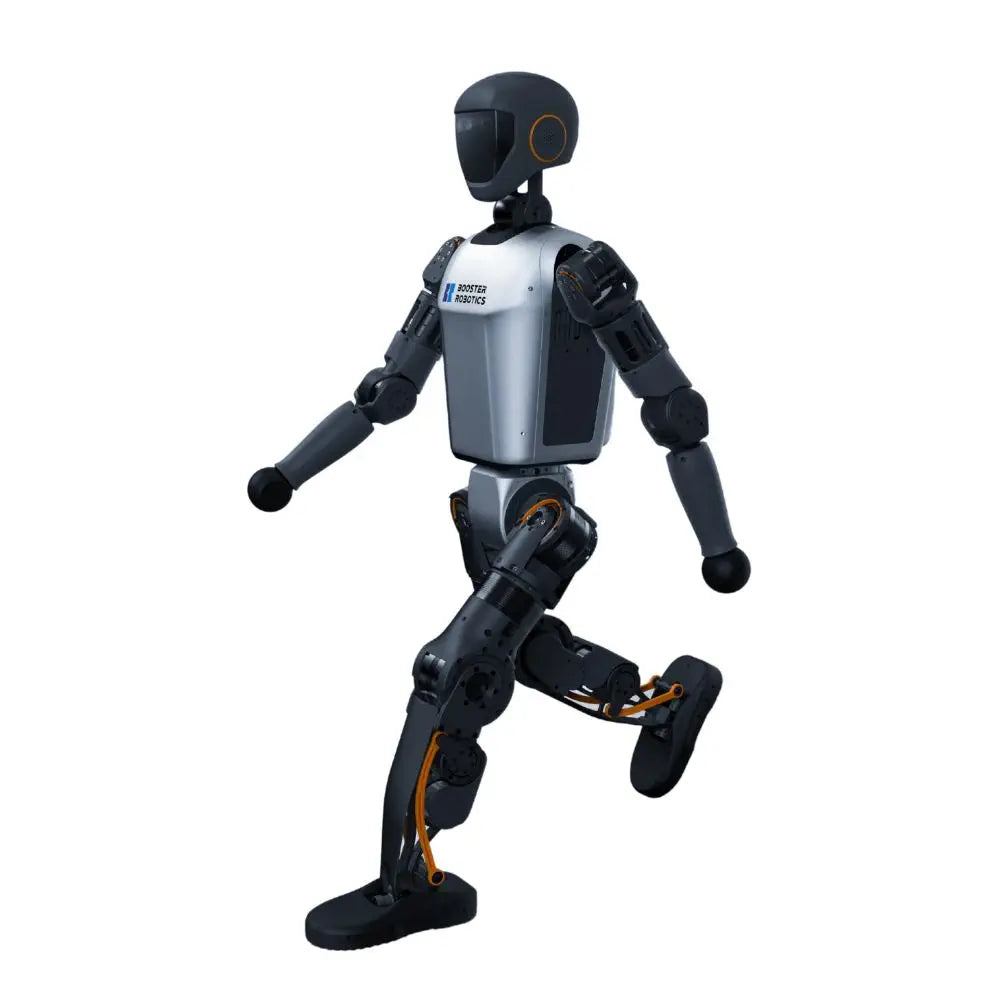
The Booster Robotics T1 is a compact, athletic humanoid robot from China, designed for high-dynamic motions like walking and running. Standing at 118 cm tall and weighing 30 kg, it packs 23 degrees of freedom and can reach speeds up to 18 km/h. With a price of around $22,000, it targets education, research, and humanoid soccer applications. Its open platform and SDK support make it a budget-friendly alternative to larger humanoids like the Fourier GR1 or Unitree G1, particularly for labs needing a lightweight, agile platform for dynamic motion studies. It is currently available for pre-order.
Specifications
Here are the full technical specifications.
| Spec | Value |
|---|---|
| Height | 118 cm |
| Weight | 30 kg |
| Degrees of freedom | 23 |
| Battery life | 2 hours |
| Max speed | 18 km/h |
| Payload | 3 kg |
| Price (new) | $22,000 |
| Price (used range) | N/A |
Price & Value
New MSRP: $22,000
Used range: N/A
At $22,000, the Booster T1 undercuts most dynamic humanoids, making it a compelling alternative to the $16k Unitree G1, which is slower, and the $150k Fourier GR1, which is heavier but more capable. Its open platform and SDK reduce long-term software costs, and its modular construction may simplify repairs. Resale value is uncertain given the early stage, but early units may depreciate quickly as more polished competitors emerge. For labs with limited budgets, the T1 offers an unmatched speed-to-price ratio. However, total cost of ownership should factor in potential battery replacements and the limited manufacturer support. Overall, it is one of the most affordable running humanoids available in 2026.
Who Is It For?
Best for: - University robotics labs needing a low-cost, high-dynamic humanoid for locomotion research - Humanoid soccer teams in RoboCup leagues requiring a fast, agile player - Educators teaching advanced robot motion planning with hands-on access
Not for: - Heavy industrial tasks due to 3 kg arm payload limitation - Applications needing long-duration autonomy (2-hour battery) - Projects requiring human-like hand dexterity (hands not fully specified)
Alternatives & Comparison
The Booster T1 competes with other budget humanoid robots in the research and sports market. While it emphasizes speed and agility, alternatives offer different trade-offs.
| Model | Price | Available | Key Difference |
|---|---|---|---|
| Unitree G1 | $16,000 | yes | Lower price, more general-purpose, not sports-optimized. |
| Fourier GR1 | $150,000 | yes | Larger, heavier, higher payload, not optimized for soccer. |
Verdict: For researchers needing a low-cost, fast-running humanoid, the Booster T1 is the clear winner, offering unmatched speed per dollar. However, labs needing stronger manipulation or heavier payloads should consider the Fourier GR1. The Unitree G1 provides similar affordability but lacks the T1's athletic edge, making it better for general-purpose studies.
Use Cases & Capabilities
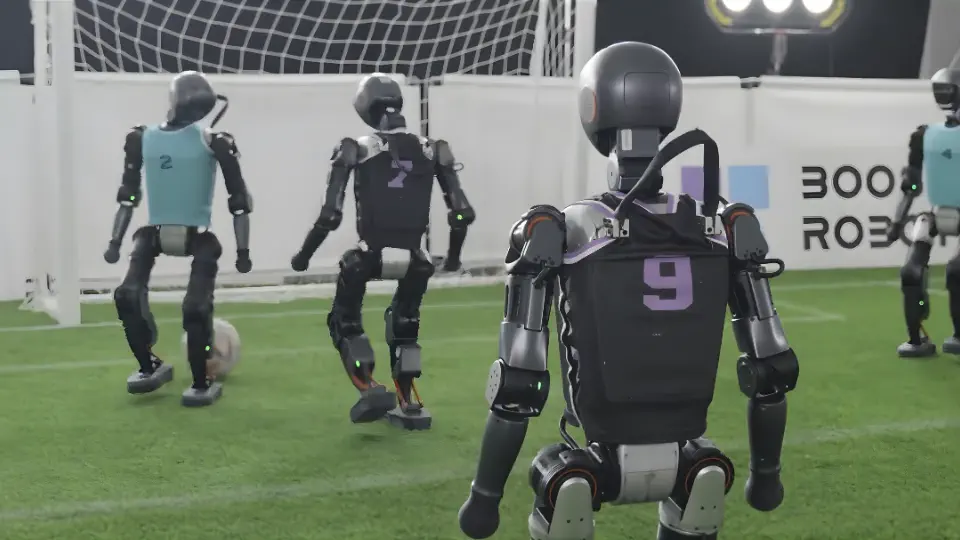
Humanoid Soccer
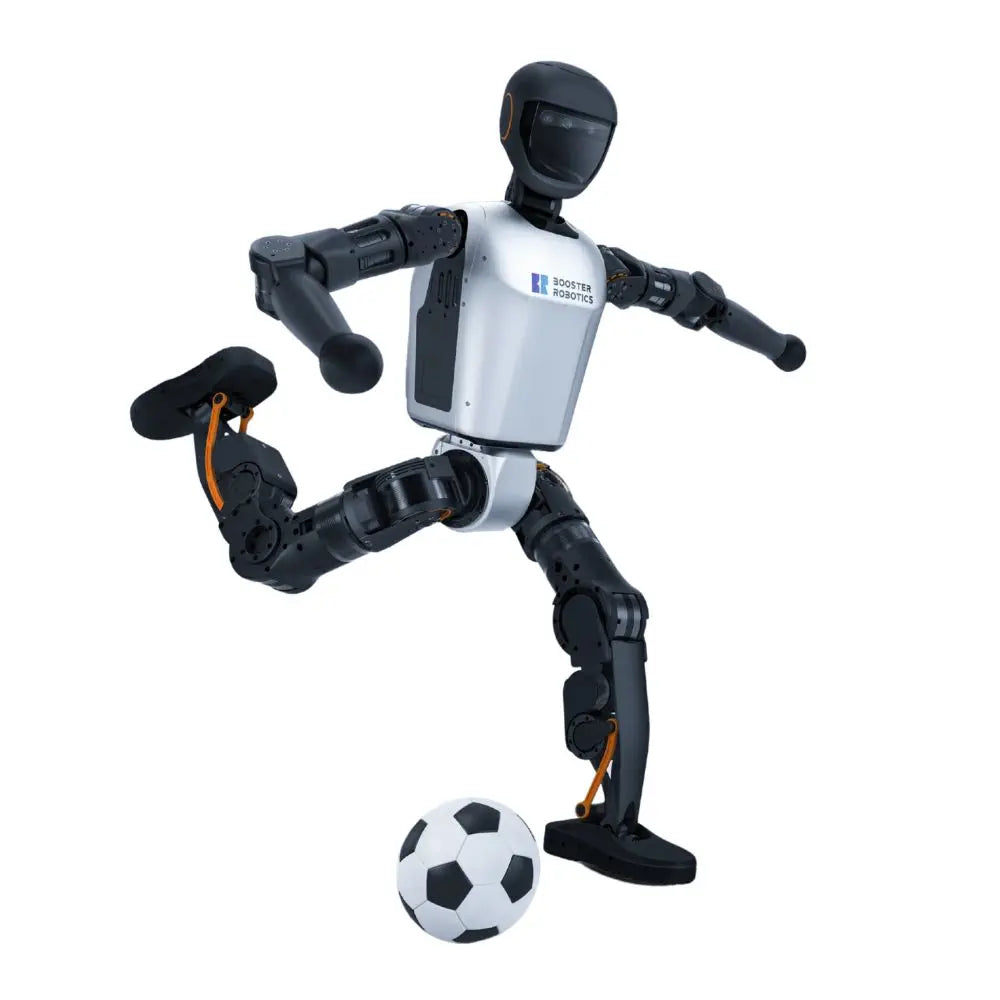
The Booster T1's lightweight 30 kg build and 18 km/h top speed make it a standout choice for humanoid soccer leagues like RoboCup. Its 23 DOF allow human-like running and kicking motions, while fall-resistant design helps it recover quickly after tackles. The open SDK and ROS compatibility enable teams to fine-tune gait algorithms and strategic plays. With a 2-hour battery life, it can complete a full match with pauses for charging. Early adopters report improved scoring potential compared to heavier bots.
Dynamic Locomotion Research
Researchers studying bipedal walking and running can leverage the T1 as an affordable, high-speed testbed. Its 5 m/s max speed and dynamic motion capability are exceptional at this price point. The robot's open platform allows full access to motor control and sensor data, enabling the development of novel balance and push-recovery algorithms. Labs can implement reinforcement learning directly on the hardware without the high cost of larger humanoids. However, the limited 2-hour battery may require frequent recharging during extended experiments.
Developer Education
The Booster T1 serves as a hands-on teaching tool for robotics and AI students. Its low cost and open SDK lower the barrier for universities to operate multiple units simultaneously. Students can program gaits, integrate computer vision for obstacle avoidance, and experiment with full-body control. The robot's compact size and safe composite materials make it suitable for classroom environments. Despite limited documentation, the active community around humanoid soccer provides learning resources.
Sports Science
In biomechanics and sports engineering, the T1 can serve as a humanoid model for studying athletic performance. Its running speeds and joint articulation mimic human sprinting, offering a physical platform for testing footwear, surface interactions, or motion efficiency. Researchers can instrument the robot with external sensors to measure ground reaction forces. The robot's open-source nature allows custom modifications for specific research questions. However, payload limitations restrict the addition of heavy instrumentation.
History & Background
Booster Robotics, a Chinese startup, launched the T1 humanoid in 2024, targeting the research and sports robotics market. The company has kept a low profile, with minimal public information about its founding team or facilities. The T1's first public appearance was at robotics competitions and through reseller listings in 2024. Unlike many humanoid companies focusing on industrial applications, Booster emphasized athletic performance—walking, running, and agility—at an aggressive price. As of 2026, the robot is available for pre-order, with initial units shipped to university labs and RoboCup teams. Booster Robotics has not announced any newer models or variants, suggesting the T1 remains their flagship product. The company maintains a sparse online presence, with only a basic landing page and no social media updates.
Buying Used — What to Check
Verify warranty and support Pre-order units may lack full manufacturer support or have limited warranty coverage.
Check for custom modifications Used T1 units may have been modified for specific experiments, potentially altering performance.
Confirm battery health Battery degradation could significantly reduce runtime below the advertised 2 hours.