What is the Boston Dynamics Atlas Hydraulic?
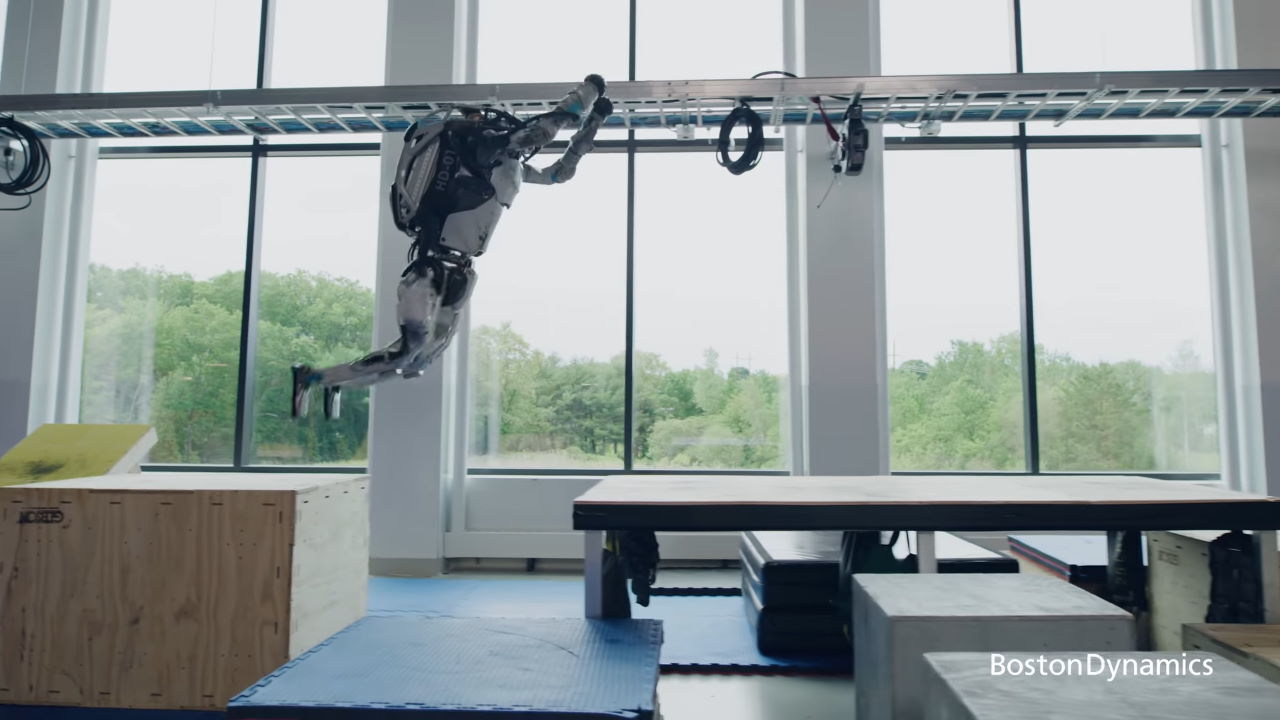
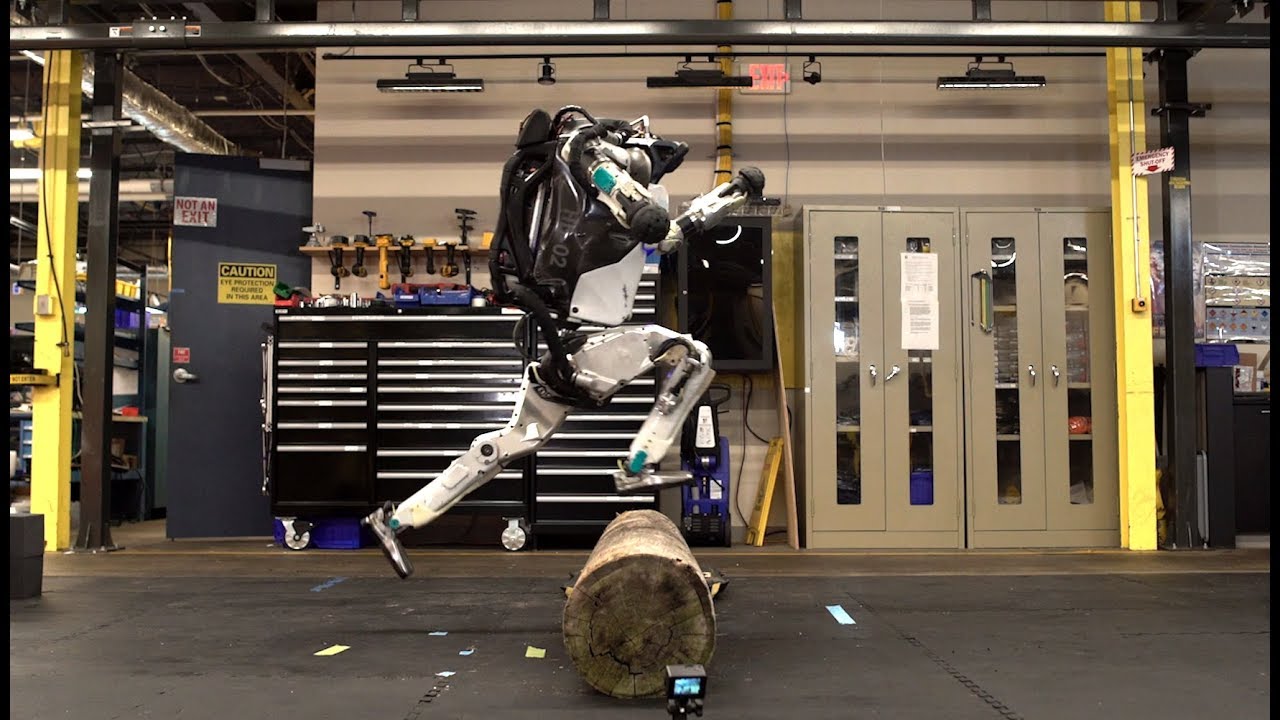
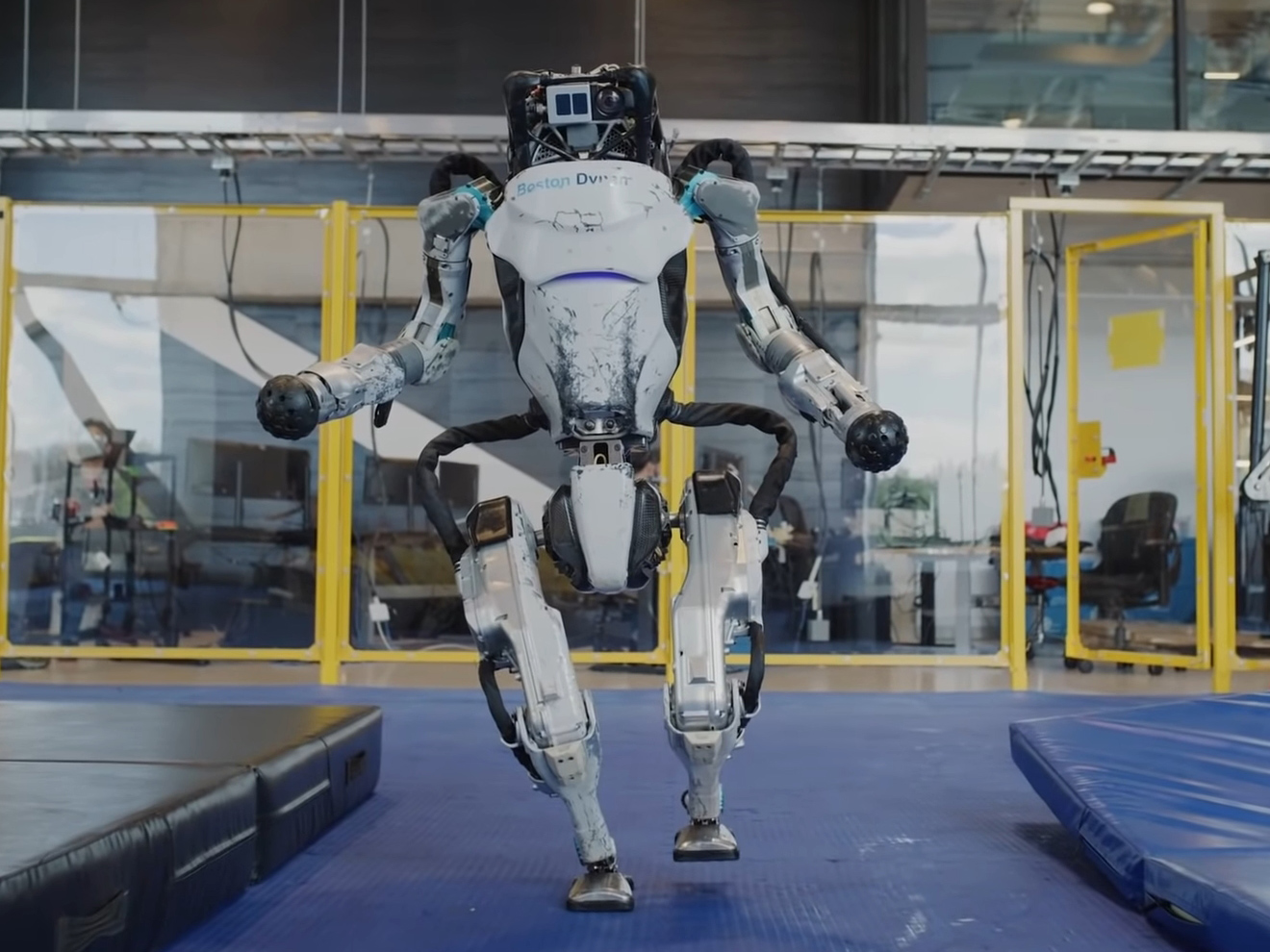
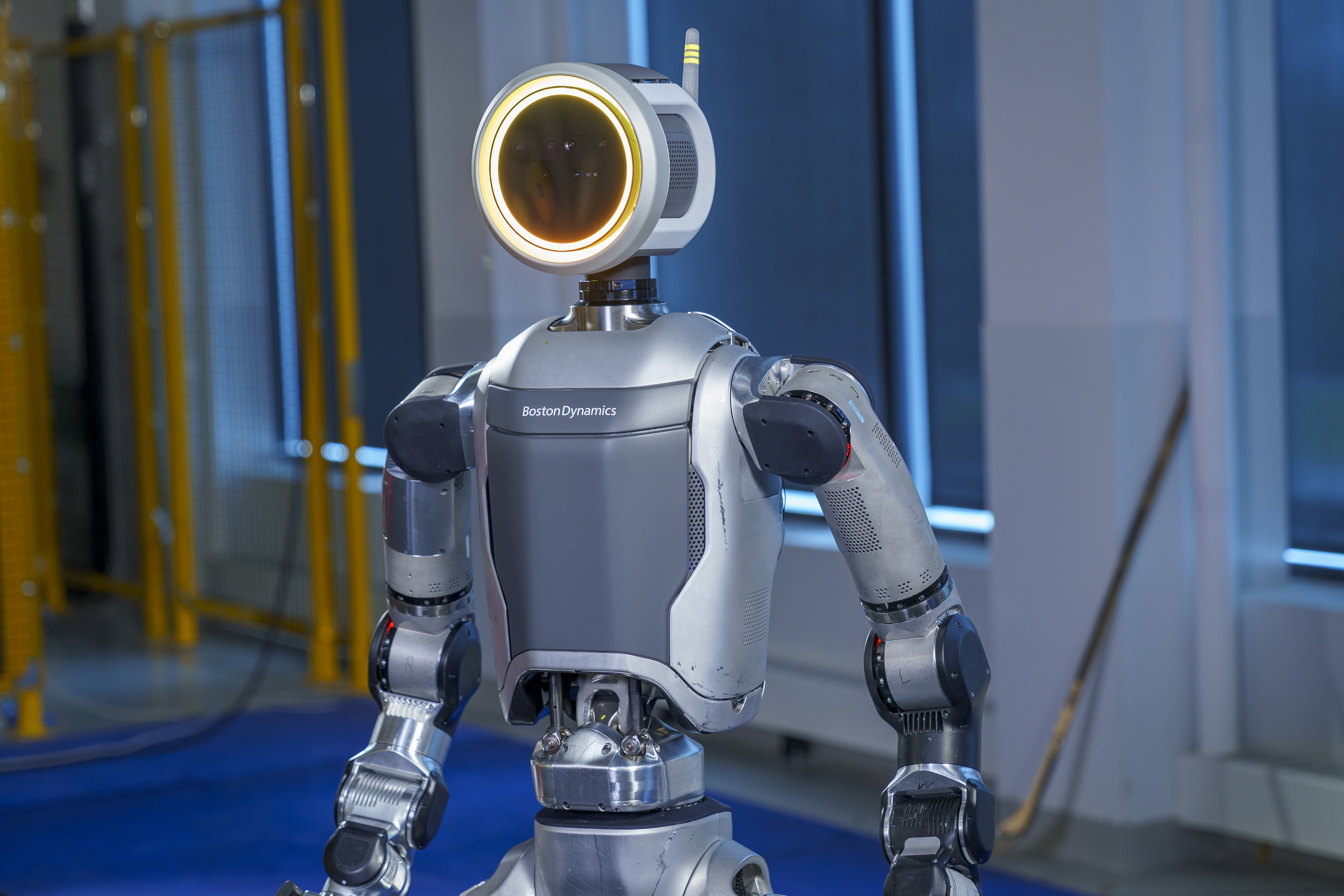
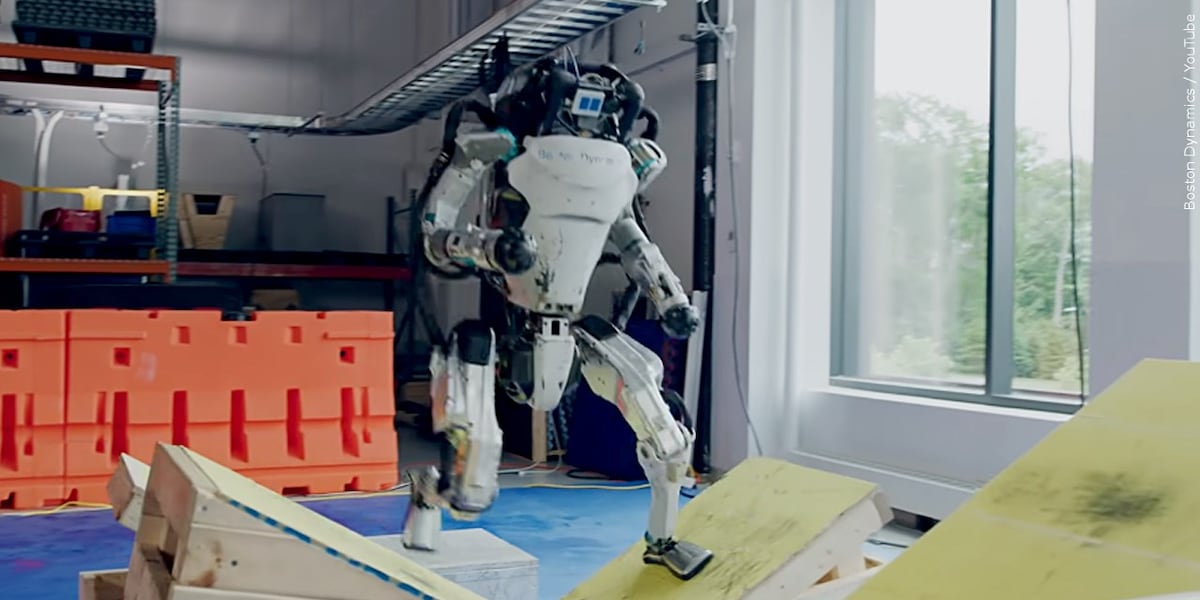
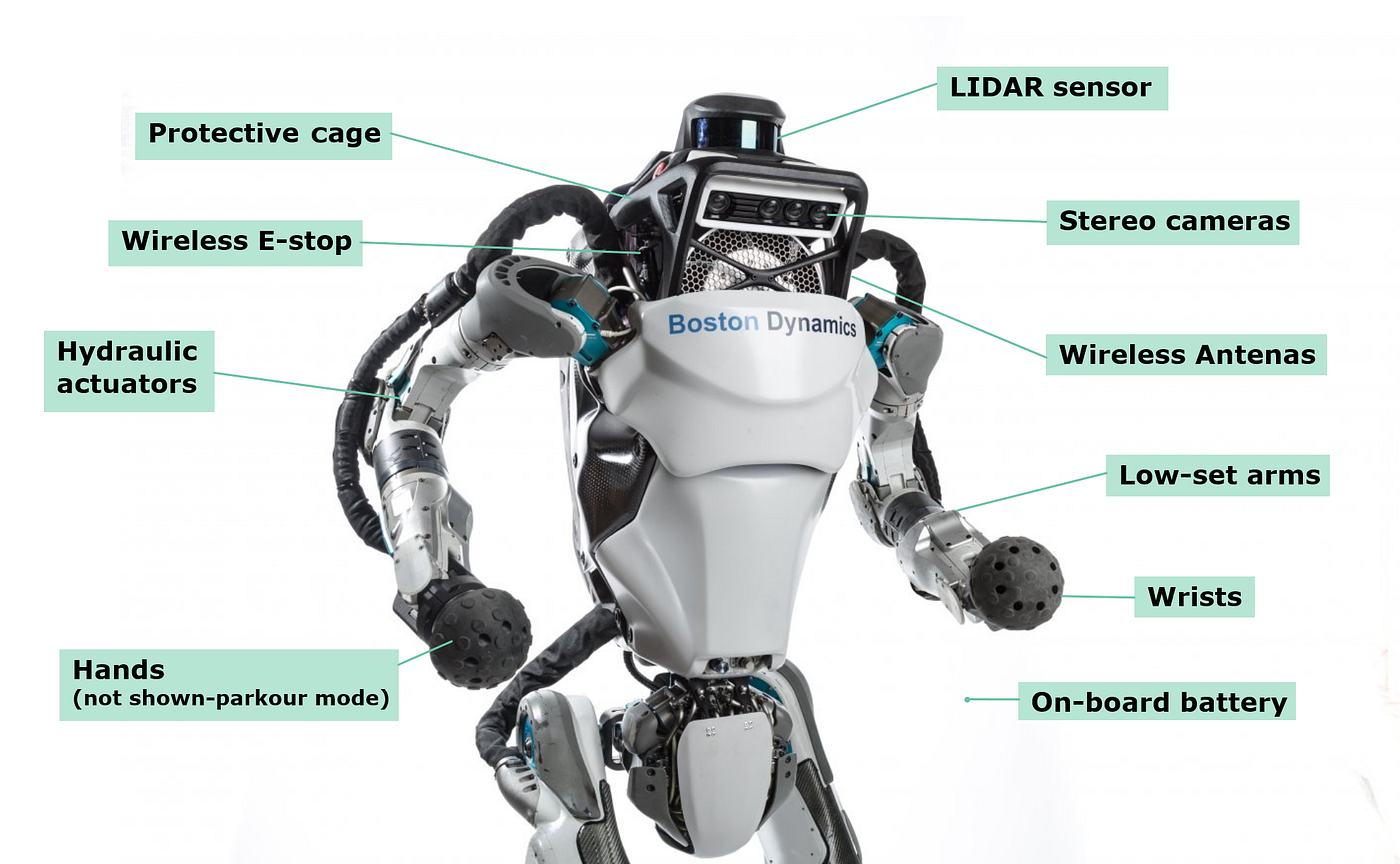
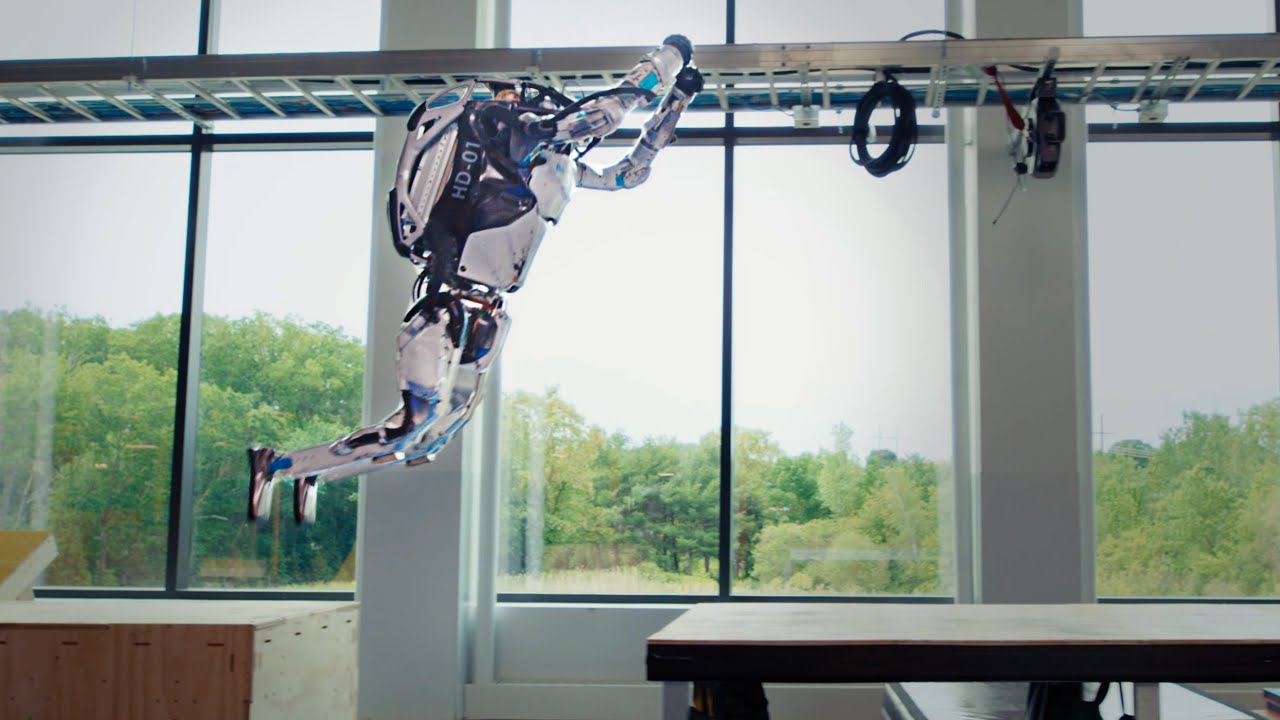
The Boston Dynamics Atlas (Hydraulic) is a full-size humanoid research robot developed by Boston Dynamics in Waltham, Massachusetts, USA. Introduced in 2013 for the DARPA Robotics Challenge, it became famous for pioneering dynamic mobility — walking, jogging, backflips, and obstacle jumps using custom high‑pressure hydraulic actuators. Weighing 150 kg and standing 1.88 m tall, Atlas demonstrated unprecedented agility for a bipedal machine, though limited by a noisy hydraulic pump, ~1‑hour battery life, and no commercial availability. The hydraulic platform was retired in April 2024 and replaced by an all‑electric Atlas, cementing its status as a historic milestone in humanoid robotics.
Specifications
Here are the full technical specifications.
| Spec | Value |
|---|---|
| Height | 188 cm |
| Weight | 150 kg |
| Degrees of freedom | 28 |
| Battery life | 1 hour |
| Max speed | 5.4 km/h |
| Payload | 11 kg |
| Price (new) | Not for sale |
| Price (used range) | N/A |
Price & Value
New MSRP: Not for sale
Used range: N/A
The hydraulic Atlas was never offered for sale, functioning purely as an internal research and DARPA challenge platform. There is no MSRP, no used market, and no pricing history. However, the estimated cost to build such a robot — combining high‑pressure custom hydraulics, on‑board power unit, and custom sensors — likely exceeded $1 million per unit. By contrast, today’s electric humanoids like Tesla Optimus or Unitree H1 aim for mass‑produced prices below $50,000, though they lack the dynamic explosiveness of hydraulic actuation. For research groups, replicating Atlas‑level mobility remains prohibitively expensive, making the hydraulic Atlas a one‑of‑a‑kind historic artifact rather than a commercial asset.
Who Is It For?
Best for: - Robotics historians and locomotion researchers studying legacy dynamic bipedal systems via simulation or historical videos. - DARPA Robotics Challenge enthusiasts analyzing disaster‑response strategies that shaped modern humanoid design.
Not for: - Commercial deployment: never mass‑produced, no payload reliability for industrial tasks, and zero aftermarket support. - Any real‑world operation: noise, short battery life, and retired status make it impractical for field use.
Alternatives & Comparison
While the hydraulic Atlas is no longer available, several modern humanoids have emerged to fill its role in dynamic mobility research and industrial tasks. Here’s how they compare to the original Atlas legacy.
| Model | Price | Available | Key Difference |
|---|---|---|---|
| Tesla Optimus | ~$20,000–30,000 (est.) | preorder | Electric actuation with lower strength but quieter, cleaner, and aimed at mass manufacturing. |
| Unitree H1 | ~$150,000 | yes | High‑torque electric motors, 5.4 km/h walking speed, 32 kg payload, commercially available. |
| Agility Digit | Undisclosed | enterprise-only | Bipedal with legs and arms, passive dynamic walking optimized for logistics, not dynamic acrobatics. |
| Figure 02 | Undisclosed | preorder | All‑electric with dexterous hands and integrated AI, targeting general‑purpose manipulation tasks. |
Verdict: For researchers fascinated by hydraulic dynamics and extreme mobility, the Atlas remains a legendary benchmark whose capabilities have yet to be matched by any electric humanoid. For practical, low‑cost deployment, the Unitree H1 or Tesla Optimus are far more viable — but they sacrifice raw explosive power. No electric robot today can perform backflips like Atlas, making the hydraulic platform a unique historical achievement.
Use Cases & Capabilities
Search and Rescue Research
Atlas was designed for the DARPA Robotics Challenge to perform disaster‑response tasks like driving a vehicle, opening doors, and traversing rubble. Its hydraulic strength and dynamic stability allowed it to carry tools and climb over obstacles, demonstrating feasibility of humanoid robots in hazardous environments. However, the loud hydraulic pump and 1‑hour battery constrained practical field use, and the robot’s size made it unsuitable for confined spaces. The research outcomes have informed all subsequent humanoid designs for disaster relief, especially in terms of whole‑body motion planning under uncertainty.
Dynamic Locomotion Research
Atlas became iconic for parkour, backflips, and jogging, pushing the limits of whole‑body motion planning. Researchers at Boston Dynamics used Atlas to test control algorithms for balance, gait transitions, and aerial maneuvers — breakthroughs that are now being transferred to electric platforms. The robot’s public demonstration videos inspired a new generation of robotics engineers and set a benchmark for agility that competitors still strive to achieve. Even after retirement, the datasets and code developed for Atlas continue to influence bipedal locomotion research worldwide.
Humanoid Robotics Benchmarking
During the DARPA challenge, teams worldwide developed software that ran on Atlas, creating a common benchmark for perception, task planning, and robust autonomy. The platform standardized sensor fusion, real‑time control, and manipulation capabilities, accelerating progress in semi‑autonomous humanoid operation. Lessons from programming Atlas directly influenced the design of later robots like Valkyrie and Digit, particularly in areas of fall recovery and multi‑contact motion. The hydraulic Atlas remains a reference point for evaluating the dynamic performance ceiling of humanoids.
Industrial Feasibility Studies
Although never deployed in factories, early Atlas prototypes carried payloads up to 11 kg and demonstrated the potential for heavy lifting in unstructured settings. The hydraulic system’s power‑to‑weight ratio outperformed electrics of the era, enabling Atlas to move heavy objects with smooth, high‑force motions. However, reliability concerns (leaks, overheating) and noise made it unsuitable for around‑the‑clock manufacturing. These studies ultimately pushed the industry toward all‑electric actuators as the pathway to practical, quiet, and serviceable humanoid workers.
History & Background
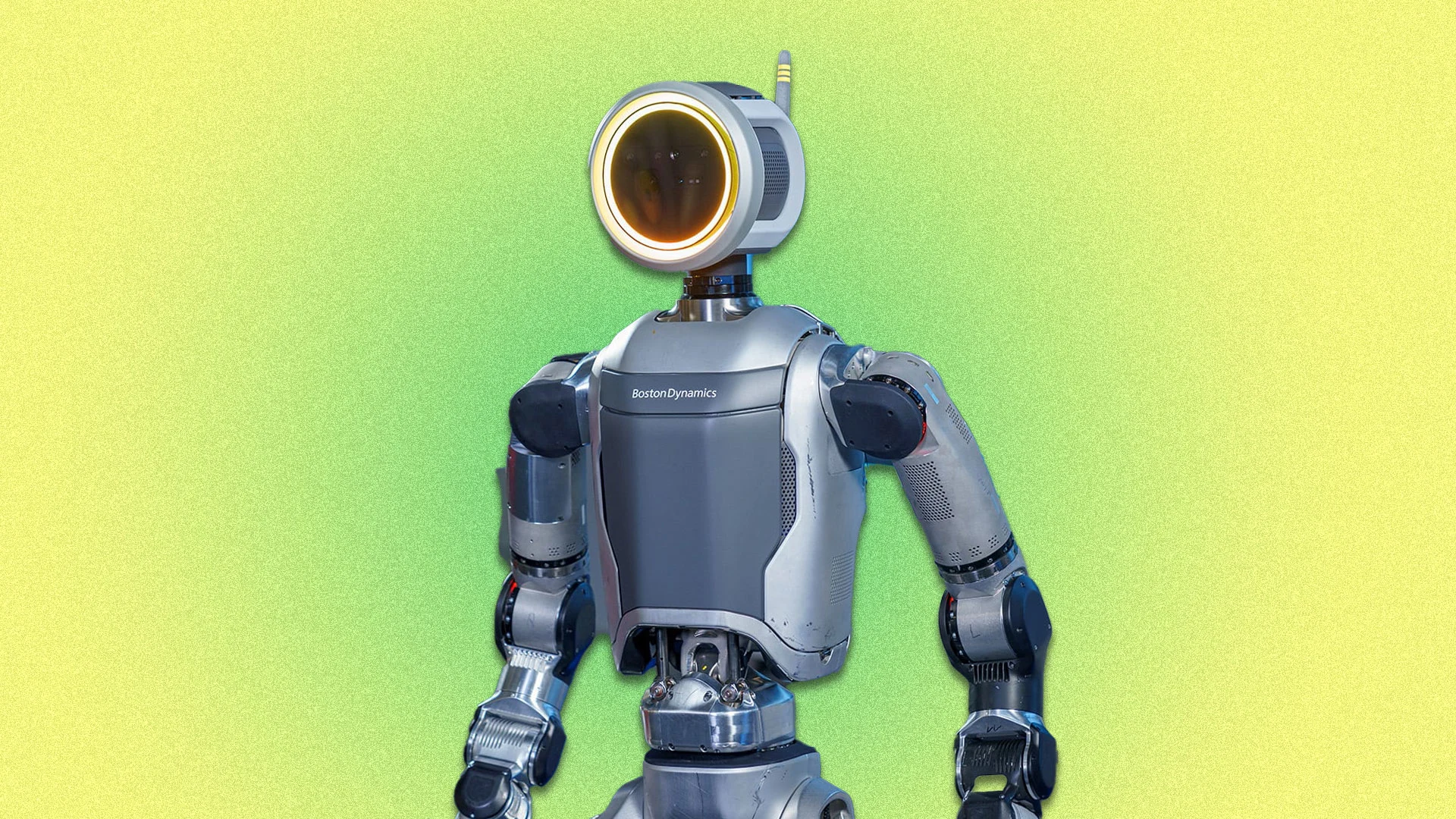
Boston Dynamics, founded in 1992 by Marc Raibert as an MIT spinoff, developed early hydraulic quadruped robots before turning to humanoids. The hydraulic Atlas was first revealed in 2013 for the DARPA Robotics Challenge (DRC), a Pentagon competition to advance disaster‑response robots. Early versions required an external tether for power and safety; later a battery‑powered, untethered version (Atlas HD) debuted in 2015. The robot evolved over multiple generations, gaining electric hands, onboard battery, and new control software. In 2020, Boston Dynamics was acquired by Hyundai Motor Group for $1.1 billion. After a decade of groundbreaking demonstrations — including stunning parkour and backflip videos — the hydraulic Atlas was officially retired on April 16, 2024, with an announcement video showcasing its achievements and teasing an all‑electric successor.
Buying Used — What to Check
Verify authenticity Any hydraulic Atlas unit offered would likely be an early development prototype; demand provenance documentation from Boston Dynamics.
Check hydraulic system integrity Hoses, seals, and the custom high‑pressure pump may be degraded after years of disuse, and original parts are unique and unavailable.
Confirm battery condition The custom lithium‑ion pack likely has diminished capacity and no third‑party replacement exists, restricting operation to minutes.