What is the Boston Dynamics Electric Atlas?
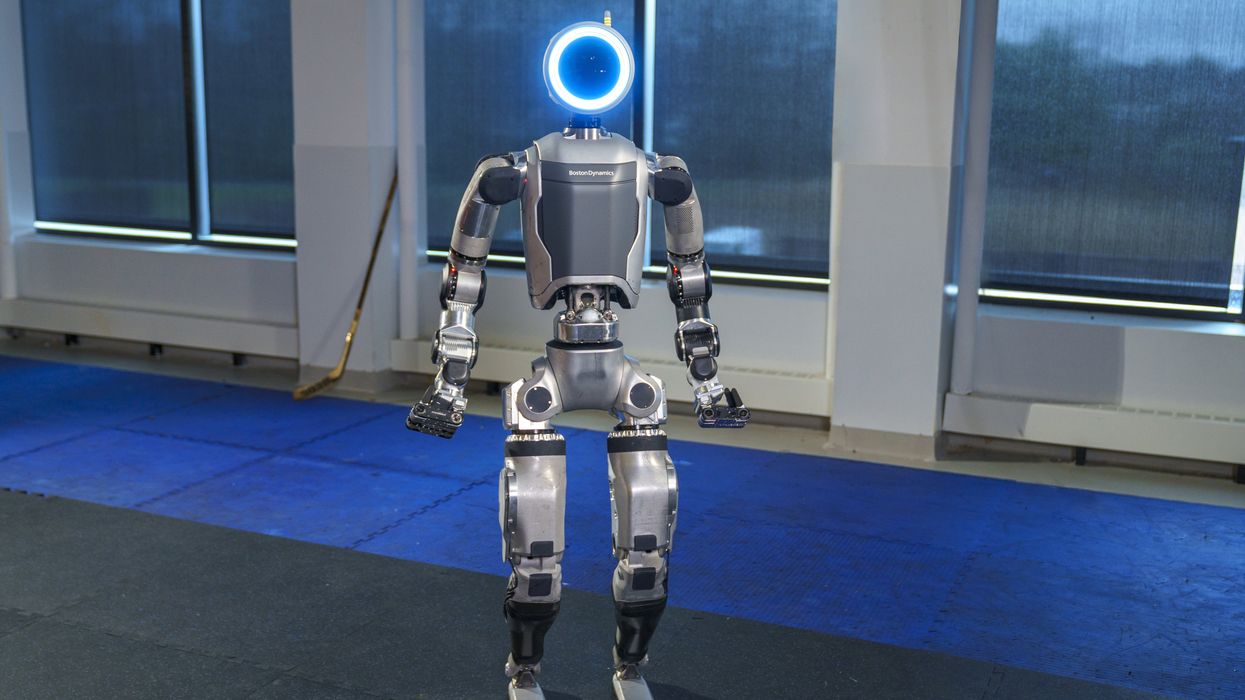
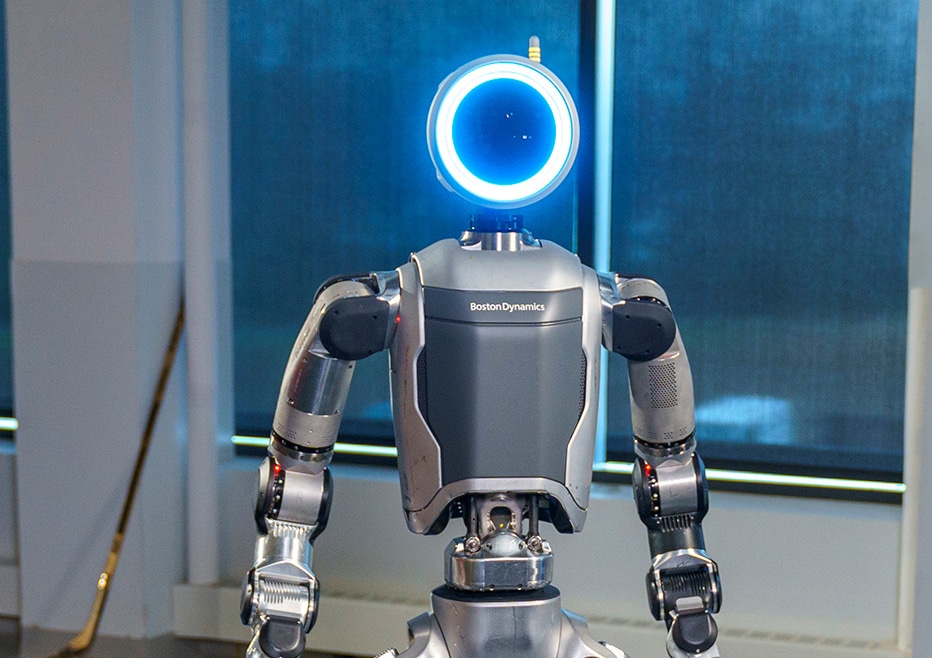
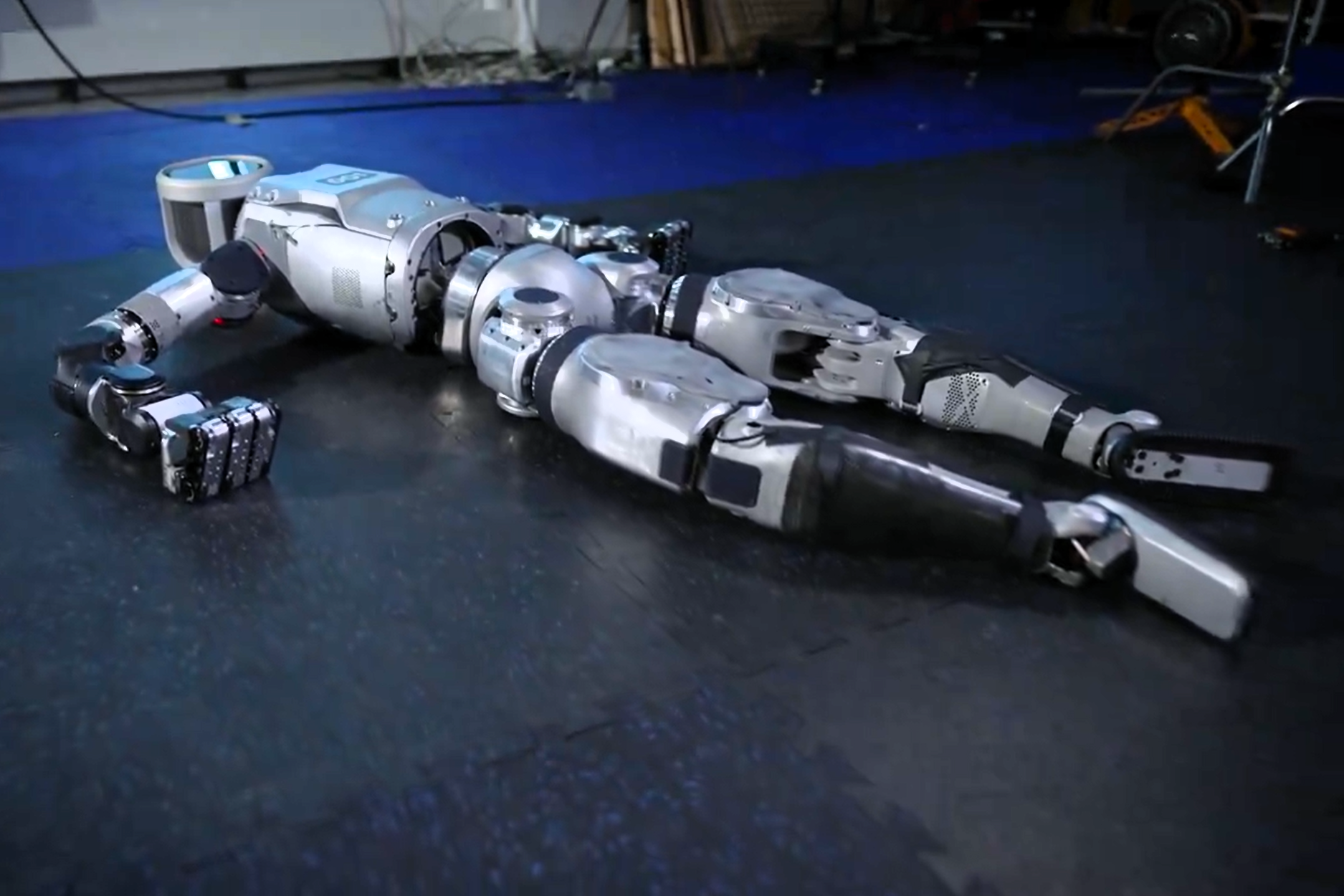
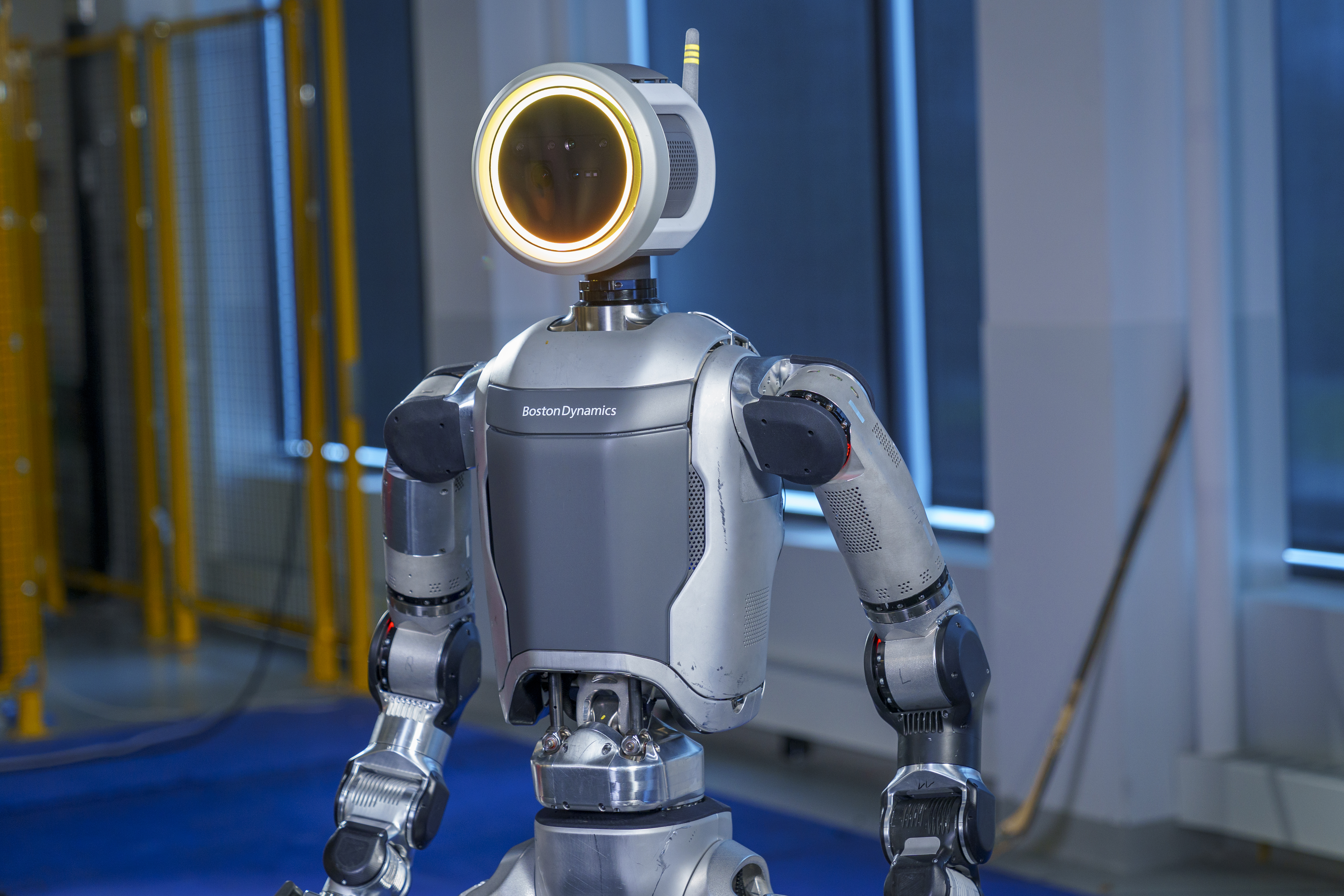
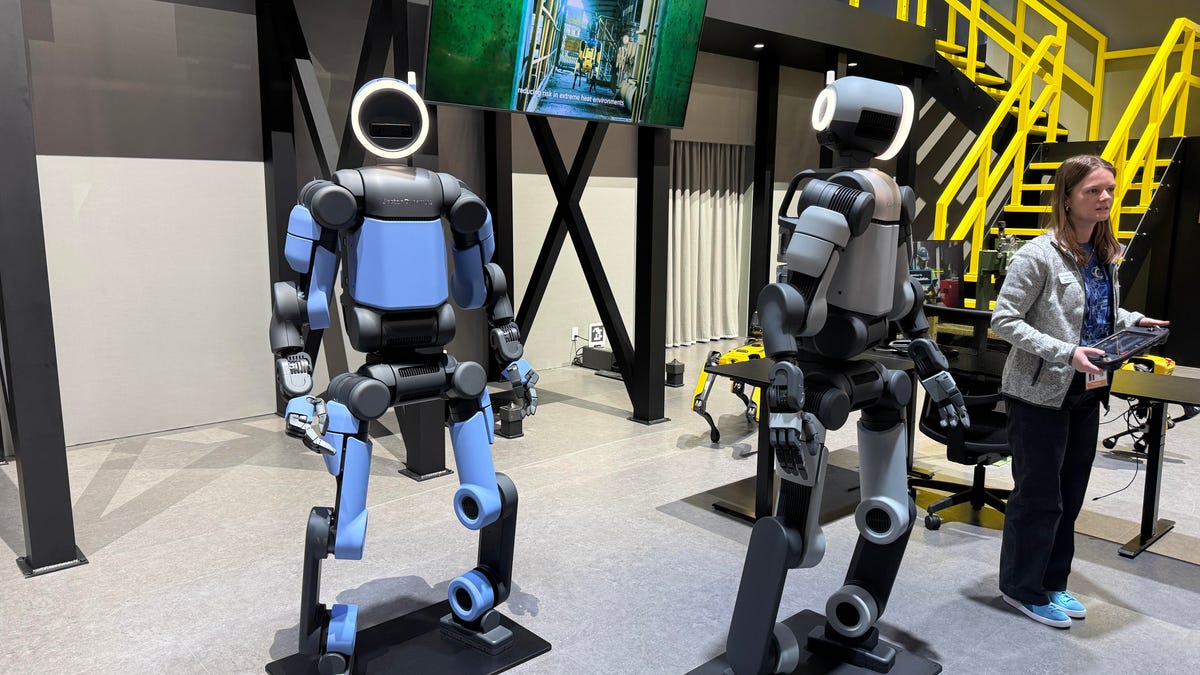
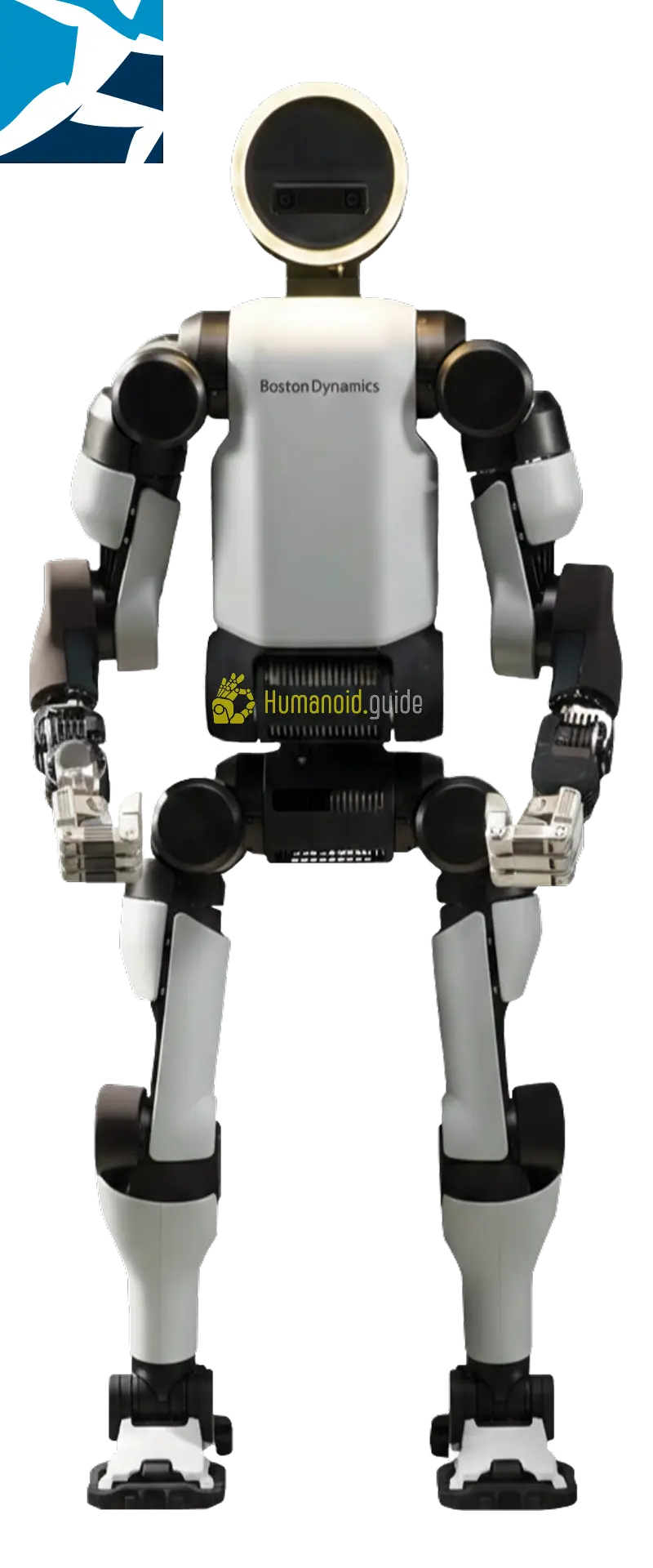
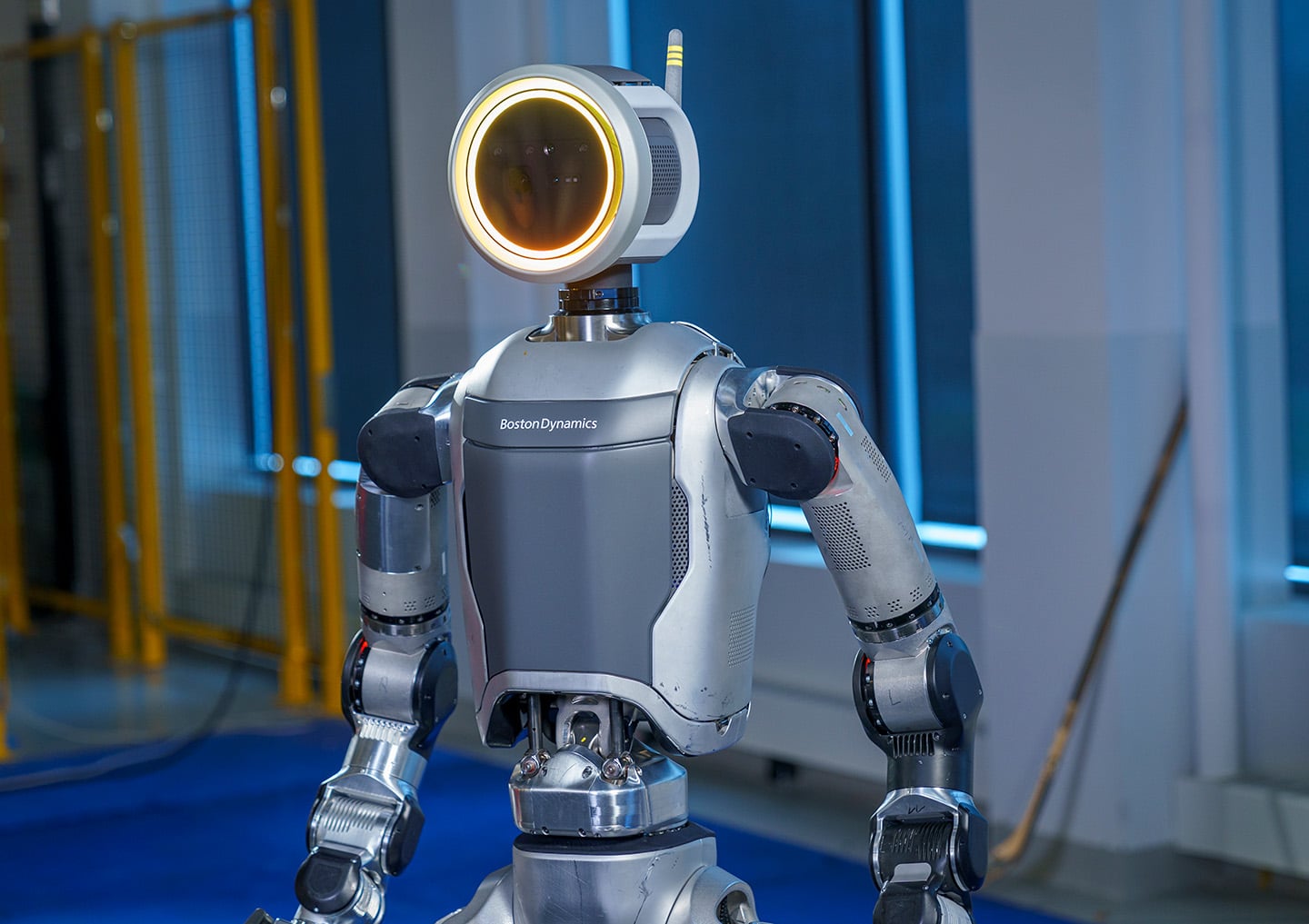
The Boston Dynamics Electric Atlas is a bipedal humanoid robot developed by Boston Dynamics in Waltham, Massachusetts. Revealed in April 2024, it represents a complete electric redesign of the iconic hydraulic Atlas platform. The electric Atlas is stronger and quieter, designed for real-world commercial deployment in industrial automation, logistics, and advanced research. It features extreme joint flexibility with a 360-degree head rotation and 180-degree leg rotation, enabling unconventional maneuvers like self-righting from a prone position. Standing 1.67 m tall and weighing 89 kg, the robot incorporates electric actuators, lidar, RGB and depth cameras, and an IMU for perception. As of 2026, it remains a prototype with no public pricing or sales, and production slots are allocated to strategic partners.
Specifications
Here are the full technical specifications.
| Spec | Value |
|---|---|
| Height | 1.67 m |
| Weight | 89 kg |
| Degrees of freedom | 28 |
| Battery life | 1 hour |
| Max speed | 9 km/h |
| Payload | 11 kg (standing) |
| Price (new) | Undisclosed |
| Price (used range) | N/A |
Price & Value
New MSRP: Undisclosed
Used range: N/A
Boston Dynamics has not disclosed pricing for the Electric Atlas, as it remains a research platform. Industry speculation places a potential price between $370,000 and $450,000 based on the cost of comparable advanced humanoids, but no official confirmation exists. All current production slots are reportedly committed to partners like Hyundai and Google DeepMind through 2026, making it inaccessible to the general market. Compared to alternatives like Tesla Optimus (also in development) or Agility Digit (priced at $250,000 for logistics), the Atlas would likely command a premium for its extreme mobility. Total cost of ownership is unclear, but maintenance of such a complex electric biped would likely be significant. Used units are not available as the robot has not been sold to third parties.
Who Is It For?
Best for: - Advanced locomotion research labs exploring extreme humanoid agility and whole-body manipulation - Industrial R&D teams with partner access evaluating humanoid robots for future factory deployment
Not for: - Small businesses or buyers seeking a commercially available robot (not for sale) - Operations requiring long battery life (only 1-hour runtime)
Alternatives & Comparison
The Electric Atlas is measured against other advanced humanoids targeting industrial and research applications. All are pre-commercial or limited-release, but key differences in design and capabilities set them apart.
| Model | Price | Available | Key Difference |
|---|---|---|---|
| Tesla Optimus Gen 2 | Undisclosed | no | More dexterous hands; targeting personal assistant tasks |
| Figure 02 | Undisclosed | no | Designed for warehouse and manufacturing; AI-driven learning |
| Agility Digit | $250,000 | yes | Bipedal with specialized legs for logistics; already being trialed in warehouses |
Verdict: For pure locomotion research, Atlas Electric's extreme agility is unmatched. However, for practical deployment in warehouses today, Agility Digit is the only commercially available option at $250,000. Tesla Optimus and Figure 02 are still in development and lack Atlas's proven mobility, making Atlas the top choice for partners investigating next-gen humanoid capabilities.
Use Cases & Capabilities
Advanced Locomotion Research
The Electric Atlas excels as a platform for studying dynamic bipedal locomotion. Its 28 electric joints and extreme flexibility—including 180-degree leg rotation and rapid self-righting—allow researchers to develop and test algorithms for parkour, stair climbing, and uneven terrain navigation. The on-board lidar and depth cameras provide rich sensory data for real-time motion planning, while a top speed of 9 km/h enables fast experiments. The compact frame fits standard lab spaces, and Boston Dynamics' Orbit software stack supports custom control development. Partner access already fuels academic and industry publications on humanoid agility.
Industrial Inspection and Maintenance
In the future, electric Atlas could be deployed for inspection tasks in power plants, refineries, or construction sites. Its 360-degree head rotation and sensor suite enable it to navigate complex infrastructure and detect anomalies like gas leaks or thermal hotspots. The 11 kg standing payload is sufficient for carrying inspection tools such as thermal cameras or ultrasonic detectors. Unlike wheeled or tracked robots, Atlas can step over obstacles and climb ladders, reaching areas inaccessible to other machines. Battery life of 1 hour would limit continuous inspection missions without frequent recharging, so hot-swappable batteries or autonomous docking would be essential.
Logistics and Material Handling
While not fielded yet, Atlas's manipulation capabilities (one hand, 11 kg payload) make it a candidate for light material handling in warehouses. Electric actuation provides quieter operation and better energy efficiency than its hydraulic predecessor, crucial for indoor environments. Its humanoid form factor allows it to use tools and workspaces designed for humans, reducing retrofitting costs. Compared to purpose-built logistics robots like Agility Digit, Atlas lacks specialized carrying legs and heavy payload, limiting its immediate viability in this role. Future iterations with a stronger grip and longer runtime could close that gap.
Human-Robot Interaction Studies
As a full-sized humanoid, Atlas is suitable for investigating how humans interact with robots in collaborative settings. Electric motors produce far less noise than hydraulics, making it more approachable in shared workspaces. Researchers can study trust, safety, and task delegation using the robot's full-body control and high degree of freedom. The rich sensor suite enables gaze tracking and gesture recognition, supporting natural communication. However, its prototype status and lack of safety certifications mean it is restricted to controlled laboratory environments until commercial standards are met.
Software Development and AI Research
The fully electric platform is an ideal testbed for AI-driven motion planning and whole-body control software. With 28 DOF and real-time sensor fusion from lidar, cameras, and IMU, developers can train reinforcement learning policies for complex locomotion tasks. The extreme joint range enables novel motion primitives not possible on typical humanoids, pushing the boundaries of what AI can achieve. Boston Dynamics' partnership with DeepMind suggests advanced AI integration in future software stacks, and partners already leverage the Orbit SDK to simulate and deploy controllers. The small number of available units limits large-scale parallel testing, but the research output is disproportionately influential.
History & Background
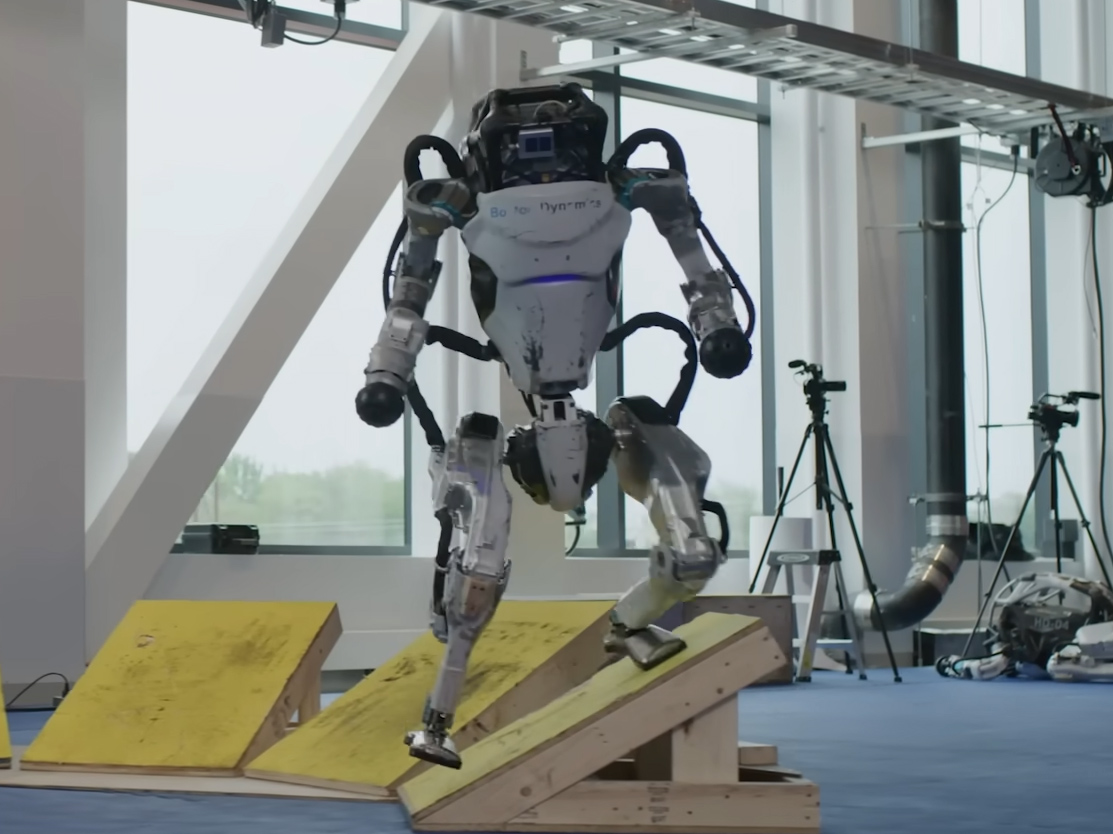
Boston Dynamics, founded in 1992 in Waltham, Massachusetts, has a long history of developing advanced dynamic robots. The original hydraulic Atlas was first unveiled in 2013 as a DARPA-funded platform for the DARPA Robotics Challenge, demonstrating impressive mobility with 28 DOF and a 1-hour battery. Over a decade, successive versions performed increasingly difficult tasks—walking over rubble, handling objects, and executing backflips. In April 2024, Boston Dynamics retired the hydraulic Atlas and revealed the all-electric successor, a completely new design. The electric Atlas is stronger, quieter, and intended for commercial deployment, featuring a sleeker form, 360-degree rotating head, and extreme joint flexibility. As of 2026, it remains in prototype stage with limited units built for strategic partners like Hyundai and Google DeepMind. No production timeline or pricing has been announced.
Buying Used — What to Check
Verify actuator and joint health Complex electric actuators may wear over time and are costly to repair; request maintenance logs.
Check battery cycle count Battery capacity degrades; confirm runtime under load matches original 1-hour spec.
Request software and calibration support Without official support from Boston Dynamics, recalibrating sensors or updating the OS could be difficult.