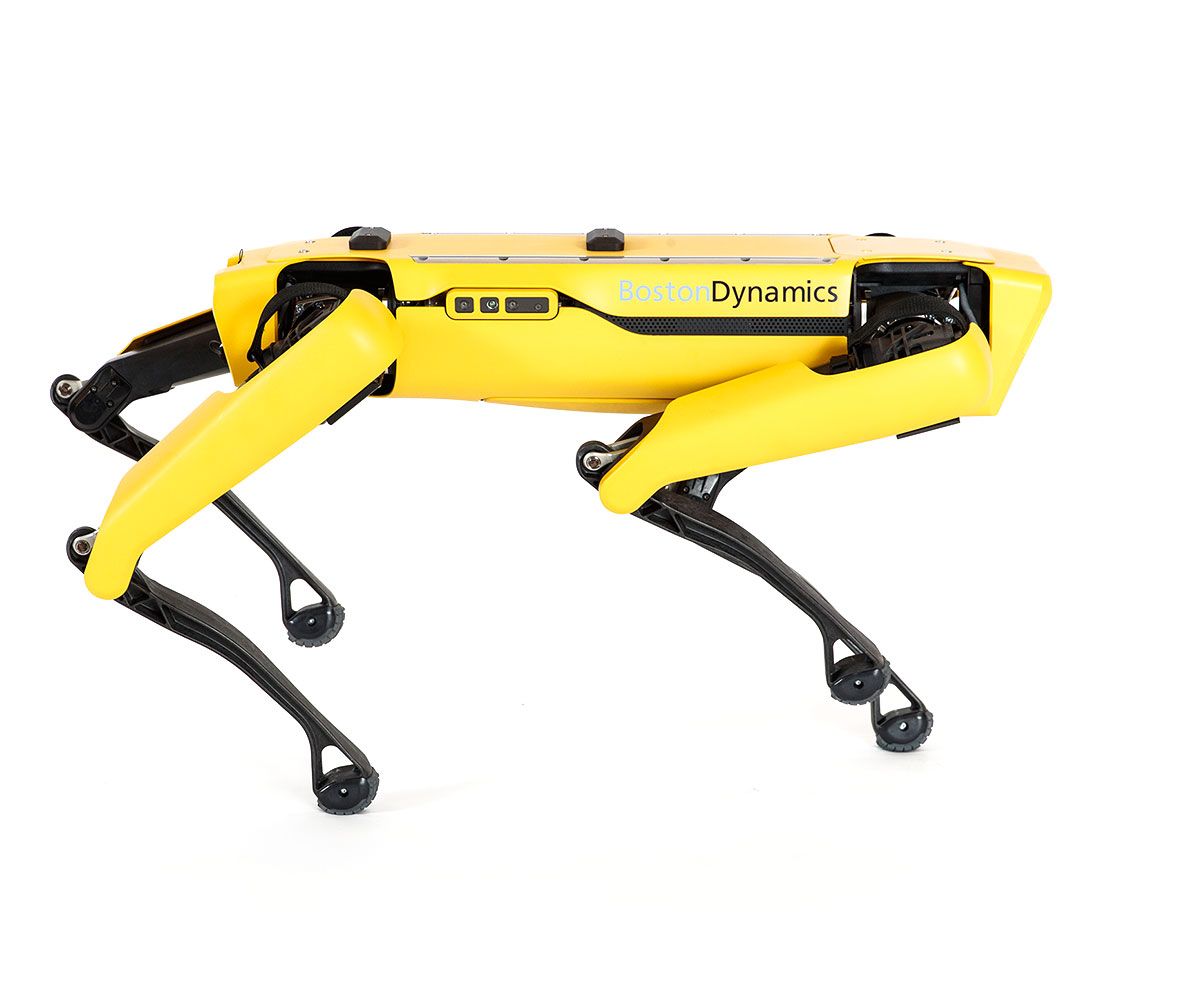
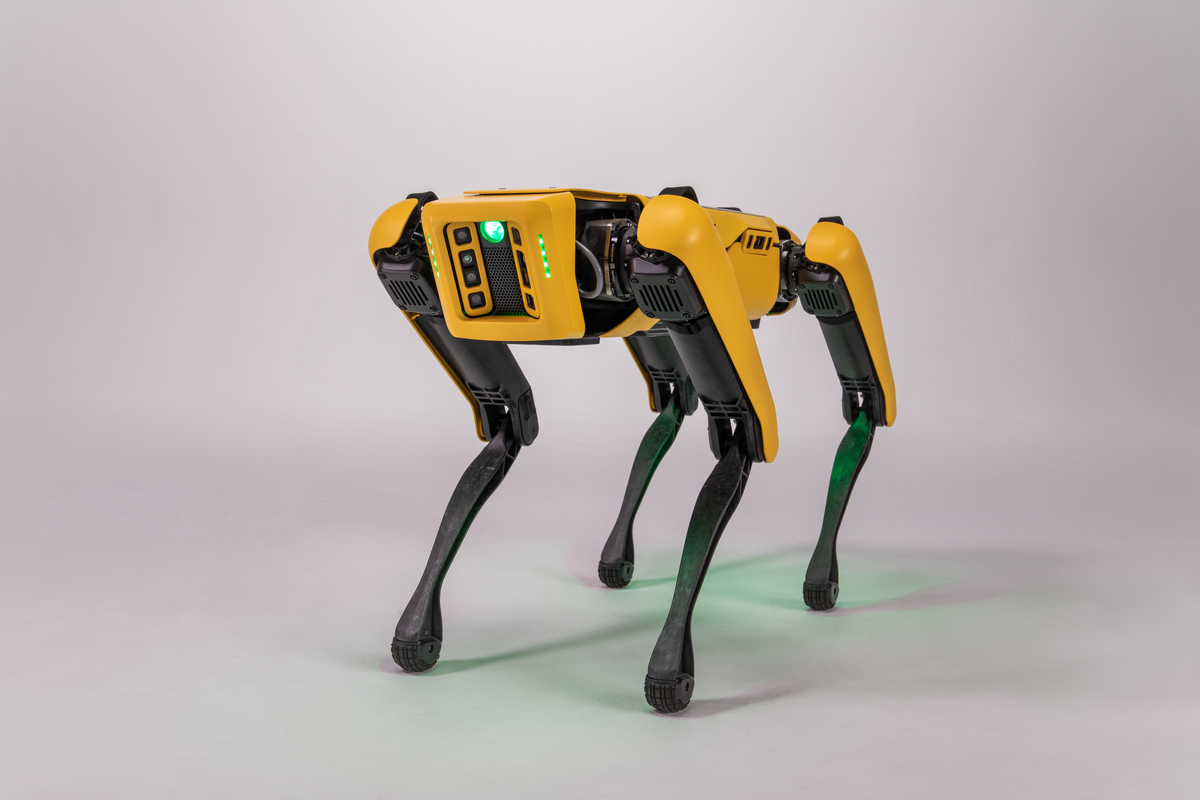
What is the Boston Dynamics Spot?
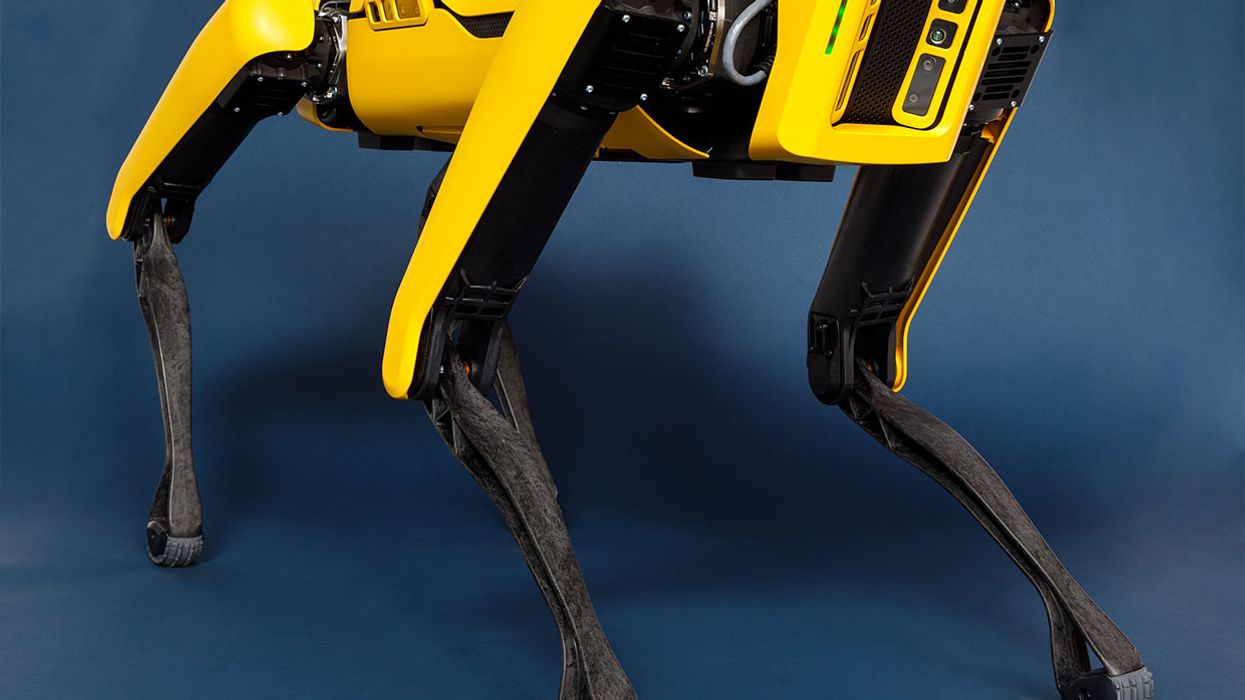
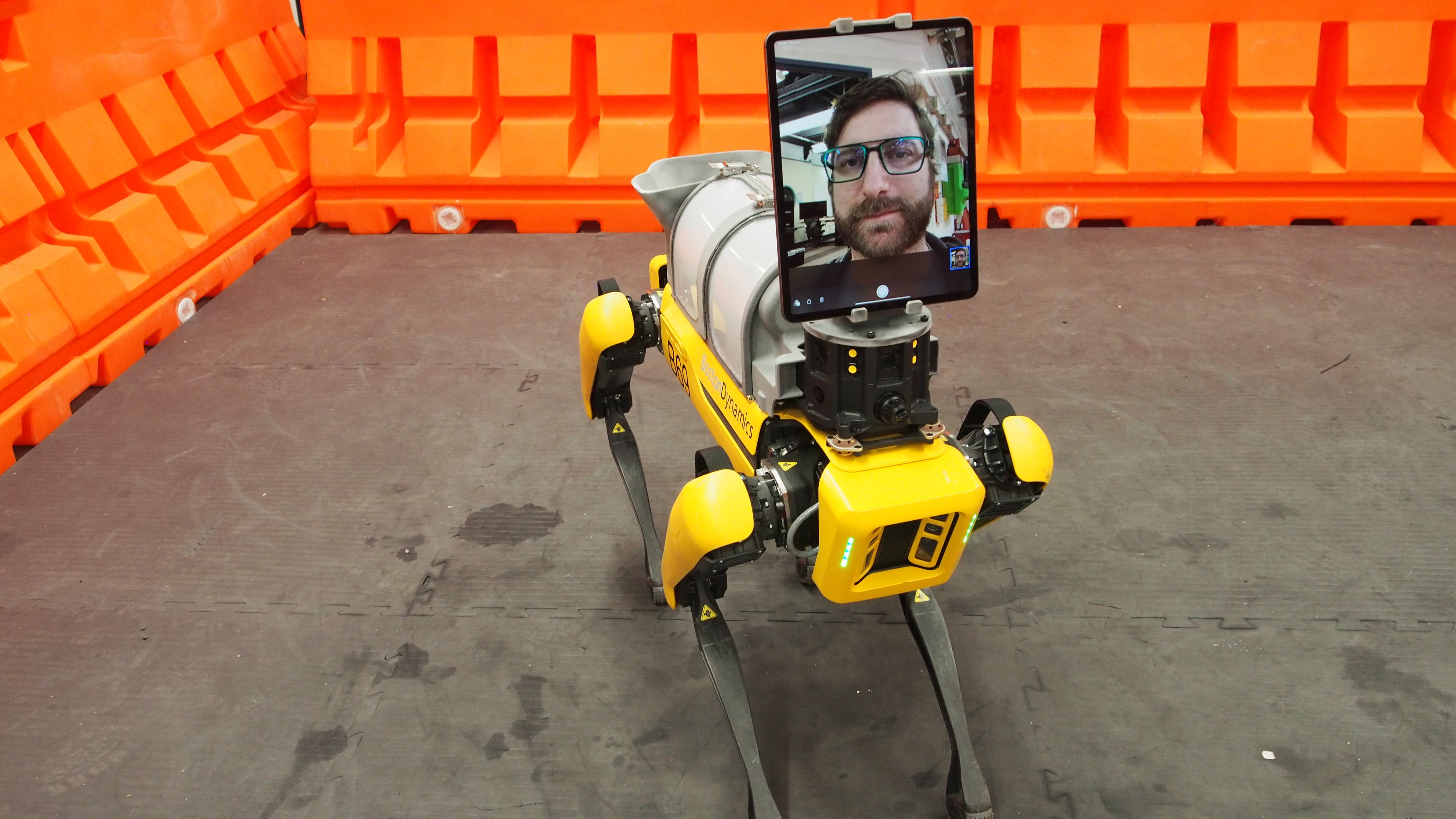
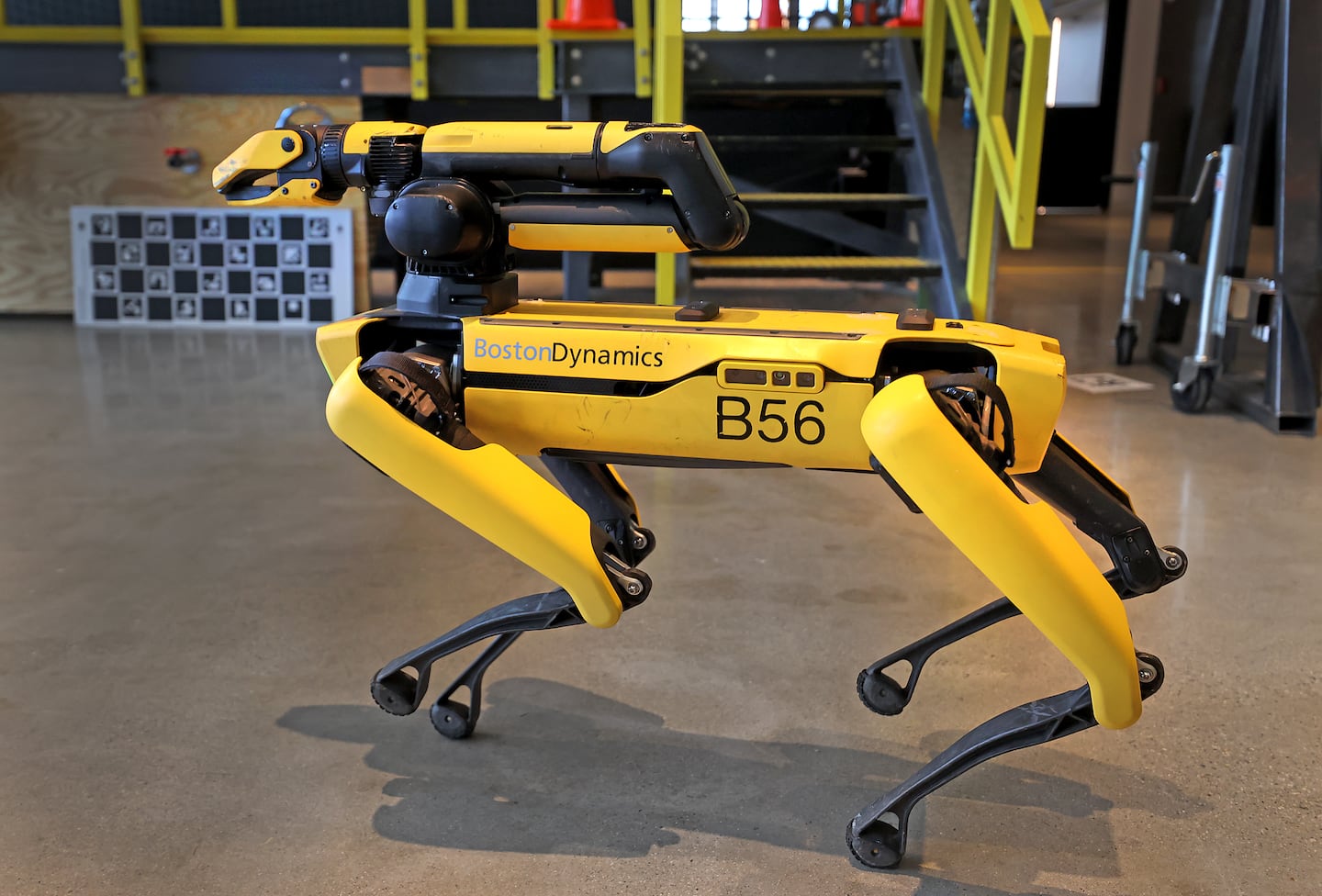
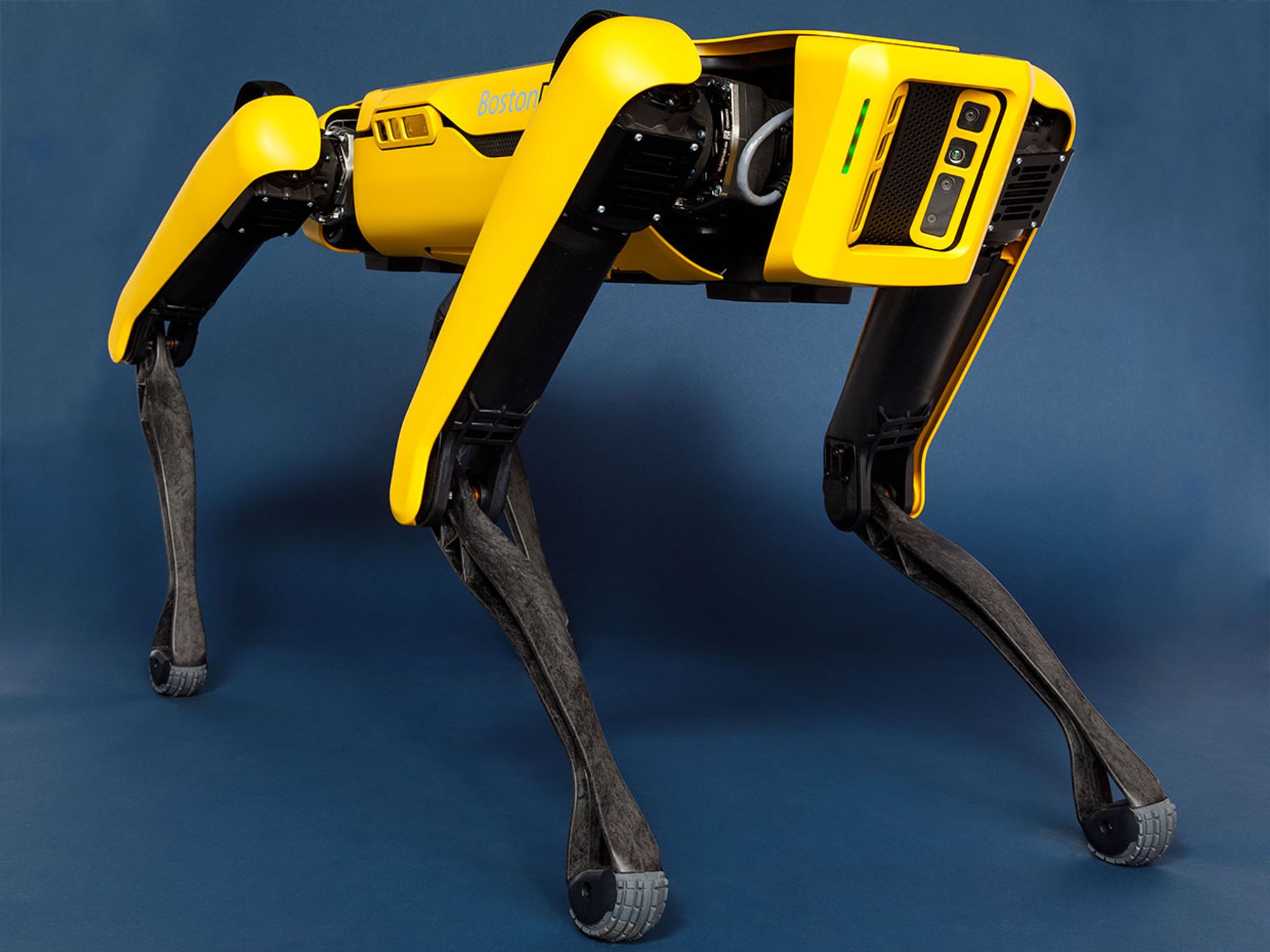
The Boston Dynamics Spot is an agile, quadruped mobile robot purpose-built for industrial inspection and autonomous data collection. Designed and manufactured by Boston Dynamics in Waltham, Massachusetts, USA, Spot navigates stairs, rubble, gravel, and slopes with a ruggedized IP54-rated body. It carries up to 14 kg of modular payloads—thermal cameras, gas sensors, LiDAR—and supports autonomous missions via Autowalk pre-programming. Key differentiators include hot-swappable batteries, a docking station for 24/7 patrols, and a full Python/gRPC SDK with ROS integration. The optional Spot Arm (6 DOF + gripper) enables door opening, valve turning, and object manipulation. With fleet management through the Orbit web dashboard and OTA updates, Spot is deployed across energy, construction, and manufacturing sectors worldwide.
Specifications
Here are the full technical specifications.
| Spec | Value |
|---|---|
| Height | 840 mm |
| Weight | 32.5 kg (with 2 batteries) |
| Degrees of freedom | 12 (legs); 18 with Spot Arm |
| Battery life | 1.5 hours (90 min) |
| Max speed | 5.76 km/h (1.6 m/s) |
| Payload | 14 kg |
| Price (new) | $74,500 (Explorer Kit) – $150,000 (enterprise bundle) |
| Price (used range) | ~$45,000 – $90,000 (est.) |
Price & Value
New MSRP: $74,500 – $150,000
Used range: ~$45,000 – $90,000 (est.)
Spot’s base Explorer Kit ($74,500) includes the robot, two batteries, charger, tablet controller, and transport case. A fully equipped enterprise bundle with Enhanced Autonomy Package (LiDAR + 360° cameras), Spot CAM+ PTZ camera, and GPU AI Core can reach $150,000. Compared to the Unitree B2 ($100k), Spot offers superior ruggedization, fleet software, and enterprise support. Annual maintenance runs roughly $6,000, and battery replacements (two packs) cost $9,240 after ~500 cycles. On the secondary market, well-maintained one-year-old units often list between $45,000 and $90,000, though accessory configurations heavily influence price. The robot’s long lifecycle, upgradeable payload ports, and strong manufacturer backing support moderate depreciation. For organizations deploying multiple units, the Orbit fleet dashboard and 24/7 autonomous docking further justify the total cost of ownership.
Who Is It For?
Best for: - Industrial inspection teams in energy, mining, or manufacturing needing rugged, autonomous patrols (IP54, stair climbing, 14 kg payload) - Public safety and law enforcement requiring remote, PTZ surveillance with optional thermal imaging and 30× zoom - Research labs with budget for a robust quadruped platform that supports full SDK access, ROS integration, and payload expansion
Not for: - Small businesses or individuals looking for a low-cost inspection drone (starting price $74,500, high TCO over three years) - Submersible or highly wet environments (IP54 splash-resistant only; for IP67 see ANYbotics ANYmal) - Heavy payload logistics beyond 14 kg (payload limited to 14 kg, not suitable for continuous carrying of large tools)
Alternatives & Comparison
Spot competes in the high-end industrial quadruped market with the Unitree B2, Ghost Robotics Vision 60, and ANYbotics ANYmal. Each offers unique strengths in price, ruggedness, and specialized autonomy.
| Model | Price | Available | Key Difference |
|---|---|---|---|
| Unitree B2 | $100,000 | yes | Lower cost, open-source ROS support, but lighter build, less ruggedized, and payload 10 kg |
| Ghost Robotics Vision 60 | $150,000 | yes | Military-grade ruggedness, higher speed, different sensor integration designed for defense |
| ANYbotics ANYmal | $150,000 | yes | Higher IP67 rating, oil & gas specialization, full autonomy with onboard perception, heavier payload |
Verdict: For most industrial inspection needs, Spot’s $74,500 base price and mature Autowalk autonomy make it the cost-effective choice. You get a proven fleet management platform and an extensive partner ecosystem. If your site has wet or true outdoor exposure, ANYmal’s IP67 rating justifies its $150K price tag. And for defense or high-risk military applications, Ghost’s Vision 60 delivers unmatched ruggedness.
Use Cases & Capabilities
Autonomous Industrial Inspection
Spot replaces human inspectors on routine rounds through manufacturing plants, refineries, and power substations. Using Autowalk, teams pre-record inspection routes; Spot then autonomously follows those paths, capturing high-resolution imagery, thermal scans, and gauge readings. Onboard edge AI (optional GPU core) can flag defects in real-time and alert operators via the Orbit dashboard. The robot can also dock itself for recharging and upload data to SCADA or digital twin systems, ensuring 24/7 monitoring without manual intervention.
Remote Surveillance & Security
Public safety agencies and private security firms deploy Spot for perimeter patrols and event security. With the Spot CAM+ PTZ camera (30× optical zoom), operators can remotely inspect distant objects, zoom in on license plates, and stream video to a command center. Spot’s 360° stereo vision and automatic obstacle avoidance let it navigate warehouses, parking lots, or outdoor compounds at night. Integration with existing security systems is simplified through the API and ROS drivers.
Construction Site Monitoring
On large construction sites, Spot documents daily progress by walking grids with mounted cameras or 3D scanners. The robot creates time-lapse records, measures volumes, and detects safety violations without dedicated personnel. Paired with the Spot Dock, it can return to base for recharging between patrols without human assistance. Its stair-climbing ability lets it cover multi-story structures. Payload flexibility allows swapping from visual to thermal or gas sensors as project phases change.
Hazardous Environment Data Collection
In nuclear facilities, chemical plants, or post-disaster zones, Spot carries gas sensors, radiation detectors, and hazmat samplers to locations too dangerous for humans. The robot’s IP54 resistance protects against light dust and splashes, and its self-righting capability means it can recover from falls. Operators can tele-operate Spot via tablet or Orbit, with the ability to open doors and turn valves using the optional arm. Collected data is streamed in real-time for immediate analysis.
Research & Development Platform
Universities and corporate R&D labs use Spot as a locomotion and manipulation testbed. The full Spot SDK (Python, gRPC) and ROS integration lower the barrier for custom autonomy, SLAM, or reinforcement learning projects. The robot supports cloud connectivity for big-data analytics and has expansion ports for custom sensors or compute modules. With the Spot Arm (6 DOF + gripper), researchers prototype mobile manipulation tasks like sample pickup or valve turning at the full 985 mm reach.
History & Background
Boston Dynamics was founded in 1992 in Waltham, Massachusetts, initially developing advanced legged robots for DARPA. The Spot quadruped emerged from early prototypes BigDog and LS3, with the smaller, quieter Spot first publicly revealed around 2015. In 2019, Spot entered commercial production as the Spot Explorer, making it one of the first legged robots sold to enterprise customers. Over the following years, the platform expanded with the Spot Arm (6 DOF), Spot CAM+ PTZ camera, autonomous Spot Dock, and Autowalk mission programming. The Orbit fleet management web application (formerly Scout) centralized multi-robot control and data integration. In December 2020, Hyundai Motor Group acquired a controlling stake in Boston Dynamics for $1.1 billion, providing the capital to scale manufacturing and R&D. As of 2026, Spot remains in active production and field deployment, with thousands of units operating worldwide across energy, construction, manufacturing, and public safety sectors.
Buying Used — What to Check
Verify battery cycle count Batteries degrade after ~500 cycles; a full replacement set costs $9,240 and directly impacts runtime.
Inspect leg joints and actuators Quadruped legs experience significant wear; check for play, noise, and smoothness across all 12 DOF.
Confirm firmware and autonomy licenses Autowalk and Enhanced Autonomy Package are software purchases tied to the robot; ensure they transfer with the sale.