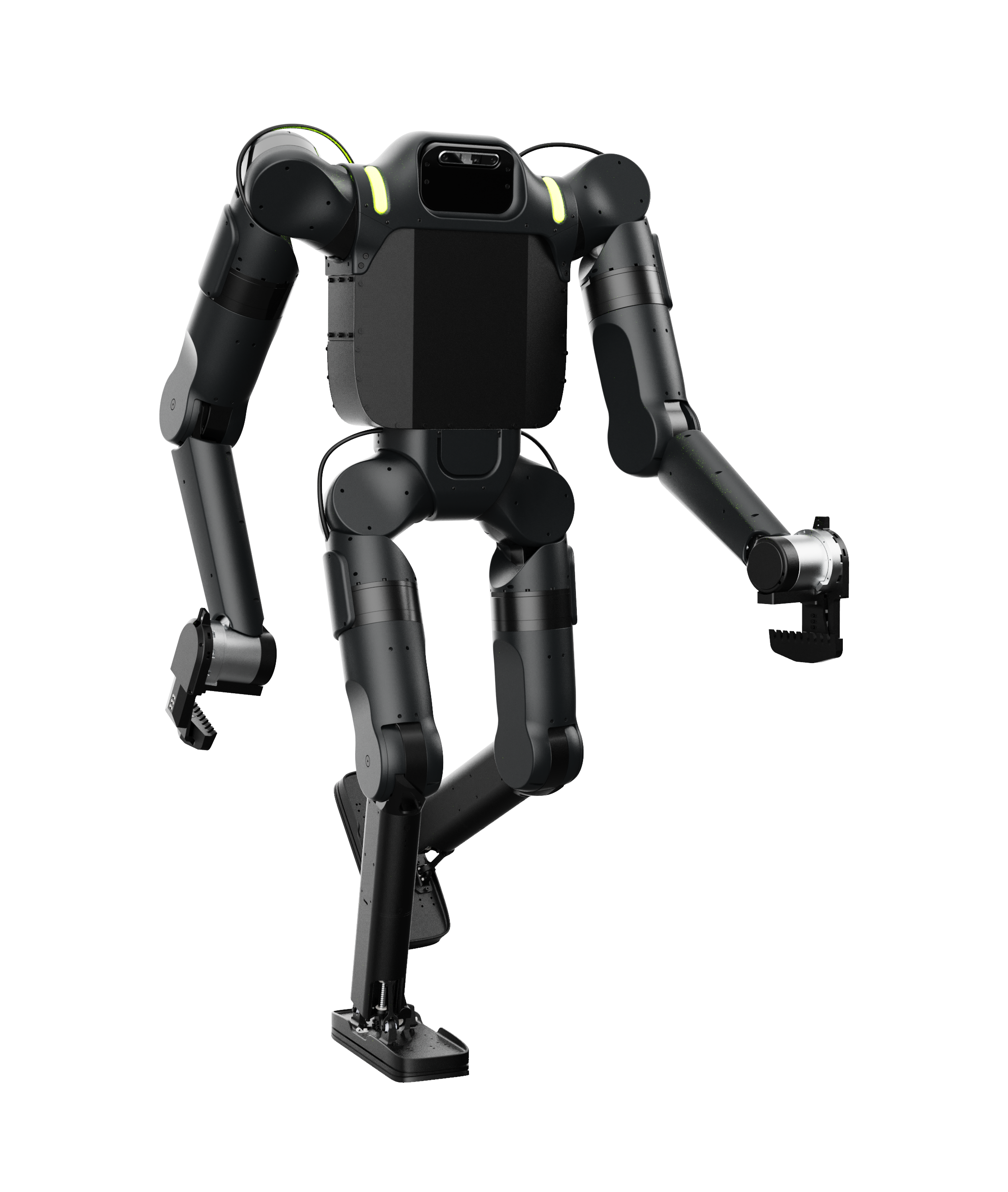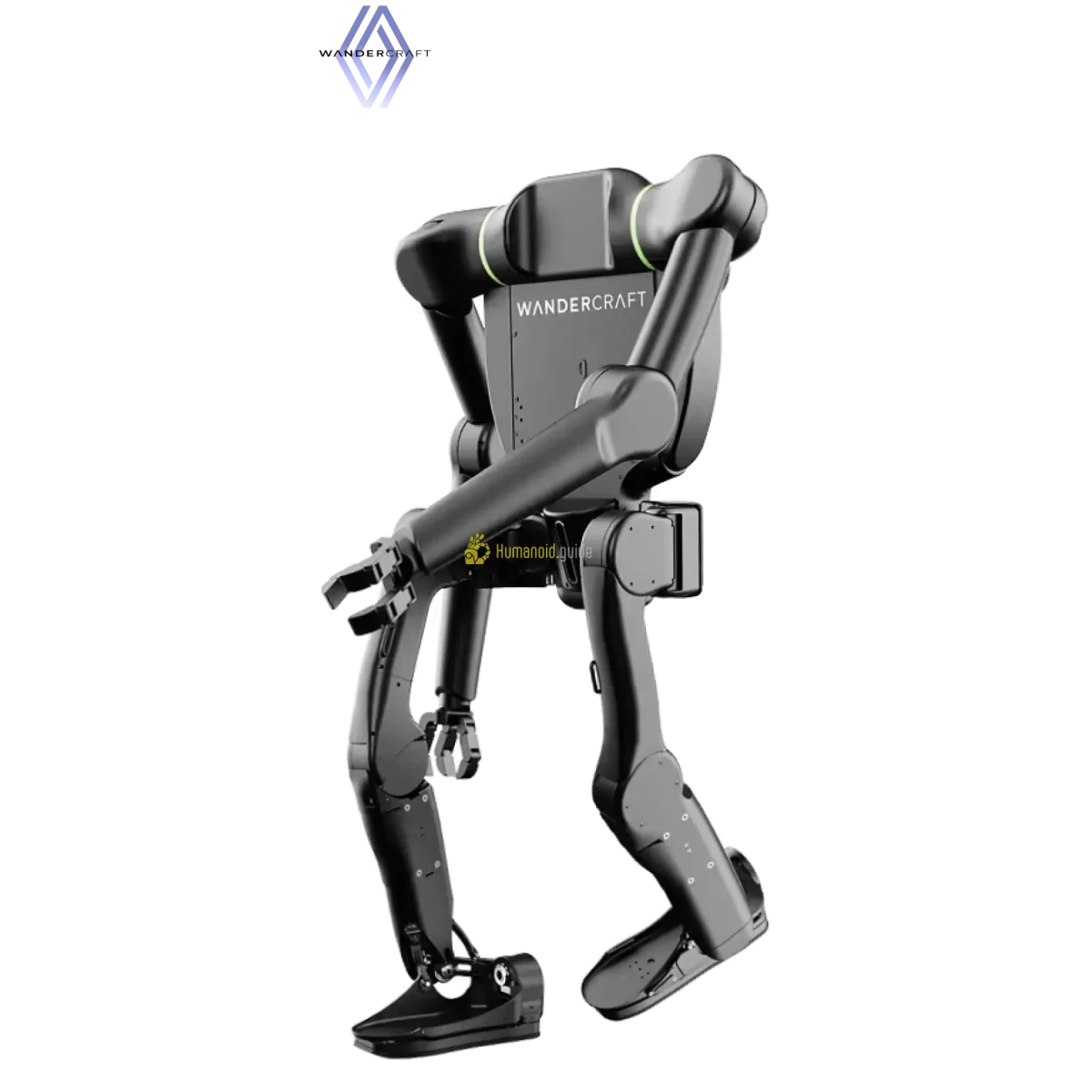
What is the Calvin 40?
The Wandercraft Calvin-40 is a headless, voice-operated bipedal humanoid robot from French robotics company Wandercraft, headquartered in Paris. Built on the self-balancing platform that powers the company’s Atalante medical exoskeleton, the Calvin-40 was developed for physically demanding industrial tasks — specifically heavy logistics and material handling within factories. Revealed in June 2025 after just 40 days of assembly (hence the name), it stands 170 cm tall and weighs 80 kg. It integrates an NVIDIA Jetson edge AI compute module paired with the NVIDIA Isaac robotics platform, enabling visual language model reasoning for task interpretation and a voice-command interface. With an IP54 rating for dust and water resistance, a 4-hour runtime, and a 40 kg payload capacity, the Calvin-40 is currently undergoing pilot deployments in automotive manufacturing with Renault Group.
Specifications
Here are the full technical specifications.
| Spec | Value |
|---|---|
| Height | 170 cm |
| Weight | 80 kg |
| Degrees of freedom | 28 |
| Battery life | 4 hours |
| Max speed | 3 km/h |
| Payload | 40 kg |
| Price (new) | Undisclosed (contact manufacturer) |
| Price (used range) | N/A (pre-commercial) |
Price & Value
New MSRP: Undisclosed
Used range: N/A
Wandercraft has declined to disclose a price for the Calvin-40, as it remains in pilot testing and is not commercially available. The industrial humanoid market is still emerging, with comparable robots like the Digit from Agility Robotics often priced in the mid-six figures, though some entrants target sub-$50,000 price points. Calvin-40 likely benefits from Wandercraft’s exoskeleton supply chain to manage costs, but any estimate remains speculative. Early enterprise adopters should anticipate a custom quotation covering the robot, integration, and fleet management software. Given the lack of a public price, total cost of ownership projections are premature; however, Wandercraft’s leasing model for its medical exoskeleton suggests a similar rental or lease approach could be offered for industrial customers once the robot reaches production. Until then, no secondary market exists, and used pricing is not applicable.
Who Is It For?
Best for: - Factory logistics teams piloting humanoid automation (40 kg payload, voice-operated, IP54 rated for dusty environments)
Not for: - Applications requiring dexterous manipulation (the Calvin-40 has only 10 DOF in its upper body for basic gripping, not fine manipulation)
Alternatives & Comparison
The Calvin-40 competes with a growing field of industrial humanoids designed for logistics and manufacturing. While still in pilot phase, it can be compared to other early-stage or recently released humanoid robots.
| Model | Price | Available | Key Difference |
|---|---|---|---|
| Agility Robotics Digit | ~$250,000 (est.) | yes | Established logistics humanoid, proven in warehouse deployments with customer trials. |
| Apptronik Apollo | Under $50,000 (target) | pre-order | Low-cost humanoid platform, exchangeable battery, designed for diverse tasks. |
| Fourier GR-2 | Undisclosed (est. $100k–$150k) | yes | Full-body humanoid with 40+ DOF, advanced grasping and manipulation capabilities. |
Verdict: For heavy factory transport tasks with a robust, IP54-rated design, the Calvin-40’s voice-operated, headless form factor offers a unique solution. However, buyers requiring dexterous manipulation should look to the Fourier GR-2, while those prioritizing low upfront cost and flexibility may wait for the Apptronik Apollo’s general availability. Digit remains the most proven logistics humanoid in real-world deployments, though at a higher price point. The Calvin-40 stands out in environments where a dedicated, rugged cargo carrier is needed without complex hand operations.
Use Cases & Capabilities
Factory Floor Logistics
The Calvin-40 can transport heavy parts, subassemblies, and tools between stations on a factory floor. Its 40 kg payload and self-balancing bipedal locomotion allow it to navigate uneven surfaces and narrow aisles that wheeled AGVs cannot. Voice commands enable hands-free tasking, so operators can redirect the robot while continuing their own work. The IP54 rating provides protection against dust and minor liquid splashes common in manufacturing environments. Currently piloted at Renault Group, it is designed to reduce manual cart-pushing and repetitive transport tasks.
Assembly Line Material Handling
The robot can pick up and place components or kitted trays using its basic upper-body grippers. Its 10-DOF upper limb configuration is sufficient for simple grasping and transfer motions, though not for intricate assembly tasks. Integration with factory management software via Wi‑Fi or Ethernet allows for just-in-time delivery of parts to assembly stations. The NVIDIA Jetson edge AI provides visual language model reasoning to interpret task instructions and confirm object locations. Because it is headless and voice-operated, the Calvin-40 minimizes distractions and keeps safety-critical visibility high for human coworkers.
Warehouse and Distribution
In a warehouse setting, the Calvin-40 can handle palletizing, loading, and unloading of goods weighing up to 40 kg. Its 3 km/h walking speed is comparable to a person walking with a heavy load, and the 4‑hour battery life covers a typical shift segment. The robot’s Linux-based real-time stack with ROS 2 ensures predictable, low-latency control for safe operation around people and forklifts. HD/4K-class cameras provide day/night object recognition, enabling operation in darker storage areas. As a pilot-stage system, it is being evaluated for its ability to reduce strain injuries and improve throughput in logistics workflows.
Line‑Side Replenishment in Automotive Manufacturing
In automotive assembly plants, the Calvin-40 is being tested to deliver large components — such as doors or dashboard modules — directly to the assembly line. Its self-balancing control, inherited from Wandercraft’s medical exoskeleton platform, ensures stable load carrying even when the surface is uneven. The voice interface allows assemblers to call the robot to a specific station without leaving their work position. Combined with fleet management connectivity, multiple units could coordinate material flow across a factory. This use case directly addresses manual material movement, which is a common source of worker fatigue and inefficiency in high-volume automotive production.
History & Background
Wandercraft was founded in 2012 in Paris, France, with the mission of building robotic exoskeletons for people with mobility impairments. Its flagship medical device, the Atalante, received regulatory clearance in Europe and the US and is used in rehabilitation clinics for gait training. By 2025, the company had accumulated over a decade of expertise in self-balancing bipedal robotics. Capitalizing on that foundation, Wandercraft pivoted to develop an industrial humanoid: the Calvin-40 was designed and built in just 40 days and publicly revealed in June 2025. It was immediately deployed for pilot testing with Renault Group at an automotive facility, showcasing its heavy-lift and navigation capabilities. The same year, Wandercraft raised $75 million to scale both its exoskeleton and humanoid product lines. As of 2026, the Calvin-40 remains in limited production and pilot deployments, with no general commercial availability or public pricing yet announced.
Buying Used — What to Check
Verify payload rating and battery endurance Real-world factory use may degrade performance over time, and actual payload capacity could deviate from the 40 kg specification.
Check IP54 seal integrity Dust and moisture exposure on factory floors can compromise ingress protection if seals are worn.
Confirm voice-command system functionality The voice interface is the primary control method; any malfunction would render the robot difficult to task.