What is the Cloid Lg?
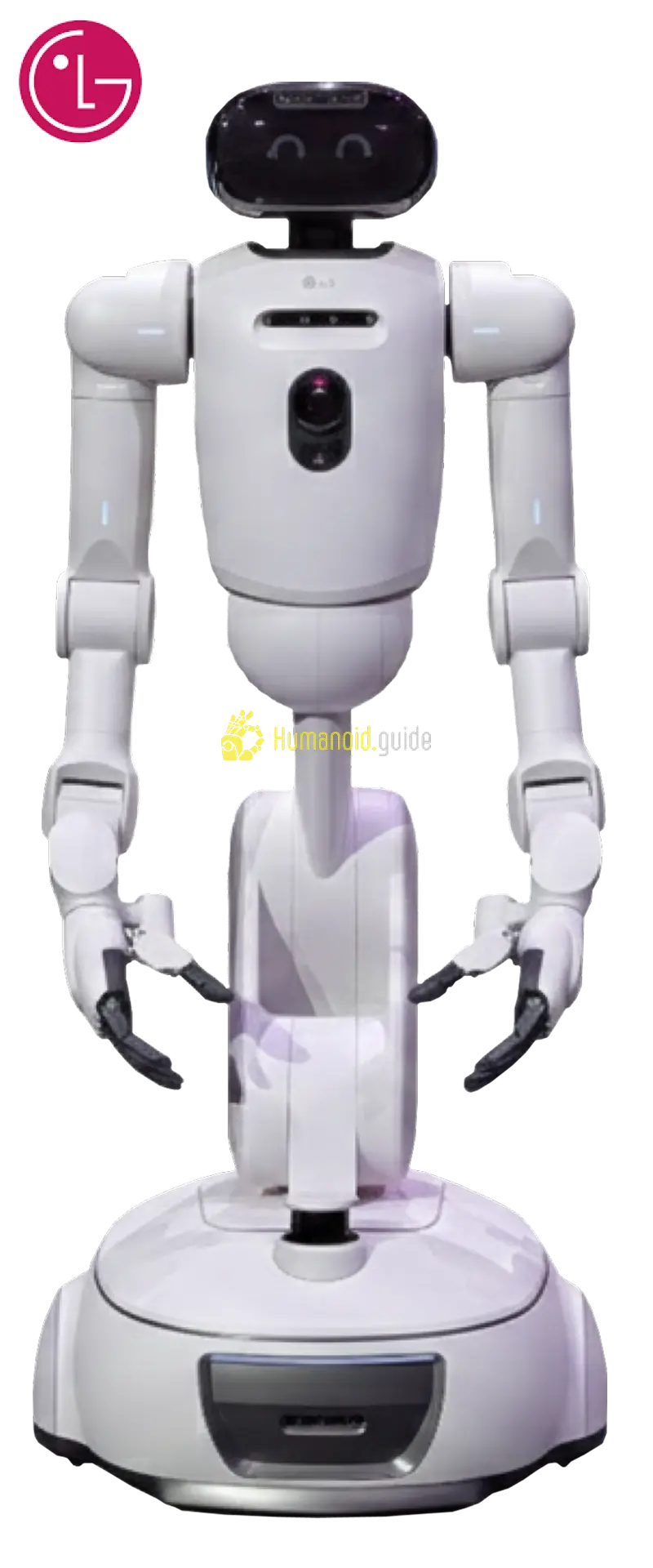
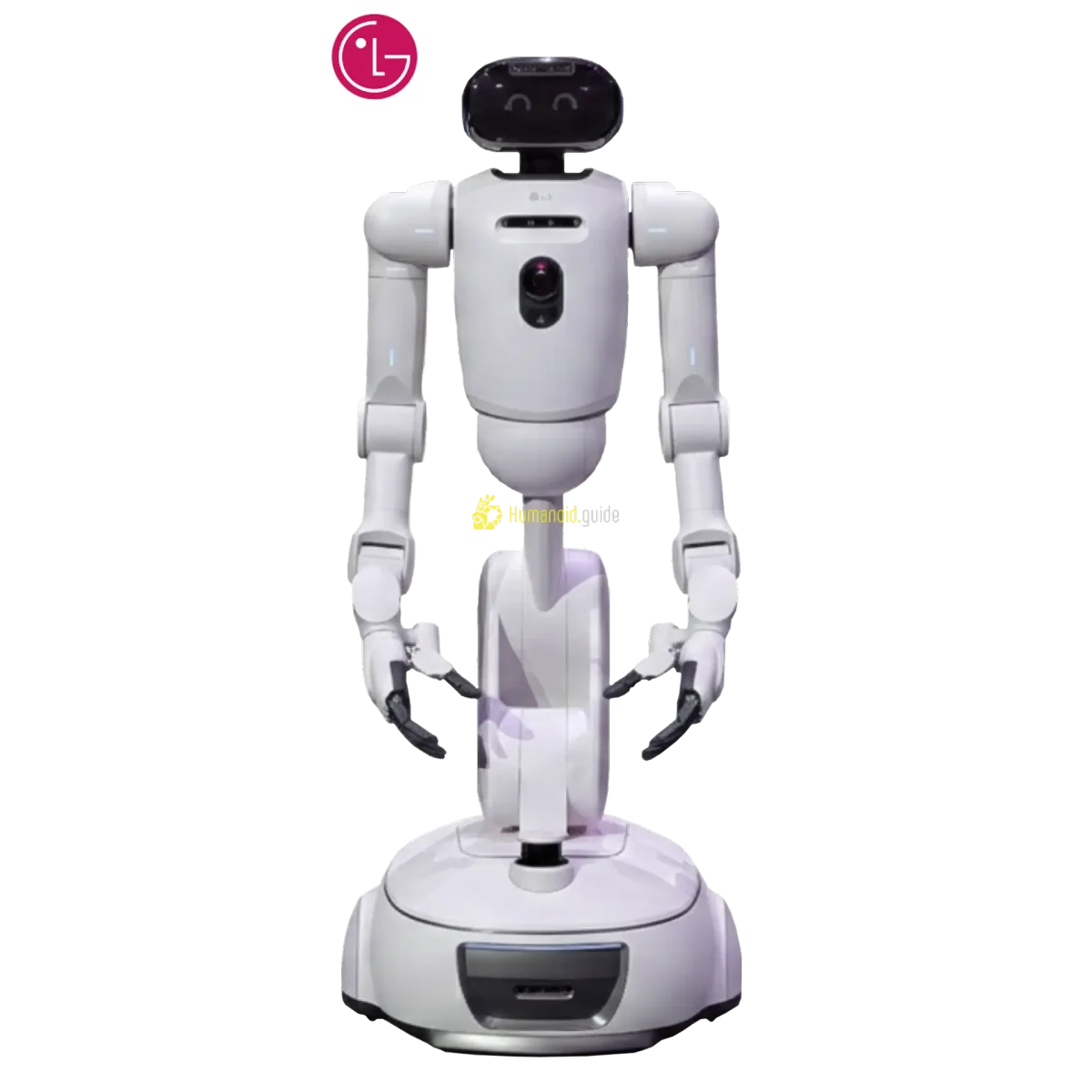
The LG CLOiD is a wheeled humanoid service robot developed by LG Electronics at its Seoul headquarters. Unveiled at CES 2026, it merges a humanoid upper body with a wheeled base, targeting both public-space service and home assistance. The robot features dual 7-DOF arms, five-fingered hands, and a UV-C mercury-vapor lamp for disinfection, giving it a unique dual-role capability. Navigation relies on LiDAR SLAM and depth cameras, with safety features like automatic shut-off when humans are detected. Currently limited to enterprise pilots, CLOiD represents LG's next step in service robotics, blending dexterous manipulation with autonomous mobility in a compact 60 kg form factor.
Specifications
Here are the full technical specifications.
| Spec | Value |
|---|---|
| Height | 1,200 mm |
| Weight | 60 kg |
| Degrees of freedom | 10 |
| Battery life | 8 hours |
| Max speed | 4 km/h |
| Payload | Not specified |
| Price (new) | Undisclosed (contact manufacturer) |
| Price (used range) | N/A (no secondary market) |
Price & Value
New MSRP: Undisclosed (contact manufacturer)
Used range: N/A
LG has not publicly disclosed pricing for the CLOiD, as it is sold only through enterprise B2B channels and remains in limited pilot deployment. Industry insiders expect costs in the tens of thousands of dollars, on par with advanced service humanoids like UBTECH's Walker X. Leasing and renting options are reportedly available, which can lower initial capital outlays for hospitals or hotels. While the robot's dual-function (disinfection and light manipulation) could justify a premium over single-purpose UV-C robots, the absence of a published payload rating and limited real-world track record make direct value comparison difficult. As an early-production humanoid, depreciation is steep, but no used market has formed yet. Total cost of ownership will involve ongoing maintenance for LiDAR sensors, arm actuators, and UV-C lamp replacement, plus software licensing for cloud-based AI integration.
Who Is It For?
Best for: - Hospitals and hotels seeking a humanoid UV-C disinfection robot that also offers a friendly, approachable presence for guest engagement - Retail and airport operators who want a service robot with dexterous hands for light carrying—such as delivering small items or guiding visitors - Research institutions exploring human-robot interaction with realistic five-fingered hands and autonomous navigation in controlled indoor settings
Not for: - Heavy industrial material handling (LG has not published a payload rating, and the arms are designed for light tasks only) - Outdoor applications (CLOiD is designed solely for indoor use and lacks weatherproofing or all-terrain wheels) - Consumers (the robot is not sold through retail channels; only enterprise customers can purchase or lease via LG's B2B program)
Alternatives & Comparison
While LG CLOiD occupies a niche as a humanoid disinfection robot with manipulation abilities, several dedicated UV-C disinfection robots compete in the same healthcare and hospitality markets.
| Model | Price | Available | Key Difference |
|---|---|---|---|
| UVD Robot | ~$60,000 (est.) | yes | Autonomous navigation with multiple UV-C lamps; larger coverage area per cycle |
| Xenex LightStrike | ~$125,000 (est.) | yes | Pulsed xenon UV light for faster disinfection cycles and no mercury |
| Tru-D SmartUVC | ~$60,000 (est.) | yes | Single high-intensity tower with patented Sensor360 technology to measure delivered dose |
Verdict: For facilities that value a humanoid interface and the ability to perform light object-handling tasks on top of disinfection, LG CLOiD stands alone in this comparison group. However, if your sole priority is fast and autonomous UV-C disinfection, the Xenex LightStrike provides quicker cycles and the UVD Robot offers proven multi-room navigation at a likely lower cost. CLOiD is the best choice when dexterous hands and a personable robot can elevate customer experience or support research goals.
Use Cases & Capabilities
Hospital UV-C Disinfection
CLOiD autonomously navigates patient rooms, waiting areas, and hallways using LiDAR SLAM, identifying surfaces with depth cameras and then exposing them to 15-minute UV-C disinfection cycles. Its mercury-vapor lamp is housed behind a protective shell that automatically shuts off when a human is detected—a critical safety feature in busy healthcare environments. Because it’s wheeled, it can be assigned to multiple floors via elevator integration. While its disinfection speed per square meter has not been published, the robot can run continuously for up to 8 hours on a single charge before needing to return to its dock.
Hospitality Front-of-House Service
In hotels and airports, CLOiD’s humanoid upper body and five-fingered hands allow it to greet guests, point directions, and even hand out small items like room keys or brochures. The robot’s built-in Wi-Fi and LTE connectivity keeps it linked to cloud services for natural conversation via possible LLM integration. Its 4 km/h speed enables it to accompany guests at a comfortable walking pace through lobbies. Combined with a friendly design—white shell, rounded features—it can act as a roving concierge during the day and then switch to disinfection duties after hours, maximizing ROI for the property.
Retail Customer Assistance
Retail stores can deploy CLOiD to guide customers to product aisles, carry small purchases in its hands, and provide brand information via a tablet-like display on its torso. The LiDAR-based navigation lets it avoid displays and shoppers even in dynamic layouts, while obstacle avoidance and human-detection shut-off ensure safe operation. Since it runs on lithium-ion batteries, swapping or fast-charging can keep it available throughout store opening hours. The biggest limitation here is payload—the robot can only handle lightweight objects, so it’s better suited for cosmetics, electronics accessories, or lightweight snacks rather than bulkier goods.
Home Assistance (Pilot)
At CES 2026, LG demonstrated CLOiD performing household chores like loading a dishwasher, assisting with laundry, and retrieving objects from shelves. Its dual 7-DOF arms with harmonic-drive gearboxes give it the precision to handle delicate tasks, though sustained heavy loads aren’t yet supported. The robot’s compact 1,200 mm height and wheeled base let it move around kitchens and living rooms without needing stair-climbing ability. As a pre-commercial pilot, this use case is still being validated; real-world reliability for home tasks remains to be proven. LG aims to eventually make CLOiD a true domestic helper.
History & Background
LG Electronics, founded in 1947 and headquartered in Seoul, South Korea, entered the robotics market in 2018 with its CLOi brand of service robots. Early models included the CLOi GuideBot for airports, CLOi CleanBot for commercial cleaning, and CLOi DisinfectBot, a wheeled UV-C robot aimed at hospitals. Building on that disinfection platform, LG unveiled the first-generation CLOiD at CES in January 2026—a humanoid service robot with dexterous five-fingered hands and an integrated UV-C lamp. The reveal marked a strategic shift from purely utilitarian robots to anthropomorphic designs that can both disinfect and assist with lightweight tasks. As of mid-2026, CLOiD remains in limited enterprise pilots, with no word yet on a consumer model. LG’s robotics division continues to refine the platform through partnerships in healthcare, hospitality, and retail, aiming for wider commercial rollout in the coming years.
Buying Used — What to Check
Verify operational hours and disinfection cycles UV-C lamps have limited lifespan; high hours and many cycles could mean the lamp and internal reflectors need replacing soon.
Inspect arm actuators and finger joints Harmonic drive gearboxes and electric servos in the arms can wear if the robot was used to carry loads near its margin. Check for play or noise.
Confirm battery health Lithium-ion packs degrade over 500–1,000 cycles; a unit from early pilots may already show reduced runtime, affecting 8-hour shift feasibility.